






Estimated Reading Time: 10 – 15 minutes (2,475 words)
Introduction
In a world where artificial intelligence reshapes job roles almost daily and creativity increasingly intersects with data, automation, and emerging technologies, traditional awards-driven industry events are no longer sufficient to sustain career growth. Professionals today are not merely seeking recognition for past work; they are seeking future relevance.
This is precisely where Spikes Asia Week 2026 marks a turning point. What was once celebrated primarily as Asia-Pacific’s premier creative awards festival has evolved into a multi-dimensional platform for learning, networking, collaboration, and career acceleration. Instead of only rewarding excellence, Spikes Asia Week now actively builds excellence by equipping professionals with skills, communities, and long-term industry access.
Modern professionals face what can best be described as a skills paradox:
- On one hand, global demand for creative, marketing, and digital talent is higher than ever
- On the other, the half-life of skills is shrinking rapidly
According to global workforce studies, many technical and creative skills now become partially outdated within 18–24 months. For marketers, designers, strategists, and content creators, this pace of change creates anxiety, career uncertainty, and widening gaps between what the industry needs and what individuals know.
Traditional education systems, static certifications, and even one-time workshops struggle to keep pace with this transformation. The result is a workforce that is employed — yet often underprepared for what comes next.
This article explains why upskilling and community-driven learning, as highlighted at Spikes Asia Week 2026, are emerging as non-negotiable pillars of career success. With a strong focus on India’s rapidly growing creative talent pool and its integration into global markets, this deep-dive explores:
- How industry events are transforming into learning ecosystems
- Why community participation increasingly outweighs formal credentials
- How AI is redefining — not replacing — creative careers
- What actionable steps professionals can take today to stay future-ready
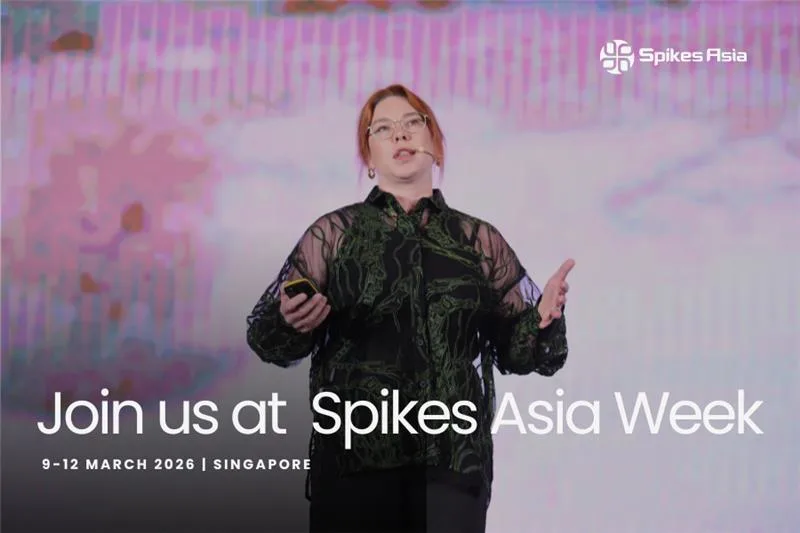
Why Spikes Asia Week 2026 Matters
Spikes Asia Week has long been recognised as a benchmark of creative excellence in the Asia-Pacific region. However, its significance in 2026 lies not in trophies, but in its strategic repositioning as a future-of-work catalyst.
Today, Spikes Asia Week functions as:
- A skills discovery platform
- A career navigation hub
- A community-driven professional ecosystem
This shift reflects a broader industry realisation: creativity alone is no longer enough. Sustainable success now requires fluency in technology, adaptability to AI-driven workflows, and access to communities that continuously exchange knowledge.
“The future of creative careers will be defined by continuous learning and real-world communities, not certificates alone.”
— Industry Expert, Marketing Leader
For Indian professionals, this evolution is especially critical. India’s young workforce, global service orientation, and rapid digital adoption place it in a unique position — but only if talent remains continuously upskilled and globally connected.
The Big Shift: From Awards to Skills
The Old Event Model: Prestige + Recognition
Historically, industry festivals operated on a celebratory model:
- Recognise past achievements
- Reward agencies, brands, and individuals
- Offer limited passive learning through talks
While prestigious, this model often delivered short-term inspiration rather than long-term capability.
The New Event Model: Upskilling + Community Ecosystem
Spikes Asia Week 2026 reflects a fundamentally different philosophy:
- Learning is continuous, not limited to a single week
- Participation matters more than attendance
- Career impact outweighs ceremonial recognition
Globally, major industry events are transforming into:
- Year-round learning platforms offering workshops, labs, and digital access
- Career accelerators enabling mentorship, hiring visibility, and skill validation
- Community-driven ecosystems where professionals grow together, not in isolation
This mirrors a wider shift in professional priorities. Increasingly, employers and clients value demonstrable skills, adaptability, and network credibility over static resumes or brand names on a CV.
Global Trends in Creative Upskilling
The Macro Shift
The global economy is undergoing a transition from job security to skill security. Creative industries, once considered intuition-led, are now deeply intertwined with technology, analytics, automation, and AI.
🔎 Key Statistics Explained
Corporate Learning Growth
The global upskilling and reskilling market is projected to reach $450–500 billion by 2030, driven by automation, digital transformation, and AI integration across industries.
AI + Creativity Skills
By 2030, over 50% of creative roles will require hybrid skill sets combining:
- Creative ideation
- Data interpretation
- AI tool proficiency
Lifelong Learning Imperative
Approximately 72% of the global workforce will need significant reskilling by 2027, highlighting that education is no longer front-loaded early in life — it is career-long.
Strategic Insight
The world economy no longer rewards one-time degrees. Instead, it rewards:
- Learning agility
- Cross-disciplinary fluency
- Community-validated expertise
Events like Spikes Asia Week are aligning themselves with this reality by embedding learning into the core of their identity.
India’s Creative Talent Surge
India is rapidly emerging as one of the most influential creative talent hubs globally. Several forces are driving this momentum:
Rapid Adoption of Generative AI
Indian agencies, freelancers, and startups are among the fastest adopters of generative AI tools, using them for:
- Concept generation
- Campaign ideation
- Content localisation at scale
Cost efficiency and talent depth make India an ideal testing ground for AI-assisted creativity.
Explosion of the Creator Economy
India’s creator ecosystem now includes 70+ million creators, spanning:
- Content creation
- Influencer marketing
- Brand storytelling
- Educational content
These creators increasingly operate as micro-entrepreneurs, monetising skills rather than just content.
Youth Demographic Advantage
India’s median age remains under 30, creating a massive population eager for:
- Skill-based income
- Global freelancing opportunities
- Community-driven career growth
👉 Over the next decade, India is expected to contribute approximately 25% of global digital and creative talent growth, making platforms like Spikes Asia Week especially relevant.
Why Communities Trump Credentials
The Decline of Credential-Only Value
Degrees and certificates still matter — but they are no longer sufficient. Employers increasingly ask:
- Can you collaborate?
- Can you adapt?
- Can you solve real-world problems?
These qualities are often best demonstrated within communities, not classrooms.
Community-Led Learning: Three Key Advantages
1. Peer-Driven Feedback
Continuous critique and idea exchange sharpen skills faster than isolated learning.
2. Live Projects & Portfolios
Communities enable real assignments, collaborations, and case studies that translate directly into portfolios.
3. Network Impact on Hiring
Research consistently shows that a large percentage of job opportunities emerge from referrals and community connections, not job portals.For creative professionals, communities function as living resumes.
AI, Creativity & the Future Job Market
AI Is Changing Jobs — Not Eliminating Them
AI automates repetitive tasks, but it amplifies human creativity when used strategically. The most resilient roles will be those that combine:
- Creative thinking
- Analytical reasoning
- Communication and leadership
Emerging Roles at the Intersection of AI and Creativity
- Prompt Engineers for Creatives: Specialists who translate creative intent into AI-driven outputs
- AI Ethics Advisors: Professionals ensuring responsible, bias-aware creative AI usage
- Multidisciplinary Campaign Strategists: Leaders who bridge storytelling, data, and technology
Spikes Asia Week 2026 reflects this reality by integrating AI literacy into creative discourse.
Case Studies: Learning Success Stories
Case Study #1: Indian Freelancer → Global Campaigns
An Indian marketing freelancer attended Spikes Asia Week virtual workshops focused on AI-assisted strategy. By restructuring their portfolio to highlight AI-led insights, they transitioned from local clients to global briefs within a year.
Key takeaway: Skill repositioning + global exposure unlocks new markets.
Case Study #2: Community-Led Startup Growth
A creative community formed through industry events evolved into a subscription-based learning platform. Weekly expert-led modules now generate recurring revenue while continuously upskilling members.
Key takeaway: Communities can become sustainable business models.
Actionable Steps to Level Up Your Skills
Step 1: Identify Skill Gaps
Use:
- Learning analytics platforms
- Industry skill maps
- Peer benchmarking
Step 2: Join Strong Communities
Engage actively in:
- Discord and Slack groups
- Industry-led forums
- Event-based learning cohorts
Step 3: Build Projects, Not Just CVs
Portfolios demonstrating real outcomes outperform resumes listing qualifications.
FAQs Section
1. What is Spikes Asia Week 2026?
Spikes Asia Week 2026 is a leading Asia-Pacific creative industry event that has significantly evolved beyond its traditional role as an awards festival. In its 2026 edition, Spikes Asia Week functions as a multi-layered professional ecosystem focused on:
- Upskilling and reskilling across marketing, advertising, media, technology, and creative fields
- Community-driven learning, where peers, mentors, and industry leaders collaborate
- Career enablement, including exposure to global standards, hiring trends, and future-ready skills
Unlike earlier editions that primarily celebrated past creative excellence, Spikes Asia Week 2026 emphasizes building future excellence. It integrates workshops, learning tracks, mentorship sessions, and collaborative forums that help professionals stay relevant in an AI-disrupted and rapidly digitising global economy.
For many participants, especially from emerging markets like India and Southeast Asia, Spikes Asia Week now serves as a career inflection point, not just an industry gathering.
2. Why has Spikes Asia shifted its focus toward upskilling?
The shift toward upskilling is driven by a fundamental change in how careers evolve in creative and marketing industries. Industry feedback over recent years has highlighted several realities:
- Skills are becoming obsolete faster than ever due to AI, automation, and platform changes
- Traditional degrees and awards alone no longer guarantee long-term employability
- Employers and clients increasingly prioritise capability, adaptability, and learning mindset
Spikes Asia responded by aligning its core purpose with industry needs rather than legacy formats. Upskilling ensures that the event delivers measurable, long-term value to attendees — not just inspiration or recognition.
This transition also reflects a broader global trend where professional events are expected to function as learning institutions, talent marketplaces, and communities, rather than one-off celebrations.
3. How is Spikes Asia Week 2026 relevant for Indian professionals?
For Indian professionals, Spikes Asia Week 2026 holds exceptional relevance due to India’s position in the global creative and digital economy. India is experiencing:
- Rapid growth in digital marketing, content creation, and creative services
- High adoption of AI tools due to cost efficiency and scale advantages
- Increasing participation in global campaigns, freelancing, and remote work
Spikes Asia Week provides Indian professionals with:
- Global exposure to international creative standards and expectations
- Skill validation, where capabilities are benchmarked against global peers
- Community access, enabling connections with agencies, brands, and creators across Asia-Pacific
In practical terms, participation can help Indian professionals transition from execution-focused roles to strategy-led, globally competitive careers.
4. Is AI a threat to creative jobs?
AI is not a threat to creativity itself, but it is a threat to static, execution-only roles. Artificial intelligence excels at automating repetitive, rule-based tasks such as:
- Drafting initial copies
- Generating design variations
- Optimising media placements
However, AI simultaneously increases demand for higher-order human skills, including:
- Strategic thinking and problem framing
- Cultural and contextual storytelling
- Brand judgment and ethical decision-making
Rather than replacing creative professionals, AI is reshaping job definitions. Those who learn to collaborate with AI tools gain productivity and competitive advantage, while those who resist risk obsolescence.
Spikes Asia Week 2026 reflects this balanced view by integrating AI literacy into creative learning rather than positioning AI as a replacement.
5. What skills are most in demand after 2026?
Post-2026, the most in-demand skills are hybrid and interdisciplinary, combining creativity with technology and business understanding. Key skill clusters include:
- Creative + AI fluency (prompting, tool selection, AI-assisted ideation)
- Data-informed creativity, where insights guide storytelling
- Strategic communication, aligning creative output with business outcomes
- Cross-platform adaptability, spanning digital, social, experiential, and emerging media
Purely technical or purely creative skills are increasingly insufficient on their own. Professionals who can bridge disciplines will command higher value and longer career longevity.
6. How do communities accelerate career growth?
Communities accelerate career growth by providing continuous, real-world learning environments that formal education often cannot match. Their impact comes from several mechanisms:
- Mentorship access, where experienced professionals guide newcomers
- Peer accountability, encouraging consistent skill improvement
- Real project collaboration, leading to tangible portfolio outcomes
- Referral-driven opportunities, which dominate modern hiring
In creative industries, trust and reputation often matter more than credentials. Communities help professionals build both, making them powerful career multipliers.
7. Can freelancers benefit as much as agency professionals from Spikes Asia Week?
Yes — and in many cases, freelancers benefit even more. Freelancers typically lack:
- Structured learning environments
- Built-in professional networks
- Brand credibility associated with agencies
Spikes Asia Week and its surrounding community ecosystem help freelancers overcome these gaps by offering:
- Global exposure and credibility
- Skill benchmarking against industry standards
- Direct access to clients, collaborators, and agencies
For Indian freelancers targeting international markets, this exposure can significantly improve pricing power, project quality, and long-term stability.
8. Are certificates and credentials still useful?
Certificates and credentials still hold value, but only in context. On their own, they no longer guarantee employability or career growth. Their relevance depends on:
- Whether the skills can be demonstrated in real projects
- Whether learning is continuously updated
- Whether the professional is active within industry communities
Employers increasingly treat certificates as signals, not proof. Demonstrable skills, portfolios, and community engagement provide the actual validation.
9. How can beginners or students leverage platforms like Spikes Asia Week?
Beginners can extract significant value by approaching such platforms strategically. Effective steps include:
- Attending skill-focused sessions rather than only keynote talks
- Participating in discussions and workshops to build visibility
- Collaborating on community projects to gain experience
- Documenting learning outcomes into portfolios or case studies
For students and early-career professionals, these platforms act as bridges between education and employment, reducing the gap between theory and industry practice.
10. What makes Spikes Asia Week different from other creative festivals?
What differentiates Spikes Asia Week is its explicit shift from recognition to enablement. Unlike festivals that primarily celebrate past work, Spikes Asia Week focuses on:
- Preparing professionals for future industry demands
- Building long-term communities rather than short-term audiences
- Integrating learning, networking, and career development into one ecosystem
This makes it particularly relevant in an era where careers are defined by adaptability rather than accolades.
11. Will this upskilling and community trend continue beyond 2026?
Yes, and it is expected to intensify. Several forces ensure this trend’s longevity:
- Rapid technological disruption across industries
- Shortening skill life cycles
- Global shift toward freelance, remote, and project-based work
As a result, industry events worldwide are evolving into learning ecosystems. Spikes Asia Week 2026 is not an exception — it is an early indicator of what the future of professional development looks like.
Summary
- Spikes Asia Week 2026 signals a structural industry shift
The event reflects a broader global transition from recognition-focused festivals to skill-driven ecosystems that prioritise learning, adaptability, and long-term career relevance over one-time awards. - Continuous upskilling is now a career necessity, not an option
Rapid AI adoption and digital disruption have shortened skill life cycles, making ongoing learning essential for creative, marketing, and technology professionals to remain competitive. - Communities are becoming more valuable than formal credentials
Peer networks, mentorship, and collaborative communities increasingly influence hiring, referrals, and career progression more than traditional degrees or certificates alone. - India is rising as a global creative and digital talent powerhouse
With a young workforce, fast AI adoption, and a booming creator economy, India is positioned to supply a significant share of the world’s future creative and marketing talent. - AI is reshaping creative roles by amplifying human strengths
Rather than replacing creatives, AI enhances productivity and execution, increasing demand for strategic thinking, storytelling, and ethical decision-making. - Events, communities, and learning platforms are converging into career accelerators Modern industry platforms now blend education, networking, and opportunity creation, transforming how professionals build sustainable, future-ready careers.
Conclusion
Spikes Asia Week 2026 represents more than an industry event — it symbolises a new career architecture for creative professionals. In an era defined by rapid technological change, the winners will not be those with the most awards, but those with the most relevant skills and strongest communities. For India and the world alike, upskilling and collaboration are no longer optional — they are foundational.
References
- https://www.spikes.asia
- https://www.campaignasia.com
- https://www.statista.com/topics/1539/advertising-and-marketing/
- https://www.statista.com/topics/2468/online-learning/
- https://www.mckinsey.com/capabilities/growth-marketing-and-sales/our-insights
- https://www.mckinsey.com/capabilities/people-and-organizational-performance/our-insights
- https://www.weforum.org/reports/the-future-of-jobs-report-2025/
- https://www.linkedin.com/business/learning/blog
- https://www.economictimes.com/industry/media/advertising
- https://www.bcg.com/publications/collections/creative-economy
- https://www.pwc.com/gx/en/industries/tmt/media/outlook.html
- https://www.nasscom.in/knowledge-center
- https://www.hbr.org/topic/creativity
- https://www.adage.com
- https://www.warc.com
