








Estimated Reading Time: 12-16 minutes (2,741 words)
Introduction
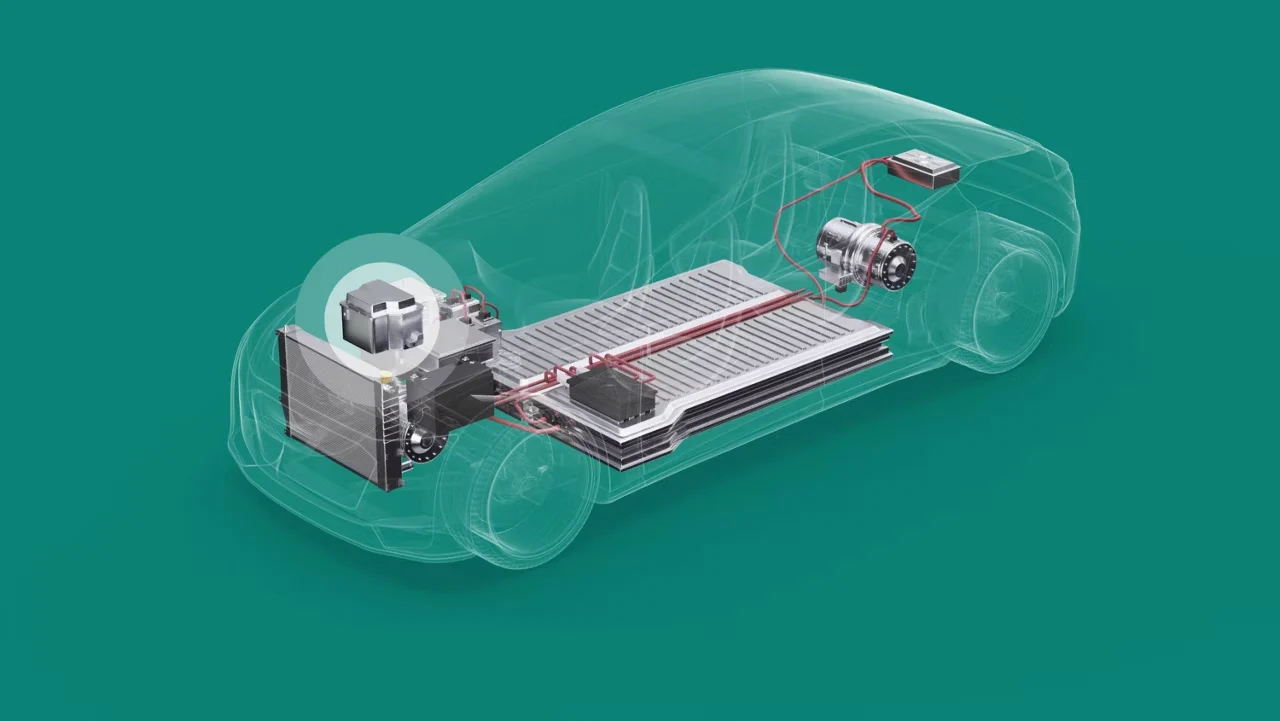
Electric vehicle (EV) technology is evolving at a pace faster than any other segment in the automotive industry. While batteries and charging infrastructure often dominate public discourse, the real efficiency gains in modern EVs are increasingly coming from power electronics and motor control systems. These subsystems determine how effectively electrical energy is converted into motion, how reliably vehicles operate under extreme conditions, and how scalable EV platforms can be across multiple vehicle categories.
One of the most important recent developments in this space is the unveiling of a compact motor control System-in-Package (SiP) by Infineon Technologies. This solution integrates multiple traditionally separate components—microcontroller, gate drivers, power stages, and protection logic—into a single, automotive-grade package. The result is not merely a reduction in size, but a fundamental redesign of how EV motor control architectures are built.
For EV manufacturers, this shift directly addresses three of the industry’s biggest challenges:
- Reducing hardware complexity
- Lowering cost per vehicle
- Accelerating time-to-market
For India, where EV adoption is scaling rapidly across two-wheelers, three-wheelers, and entry-level passenger vehicles, such compact and integrated solutions are particularly relevant. They enable local OEMs to deploy reliable, thermally robust, and cost-optimized motor control systems without requiring massive in-house semiconductor expertise.
In this article, we unpack what Infineon’s compact motor control SiP actually is, why it matters for the global EV ecosystem, how it fits into India’s EV and semiconductor ambitions, and what it signals for the next decade of electric mobility.
What Is a Compact Motor Control SiP?
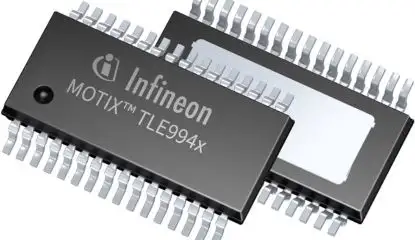
A System-in-Package (SiP) is an advanced semiconductor packaging approach that integrates multiple functional components into a single physical module while keeping them electrically distinct. Unlike a traditional System-on-Chip (SoC), which merges everything onto one silicon die, an SiP allows optimized chips—logic, power, analog, and sensing—to coexist in one compact enclosure.
What Infineon’s Motor Control SiP Integrates
Infineon’s compact motor control SiP combines the following critical elements:
- Arm Cortex-M23–class microcontroller
Handles real-time motor control algorithms, diagnostics, and communication. - Three-phase bridge gate driver
Controls switching of power transistors for precise motor actuation. - Power stage using automotive-grade MOSFETs (OptiMOS class)
Converts electrical energy into controlled motor torque and speed. - Integrated power supply and protection logic
Ensures stable operation under voltage fluctuations, thermal stress, and fault conditions.
Why This Integration Matters
In traditional EV motor control designs, these components are spread across the PCB as discrete chips. This leads to:
- Longer signal paths
- Higher parasitic inductance
- Increased EMI risk
- Larger board size
By integrating them into a single package, Infineon’s SiP:
- Minimizes electrical losses
- Improves switching efficiency
- Enhances noise immunity
- Simplifies PCB design dramatically
This makes the SiP especially well-suited for space-constrained automotive applications such as pumps, compressors, actuators, and auxiliary motors—systems that collectively account for a significant portion of an EV’s energy consumption.
Why This Matters: The EV Power Electronics Landscape
Modern EVs are effectively computers on wheels, containing anywhere from 50 to 100 electronic control units (ECUs). At the heart of many of these ECUs are motor controllers, which manage everything from propulsion to thermal management.
Role of Motor Controllers in EVs
Motor controllers are central to:
- Traction drive systems (where applicable)
- Cooling pumps for batteries and power electronics
- HVAC compressors
- Electric steering and braking systems
- Body and comfort actuators
Each motor controller must meet strict requirements for:
- Reliability over 10–15 years
- Operation across extreme temperatures
- Functional safety compliance
Limitations of Traditional Architectures
Conventional designs rely on:
- Separate microcontroller
- Discrete gate drivers
- External power MOSFETs
- Multiple protection ICs
This approach:
- Increases PCB footprint
- Raises assembly and testing complexity
- Extends development timelines
- Increases failure points
How Integrated SiP Changes the Game
Integrated SiP architectures directly address these challenges by:
- Reducing component count
- Improving electrical performance
- Lowering manufacturing variability
- Enabling faster OEM platform scaling
In an industry where every gram of weight, every cubic centimeter of space, and every rupee of cost matters, this architectural shift is highly strategic.
Key Benefits of Infineon’s Motor Control SiP
✅ Compact Footprint
The SiP significantly reduces PCB area compared to discrete implementations. This is critical for:
- Under-hood modules
- Battery-adjacent electronics
- Dense auxiliary systems
Smaller boards also mean lighter vehicles, which directly improves driving range.
🔋 Superior Thermal Management
Shorter interconnects and optimized internal layouts reduce heat generation and improve dissipation. This results in:
- Higher efficiency
- Longer component lifespan
- Greater reliability in hot climates like India
⚡ Reduced System Complexity
Fewer components translate to:
- Simplified BOM
- Faster validation cycles
- Lower risk of assembly defects
This is particularly valuable for EV startups and Tier-2 suppliers.
🛠 Functional Safety Readiness
Designed with automotive safety standards in mind, the SiP supports:
- Fault detection
- Redundancy strategies
- ISO 26262 system-level compliance
💡 Lower Total Cost of Ownership
Although integrated solutions may appear premium upfront, they reduce:
- Engineering cost
- Manufacturing cost
- Warranty and failure costs
Over the vehicle lifecycle, this delivers strong ROI.
Real-World EV Use Cases
a. EV Thermal Management Systems
Cooling pumps and fans operate continuously and must be highly efficient. The compact SiP enables:
- Smaller control modules
- Precise speed control
- Reduced power losses
b. Comfort & Body Electronics
Applications like seat motors, power windows, and mirror actuators benefit from:
- Quiet operation
- Compact packaging
- High reliability
c. Powertrain Auxiliary Systems
Electric brake boosters, steering pumps, and oil pumps require:
- High safety integrity
- Precise torque control
- Robust fault handling
Integrated SiP solutions are ideal for these mission-critical systems.
India-Specific Impact
India’s EV transition is being driven by:
- Urban air quality concerns
- Rising fuel costs
- Government incentives
While two- and three-wheelers dominate volumes, passenger EV adoption is accelerating.
Why Infineon’s SiP Fits India Well
- Handles high ambient temperatures
- Reduces system cost for price-sensitive segments
- Supports localization under “Make in India”
Infineon’s partnerships with Indian semiconductor and power electronics players further strengthen local supply chains.
Key Benefits for India
- Enables compact, affordable EV electronics
- Improves reliability in harsh operating conditions
- Supports India’s growing semiconductor ecosystem
Competitive Landscape
| Company | Core Strength |
| NXP | Integrated MCUs & motor control platforms |
| STMicroelectronics | Power modules & automotive MCUs |
| Texas Instruments | Analog & motor drive ICs |
Infineon’s key advantage lies in its end-to-end automotive portfolio, allowing seamless integration across power, control, and safety domains.
Challenges & Risks: What Could Slow Down SiP Adoption in EVs?
While compact motor control System-in-Package (SiP) solutions offer clear advantages, their adoption is not without challenges. These risks are particularly relevant in cost-sensitive, high-volume EV markets like India, and for OEMs transitioning from legacy discrete architectures.
Understanding these limitations is critical for manufacturers, suppliers, and policymakers to ensure smooth and scalable deployment.
🔥 1. High Thermal Density & Heat Dissipation Constraints
One of the most significant technical challenges of compact SiP designs is thermal density.
By integrating:
- Microcontrollers
- Gate drivers
- Power MOSFETs
- Power management circuitry
into a single package, heat generation becomes concentrated in a smaller physical area.
Why This Is a Risk
- Power devices inherently generate heat during switching
- Inadequate heat dissipation can lead to:
- Reduced efficiency
- Thermal throttling
- Accelerated component aging
- Potential system failures
- Reduced efficiency
System-Level Impact
OEMs must invest in:
- Advanced PCB thermal layouts
- Heat sinks or thermal vias
- Improved enclosure airflow
This increases design complexity, especially for compact EV modules placed near batteries or motors where ambient temperatures are already high.
➡️ In hot climates like India, where under-hood temperatures routinely exceed global averages, thermal design becomes even more critical.
💰 2. Cost Pressure in Entry-Level and Mass-Market EVs
Although SiPs reduce total system cost over time, their upfront component cost can appear higher than discrete alternatives.
Cost Challenges Include:
- Higher per-unit silicon cost
- Advanced packaging expenses
- Automotive-grade qualification overhead
India-Specific Concern
India’s EV market is dominated by:
- Two-wheelers
- Three-wheelers
- Entry-level passenger vehicles
These segments operate on razor-thin margins, where:
- Even small cost increases can affect vehicle pricing
- OEMs are extremely BOM-sensitive
As a result, some manufacturers may hesitate to adopt SiPs unless:
- Volumes scale significantly
- Local manufacturing or packaging reduces costs
- Government incentives support advanced electronics
➡️ This creates a short-term tension between engineering efficiency and commercial viability.
🌍 3. Global Semiconductor Supply Chain Volatility
The semiconductor industry remains vulnerable to:
- Geopolitical tensions
- Fab capacity constraints
- Export controls
- Regional concentration of advanced manufacturing
SiP solutions rely on:
- Multiple dies
- Advanced assembly and packaging facilities
- Long, globally distributed supply chains
Risks for OEMs
- Component shortages delaying EV production
- Price fluctuations affecting vehicle margins
- Overdependence on limited global suppliers
For emerging EV markets like India, this raises concerns around:
- Supply security
- Long-term availability
- Strategic dependence on imports
This is why localization efforts—such as semiconductor packaging and OSAT development—are becoming increasingly important.
🧠 4. Reduced Design Flexibility Compared to Discrete Architectures
Integrated SiPs offer optimization but limit customization.
Trade-Offs Include:
- Fixed power ratings
- Predefined protection logic
- Limited ability to swap individual components
For OEMs that:
- Want highly customized motor control behavior
- Operate across multiple voltage or power classes
- Serve niche or experimental EV platforms
discrete designs may still offer greater flexibility.
➡️ This makes SiPs more attractive for standardized, high-volume platforms than for highly customized low-volume vehicles.
🧪 5. Qualification, Validation & Reliability Testing Complexity
Automotive components require:
- Long validation cycles
- Extensive environmental testing
- Compliance with strict reliability standards
Because SiPs integrate multiple critical functions:
- A single failure may impact multiple subsystems
- Testing requirements become more stringent
- Debugging can be more complex than with discrete designs
OEMs must adapt their:
- Testing methodologies
- Failure analysis processes
- Quality assurance workflows
This increases initial engineering effort, even though long-term reliability may improve.
📉 6. Learning Curve for Smaller OEMs and Startups
While SiPs simplify hardware design, they require:
- Deeper understanding of system-level integration
- Strong firmware and motor control software expertise
- Advanced debugging and diagnostics skills
Smaller EV startups may face:
- Skill gaps in embedded software
- Dependence on vendor reference designs
- Limited in-house validation capabilities
Without adequate ecosystem support—training, tools, and documentation—adoption could be slower in emerging markets.
🔎 Bottom Line: Integration Wins, But Execution Matters
Despite these challenges, the direction of the EV industry is clear:
- Vehicle architectures are becoming more compact
- Electronics are becoming more integrated
- Software is increasingly central to performance and differentiation
The risks associated with compact motor control SiPs are not structural barriers, but engineering and ecosystem challenges that can be addressed through:
- Better thermal design practices
- Cost optimization at scale
- Localization of semiconductor packaging
- Strong OEM–supplier collaboration
➡️ As volumes grow and designs mature, the benefits of integration will increasingly outweigh the risks, making SiP-based motor control a foundational element of next-generation electric vehicles.
Future Outlook (2026–2035)
By 2035:
- Integrated motor control packages become standard
- SiP expands into higher-power traction applications
- Software-defined motor control becomes dominant
This evolution points toward smarter, more efficient, and safer EV architectures.
FAQs Section
1. What is an automotive System-in-Package (SiP), and how is it different from traditional ICs?
An automotive System-in-Package (SiP) is an advanced semiconductor packaging approach that integrates multiple functionally distinct chips—such as microcontrollers, power devices, gate drivers, analog circuits, and protection logic—into a single, compact, automotive-qualified package.
How It Differs from Traditional Designs:
- Discrete architecture:
Multiple standalone chips placed across the PCB, connected via traces and external components. - SoC (System-on-Chip):
All functions merged into a single silicon die (often limited by process trade-offs). - SiP:
Best-in-class dies combined in one package, preserving performance while reducing size.
Automotive-Grade Advantages:
- Designed for high temperature operation
- Resistant to vibration, humidity, and electrical noise
- Qualified for long vehicle lifecycles (10–15 years)
In EVs, this approach significantly reduces PCB area, EMI issues, and assembly complexity, making it ideal for dense, safety-critical automotive environments.
2. How does Infineon’s motor control SiP specifically improve EV efficiency?
The motor control SiP from Infineon Technologies improves EV efficiency at multiple system levels, not just at the component level.
Key Efficiency Gains:
- Reduced parasitic losses:
Shorter internal interconnects lower inductive and resistive losses compared to PCB traces. - Optimized switching behavior:
Gate drivers and power MOSFETs are co-designed for faster, cleaner switching. - Improved thermal coupling:
Heat flows more efficiently within the package, reducing energy lost to thermal inefficiency. - Smarter control algorithms:
Integrated MCU enables precise PWM control, field-oriented control (FOC), and adaptive tuning.
Real-World Impact:
- Lower energy consumption per kilometer
- Improved driving range
- Reduced heat stress on surrounding components
In aggregate, even small efficiency improvements at the motor control level translate into measurable real-world EV performance gains.
3. Is this SiP suitable for main traction motor drives in EVs?
At present, Infineon’s compact motor control SiP is primarily optimized for auxiliary and low-to-medium power motor applications, rather than high-power traction inverters.
Current Ideal Applications:
- Cooling pumps
- HVAC compressors
- Electric power steering
- Brake boosters
- Auxiliary drivetrain motors
Why Not Traction (Yet)?
- Traction motors demand:
- Much higher current and voltage handling
- Advanced cooling solutions
- Larger power modules (often SiC-based)
- Much higher current and voltage handling
Future Outlook:
As packaging technology evolves and SiC-based SiP modules mature, future variants may:
- Scale to higher power classes
- Enter compact traction inverter segments
- Support next-generation modular EV platforms
So while traction motors still rely on larger power modules today, the architectural direction strongly favors integration over time.
4. How does this innovation help Indian EV OEMs specifically?
Indian EV OEMs face a unique combination of challenges:
- Extreme cost sensitivity
- Harsh operating environments
- Limited in-house semiconductor expertise
Infineon’s motor control SiP directly addresses these constraints.
Benefits for Indian OEMs:
- Lower development complexity:
Fewer components reduce design, testing, and debugging effort. - Faster time-to-market:
Reference designs and integrated protection shorten development cycles. - Improved reliability:
Automotive-grade robustness suits Indian climate and road conditions. - Scalability:
Enables reuse across multiple vehicle models and variants.
For startups and mid-size OEMs, this levels the playing field by providing world-class motor control capability without massive R&D investment.
5. What automotive safety standards does the SiP support?
The motor control SiP is designed to support ISO 26262, the global standard for functional safety in road vehicles.
Functional Safety Capabilities Include:
- Fault detection and reporting
- Over-current and over-temperature protection
- Safe-state handling mechanisms
- Support for ASIL-B to ASIL-D system designs (depending on application)
Why This Matters:
In EVs, motor controllers influence:
- Steering
- Braking
- Thermal management
Any failure can have safety implications. By embedding safety mechanisms at the silicon and package level, the SiP simplifies compliance for OEMs and reduces safety certification risk.
6. Does higher integration increase the risk of system failure?
Contrary to intuition, higher integration often improves reliability, provided thermal design is handled correctly.
Why Integration Can Be Safer:
- Fewer solder joints → fewer mechanical failure points
- Reduced interconnect length → lower EMI and signal integrity issues
- Factory-controlled integration → consistent quality
Key Caveat:
Thermal management becomes more critical. OEMs must ensure:
- Proper PCB thermal design
- Adequate heat sinking or airflow
- Real-world thermal validation
When executed properly, integrated SiP solutions typically deliver higher mean time between failures (MTBF) than equivalent discrete designs.
7. Can EV startups and smaller manufacturers realistically use this technology?
Yes—and they are among the biggest beneficiaries.
Why SiPs Are Startup-Friendly:
- Reduce hardware complexity
- Minimize component sourcing challenges
- Come with extensive documentation and reference designs
- Enable focus on software, UX, and vehicle integration
For startups lacking large hardware teams, SiPs:
- Lower the barrier to entry
- Reduce engineering risk
- Enable faster product launches
This is particularly valuable in India’s fast-moving EV startup ecosystem.
8. Is the motor control SiP suitable for two-wheelers and three-wheelers?
Yes, especially for auxiliary motor systems.
Ideal Use Cases:
- Cooling fans
- Battery thermal pumps
- Small actuators
- Electric oil pumps
While main traction motors in two-wheelers often use simpler controllers, supporting subsystems increasingly demand automotive-grade reliability, making SiPs highly relevant.
As vehicle sophistication increases, even low-cost segments will benefit from integrated motor control solutions.
9. Does the SiP support future software updates and diagnostics?
Absolutely. One of the biggest advantages of integrating a microcontroller is software flexibility.
Software Capabilities:
- Firmware updates
- Motor control algorithm optimization
- Predictive diagnostics
- Over-the-air (OTA) support (via vehicle ECU integration)
This enables:
- Performance tuning post-deployment
- Extended product lifecycles
- Better fleet monitoring and maintenance
In the era of software-defined vehicles, this capability is increasingly critical.
10. Will SiP solutions completely replace discrete motor control designs?
Not entirely—but they will dominate most applications.
Expected Industry Transition:
- Low- to mid-power motor systems:
SiP becomes the default choice - High-power, highly customized systems:
Discrete or modular solutions remain relevant
Over the next decade, the majority of EV motor control designs—especially in mass-market vehicles—will shift toward integrated SiP architectures due to their efficiency, reliability, and scalability advantages.
Summary
- Infineon’s compact motor control SiP represents a major architectural shift in EV electronics.
- Integration improves efficiency, reliability, and design simplicity while reducing size and cost.
- The solution is particularly well-suited for auxiliary EV motor applications.
- India stands to benefit significantly due to its cost-sensitive and fast-growing EV market.
- Competitive pressure is accelerating the industry-wide move toward integrated power electronics.
- Over the next decade, SiP-based designs will become the dominant approach in EV motor control.
Conclusion
Infineon’s compact motor control SiP is more than a component innovation—it is a strategic enabler for the next phase of electric mobility. By simplifying design, improving efficiency, and supporting scalable EV architectures, it aligns perfectly with both global EV trends and India’s ambitious electrification goals. As EV platforms become more integrated and software-defined, solutions like this will form the backbone of future electric vehicles.
