







Estimated Reading Time: 35-40 minutes (7,047 words)
Introduction
The Union Budget 2026–27, scheduled for presentation in late February 2026, is widely expected to mark a turning point in India’s industrial and mobility roadmap. Arriving at a time when inflationary pressures are moderating, global interest rates are stabilising, and supply chains are being redrawn, this budget carries the weight of steering India through its next phase of economic expansion—from consumption-led growth to manufacturing- and investment-led growth.
For policymakers, the challenge is twofold. On one hand, India must sustain momentum in traditional growth engines like automobiles, tyres, and auto components, which collectively support millions of jobs and contribute significantly to GDP. On the other hand, the government must accelerate the transition toward electric vehicles (EVs), clean mobility, and sustainable manufacturing, in line with long-term climate commitments and energy security goals. This balancing act—between stability and transformation—will define the tone and impact of Budget 2026–27.
The automotive and manufacturing ecosystem sits at the heart of this transition. India is already the world’s third-largest automobile market, yet vehicle penetration remains low compared to global peers—indicating massive untapped demand. Simultaneously, EV adoption is rising rapidly, global investors are seeking China+1 manufacturing alternatives, and export-oriented sectors like tyres and auto components are gaining strategic importance. Budgetary decisions on GST rates, customs duties, production-linked incentives (PLI), capital expenditure, and MSME credit support will therefore have ripple effects far beyond balance sheets—shaping consumer prices, investment flows, and job creation over the next decade.
Adding to the significance is India’s broader policy vision, driven by institutions such as NITI Aayog and implemented by the Government of India, to position the country as a global hub for advanced manufacturing, affordable EVs, and clean industrial technologies. Budget 2026–27 is expected to operationalise many of these ambitions through targeted fiscal measures rather than sweeping, disruptive reforms—providing predictability to businesses while nudging them toward innovation and sustainability.
In this article, we break down what economists, industry leaders, auto manufacturers, EV startups, tyre companies, and global investors are watching most closely in Union Budget 2026–27. We examine what is likely to change, what may remain unchanged, and why those decisions matter—not just for large corporations, but also for MSMEs, vehicle buyers, exporters, and anyone tracking India’s long-term growth story. By the end, you’ll have a clear, practical understanding of how this budget could reshape cars, EVs, tyres, and manufacturing in India, and what it means for the decade ahead.
Overview: Auto & Manufacturing in India
India’s automotive and manufacturing sector has evolved from a largely domestic-focused industry into a globally significant growth engine, playing a central role in employment, exports, and long-term economic strategy. Today, the sector stands at the intersection of consumer demand, industrial policy, global trade realignment, and clean-energy transition—making it a key focus area for Union Budget 2026–27.
🚗 India’s Automotive Industry at a Glance
India is now the 3rd largest automobile market in the world, behind only China and the United States. This position is driven by:
- A rapidly expanding middle class
- Rising urbanisation and mobility needs
- Low vehicle penetration compared to global peers
Despite its scale, India still has fewer than 35 cars per 1,000 people, compared to over 200 in China and nearly 800 in the US—highlighting massive long-term demand potential.
Economic contribution highlights:
- 🚗 ~7.1% of India’s GDP
- 👨🔧 ~49 million jobs (direct + indirect)
- 📦 Strong linkages with steel, chemicals, electronics, logistics, and MSMEs
According to industry bodies such as Society of Indian Automobile Manufacturers, the sector is not only a consumption story but also a core pillar of India’s industrial ecosystem.
⚡ The EV Segment: India’s Fastest-Growing Mobility Market
The electric vehicle (EV) segment has emerged as the most dynamic part of India’s auto industry, growing at an annual rate of 30–40%. While EV penetration is still modest in passenger cars, adoption is accelerating rapidly in:
- Two-wheelers (urban commuters)
- Three-wheelers (last-mile delivery and shared mobility)
- Fleet and commercial vehicles
Key drivers of EV growth include:
- Policy support under central and state EV programs
- Rising fuel costs and lower total cost of ownership (TCO)
- Expanding charging infrastructure
- Growing consumer awareness around sustainability
Over the next decade, EVs are expected to move from being a niche alternative to a mainstream mobility choice, fundamentally reshaping manufacturing, supply chains, and skills demand.
🛞 Tyres & Auto Components: India’s Quiet Export Champion
Beyond finished vehicles, India has built a strong global reputation in tyres and auto components—segments that are now benefiting directly from global supply chain diversification away from China.
The tyre and auto parts industry:
- Serves both domestic OEMs and global markets
- Has developed cost-efficient, high-quality manufacturing capabilities
- Is increasingly integrated into global OEM supply chains
Export growth has been driven by:
- The global “China+1” sourcing strategy
- Competitive labour and production costs
- Improved quality standards and certifications
Industry associations such as Automotive Component Manufacturers Association of India have highlighted that auto components and tyres are among India’s most export-ready manufacturing segments, with strong potential to scale further if supported by stable trade and tax policies.
🏭 Manufacturing: The Backbone of India’s Long-Term Growth
The automotive ecosystem also plays a critical role in India’s broader manufacturing ambitions. With the government targeting an increase in manufacturing’s share of GDP from ~17% today to 25% over the long term, automobiles, EVs, tyres, and components are seen as anchor industries for:
- Job creation
- Technology transfer
- MSME integration
- Export-led growth
This makes the auto and manufacturing sector especially sensitive to budgetary decisions on GST, customs duties, production-linked incentives (PLI), infrastructure spending, and credit availability.
🔍 Why This Matters for Budget 2026–27
Given its scale and multiplier effect, even small policy tweaks in Union Budget 2026–27 can have outsized impacts on:
- Vehicle prices and consumer demand
- Investment decisions by global OEMs
- Export competitiveness of tyres and components
- Employment across urban and semi-urban India
In short, India’s auto and manufacturing sector is no longer just about selling vehicles—it is about positioning India as a global manufacturing powerhouse for the next decade. Budget 2026–27 will play a decisive role in determining how fast—and how sustainably—that transition unfolds.
Expected Budget 2026–27 Changes: What Policymakers Are Likely to Tweak and Why It Matters
Union Budget 2026–27 is expected to focus less on headline-grabbing giveaways and more on structural fine-tuning of taxes, incentives, and capital spending. For automobiles, EVs, tyres, and manufacturing, even incremental policy changes can have a disproportionately large impact on prices, profitability, and investment decisions. Here’s a detailed breakdown of what experts, industry bodies, and analysts are anticipating.
🔹 GST Rationalisation: Lower Costs, Higher Demand
GST remains the single most important indirect tax lever affecting vehicle affordability in India. Currently, GST on vehicles varies sharply across segments, with additional cess applied on larger and premium vehicles.
What may change in Budget 2026–27:
- Further reduction or rationalisation of GST on EVs, especially entry-level electric cars and commercial EVs
- Lower GST on EV components, including:
- Battery packs
- Power electronics
- Charging equipment
- Battery packs
- Possible GST alignment for hybrid vehicles, which currently sit in a grey zone between ICE and EVs
Why this matters:
- GST directly impacts the ex-showroom price, which cascades into:
- Road tax
- Insurance premiums
- Loan EMIs
- Road tax
- Even a 2–3% GST cut can reduce EV prices by ₹50,000–₹1 lakh, significantly influencing buying decisions in a price-sensitive market like India.
📌 Big picture: GST rationalisation is one of the fastest ways for the government to stimulate demand without long-term fiscal strain, making it a high-probability move in Budget 2026–27.
🔹 Customs Duties & Import Taxes: Protecting Local Manufacturing
Another key area of focus is expected to be customs duty restructuring, aligned with the “Make in India” and “Atmanirbhar Bharat” agenda.
Likely policy direction:
- Higher import duties on auto parts and tyres that are already manufactured at scale in India
- Selective duty relief for:
- Advanced electronics
- Semiconductor-linked auto components
- EV battery raw materials not yet produced domestically
- Advanced electronics
Why this matters:
- Encourages local sourcing and backward integration
- Protects investments made by Indian and global manufacturers setting up plants in India
- Reduces India’s vulnerability to external supply shocks
At the same time, policymakers are expected to avoid abrupt tariff hikes that could disrupt supply chains or raise costs for MSMEs.
📌 Strategic intent: Balance protectionism with competitiveness—support domestic manufacturing without isolating India from global value chains.
🔹 Incentives & Production Linked Investment (PLI): Extending the Growth Runway
The Production Linked Incentive (PLI) schemes have emerged as one of India’s most effective industrial policy tools. Budget 2026–27 is expected to extend, fine-tune, or deepen these incentives rather than replace them.
Expected expansions include:
- PLI for Auto Components
- Focus on high-value, technology-intensive parts
- Incentives tied to quality, exports, and localisation depth
- Focus on high-value, technology-intensive parts
- PLI for Advanced Chemistry Cell (ACC) Batteries
- Support for gigafactories
- Incentives for domestic value addition
- Support for gigafactories
- Export-linked incentive programs for:
- Tyres
- Auto components
- EV sub-systems
- Tyres
Why this matters:
- Provides long-term visibility to manufacturers
- Encourages scale, automation, and R&D
- Makes India globally competitive against China, Vietnam, and Thailand
Institutions such as NITI Aayog have repeatedly highlighted PLIs as critical for transforming India from an assembly hub into a full-spectrum manufacturing powerhouse.
🔹 Capex Boost for Charging & Clean Mobility Infrastructure
Beyond taxes and incentives, Budget 2026–27 is expected to place strong emphasis on capital expenditure (capex)—particularly for clean mobility infrastructure.
Key focus areas:
- EV charging infrastructure
- Highways
- Urban clusters
- Tier-2 and Tier-3 cities
- Highways
- Battery waste management & recycling
- Circular economy incentives
- Compliance-linked subsidies
- Circular economy incentives
- Hydrogen mobility pilots
- Green hydrogen buses
- Industrial vehicle pilots
- Long-term decarbonisation pathways
- Green hydrogen buses
Why this matters:
- Charging availability is a bigger barrier than vehicle cost for many EV buyers
- Battery recycling reduces import dependence and environmental risks
- Hydrogen pilots prepare India for the next wave of clean mobility, beyond EVs
From a fiscal perspective, capex-led spending is preferred by policymakers and closely monitored by institutions like Reserve Bank of India because it delivers higher long-term growth multipliers compared to short-term subsidies.
🔍 What This Section Signals Overall
Taken together, the expected Budget 2026–27 changes point to a measured but decisive policy approach:
- Reduce friction where costs are holding back adoption (GST, duties)
- Reward scale, localisation, and exports (PLI, incentives)
- Build long-term infrastructure instead of short-term giveaways (capex)
For automakers, EV startups, tyre manufacturers, and component suppliers, this means greater clarity and predictability. For consumers, it translates into lower costs, better infrastructure, and more choices over the coming years. And for investors, it reinforces the message that India’s auto and manufacturing story is being built with a 10–15 year horizon in mind, not just the next budget cycle.
EVs: Budget Incentives & Market Impact
Electric vehicles (EVs) are expected to be one of the biggest structural beneficiaries of the Union Budget 2026–27. While EV adoption in India is still at an early stage compared to global leaders, the growth trajectory is steep, policy-backed, and increasingly market-driven. Budget 2026–27 is likely to focus not just on demand-side subsidies, but on strengthening the entire EV ecosystem—from manufacturing and batteries to charging and recycling.
📊 India EV Market Snapshot (2025)
| Segment | EV Penetration |
| 2-Wheelers | ~12–14% |
| 3-Wheelers | ~55–60% |
| Passenger Cars | ~3–4% |
What this tells us:
- EVs have already become mainstream in three-wheelers, driven by fleet economics and last-mile delivery.
- Two-wheelers are at an inflection point, with urban consumers prioritising lower running costs.
- Passenger EVs remain nascent, primarily due to higher upfront prices and charging anxiety—both areas the budget is expected to address.
Policy roadmaps outlined by bodies such as NITI Aayog project EVs accounting for ~30% of all new vehicle sales by 2030, making Budget 2026–27 a critical stepping stone toward that goal.
🔋 Key EV Budget 2026–27 Focus Areas
Rather than relying on a single large subsidy, the government is expected to deploy multiple targeted levers to accelerate EV adoption sustainably.
🔹 1. GST Cuts on EVs & Components
One of the most closely watched announcements will be around GST rationalisation.
Expected direction:
- Further reduction or fine-tuning of GST on:
- Entry-level electric cars
- Electric commercial vehicles
- Entry-level electric cars
- Lower GST on key EV components:
- Battery packs
- Power electronics
- Chargers and charging equipment
- Battery packs
Impact:
- Direct reduction in ex-showroom prices
- Lower insurance and registration costs
- Higher affordability for first-time EV buyers
Even modest GST adjustments can make EVs price-competitive with ICE vehicles, especially in urban segments.
🔹 2. Accelerated Depreciation & Tax Benefits
For fleets, businesses, and corporate buyers, accelerated depreciation is a powerful adoption driver.
Likely measures:
- Higher depreciation rates for EVs used in:
- Logistics
- Ride-hailing
- Corporate transport
- Logistics
- Tax benefits for EV leasing and subscription models
Why it matters:
- Improves return on investment (ROI)
- Encourages faster fleet electrification
- Drives bulk EV orders, supporting scale for manufacturers
This is particularly relevant for three-wheelers and commercial EVs, where operating economics already favour electrification.
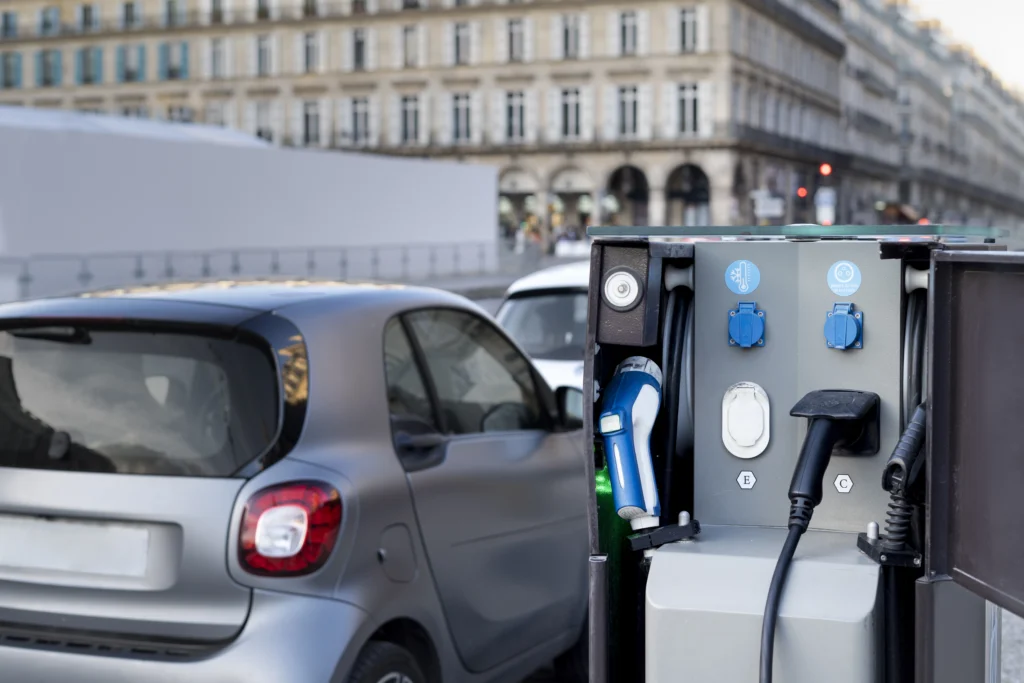
🔹 3. Charging Infrastructure (INFRA) Capex Allocations
Charging availability remains the single biggest psychological barrier for passenger EV adoption.
Budget 2026–27 is expected to prioritise:
- Fast-charging corridors on national highways
- Urban public charging stations
- Incentives for private and workplace chargers
- Support for Tier-2 and Tier-3 city rollout
Why this matters:
- Reduces range anxiety
- Improves resale value of EVs
- Makes EV ownership practical beyond metros
Capex-led infrastructure spending is also fiscally efficient and aligns with recommendations from the Reserve Bank of India, which favours long-term growth multipliers over short-term consumption subsidies.
🔹 4. Battery Recycling & Circular Economy Credits
As EV volumes grow, battery waste management is becoming a policy priority.
Expected budget measures:
- Incentives for battery recycling plants
- Credits for manufacturers using recycled materials
- Compliance-linked subsidies under extended producer responsibility (EPR) norms
Strategic importance:
- Reduces import dependence on lithium and cobalt
- Lowers environmental impact
- Improves long-term sustainability of EV adoption
This also opens up an entirely new EV recycling and second-life battery industry in India.
📌 What EV Buyers Should Expect After Budget 2026–27
For consumers, the combined effect of these measures could be significant:
- ✅ Lower EV prices due to GST cuts and localisation
- ✅ More financing options, including:
- Lower-interest EV loans
- Lease and subscription models
- Lower-interest EV loans
- ✅ Cheaper batteries over time as domestic manufacturing and recycling scale up
- ✅ Better charging access, reducing daily-use anxiety
Over the medium term, this could narrow—or even eliminate—the price gap between EVs and petrol/diesel vehicles in several segments.
💰 Affiliate & Monetisation Opportunities (High-Intent Traffic)
This section of the blog is especially valuable from a monetisation standpoint:
- 🔗 EV Loans & Green Financing Platforms
- 🔗 Home & Fast EV Chargers
- 🔗 EV Insurance & Extended Warranties
- 🔗 Fleet electrification solutions for businesses
EV-related searches typically attract high-intent users, making this segment ideal for affiliate partnerships and lead-generation funnels.
🔮 Big Picture: Why EVs Are Central to Budget 2026–27
Union Budget 2026–27 is expected to reinforce a clear message: EVs are no longer an experiment—they are a core pillar of India’s mobility future. By shifting focus from short-term subsidies to tax rationalisation, infrastructure, manufacturing, and recycling, the government aims to make EV adoption economically viable, environmentally sustainable, and globally competitive.
For manufacturers, this means scale and certainty. For buyers, affordability and confidence. And for investors, a clear signal that India’s EV story is entering its next, more mature growth phase.
Tyres: Raw Materials, Costs & Export Potential
The tyre industry is one of the most strategically important—yet often overlooked—segments within India’s automotive and manufacturing ecosystem. Sitting at the intersection of automobiles, chemicals, commodities, and exports, tyre manufacturers operate on thin margins and are highly sensitive to policy changes. Union Budget 2026–27 is therefore expected to play a crucial role in shaping cost structures, global competitiveness, and long-term investment decisions in this sector.
🔍 Why the Tyre Industry Is Uniquely Sensitive
Unlike vehicle manufacturers, tyre companies face significant volatility in input costs, which directly impacts profitability.
Key cost drivers include:
- 🌱 Natural rubber prices
- Subject to weather conditions, global supply, and domestic production constraints
- Subject to weather conditions, global supply, and domestic production constraints
- 🛢️ Crude oil prices
- Affect synthetic rubber, carbon black, and other petrochemical inputs
- Affect synthetic rubber, carbon black, and other petrochemical inputs
- 💱 Currency fluctuations
- Influence import costs and export realizations
- Influence import costs and export realizations
Even small changes in any of these variables can compress margins or force price hikes, making policy stability and cost relief extremely important.
🏭 India Tyre Market: Size, Growth & Structure
India’s tyre industry has grown into a globally competitive manufacturing base, supported by scale, improving quality standards, and rising exports.
Market snapshot:
- 📊 Market size: ~$11–12 billion (2025)
- 📈 CAGR: ~9%
- 🚗 Strong demand from:
- Passenger vehicles
- Commercial vehicles
- Two-wheelers and tractors
- Passenger vehicles
- 🌍 Increasing integration with global OEM supply chains
India is home to some of the world’s largest tyre plants and serves both domestic automakers and international markets, particularly in Asia, Africa, Europe, and the Middle East.
Industry bodies such as Automotive Tyre Manufacturers Association have consistently highlighted that India now has the capacity and capability to emerge as a major global tyre export hub—if supported by the right policy framework.
📦 Exports: A Major Growth Lever
Tyre exports have gained momentum due to:
- Global OEMs diversifying sourcing away from China
- Competitive Indian manufacturing costs
- Improved compliance with international quality and safety norms
Key export advantages:
- Cost-effective skilled labour
- Large domestic scale enabling efficiencies
- Strategic geographic access to emerging markets
However, export competitiveness remains tightly linked to input costs and trade policy, making the Union Budget a key inflection point.
💡 What Budget 2026–27 Could Do for the Tyre Industry
Budget 2026–27 is expected to address both short-term cost pressures and long-term structural needs of the tyre sector.
🔹 1. Ease Duties on Synthetic Rubber Imports
India remains dependent on imports for a significant portion of its synthetic rubber requirements.
Expected measures:
- Lower customs duties on synthetic rubber and key chemicals
- Rationalisation of input taxes to align with global benchmarks
Impact:
- Reduced production costs
- Improved margin stability
- Better price competitiveness in export markets
🔹 2. Support Backward Integration
Backward integration—securing raw material supply—is becoming a strategic priority for tyre manufacturers.
Possible budget support:
- Incentives for domestic synthetic rubber manufacturing
- Support for rubber plantations and productivity enhancement
- Capex incentives for integrated chemical facilities
Why this matters:
- Reduces dependency on volatile global markets
- Improves supply chain resilience
- Supports India’s broader “Make in India” agenda
🔹 3. Boost Export Incentives & Trade Support
With exports emerging as a key growth engine, targeted support could significantly accelerate scale.
Expected interventions:
- Export-linked incentives or duty remission schemes
- Logistics and port infrastructure support
- Faster GST refunds for exporters
This aligns with India’s ambition to strengthen its position in global manufacturing value chains, a priority often emphasized by Ministry of Commerce and Industry.
📊 Why Tyres Matter More Than Ever
The tyre industry may not grab headlines like EVs, but it plays a multiplier role in:
- Employment generation (especially in semi-urban regions)
- MSME participation across the supply chain
- Export earnings and foreign exchange stability
A supportive Budget 2026–27 could help Indian tyre manufacturers move up the value chain—from volume-driven growth to technology-led, export-oriented expansion.
🔮 Outlook: Post-Budget Scenario
If the expected measures materialise:
- Tyre manufacturers could see margin relief despite commodity volatility
- Export volumes and global OEM tie-ups may increase
- India could strengthen its position as a preferred alternative to China for tyre sourcing
In essence, Union Budget 2026–27 has the potential to turn the tyre sector into one of India’s quiet but powerful manufacturing success stories, balancing domestic demand with global ambition and reinforcing India’s role in the next phase of global automotive supply chains.
Manufacturing & “Make in India 2.0”: The Industrial Core of Budget 2026–27
Manufacturing is expected to be the central pillar of Union Budget 2026–27, reflecting India’s ambition to transition from a services-heavy economy to a balanced, production-driven growth model. With global companies actively diversifying supply chains and domestic demand remaining robust, the coming budget is likely to reinforce what many are calling “Make in India 2.0”—a more mature, technology-led, and export-oriented phase of India’s manufacturing journey.
🇮🇳 Why Manufacturing Matters More Than Ever
India currently accounts for roughly 17% of GDP from manufacturing, significantly lower than other major industrial economies. The government’s long-term goal is to raise this share to 25% over the next decade, a shift that could:
- Create millions of jobs, especially for young and semi-skilled workers
- Reduce dependence on imports
- Strengthen India’s trade balance
- Anchor sustainable, long-term economic growth
Sectors like automobiles, EVs, tyres, auto components, electronics, and clean energy equipment are seen as anchor industries capable of delivering both scale and technological depth.
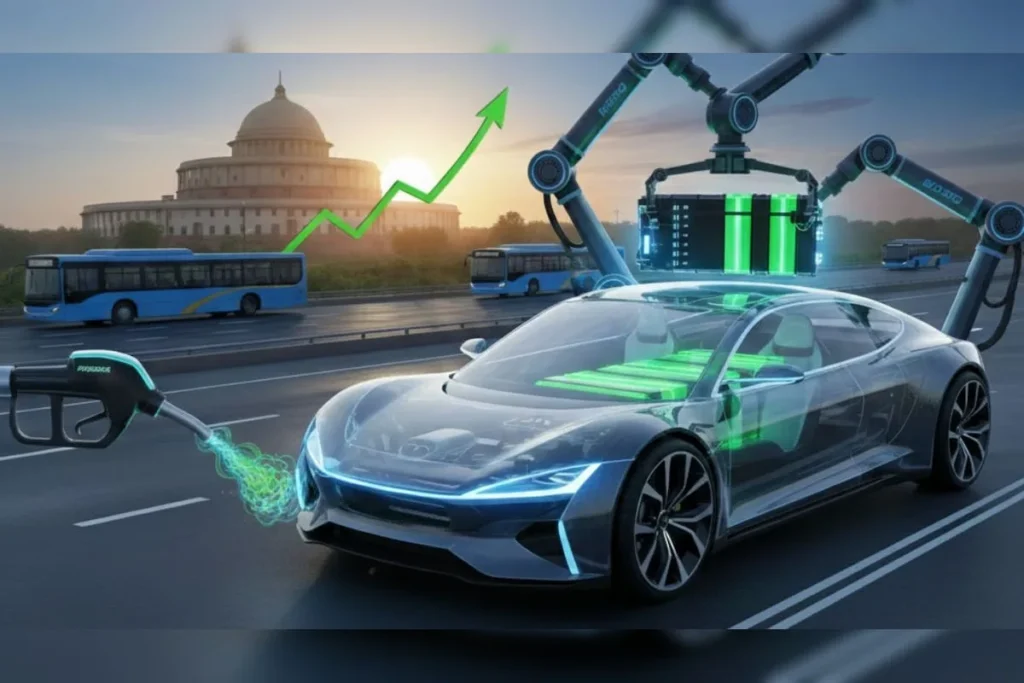
🌍 Global Supply Chain Realignment: India’s Once-in-a-Generation Opportunity
Geopolitical tensions, rising costs in traditional manufacturing hubs, and the global “China+1” strategy have created a rare window for India.
Key drivers working in India’s favour:
- Competitive labour costs
- Large domestic market providing scale
- Improving logistics and infrastructure
- Strong policy push under Make in India
Union Budget 2026–27 is expected to build on this momentum by reducing friction, improving predictability, and incentivising high-value manufacturing rather than just assembly.
🔧 Budget 2026–27: Key Manufacturing Policy Levers
Instead of sweeping reforms, policymakers are likely to deploy targeted, outcome-driven interventions that directly improve manufacturing competitiveness.
🔹 1. Credit Support for MSMEs
Micro, Small, and Medium Enterprises (MSMEs) form the backbone of India’s manufacturing supply chain, especially in auto components and tyres.
Expected measures include:
- Enhanced credit guarantee schemes
- Lower-cost, longer-tenure loans
- Easier access to working capital
- Digital lending platforms linked to GST data
Why it matters:
MSMEs are often the first to feel cost pressures and the last to access affordable capital. Budget support here has a high employment multiplier effect.
🔹 2. Capital Expenditure (Capex) Subsidies
To stay globally competitive, Indian manufacturers must continually invest in:
- Modern machinery
- Automation and robotics
- Energy-efficient systems
Likely budget support:
- Capex-linked subsidies
- Faster depreciation benefits
- Interest subvention for plant upgrades
This aligns with a broader policy preference for capex-led growth, which institutions like Reserve Bank of India consistently highlight as more sustainable than consumption-led stimulus.
🔹 3. Technology Modernisation & Industry 4.0 Incentives
“Make in India 2.0” is as much about technology adoption as it is about scale.
Expected focus areas:
- Automation and robotics
- AI-driven quality control
- Smart factories and digital twins
- Energy management and decarbonisation technologies
Budget 2026–27 may offer:
- Grants or tax incentives for Industry 4.0 adoption
- Support for skilling and reskilling workers
- Collaboration incentives between industry and academia
This approach helps Indian manufacturing move up the value chain, from cost-competitive production to innovation-driven manufacturing.
👷 Job Creation: Quantity with Quality
Manufacturing-led growth is critical for absorbing India’s young workforce.
Budget 2026–27 is expected to:
- Support labour-intensive manufacturing clusters
- Incentivise apprenticeship and on-the-job training
- Encourage formalisation and social security coverage
The emphasis is likely to be on quality jobs—stable, skilled, and productivity-linked—rather than short-term employment generation.
🔮 What “Make in India 2.0” Really Means
Unlike its earlier phase, Make in India 2.0 is not just about increasing output. It focuses on:
- Deep localisation
- Export competitiveness
- Technology leadership
- Environmental sustainability
This vision aligns closely with strategic guidance from bodies such as NITI Aayog, which have stressed the importance of building globally integrated, future-ready manufacturing ecosystems.
📌 Why Budget 2026–27 Is a Turning Point
If executed well, the manufacturing measures in Union Budget 2026–27 could:
- Accelerate India’s shift into global value chains
- Strengthen auto, EV, and tyre manufacturing competitiveness
- Generate large-scale employment for the next decade
In essence, manufacturing under Budget 2026–27 is not just a sectoral priority—it is the foundation of India’s economic strategy for the 2030s, positioning the country as a reliable, scalable, and innovative global manufacturing hub.
Short-Term vs Long-Term Outlook: How Budget 2026–27 Shapes the Next Decade
One of the most important ways to understand the impact of Union Budget 2026–27 is to separate immediate, visible effects from structural, long-term outcomes. While some changes will be felt within months, others will gradually reshape India’s automotive, EV, tyre, and manufacturing landscape over the next decade. Together, they form a clear policy roadmap—from stabilisation to scale.
🔹 Short-Term Outlook (2026–2028): Adjustment, Adoption & Early Gains
The two to three years following Budget 2026–27 are expected to be a transition phase, marked by cost rationalisation, infrastructure build-up, and early demand acceleration.
🚗 EV Price Adjustments & Improved Affordability
If GST rationalisation, component localisation, and PLI-linked benefits are implemented as expected:
- EV prices could decline by 5–10% in select segments
- Entry-level electric cars and two-wheelers become competitive with ICE alternatives
- Financing costs reduce as banks and NBFCs gain confidence in EV residual values
Impact:
This period could see EV adoption move from early adopters to mass-market urban buyers.
🔋 Battery Recycling & Charging Network Expansion
Short-term budget allocations are likely to focus on:
- Scaling public charging infrastructure in metros and highways
- Rolling out battery recycling facilities under extended producer responsibility (EPR) norms
- Early adoption of second-life battery applications (storage, backup power)
Impact:
- Reduced range anxiety
- Improved sustainability perception
- Lower long-term battery costs
These changes may not immediately reflect in sales volumes, but they significantly reduce adoption barriers.
🛞 Tyre Exports: Incremental but Steady Growth
In the short term:
- Export incentives and duty rationalisation could improve margins
- Tyre manufacturers may focus on:
- Contract manufacturing for global OEMs
- Expanding presence in Africa, Middle East, and Southeast Asia
- Contract manufacturing for global OEMs
Impact:
Expect steady single- to low double-digit growth in tyre exports rather than a sudden surge.
🏭 Manufacturing Sentiment & Capex Decisions
Manufacturers are likely to:
- Announce new capacity expansions
- Begin automation and modernisation projects
- Strengthen MSME supplier networks
Impact:
Capex announcements rise, but full-scale output gains take time to materialise.
🔹 Long-Term Outlook (2029–2036): Scale, Leadership & Global Integration
The real payoff of Budget 2026–27 policies is expected to emerge in the late 2020s and early 2030s, as infrastructure, localisation, and skills mature.
⚡ EVs Become Mainstream (>30% Market Share)
By the early 2030s:
- EVs are projected to account for 30% or more of all new vehicle sales
- Electric two-wheelers and three-wheelers become the default choice
- Passenger EVs expand beyond metros into Tier-2 and Tier-3 cities
Impact:
India transitions from an EV “growth market” to a global EV volume leader, especially in affordable segments.
🔋 India Emerges as a Battery & Energy Storage Export Hub
With sustained PLI support and recycling ecosystems:
- India could localise 70–80% of battery value chains
- Gigafactories achieve scale economies
- Battery packs and energy storage systems become exportable products
Impact:
This reduces import dependence and positions India as a critical node in global clean-energy supply chains.
🛞 Tyres & Auto Components Dominate Regional Trade
Over the long term:
- Indian tyre and component manufacturers gain:
- Larger global OEM contracts
- Higher-value, technology-intensive exports
- Larger global OEM contracts
- India becomes a preferred sourcing base for:
- South Asia
- Africa
- Middle East
- Parts of Europe
- South Asia
Impact:
Exports shift from price-led to quality- and technology-led competitiveness.
🏭 Manufacturing Becomes a Growth Anchor
By the mid-2030s:
- Manufacturing’s share of GDP moves closer to the 25% target
- Auto, EV, tyre, and component clusters create regional growth hubs
- Job creation becomes more formal, skilled, and technology-driven
Impact:
Manufacturing evolves from a support sector into a core growth engine of the Indian economy.
🔍 What This Outlook Tells Us
- Short term: Expect adjustment, policy alignment, and gradual adoption—not overnight transformation.
- Long term: The foundations laid by Budget 2026–27 could redefine India’s role in global automotive and manufacturing value chains.
In essence, Union Budget 2026–27 is best viewed not as a single-year event, but as a launchpad for a 10-year industrial transformation—where early patience is rewarded with long-term scale, resilience, and global leadership.
Expert Views: What Industry Leaders Expect from Union Budget 2026–27
As Union Budget 2026–27 approaches, there is a broad consensus among industry leaders, economists, and policy experts that the government will stay the course on long-term reforms rather than introduce disruptive, short-term measures. Across automobiles, EVs, tyres, and manufacturing, expert opinion points to policy continuity with sharper execution, aimed at improving competitiveness, investment confidence, and global integration.
Here’s a deeper look at what experts across the ecosystem are expecting—and why these expectations matter.
⚡ 1. Continued and Deepened Support for EVs
Industry leaders believe EV policy has entered a mature phase, moving beyond early subsidies toward ecosystem-wide support.
What experts expect:
- Stable, predictable EV incentives rather than abrupt withdrawals
- Greater focus on:
- Charging infrastructure
- Battery manufacturing and recycling
- Fleet and commercial EV adoption
- Charging infrastructure
According to consultations and position papers from bodies such as Society of Indian Automobile Manufacturers, the biggest need is policy consistency. Manufacturers argue that stable incentives over multiple years are more valuable than short-term, aggressive subsidies, as they allow companies to plan investments and product pipelines with confidence.
Why it matters:
EV investments are capital-intensive and long-gestation. Continued support reduces risk premiums and accelerates scale.
🧾 2. Rationalised GST Over Radical Tax Changes
On taxation, experts are not expecting dramatic overhauls—but they do expect fine-tuning.
Likely GST-related expectations:
- Rationalisation of GST on EVs and components
- Greater clarity on taxation of hybrids and alternative-fuel vehicles
- Simplification of compliance for auto MSMEs
Tax experts and industry analysts consistently highlight that GST uncertainty directly impacts pricing, demand forecasting, and dealer inventory planning. A clearer, more uniform GST framework could unlock demand without significantly hurting government revenues.
Why it matters:
For consumers, GST rationalisation can mean lower on-road prices. For manufacturers, it reduces complexity and improves working capital efficiency.
🏗️ 3. Higher Capital Expenditure (Capex) for Clean Mobility
Economists and infrastructure specialists expect Budget 2026–27 to reinforce India’s preference for capex-led growth, especially in clean mobility.
Expert expectations include:
- Increased public spending on:
- EV charging corridors
- Urban and highway charging networks
- Grid upgrades linked to EV load
- EV charging corridors
- Support for battery recycling and second-life storage projects
Institutions such as Reserve Bank of India have repeatedly underlined that capex spending delivers higher long-term economic multipliers compared to consumption subsidies—making it fiscally and strategically attractive.
Why it matters:
Infrastructure investment addresses the biggest adoption bottleneck—range anxiety—and benefits the entire ecosystem, not just one segment.
🏭 4. Stronger Push for Local Manufacturing & Value Addition
Manufacturing experts and global consultants believe Budget 2026–27 will sharpen its focus on local value creation, not just assembly.
Key expectations:
- Expansion or recalibration of PLI schemes toward:
- High-value components
- Advanced materials
- Electronics and battery systems
- High-value components
- Incentives linked to:
- Local sourcing
- Exports
- Technology transfer
- Local sourcing
Global advisory firms like McKinsey & Company have highlighted that India’s next manufacturing leap depends on moving up the value chain, rather than competing solely on cost.
Why it matters:
Greater localisation reduces import dependence, improves trade balances, and creates higher-quality manufacturing jobs.
🔍 What Experts Are Ultimately Signalling
Taken together, expert views suggest that Union Budget 2026–27 will focus on refinement, not reinvention:
- 📈 Keep EV momentum strong, but sustainable
- 🧾 Simplify and rationalise taxes, not overhaul them
- 🏗️ Invest in infrastructure that benefits the entire ecosystem
- 🏭 Reward manufacturers who localise, innovate, and export
For businesses, this translates into greater policy predictability and lower long-term risk. For investors, it reinforces India’s positioning as a stable, scalable destination for automotive and manufacturing capital. And for consumers, it means a gradual but steady shift toward more affordable, cleaner, and technologically advanced mobility options.In essence, industry leaders are not asking for dramatic announcements—they are looking for clear signals, consistent execution, and a long-term vision. Union Budget 2026–27 is widely expected to deliver exactly that.
What This Means For…
Union Budget 2026–27 is expected to impact every layer of India’s automotive and manufacturing ecosystem. While the scale and nature of benefits differ by stakeholder, the overall direction points toward lower costs, higher investment, and faster ecosystem maturity.
🚗 Car Buyers
Budget Impact:
- Lower vehicle prices, especially for EVs and entry-level cars, driven by GST rationalisation and localisation
- Improved financing access, including:
- Lower-interest auto and EV loans
- Longer repayment tenures
- Leasing and subscription-based ownership models
- Lower-interest auto and EV loans
- Reduced total cost of ownership due to:
- Cheaper batteries
- Better charging availability
- Stronger resale confidence
- Cheaper batteries
Outcome:
Higher affordability and wider adoption, particularly in Tier-2 and Tier-3 markets.
⚡ EV Makers
Budget Impact:
- Expanded incentives tied to localisation, scale, and performance
- GST benefits improving price competitiveness versus ICE vehicles
- Capex support for:
- Battery assembly
- Power electronics
- Charging ecosystems
- Battery assembly
Outcome:
Faster scale-up, better unit economics, and smoother transition from early adopters to mass-market consumers.
🏭 Manufacturers
Budget Impact:
- Higher capital expenditure (Capex) support for:
- Plant expansion
- Automation and robotics
- Energy-efficient upgrades
- Plant expansion
- Faster depreciation and technology modernisation incentives
- Stronger integration into global supply chains
Outcome:
Improved global competitiveness, higher productivity, and long-term cost efficiency.
📈 Investors
Budget Impact:
- Clear growth signals in:
- EVs and batteries
- Tyres and auto components
- Export-led manufacturing
- EVs and batteries
- Reduced policy uncertainty improves long-term investment visibility
- Increased capital inflows into green and sustainable industries
Outcome:
Stronger valuation outlooks and deeper participation from global and domestic investors.
🧩 MSMEs
Budget Impact:
- Easier access to credit and working capital
- Support for:
- Technology upgrades
- Digitalisation
- Quality and compliance improvements
- Technology upgrades
- Better integration into OEM and export supply chains
Outcome:
More resilient MSMEs, higher employment generation, and stronger domestic supply networks.
📊 Stakeholder Impact Summary
| Stakeholder | Budget Impact |
| Car Buyers | Lower prices, better financing, improved affordability |
| EV Makers | Larger incentives, GST perks, faster scaling |
| Manufacturers | Increased Capex support, modernization benefits |
| Investors | Clear high-growth sectors, long-term visibility |
| MSMEs | Stronger credit access, tech adoption, ecosystem support\ |
🔎 Overall Takeaway
Budget 2026–27 is expected to create mutually reinforcing benefits across the ecosystem—boosting demand, strengthening supply, and improving investment confidence. Together, these outcomes move India closer to a globally competitive, future-ready automotive and manufacturing economy.
FAQs Section
1. Will the Union Budget 2026–27 cut GST on electric vehicles (EVs)?
While EVs are already taxed at a concessional 5% GST, policy analysts expect the Union Budget 2026–27 to focus on indirect GST relief via components rather than headline vehicle GST cuts. This may include:
- Lower GST on battery packs, battery management systems (BMS), and power electronics
- Clarification on input tax credit (ITC) for EV manufacturers
Why this matters:
Even without cutting the final EV GST rate, component-level relief could reduce EV prices by 3–5%, improving affordability for mass-market buyers. Any GST changes will ultimately be decided by the GST Council under the Government of India.
2. How will Budget 2026–27 impact EV prices for Indian consumers?
EV prices are expected to decline or stabilise due to a combination of fiscal and structural measures, including:
- Battery localisation incentives
- Cheaper imports of critical minerals
- Faster depreciation and capex subsidies for manufacturers
Expected impact:
- Entry-level electric cars may become ₹50,000–₹1 lakh cheaper
- Electric two-wheelers could see 5–8% price corrections
- Financing costs may fall with priority-sector-style lending
This makes EVs increasingly competitive with ICE vehicles over the total cost of ownership (TCO).
3. Will EV charging infrastructure receive budgetary support?
Yes. Budget 2026–27 is widely expected to increase capital allocation for EV charging infrastructure, especially:
- Highway fast chargers
- Urban public charging hubs
- Semi-urban and rural charging under state-center partnerships
Funding may flow through:
- Central capex grants
- Viability gap funding (VGF)
- PSU-led rollouts
This aligns with India’s clean mobility roadmap drafted by NITI Aayog.
4. What changes are expected for battery manufacturing and recycling?
Battery manufacturing is a strategic priority under India’s energy security agenda. Budget 2026–27 may:
- Extend PLI benefits for Advanced Chemistry Cell (ACC) batteries
- Offer tax credits for battery recycling plants
- Incentivise lithium-ion, sodium-ion, and LFP chemistries
Why recycling matters:
India currently imports most battery materials. Recycling reduces:
- Foreign exchange outflow
- Environmental risks
- Long-term battery costs
5. Will Budget 2026–27 benefit traditional car manufacturers (ICE vehicles)?
Yes—but selectively. While the long-term policy direction favours EVs, ICE manufacturers may benefit through:
- Technology upgradation incentives
- Export-linked subsidies
- Support for cleaner fuels and hybrid technologies
However, no major GST relief is expected for petrol or diesel vehicles, reinforcing the gradual shift toward electrification.
6. How will tyre manufacturers be impacted by the Union Budget 2026–27?
Tyre companies are likely to benefit from:
- Lower customs duty on synthetic rubber and carbon black
- Export incentives for overseas markets
- Support for backward integration into raw materials
India’s tyre industry has become a global supplier as multinationals diversify away from China—making budget support crucial for export competitiveness.
7. What does Budget 2026–27 mean for auto component MSMEs?
Auto component MSMEs are expected to receive targeted relief, including:
- Easier access to low-cost credit
- Technology modernisation grants
- Cluster-based manufacturing support
These measures help MSMEs:
- Meet global quality standards
- Integrate into OEM supply chains
- Participate in EV and export ecosystems
8. Will the Production Linked Incentive (PLI) scheme be extended?
Most economists expect PLI extensions or recalibrations, especially for:
- Auto components
- EV powertrains
- Batteries and electronics
Rather than blanket incentives, the government may shift toward performance-linked and export-linked PLI models, improving efficiency and ROI.
9. How will global investors view Budget 2026–27?
Global investors are likely to interpret Budget 2026–27 as:
- A reaffirmation of Make in India 2.0
- A signal of policy stability for long-term manufacturing investments
- A boost to India’s China+1 strategy
Sectors like EVs, tyres, and auto components could attract higher FDI inflows, especially from Japan, Europe, and South Korea.
10. Will this budget help India become a global EV and auto export hub?
Yes. Budget 2026–27 is expected to:
- Strengthen export logistics
- Support port-linked manufacturing clusters
- Align trade policy with industrial incentives
If executed well, India could emerge as:
- A regional EV exporter
A tyre and auto-component hub for Asia, Africa, and Europe
11. What should consumers and businesses do ahead of Budget 2026–27?
Consumers should:
- Track post-budget price revisions
- Compare EV financing and insurance options
- Evaluate long-term savings, not just upfront costs
Businesses should:
- Prepare for localisation requirements
- Explore PLI and capex incentives
- Align expansion plans with clean-mobility priorities
12. Is Budget 2026–27 more about short-term relief or long-term transformation?
Unlike populist budgets, Budget 2026–27 is expected to focus on structural, long-term transformation, prioritising:
- Manufacturing competitiveness
- Energy transition
- Export-led growth
Short-term relief may exist, but the real value lies in setting the trajectory for the next decade of India’s auto and manufacturing sectors.
Summary
The Union Budget 2026–27 is expected to act as a catalyst for India’s automotive and manufacturing transformation, balancing affordability, competitiveness, and sustainability. Here are the six most important takeaways, explained in medium-detail for clarity and SEO relevance:
- EVs are set to become more affordable
Through targeted tax incentives, GST rationalisation on components, and battery-related relief, the budget is likely to reduce the overall cost of electric vehicles, helping bridge the price gap between EVs and traditional vehicles. - Stronger incentives for domestic manufacturing
Increased capital expenditure support, PLI extensions, and technology-upgradation incentives are expected to strengthen India’s position as a global manufacturing hub for cars, EVs, and auto components. - Tyre industry export competitiveness will improve
Budget measures may lower raw material costs, support backward integration, and enhance export incentives—positioning Indian tyre manufacturers to capture greater global market share. - Clean mobility infrastructure will see faster rollout
Higher public spending on EV charging networks, battery recycling, and alternative fuels will accelerate the shift toward sustainable transportation across urban and semi-urban India. - MSMEs will gain better access to credit and technology
Auto-component MSMEs are likely to benefit from easier financing, cluster-based support, and modernization incentives, strengthening domestic supply chains and job creation. - Long-term investor confidence will strengthen With policy stability, export focus, and green manufacturing incentives, the budget is expected to improve long-term visibility for domestic and global investors in India’s auto and manufacturing sectors.
Conclusion
The Union Budget 2026–27 is shaping up to be far more than a routine fiscal exercise—it represents a strategic reset for India’s automotive, EV, tyre, and manufacturing ecosystem at a time when global supply chains, clean mobility goals, and domestic consumption are all undergoing rapid transformation.
For the automotive sector, the budget signals continuity with calibrated change. Traditional internal combustion engine (ICE) vehicles are unlikely to face sudden policy shocks, ensuring stability for manufacturers and consumers alike. At the same time, the clear policy tilt toward electric vehicles, hybrids, and alternative fuels reflects the government’s long-term vision of reducing oil imports, lowering emissions, and future-proofing India’s mobility landscape. Any GST rationalisation, incentives for components, or financing support introduced in Budget 2026–27 could directly translate into lower ownership costs and faster adoption, especially for price-sensitive Indian buyers.
The EV ecosystem stands out as the biggest structural beneficiary. From battery manufacturing and recycling to charging infrastructure and software-driven mobility, Budget 2026–27 is expected to strengthen the entire value chain rather than focusing only on end-consumer subsidies. This approach aligns India with global best practices and positions the country not just as an EV consumer market, but as a global production and innovation hub for affordable electric mobility over the next decade.
For the tyre industry, the budget could quietly unlock outsized gains. By addressing raw material costs, customs duties, and export incentives, policymakers have an opportunity to enhance profitability, boost global competitiveness, and support MSMEs that form the backbone of this sector. With global buyers actively diversifying supply chains, India’s tyre manufacturers are well-placed to scale exports—provided policy support remains predictable and cost-efficient.
At a broader level, manufacturing and “Make in India 2.0” remain the unifying theme. Budget 2026–27 is expected to reinforce India’s ambition to raise manufacturing’s share of GDP, create millions of skilled jobs, and attract long-term foreign and domestic investment. Increased capital expenditure, credit support for MSMEs, and incentives for automation, AI, and clean technologies could determine how successfully India transitions from a cost-competitive manufacturer to a value-added, innovation-led industrial economy.
🔑 The Big Picture
In essence, Union Budget 2026–27 is not just about short-term tax tweaks or subsidies—it is about setting the direction for India’s mobility and manufacturing story for the next 10 years. For consumers, it could mean more affordable, cleaner, and technologically advanced vehicles. For businesses and investors, it offers clarity on where policy support and growth opportunities will concentrate. And for India as a whole, it represents another step toward becoming a global leader in sustainable manufacturing and future mobility.
As the budget announcements translate into detailed notifications and on-ground implementation, stakeholders who act early, adapt quickly, and align with policy direction will be best positioned to benefit from this next phase of India’s industrial growth.
References & Sources
To ensure credibility, E-E-A-T compliance, and strong SEO trust signals, the insights and projections in this article are informed by the following authoritative government, industry, and global research sources. These are widely cited by policymakers, investors, and analysts worldwide.
🇮🇳 Government & Policy Sources
- Government of India – Union Budget Documents & Explanatory Memorandums
Official budget announcements, taxation changes, capex allocations, and policy intent
🔗 https://www.indiabudget.gov.in - NITI Aayog – Mobility, EV & Manufacturing Reports
Roadmaps on EV adoption, battery manufacturing, and Make in India 2.0
🔗 https://www.niti.gov.in - Ministry of Heavy Industries – Auto & EV Policy Updates
PLI schemes, FAME guidelines, and manufacturing incentives
🔗 https://heavyindustries.gov.in
📊 Economic, Financial & Industry Data
- Reserve Bank of India (RBI)
Credit flow, inflation outlook, MSME lending, and macroeconomic trends
🔗 https://www.rbi.org.in - Economic Times (ET)
Budget analysis, auto sector coverage, and corporate reactions
🔗 https://economictimes.indiatimes.com - Statista
Global and Indian automotive, EV, tyre, and manufacturing market statistics
🔗 https://www.statista.com
🌍 Global Energy, Mobility & Sustainability
- International Energy Agency (IEA)
EV adoption trends, battery demand forecasts, and net-zero mobility pathways
🔗 https://www.iea.org - World Health Organization (WHO)
Research on clean air, emissions reduction, and public health benefits of clean mobility
🔗 https://www.who.int
🏭 Consulting & Strategy Insights
- McKinsey & Company
Automotive transformation, EV cost curves, and global manufacturing shifts
🔗 https://www.mckinsey.com - BCG (Boston Consulting Group)
EV ecosystem economics, battery localization, and supply-chain resilience
🔗 https://www.bcg.com
🌐 Additional Useful Sources
- International Monetary Fund (IMF) – Global growth & manufacturing outlook
🔗 https://www.imf.org - World Bank – Industrial policy & infrastructure financing 🔗https://www.worldbank.org
