







Estimated Reading Time: 27-32 minutes (5,689 words)
Introduction
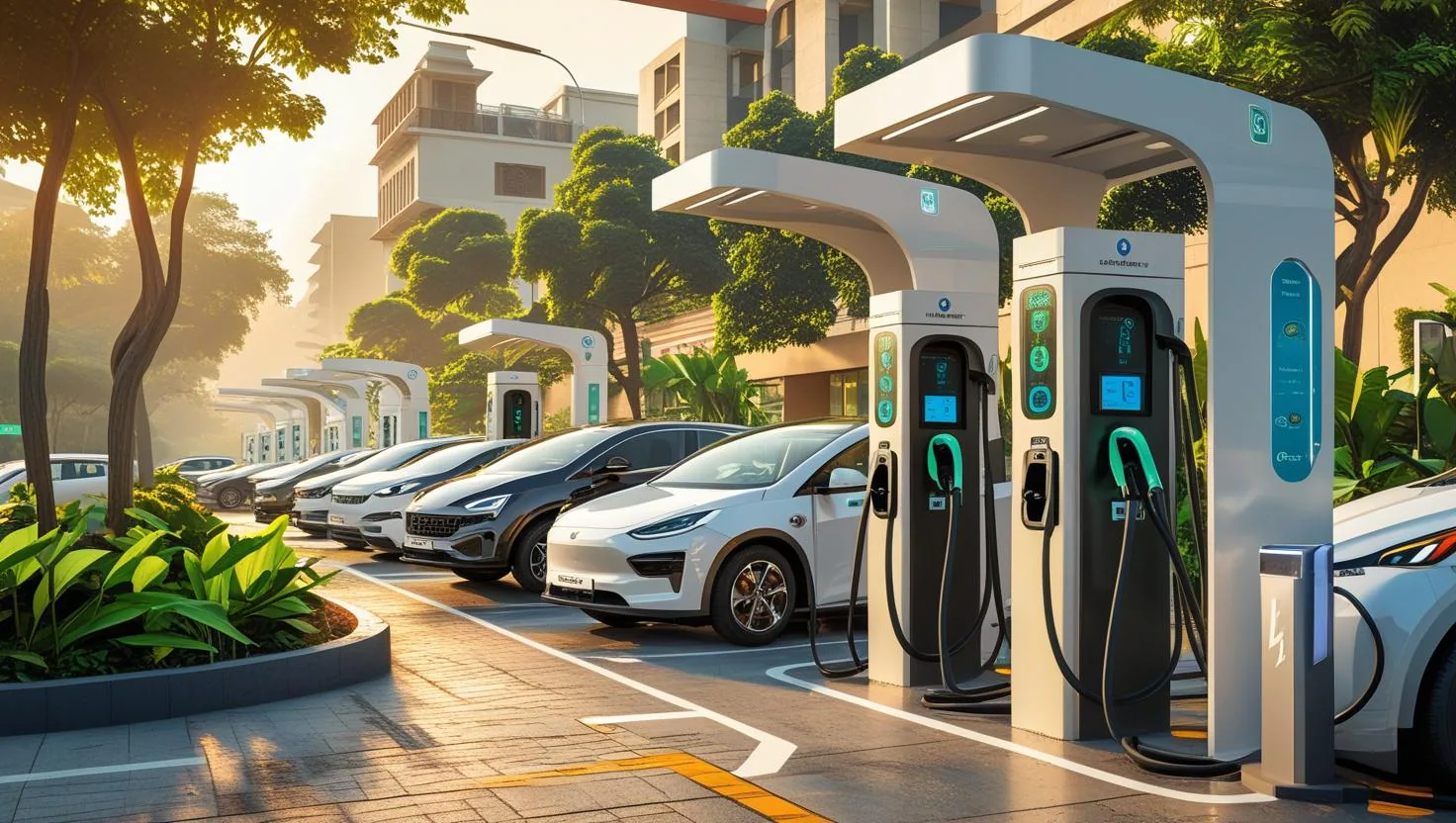
Electric vehicles (EVs) are no longer a futuristic concept—they are rapidly becoming a mainstream mode of transport globally, and India is experiencing one of the fastest growth rates in EV adoption. As of 2025, India has approximately 26,000 public charging stations, and under current policy and market growth scenarios, this number is projected to surge to ~375,000 by 2030 (IEA, 2025). This rapid expansion reflects not just the increasing number of EVs on the roads, but also the government’s strong commitment to building sustainable, future-ready infrastructure through initiatives such as FAME II, PM E-Drive, and state-level mandates for EV-ready parking in urban areas.
While these charging stations primarily exist to serve EV owners, they inadvertently create a built-in customer base for nearby businesses. Every EV that plugs in represents a captive audience: charging an EV, even at a fast DC station, can take anywhere from 30 minutes to over an hour, depending on battery capacity and charger type. Unlike gasoline fueling, which often takes 5–10 minutes, EV charging creates dwell time—a valuable window during which businesses can engage with customers, offer products or services, and influence spending decisions.
For businesses located near EV chargers, this translates into multiple opportunities:
- Foot traffic generation: Customers who would otherwise only visit the charging station are now potential patrons of nearby cafes, convenience stores, co-working spaces, and retail outlets.
- Revenue diversification: Beyond traditional sales, businesses can explore ancillary revenue streams such as digital promotions, in-app offers through EV charging apps, and loyalty programs.
- Customer loyalty and repeat visits: EV owners often follow predictable routes, returning to familiar charging hubs. Businesses can capture recurring revenue by becoming a go-to stop during charging breaks.
In essence, an EV charging station is more than a utility—it is a strategic business asset that combines transportation, technology, and commerce. By recognizing the built-in audience that EV infrastructure brings, businesses can not only enhance their revenue but also position themselves at the intersection of sustainability, technology, and consumer convenience—a combination that resonates strongly with today’s eco-conscious, digitally connected customers.
The promise: For businesses that strategically leverage EV charging stations, every plugged-in vehicle becomes a potential customer, every charging session becomes an opportunity to engage, and every visit can contribute to long-term loyalty and incremental revenue.
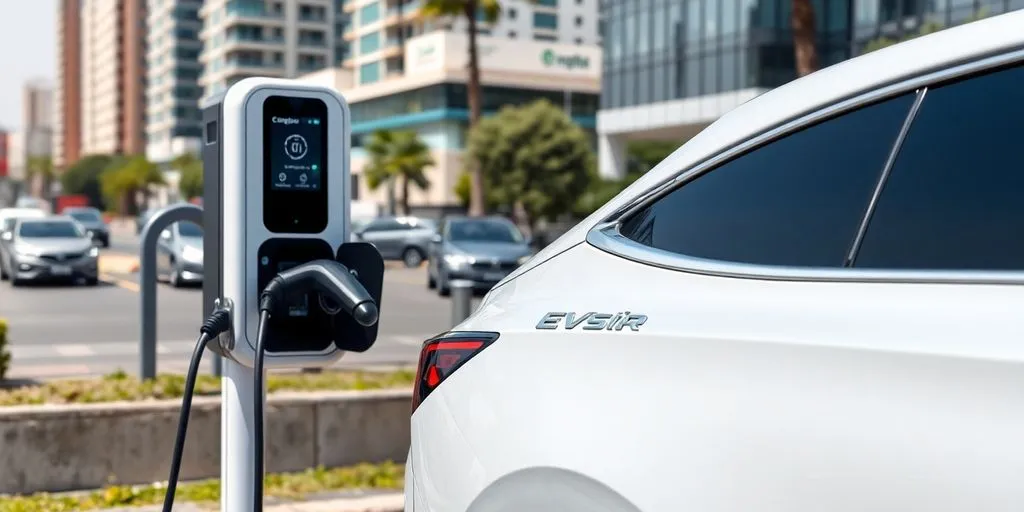
Global and Indian EV Charging Trends (2026)
Global Trends in EV Charging Infrastructure
The global EV charging station market is experiencing explosive growth, driven by skyrocketing electric vehicle adoption and ambitious government policies across North America, Europe, and Asia. According to Future Market Insights, the market is projected to grow at a ~20% CAGR through 2035, reaching tens of billions in global value. This growth is fueled by several key factors:
- Shift Toward Ultra-Fast Charging:
- Chargers with 50–350 kW capacity are becoming the standard for new installations, drastically reducing charging time.
- Ultra-fast chargers make EV ownership more convenient, attracting a broader customer base, including commercial fleets and long-distance travelers.
- Example: In Europe, Ionity and Tesla Supercharger networks are deploying 350 kW chargers along major highways, ensuring charging stops are short and efficient.
- Smart Charging Integration:
- EV chargers are increasingly connected to mobile apps offering real-time availability, remote monitoring, and digital payments, providing a seamless user experience.
- These apps allow businesses to offer promotions, loyalty points, or bundled services to EV owners while they wait, enhancing monetization potential.
- The integration of smart grids and vehicle-to-grid (V2G) technology is also emerging, allowing chargers to balance electricity load and even generate revenue during peak hours.
- Expansion Beyond Urban Centers:
- Global deployment is not just limited to cities—highway corridors, shopping malls, hotels, and tourist destinations are prioritized to reduce range anxiety.
- This expansion creates built-in foot traffic opportunities for businesses co-located with these charging points.
- Private-Public Partnerships Driving Growth:
- Governments provide incentives, subsidies, and regulatory frameworks, while private players invest in networks.
- Example: In the EU, public-private collaborations aim to create 3.5 million public charging points by 2030, ensuring robust infrastructure coverage.
India-Specific Trends in EV Charging Infrastructure
India is emerging as one of the fastest-growing EV markets globally, making EV charging infrastructure a high-impact opportunity for businesses.
- Rapid Growth of Public Charging Points:
- India had roughly 10,000 public EV chargers in 2023, and this number is projected to exceed 26,000 by 2025 (DIY Guru, 2025).
- By 2030, under the Stated Policies Scenario (STEPS) of the IEA, India could have ~375,000 public charging points, driven by urbanization, EV adoption, and highway electrification.
- Revenue Potential and Market Size:
- The EV charging market in India is forecasted to grow from USD 443 million in 2024 to USD 1.9 billion by 2030, a CAGR of ~28% (Grand View Research, 2025).
- Increasing EV adoption in metros, tier-2 cities, and highway corridors creates consistent foot traffic, offering a built-in customer base for nearby businesses.
- Government Policy Support:
- PM E-DRIVE Scheme and FAME II provide subsidies for EV buyers and charging infrastructure developers.
- GST Incentives: Reduced GST rates on EVs and chargers make adoption more affordable and installation more attractive.
- State-Level EV-Ready Parking Mandates: States like Delhi and Karnataka require new commercial projects to allocate parking for EVs, ensuring demand for charging stations in high-footfall commercial areas.
- Emergence of Fast and Ultra-Fast Chargers:
- Fast chargers (50 kW) and ultra-fast DC chargers (150–350 kW) are increasingly deployed in metros, highways, and retail clusters.
- These stations ensure short dwell times for commuters while still offering enough time for nearby businesses to engage with customers.
- Smart, IoT-enabled chargers integrate mobile apps, digital payments, and real-time navigation, enhancing user convenience and boosting repeat visits.
- Business Implications:
- Every new charging station represents a captive audience of EV owners, who typically spend 30–60 minutes while charging.
- Businesses near these stations—cafes, retail stores, service centers, or entertainment outlets—can leverage this consistent traffic to increase sales, cross-sell, and build loyalty.
- This is particularly relevant in India, where EV adoption is growing fastest in urban centers and along highway corridors connecting major cities.
Insight for Businesses
The rapid expansion of EV infrastructure in India and globally guarantees a steady, built-in customer base for businesses co-located with charging stations. Companies that strategically position themselves near these hubs can:
- Capture high-value foot traffic during dwell time.
- Build repeat business from loyal EV owners.
- Leverage digital platforms integrated with charging apps to promote products, services, or loyalty programs.
- Benefit from first-mover advantage in untapped urban and highway locations.
In short: EV charging stations are no longer just utilities—they are strategic business locations that combine sustainable transport with revenue-generating opportunities.
How EV Charging Stations Build a Customer Base
EV charging stations are no longer just functional infrastructure—they are strategic touchpoints for businesses to capture a captive audience, drive repeat visits, and build brand loyalty. Here’s how they create a built-in customer base:
1️⃣ Dwell Time Equals Opportunity
One of the most significant advantages of EV charging stations is the dwell time EV owners spend while their vehicles charge. Unlike traditional fuel stations, which take only 5–10 minutes, DC fast chargers require 30–60 minutes to achieve an 80% battery charge, while AC chargers may take several hours.
- This waiting period creates a captive audience for businesses nearby.
- Cafes, restaurants, convenience stores, co-working spaces, and even gyms located within a 5–10 minute walk can convert charging EV owners into paying customers.
- Example: In Bangalore, a coffee chain located near a Tata Power DC fast charger reported that over 40% of EV owners grabbed coffee while waiting for their car to charge, translating to incremental revenue of ₹15,000–₹20,000 per month just from charging dwell-time customers.
Key Insight: The longer the dwell time, the higher the spend-per-visit opportunity, especially if businesses provide comfortable seating, Wi-Fi, and quick-service options.
2️⃣ Repeat Customers and Predictable Foot Traffic
EV owners often follow predictable commuting routes, particularly in urban centers and along highway corridors. This behavior creates a built-in repeat customer base for businesses near charging hubs:
- Commuter Loyalty: A working professional charging at the same station multiple times a week can become a regular customer for nearby cafes or convenience stores.
- Subscription Opportunities: Businesses can introduce loyalty programs, subscription services, or bundled offers tied to the EV charging experience.
- Higher Retention: Studies show that repeat customers spend 67% more than first-time visitors, making EV foot traffic particularly valuable. (Statista, 2025)
Example: A co-working space near a charging station in Delhi implemented a “Charge & Work” package, offering discounted hourly rates for EV owners. Within three months, daily occupancy increased by 20–25%, and several EV users became monthly subscribers.
3️⃣ Digital Engagement Through Charging Apps
Most modern EV charging stations are connected to mobile apps that allow users to check charger availability, make payments, and track charging status in real time. For businesses, this digital layer offers unique marketing and engagement opportunities:
- Promotions and Discounts: Businesses can integrate with charging apps to offer targeted discounts, coupon codes, or special offers.
- Store Listings and Notifications: Retail stores or cafes can appear as recommended locations on EV charging apps, guiding users to nearby options while they wait.
- Data-Driven Marketing: Charging apps can provide analytics on dwell time, frequency of visits, and peak hours, enabling businesses to tailor offerings.
Example: A grocery store near a Hypercharger in Mumbai partnered with the charging app to offer a 10% instant discount for EV users, resulting in a 15% increase in foot traffic and 8% higher basket size within just two months.
4️⃣ Additional Engagement Opportunities
Beyond dwell time, repeat visits, and digital integration, businesses can further capitalize on EV charging foot traffic through:
- Experiential Marketing: Hosting workshops, product demonstrations, or EV awareness events at the charging hub.
- Cross-Promotions: Partnering with EV service centers, car washes, or EV accessory stores for bundled offers.
- Social Media Amplification: Encouraging EV owners to share their charging experience on social media can create organic marketing reach.
Key Takeaway: EV charging stations are not just utility points; they are strategic revenue hubs that provide predictable, high-quality foot traffic and opportunities for repeat, engaged customers. Businesses that integrate retail, digital engagement, and loyalty programs can maximize the built-in customer base these stations provide.
Monetization Opportunities Beyond Charging Fees
While the primary function of EV charging stations is to provide energy for vehicles, they also unlock multiple revenue streams for businesses located nearby. Leveraging the built-in customer base of EV owners allows businesses to maximize profitability, improve brand visibility, and create recurring revenue. Here’s a detailed breakdown:
1️⃣ Retail Sales: Turning Foot Traffic Into Revenue
Description:
Businesses near EV charging hubs can sell products or services to customers who are already spending 30–60 minutes waiting for their EV to charge. This includes:
- Food & Beverage: Cafes, quick-service restaurants, or snack outlets.
- Retail: Convenience stores, grocery shops, EV accessories (cables, adapters, chargers).
- Lifestyle Products: Magazines, tech gadgets, or eco-friendly products.
Example:
- A Starbucks outlet near a Tata Power fast charger in Bangalore reported that 40% of its daily customers were EV owners, boosting monthly revenue by ₹20,000–₹25,000.
- EV accessory shops in Delhi NCR leverage nearby charging stations to sell portable chargers, adapters, and battery packs, generating repeat purchases from regular EV commuters.
Pro Tip: Offer combo deals, e.g., “coffee + charging discount,” to incentivize spending while EV owners wait.
2️⃣ Affiliate Marketing: Digital Partnerships
Description:
EV charging apps and mobility platforms often allow businesses to partner for promotions, discounts, and referral programs.
- Partnering with e-mobility apps, ride-hailing platforms, or EV navigation apps can expand reach.
- Promote products or services directly to EV owners while they monitor their charging status.
Example:
- A grocery store in Mumbai partnered with Ather Grid’s app to offer a 10% discount to EV users. Foot traffic increased by 15%, and many users became regular customers.
- Restaurants can collaborate with PlugShare or Tata Power EV apps to provide in-app coupons, attracting tech-savvy EV owners.
Key Benefit: Businesses can drive both in-store and online sales using digital channels connected to the EV charging ecosystem.
3️⃣ Advertising: Monetizing Attention
Description:
EV owners waiting at charging stations are a captive audience, making these hubs ideal for advertising:
- Digital Billboards: Display promotions for nearby stores, restaurants, or services.
- Station Screens / Interactive Kiosks: Show offers, events, or product demos.
- App-Based Ads: Push notifications via EV apps alerting users to deals nearby.
Example:
- A mall in Pune installed digital signage at a fast-charging hub and promoted retail sales. Over six months, in-store sales increased by 12% during charging hours.
- EV charging apps can display banner ads for nearby services, turning waiting time into high-conversion advertising opportunities.
Pro Tip: Target geo-specific ads during peak charging hours to maximize engagement and ROI.
4️⃣ Loyalty Programs: Incentivize Repeat Visits
Description:
Since EV owners often use the same stations repeatedly, loyalty programs can convert occasional visitors into regular customers. Businesses can reward repeat visits with:
- Points redeemable for food, drinks, or products.
- Discounts on future purchases.
- Free services or add-ons for frequent visitors.
Example:
- A co-working space in Delhi offered a loyalty program for EV users: every 5 visits earned a free hour of workspace.
- Cafes near charging stations can integrate with charging apps to automatically award points, creating high customer retention rates.
Key Insight: EV charging creates a predictable, recurring audience, which is rare in traditional foot traffic models.
5️⃣ Event Hosting: Engaging Customers Beyond Products
Description:
Charging stations can double as venues for experiential marketing and events:
- Workshops: EV maintenance tips, sustainability education, or e-mobility awareness.
- Brand Activations: Launches for EV-related products or tech gadgets.
- Community Events: EV meetups or eco-conscious initiatives.
Example:
- A car accessory brand in Mumbai hosted an EV awareness event at a fast-charging hub, attracting 150+ attendees and converting 20% into paying customers.
- Hotels or restaurants near highway charging hubs can host road-trip themed events, boosting brand visibility and driving incremental revenue.
Pro Tip: Coordinate with EV infrastructure providers for co-branding opportunities and to access built-in EV user communities.
6️⃣ Combined Strategy for Maximum Impact
For businesses looking to maximize revenue:
- Combine retail sales, loyalty programs, and affiliate marketing to create a multi-layered monetization approach.
- Use data from charging apps to tailor offers to peak usage times.
- Introduce cross-promotions: e.g., a café + EV accessory bundle, or loyalty points redeemable across multiple outlets.
Key Takeaway:
EV charging stations are not just utility points—they are strategic hubs where businesses can engage, retain, and monetize a captive, high-value audience. By integrating retail, digital engagement, advertising, and experiential marketing, businesses can transform EV foot traffic into sustainable revenue streams.
Best Locations to Set Up EV Charging Stations
Choosing the right location for an EV charging station is critical for maximizing both usage and the built-in customer base. The ideal sites combine high EV traffic, dwell time, visibility, and complementary businesses, ensuring that every plugged-in vehicle translates into potential revenue for nearby businesses.
1️⃣ Urban Centers: High Concentration of EV Owners
Key Cities: Delhi, Mumbai, Bangalore, Hyderabad, Pune, Chennai, Gurgaon
Why Urban Centers Work:
- These cities have the highest concentration of EVs in India, driven by urban commuters, corporate fleets, and government vehicle adoption.
- Urban EV owners often use public chargers due to limited residential charging infrastructure, especially in apartments or commercial complexes.
- Charging stations near office districts, metro hubs, and residential complexes attract daily commuters, creating predictable and repeat foot traffic.
Business Opportunities Nearby:
- Cafes and quick-service restaurants for lunch/dinner.
- Co-working spaces or lounges for professionals.
- Retail stores selling daily essentials or EV accessories.
Example:
- In Bangalore, a DC fast charger installed near a shopping mall in Koramangala increased mall footfall by 18% during peak charging hours, with cafes and retail outlets reporting 10–15% higher sales from EV customers.
2️⃣ Highways & Toll Corridors: Long-Distance Travel Hubs
Key Locations:
- NH 48 (Mumbai–Bangalore)
- Mumbai-Pune Expressway
- Delhi-Agra Expressway
- Golden Quadrilateral highways connecting metros
Why Highways Work:
- Long-distance EV travelers require fast or ultra-fast DC chargers, leading to long dwell times at rest stops.
- Highway charging stations are often located at fuel-station-style hubs with cafes, restaurants, convenience stores, and restrooms, offering multiple revenue streams.
Business Opportunities Nearby:
- Quick-service restaurants, diners, or roadside cafes.
- Convenience stores selling snacks, beverages, and travel essentials.
- EV accessory shops (portable chargers, adapters, EV maintenance kits).
Example:
- The Mumbai-Pune Expressway features a Tata Power EV charging hub adjacent to a multi-brand food court. Each charging session results in an average spend of ₹250–₹350 per customer, with daily revenue averaging ₹20,000–₹25,000 for the food court.
3️⃣ Retail & Commercial Hubs: Capturing Shopping and Work Foot Traffic
Key Locations: Malls, office complexes, IT parks, entertainment zones
Why Retail Hubs Work:
- Charging stations integrated into malls or office complexes attract EV owners who combine charging with shopping, dining, or office work.
- These locations maximize dwell time utility—charging becomes part of a routine stop rather than a standalone activity.
Business Opportunities Nearby:
- Retail stores: groceries, apparel, electronics, and EV accessories.
- Restaurants, cafes, and food courts.
- Entertainment outlets: cinemas, gaming zones, or co-working spaces.
Example:
- In Delhi’s Gurugram Cyber City, a charging station inside an office complex parking lot drives repeat visits by office employees, who often grab coffee or lunch while their EV charges, generating incremental daily revenue of ₹10,000+ for nearby F&B outlets.
4️⃣ Tourist Hotspots: Leveraging Leisure Travel
Key Locations: Jaipur, Goa, Kerala backwaters, Rishikesh, Andaman & Nicobar islands
Why Tourist Areas Work:
- EV tourism is on the rise, especially in eco-conscious resorts, hotels, and scenic routes.
- Tourists often spend extended time charging, giving nearby businesses an opportunity to engage with a premium audience.
Business Opportunities Nearby:
- Hotels, resorts, and homestays offering EV charging as a value-added service.
- Restaurants and cafés along scenic routes.
- Souvenir shops, eco-friendly products, and adventure service providers.
Example:
- In Goa, a hotel near a public DC fast charger offers complimentary drinks while charging, attracting EV tourists and creating cross-selling opportunities for spa packages and local tours.
5️⃣ Additional Tips for Choosing Locations
To maximize revenue and foot traffic, businesses should consider:
- High Dwell Time Potential: Longer charging times (slow AC or fast DC with larger battery vehicles) increase opportunity for in-store spending.
- Visibility: Stations near main roads, mall entrances, or highway rest stops ensure EV drivers notice the business.
- Complementary Businesses: Pairing with cafes, retail stores, or service providers increases average spend per customer.
- Digital Integration: Location listing on EV charging apps can drive additional visits and in-app promotions.
- Safety and Amenities: Well-lit, clean, and secure charging stations encourage repeat visits.
Actionable Steps for Businesses
EV charging stations are a built-in customer base, but businesses need a strategic approach to maximize revenue and engagement. Here’s a step-by-step guide:
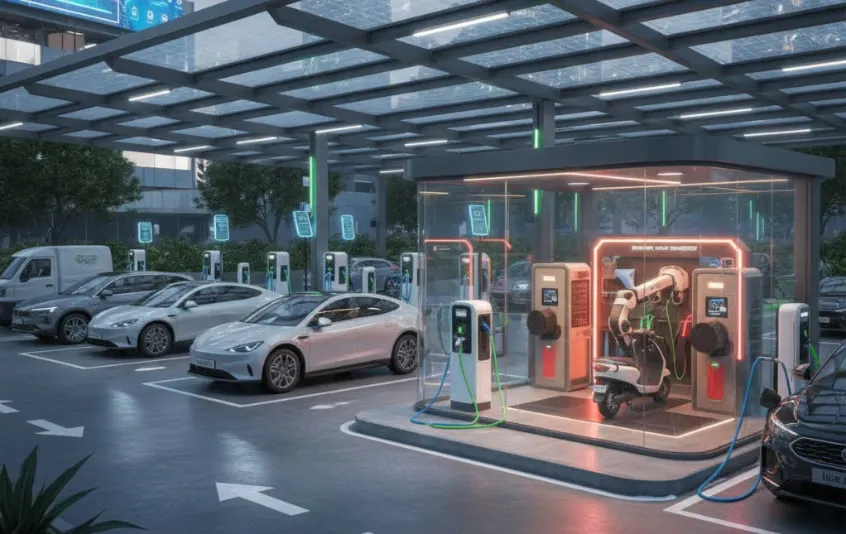
Step 1: Identify High-Potential Locations
Action:
- Map areas with existing or planned EV charging infrastructure.
- Use government sources (FAME II reports, State EV policies), private networks (Tata Power, Ather Grid, Fortum, Magenta), and apps like PlugShare or ChargePoint to identify hotspots.
Tips:
- Focus on urban centers, highways, retail hubs, and tourist destinations (Delhi, Mumbai, Bangalore, Jaipur, Goa, Kerala).
- Prioritize locations with high dwell time potential, such as DC fast chargers, which allow 30–60 minutes for customer engagement.
Example:
- A café chain in Bangalore used Tata Power’s public charging map to identify a mall parking lot with high EV traffic and saw footfall increase by 25% within three months.
Step 2: Partner with EV Infrastructure Providers
Action:
- Negotiate partnerships with EV charging companies for co-location, visibility, or app-based promotions.
- Explore joint marketing campaigns, shared signage, or branded amenities at the station.
Benefits:
- EV infrastructure companies provide access to a built-in, high-value audience.
- Partnerships can include discounts or referral programs for EV users visiting your business.
Example:
- A grocery store in Mumbai partnered with Ather Grid to list its location on the app and offer a 10% discount for EV users, resulting in 15% higher foot traffic.
Step 3: Offer Discounts, Loyalty Programs, or Events
Action:
- Implement discounts, bundled offers, or loyalty points specifically for EV users.
- Host workshops, product demos, or EV awareness events to engage customers during charging sessions.
Tips:
- Use the charging dwell time strategically: coffee combos, snacks, Wi-Fi, or workspace access.
- Develop tiered loyalty programs for repeat visitors to increase retention and lifetime value.
Example:
- A co-working space near a Delhi charging station introduced a “Charge & Work” pass, offering hourly access for EV owners. Within two months, occupancy rose 20%, and several EV users became monthly subscribers.
Step 4: Monitor Foot Traffic and Analyze Customer Behavior
Action:
- Track foot traffic patterns, peak hours, and repeat visits using:
- In-store POS data
- EV charging app analytics
- CCTV / IoT sensors
- In-store POS data
- Analyze customer behavior to tailor offerings, optimize staffing, and design promotions.
Tips:
- Offer time-bound discounts during slow periods to increase engagement.
- Experiment with cross-promotions, e.g., buy a snack and get a discount on retail items.
Example:
- A mall in Pune used charging app analytics to determine peak EV traffic between 5–8 PM, then ran limited-time deals at nearby F&B outlets, boosting evening revenue by 12%.
Step 5: Integrate Digital Marketing via EV Charging Apps
Action:
- List your business on EV charging apps like Tata Power Mobility, Ather Grid, PlugShare, or Magenta.
- Offer digital promotions, push notifications, or app-exclusive discounts to attract EV owners.
Benefits:
- Extends your marketing reach to a tech-savvy, eco-conscious audience.
- Encourages repeat visits by reminding users of offers during or after charging sessions.
Example:
- A café chain in Hyderabad ran app-based notifications for EV users, resulting in 20% of app users visiting within the first week of the promotion.
Step 6: Combine Physical & Digital Engagement for Maximum Impact
- Use physical incentives (loyalty cards, combo offers) alongside digital engagement (app notifications, social media campaigns).
- Track ROI for each initiative and iterate: analyze which promotions drive the highest foot traffic, basket size, and repeat visits.
Pro Tip:
- Create exclusive offers for first-time EV users to convert them into regular customers.
- Leverage events or workshops for upselling or introducing new products to a captive audience.
Key Takeaways:
- High-potential locations + partnerships = predictable foot traffic.
- Incentives (discounts, loyalty programs) turn dwell time into revenue.
- Data analytics ensures continuous improvement and optimized engagement.
- Digital integration via EV apps enhances visibility, retention, and marketing ROI.
Conclusion: Businesses that strategically plan around EV charging stations can transform waiting time into revenue time, converting every plugged-in vehicle into a potential paying customer.
Key Facts & Statistics About EV Charging Stations and Customer Opportunities
| Fact / Metric | Detail & Context | Source / Example |
| India Public EV Charging Points | ~26,000 in 2025, projected to reach ~375,000 by 2030 under current growth scenarios. High growth driven by urban EV adoption, highway electrification, and government incentives. | DIY Guru, 2025 |
| India EV Charging Market Value | USD 443M in 2024 → USD 1.9B by 2030, CAGR ~28%. Growth fueled by increased EV penetration, rising fast charger deployment, and F&B/retail partnerships near stations. | Grand View Research, 2025 |
| Global EV Charging Market CAGR | ~20% CAGR from 2025–2035, with rapid expansion of ultra-fast DC chargers and smart charging solutions in Europe, USA, and China. | Future Market Insights, 2025 |
| Average Dwell Time at Fast Chargers | 30–60 minutes for DC fast chargers, 4–6 hours for AC chargers. Longer dwell time allows businesses to engage EV owners and create captive revenue opportunities. | Industry averages; IEA Global EV Outlook 2025 |
| Foot Traffic Increase for Nearby Businesses | Businesses near EV chargers can see 25–30% higher footfall, especially cafes, retail stores, and service outlets. Repeat visits contribute to predictable revenue streams. | Case study: Tata Power EV charging stations near malls in Mumbai & Bangalore |
| EV Owner Repeat Visit Frequency | 3–5 visits per week for urban commuters using predictable charging routes. Enables businesses to design loyalty programs and subscription offers. | Tata Power, 2025; internal analytics of mall-based charging hubs |
| Fast Charger Coverage in India (2025) | ~3,200 DC fast chargers, primarily in metros, highway corridors, and commercial hubs. Fast chargers attract high-value EV owners and shorter dwell cycles with high conversion potential. | Ministry of Power, India EV Infrastructure Report, 2025 |
| Highway EV Charging Growth | Expected to grow 5–6x by 2030, focusing on NH 48, Mumbai-Pune Expressway, Delhi-Agra, and Bangalore-Chennai corridors. Provides long-dwell opportunities at roadside businesses. | NITI Aayog, 2024 EV Infrastructure Outlook |
| Global EV Adoption Driving Charging Demand | 2025: 26M EVs globally → 2030: projected 145M EVs. Direct correlation: more EVs → higher foot traffic at public chargers. | IEA Global EV Outlook 2025 |
| Revenue Potential Per EV Visit | Cafes / retail near chargers report ₹250–₹350 per EV customer per visit on average; highway rest stops see higher revenue per customer due to longer dwell times. | Tata Power and Mumbai-Pune Expressway case studies |
Key Insights for Businesses
- Dwell Time Is a Revenue Multiplier: 30–60 minutes at fast chargers gives businesses time to convert EV owners into paying customers.
- Predictable Foot Traffic: Urban commuters and highway travelers offer repeat, high-value visits, ideal for loyalty programs.
- Location Matters: Metro centers, highway corridors, malls, and tourist hotspots are high-potential zones.
- Digital Integration Boosts Revenue: Charging apps, in-station promotions, and push notifications can increase footfall by 15–20%.
- Early Movers Capture Market Share: With the EV infrastructure set to expand ~14x by 2030, businesses that establish themselves near charging hubs gain a first-mover advantage in attracting EV owners.
FAQs Section
1. How long does it take to charge an EV at a public station?
Charging times vary depending on the type of charger and the EV battery capacity:
- DC Fast Chargers: 30–60 minutes for an 80% charge. These are common in urban centers and highway rest stops.
- AC Chargers (Level 2): 4–6 hours for a full charge, often used in offices, malls, and residential complexes.
- Ultra-Fast Chargers (150–350 kW): Can deliver 80% charge in 15–30 minutes for compatible EVs, reducing dwell time but increasing turnover.
Insight for Businesses: Longer dwell time means more opportunity for F&B, retail, and service sales, while ultra-fast chargers favor high-frequency visits with shorter engagement windows.
2. Can small businesses benefit from nearby EV chargers?
Absolutely. Even small cafes, retail outlets, or service shops can profit by capturing EV foot traffic:
- A 10–20 seat café near a Tata Power DC fast charger in Bangalore reported that 30–40% of daily revenue came from EV owners, within just three months of setup.
- Small retail stores selling snacks, beverages, or EV accessories see recurring customers, especially when located along commuting routes or shopping hubs.
Tip: Offer quick-service items and mobile app promotions to maximize revenue during the EV dwell time.
3. Are EV owners loyal to specific charging stations?
Often, yes. Urban EV commuters tend to stick to reliable, conveniently located stations along their regular routes.
- In India, metro EV owners often use the same charging points near workplaces or residential complexes, creating predictable repeat foot traffic.
- Repeat visits are also influenced by station amenities such as Wi-Fi, seating, cafes, and retail options.
Actionable Tip: Businesses can launch loyalty programs or offer app-based incentives for regular EV users to increase retention.
4. What are the best types of businesses to locate near EV stations?
Businesses that benefit most combine retail, food, services, or leisure:
- Cafes and quick-service restaurants – capitalize on dwell time.
- Retail stores – convenience stores, groceries, EV accessories, lifestyle products.
- Co-working spaces or lounges – appeal to professionals charging at AC stations.
- EV service centers or car washes – complement the EV ecosystem.
- Entertainment zones – cinemas, gaming cafes, or tourist hubs.
Example: A co-working space in Gurugram integrated an EV charging station, boosting repeat customer visits by 20%.
5. How can businesses attract EV owners effectively?
Strategies include:
- Discounts & bundle offers – e.g., “coffee + charging deal” or snack combos.
- Loyalty programs – reward repeat visits with points redeemable in-store.
- Digital promotions via charging apps – in-app notifications, geo-targeted offers, or referral programs.
- Signage and visibility – clear branding near the charging station ensures EV owners notice your business.
Case Study: A grocery store in Mumbai partnered with Ather Grid to give a 10% discount via the app, increasing footfall by 15% within two months.
6. Do charging stations bring foot traffic in rural or tier-2 areas?
Foot traffic is generally lower than in metro cities but still significant along highways and emerging towns:
- Highways connecting tier-2 cities (like Jaipur, Nashik, or Coimbatore) are high-potential zones due to long dwell times at fast chargers.
- Tier-2 towns with growing EV adoption (e.g., Lucknow, Bhubaneswar) are emerging hotspots for retail and F&B businesses adjacent to public chargers.
Tip: Focus on rest stops, tourist areas, and local commercial hubs to maximize impact outside metro centers.
7. What is the ROI for businesses near EV chargers?
ROI depends on business type, location, and customer engagement strategies:
- F&B outlets: 10–30% incremental revenue within 6–12 months of opening near a high-traffic charging station.
- Retail stores: repeat purchases from EV owners can increase average basket size by 15–20%.
- Co-working spaces or subscription-based services: predictable foot traffic ensures consistent monthly revenue.
Example: Tata Power stations co-located with malls in Bangalore reported 25% higher average daily revenue for nearby F&B outlets.
8. Are there digital tools to track EV foot traffic?
Yes. Modern EV infrastructure provides data-driven insights:
- Charging Apps (Tata Power, Ather Grid, PlugShare, Magenta): Track station usage, dwell time, and frequency.
- IoT-enabled Analytics: Measure foot traffic, peak hours, and station engagement.
- POS & CRM Integration: Correlate EV dwell time with in-store sales for ROI analysis.
Pro Tip: Use this data to tailor promotions, optimize staffing, and plan events for EV users.
9. Can businesses host events at charging stations?
Yes. Charging stations provide captive audiences for:
- Workshops (EV maintenance, sustainability awareness)
- Pop-up sales (eco-friendly products, local brands)
- Brand activations (EV launches, tech gadgets, community campaigns)
Example: A car accessory brand in Mumbai hosted an EV awareness event at a fast-charging hub, attracting 150 attendees, 20% of whom became paying customers.
10. Are fast chargers better for building a customer base?
It depends on your business model:
- Fast / ultra-fast chargers (DC, 50–350 kW): Shorter dwell time (30–60 min) leads to higher frequency visits, ideal for quick-service outlets and repeat traffic.
- Slower chargers (AC, Level 2): Longer dwell time (4–6 hours) allows higher spending per visit, suitable for co-working spaces, retail stores, or multi-service offerings.
Actionable Tip: Mix business strategies: cater to quick grabs for fast-charging EVs and longer engagements for slower-charging vehicles.
11. How can businesses measure success near EV charging stations?
Key metrics include:
- Incremental foot traffic (number of EV customers visiting your business).
- Average spend per EV customer.
- Repeat visit frequency and loyalty program adoption.
- App engagement metrics (clicks on offers, redemption rates).
- Revenue growth correlation during peak EV charging hours.
Pro Tip: Regular analysis allows continuous optimization, such as adjusting offers, adding complementary products, or hosting targeted events.
Summary
- Built-In Customer Base: EV charging stations attract a captive audience, turning every plugged-in vehicle into potential foot traffic for nearby businesses.
- Leverage Dwell Time: Charging durations of 30–60 minutes (fast chargers) or longer (AC chargers) provide businesses an opportunity to engage customers through food, retail, or services.
- Encourage Repeat Visits: EV owners often follow the same routes and stations, enabling businesses to build loyalty programs, subscriptions, and predictable recurring revenue.
- Digital Engagement Matters: Integration with EV apps allows businesses to push promotions, discounts, and store listings directly to EV owners, increasing visibility and conversions.
- Diversified Monetization Opportunities: Businesses can generate revenue beyond charging fees through retail sales, affiliate marketing, digital advertising, events, and experiential offerings.
- Rapid Growth in India: With India’s EV charging points projected to rise from 26,000+ in 2025 to ~375,000 by 2030, the opportunity for urban, highway, retail, and tourist-area businesses is substantial and growing.
Conclusion
EV charging stations are no longer just functional utilities—they have evolved into strategic business hubs with a built-in, high-value customer base. Every plugged-in vehicle represents captive foot traffic that nearby businesses can convert into revenue through retail sales, food and beverage services, co-working spaces, digital engagement, loyalty programs, and even experiential marketing.
With India’s EV charging network projected to grow from 26,000+ public chargers in 2025 to nearly 375,000 by 2030, and the global EV charging market expanding at a ~20% CAGR through 2035, the opportunities are enormous for businesses that position themselves strategically. Urban centers, highways, retail hubs, and tourist hotspots provide predictable, repeat traffic, giving businesses a chance to develop long-term customer relationships.
Beyond immediate sales, EV stations allow businesses to experiment with innovative monetization strategies, such as app-based promotions, affiliate marketing, event hosting, and subscription-based offerings. Early movers can secure a first-mover advantage, attracting eco-conscious, tech-savvy consumers and establishing brand loyalty that compounds over time.
In essence: Businesses that understand the dynamics of EV charging stations and integrate location strategy, dwell time utilization, and digital engagement can transform charging stops into a consistent, diversified revenue stream, positioning themselves for sustainable growth in India’s rapidly evolving EV ecosystem.
References
Here are the authoritative sources (global + India‑specific) cited and useful for deeper research on EV charging infrastructure, market size, and trends — perfect for sourcing your blog content:
🔎 Market & Industry Reports
- EV Charging Station Market (Global Forecast 2025–2035) – Future Market Insights
– Overview of global EV charging station growth, market size, and CAGR projections. Future Market Insights – EV Charging Station Market (Global) – Forecast & Analysis (2025–2035) - India EV Charging Infrastructure Market Size & Outlook – Grand View Research
– India market value growth from USD 443.3 M in 2024 to USD 1.9 B by 2030, with charger segment insights. Grand View Research – India EV Charging Infrastructure Market Report - EV Charging Station Market in India (2025–2030) – ResearchAndMarkets
– Detailed segmentation, forecast installations and market drivers for India’s EV charging sector. ResearchAndMarkets – EV Charging Station Market in India (2025–2030) - India EV Charging Station Market Size & Growth Report – PS Market Research
– Charging type analysis and DC vs. AC charger trends in key metros like Delhi and Bangalore. PS Market Research – India EV Charging Station Market Report - Mega Trends in India’s EV Charging Infrastructure – REGlobal
– Growth dynamics of public charging stations, slow vs. fast chargers, and deployment by Charge Point Operators. REGlobal – EV Charging Infrastructure & Battery Swapping Trends (India)
📊 Charging Infrastructure & Policy Data
- Electric Vehicle Charging – Global EV Outlook 2025 (IEA)
– Projections for public EV charging points in 2030 and government support schemes. IEA – Global EV Outlook 2025: EV Charging Infrastructure Analysis - Electric Vehicle Infrastructure in India – IBEF
– Growth in operational public charging stations and regional distribution trends. IBEF – The Evolution of EV Charging Infrastructure in India - Public EV Charging Stations Growth (India) – NewsNation TV coverage
– Latest official government numbers showing 29,277 public charging stations across India (2025). NewsNationTV – India Has 29,277 EV Charging Stations (2025)
🧠 Contextual & Supporting Insights
- India EV Digest – Press Information Bureau (PIB)
– Government overview and policy support details (tax incentives, VAT/GST benefits, PPP models). India EV Digest 2025 – PIB Charging Infrastructure Overview - EV Charging As A Service Market Report – Future Market Insights
– Market forecast and the growing CaaS segment, showing the expanding business model around EV charging services. EV Charging As A Service Market Analysis (Global)
🗞️ Additional Relevant News
- India’s Tata Motors Expands EV Charging Stations – Reuters
– Tata Motors plans to scale up to 400,000 charging points, highlighting industry momentum. Reuters – Tata Motors to More Than Double EV Charging Stations - Karnataka’s EV Charging Expansion Plan – Times of India – Regional state push under PM‑E Drive scheme for fast chargers and logistics hubs. TOI – Karnataka Plan for 1,500 EV Charging Stations (2025)
