







Estimated Reading Time: 30-33 minutes (5,884 words)
Introduction
The global job market is undergoing its biggest transformation in decades.
The old career formula—get a degree, work for years in the same role, and retire safely—is breaking down. In 2026, degrees alone no longer guarantee employment, experience without continuous learning is rapidly losing value, and job roles are evolving faster than most professionals can keep up with.
Artificial Intelligence, automation, cloud computing, and digital platforms are not just changing jobs—they are rewriting job descriptions across every major industry, from finance and healthcare to marketing, manufacturing, education, and even government services.
According to the World Economic Forum’s Future of Jobs Report, nearly 60% of the global workforce will need to upskill or reskill by 2030 to remain employable. At the same time, millions of new roles are expected to emerge in high-growth areas such as:
- Artificial Intelligence & Data Analytics
- Healthcare & HealthTech
- Green energy & sustainability
- FinTech & digital finance
- Software, cloud, and cybersecurity
- Digital marketing, content, and creator economy
For India specifically, the challenge is even more urgent. With 10+ million new job seekers entering the workforce every year, competition is intense—and employers are increasingly shifting toward skill-based hiring instead of degree-based hiring. Recruiters today want proof of skills, real projects, and problem-solving ability, not just certificates.
Here’s the good news 👇
You do not need to spend thousands of rupees or dollars on expensive degrees or bootcamps to stay relevant—or even to switch careers.
In 2026, some of the best learning resources in the world are completely free, offered by:
- Global tech giants (Google, Microsoft, Meta, IBM)
- Top universities (IITs, MIT, Harvard, Stanford)
- Government-backed platforms in India (SWAYAM, Skill India, NPTEL)
If used strategically, these platforms can help you:
- Upgrade your current skill set
- Transition into a higher-paying or more future-proof role
- Re-enter the workforce after a career break
- Compete for global and remote job opportunities
What This Guide Will Help You Do
This comprehensive guide is designed for students, working professionals, career switchers, freelancers, and job seekers—especially those in India but applicable worldwide.
By the end of this article, you will clearly understand:
✅ Which skills matter most in 2026 and why employers are prioritizing them
✅ The best free learning platforms (India + global) that actually improve employability
✅ A step-by-step upskilling and reskilling roadmap you can follow alongside your job or studies
✅ Real-world career transition examples from people who changed roles without expensive degrees
✅ How to convert learning into job offers through projects, portfolios, LinkedIn optimization, and smart applications
Whether you want a better job, a career switch, higher income, or long-term job security, this guide will show you how to upskill or reskill for free in 2026—strategically, practically, and effectively.
Why Upskilling & Reskilling Matter in 2026
The world of work is not just evolving—it is being restructured at a fundamental level. Technology adoption, demographic shifts, and economic uncertainty are forcing companies to rethink what skills matter, how talent is hired, and how careers are built.
In 2026, learning once is no longer enough. Continuous upskilling and reskilling have become essential survival tools in the modern job market.
🔍 Key Market Reality (Global Perspective)
1️⃣ Massive Job Creation — But with New Skill Requirements
According to the World Economic Forum (WEF), nearly 170 million new jobs are expected to be created globally by 2030, even as millions of existing roles become obsolete due to automation and AI.
However, these new jobs are not simple replacements. They require:
- Digital literacy
- Analytical thinking
- Technology adoption skills
- Human-centric abilities that complement AI
👉 Insight: Job growth exists—but only for those who adapt their skills.
2️⃣ 40% of Job Skills Will Change Within 5 Years
The WEF also estimates that around 40% of core skills required for most jobs will change by 2030.
This means:
- Skills learned in college may be outdated within a few years
- Roles like marketing, finance, HR, and operations now require tech and data skills
- Even traditionally “safe” jobs are being redefined
👉 Insight: Static careers are disappearing. Dynamic skill portfolios are replacing them.
3️⃣ Skill-Based Hiring Is Replacing Degree-Based Hiring
Across the globe, employers are moving away from traditional hiring filters like:
- Degrees
- College rankings
- Years of experience alone
Instead, companies now prioritize:
- Demonstrable skills
- Hands-on projects
- Problem-solving ability
- Digital portfolios
Major employers like Google, IBM, Accenture, and TCS have publicly shifted toward skill-based hiring models.
👉 Insight: What you can do matters more than what you studied.
4️⃣ AI Is Reshaping Every Industry
AI is no longer limited to tech companies.
In 2026, AI is actively influencing:
- Finance (risk modeling, fraud detection)
- Healthcare (diagnostics, telemedicine)
- Marketing (automation, personalization)
- Manufacturing (predictive maintenance)
- Education (adaptive learning systems)
Professionals who understand how to work alongside AI—not fear it—are becoming significantly more employable.
👉 Insight: AI literacy is the new basic skill, similar to computer literacy in the 2000s.
🇮🇳 India-Specific Reality: A High-Competition Skill Economy
India presents a unique challenge—and opportunity.
1️⃣ 10–12 Million New Job Seekers Every Year
India adds 10–12 million new entrants to the workforce annually. This includes:
- Fresh graduates
- Career switchers
- Professionals returning after career breaks
However, job creation has not always kept pace with this growth—making skills the biggest differentiator.
👉 Insight: Standing still means falling behind.
2️⃣ Employability Is Improving—but Only for Skilled Candidates
The India Skills Report highlights a critical trend:
Overall employability is improving—but only among candidates with relevant, industry-aligned skills.
Employers are actively hiring candidates who demonstrate:
- Digital skills (data tools, software platforms)
- AI familiarity (even at a basic level)
- Communication & problem-solving skills
Candidates lacking these capabilities struggle—even with degrees.
👉 Insight: Degrees open doors. Skills decide who gets hired.
3️⃣ Employers Want “Job-Ready” Talent
Indian employers increasingly expect:
- Short learning cycles
- Practical, applied knowledge
- Immediate productivity
This has led to:
- Increased corporate upskilling programs
- Partnerships with online learning platforms
- Preference for candidates with portfolios or project experience
👉 Insight: Learning must translate directly into workplace value.
📌 What This Means for You (Plain Translation)
In 2026:
- Upskilling is career growth
- Reskilling is career survival
- Continuous learning is career insurance
Those who invest time in learning future-ready skills will:
- Stay employable longer
- Earn more over time
- Access global and remote opportunities
Those who don’t risk:
- Stagnant salaries
- Limited job options
- Sudden role obsolescence
💡 Quick Takeaway Box
Upskilling and reskilling are no longer optional in 2026.
They are the difference between:
- Growth vs stagnation
- Opportunity vs uncertainty
- Career control vs career risk
Upskilling vs Reskilling: What’s the Difference in 2026?
In today’s rapidly changing job market, professionals often hear two terms repeatedly—upskilling and reskilling. While they sound similar, they serve very different career goals.
Understanding the difference is crucial before you invest time and effort into learning new skills.
🔹 What Is Upskilling?
Upskilling means learning new or advanced skills within your existing career path to:
- Improve performance
- Stay relevant as job roles evolve
- Qualify for promotions or higher pay
Upskilling builds on what you already know.
Examples of Upskilling
- Accountant → Learning data analytics, Excel automation, Power BI
- Marketing executive → Learning SEO, Google Ads, AI marketing tools
- Software developer → Learning cloud computing, AI frameworks
- HR professional → Learning HR analytics & digital HR platforms
Typical Outcomes of Upskilling
- Faster promotions
- Salary increments
- Expanded responsibilities
- Better job security
📌 Best for:
Working professionals who like their field but want growth, stability, and higher income.
🔹 What Is Reskilling?
Reskilling means learning an entirely new set of skills to switch careers or job roles.
This is common when:
- Your industry is shrinking
- Your role is becoming automated
- You want better work-life balance
- You are returning to work after a break
Examples of Reskilling
- Sales professional → Digital marketing
- Mechanical engineer → Data analyst
- Customer support executive → UX/UI designer
- Homemaker → Content strategist or social media manager
Typical Outcomes of Reskilling
- Entry into a new industry
- Better long-term career prospects
- More future-proof job roles
- Higher income potential over time
📌 Best for:
Professionals looking for a career reset or long-term shift.
📊 Upskilling vs Reskilling: Detailed Comparison Table
| Aspect | Upskilling | Reskilling |
| Primary Purpose | Grow and advance in your current field | Transition to a new career or industry |
| Skill Overlap | High (builds on existing skills) | Low to medium (learning from scratch) |
| Time Required | 2–6 months (part-time learning) | 3–9 months (more intensive) |
| Career Risk | Low (safe upgrade) | Medium (temporary uncertainty) |
| Short-Term ROI | Faster promotions and salary hikes | Slower initially |
| Long-Term ROI | Moderate but stable | High if new field is future-proof |
| Cost (2026) | Mostly free or low-cost | Mostly free with time investment |
| Employer Perception | Shows adaptability and initiative | Shows courage, learning ability, reinvention |
| Job Market Demand | High in evolving roles | High in high-growth industries |
⏳ Time Commitment Explained
Upskilling Timeline (2–6 Months)
- 4–6 weeks: Learning tools and concepts
- 4–8 weeks: Applying skills in current role or projects
- Result: Promotion-ready or role expansion
Reskilling Timeline (3–9 Months)
- 1–2 months: Foundation building
- 2–4 months: Hands-on projects and portfolio
- 2–3 months: Job applications + interviews
📌 Important: Reskilling does not mean quitting your job immediately. Most successful transitions happen parallel to employment.
💰 ROI: Upskilling vs Reskilling
Upskilling ROI
- 10–30% salary increase
- Faster internal promotions
- Better job stability
Reskilling ROI
- Initial adjustment period
- 30–100% salary growth over 2–3 years (in AI, data, digital roles)
- Access to global & remote jobs
⚠️ Common Mistakes to Avoid
- Reskilling without market research
- Upskilling in outdated tools
- Switching careers without building a portfolio
- Chasing trends instead of demand
📌 How to Choose Between Upskilling and Reskilling
Ask yourself:
- Do I enjoy my current field? → Upskill
- Is my role shrinking or at risk? → Reskill
- Do I want faster growth or a fresh start?
- Can I invest 6–9 months of learning time?
🔍 Simple Translation
- Upskilling = Career growth
- Reskilling = Career reinvention
- Both = Career survival in 2026
💡 Pro Tip Box
Many professionals succeed by doing both:
- Upskill to stabilize income
- Reskill gradually to unlock better opportunities
Most In-Demand Skills in 2026 (Global + India Focus)
In 2026, the most valuable professionals are not those who know the most tools, but those who combine technology skills, business understanding, creativity, and human intelligence.
Employers are actively hiring people who can:
- Work with AI, not compete against it
- Translate data into decisions
- Solve complex problems
- Communicate effectively across teams
Below is a clear breakdown of the most in-demand skill categories in 2026, why they matter, where they’re used, and who should learn them.
A. Technology & AI Skills (Highest Demand & Pay)
Technology skills dominate job demand in 2026 because every industry is now a tech-enabled industry.
1️⃣ Artificial Intelligence & Generative AI
Why it’s in demand:
AI is transforming how companies operate, market, hire, analyze data, and build products. Even non-tech roles now require basic AI literacy.
What employers look for:
- Understanding of AI concepts (ML, NLP, LLMs)
- Using AI tools (ChatGPT, Copilot, Gemini)
- Prompt engineering & workflow automation
- Applying AI to real business problems
Who should learn this:
- IT professionals
- Business managers
- Marketers, analysts, consultants
- Students preparing for future roles
📌 India Insight:
India contributes a significant share of the global AI workforce, and AI skills can increase salary potential by 30–50%.
2️⃣ Data Analytics & Python
Why it’s in demand:
Companies are data-rich but insight-poor. Professionals who can analyze, interpret, and visualize data are highly valued.
Key skills include:
- Excel (advanced), SQL
- Python (pandas, numpy)
- Data visualization (Power BI, Tableau)
- Basic statistics
Job roles:
- Data analyst
- Business analyst
- Operations analyst
📌 Best for: Finance, operations, marketing, consulting, supply chain.
3️⃣ Cloud Computing (AWS, Azure, Google Cloud)
Why it’s in demand:
Businesses are moving infrastructure, data, and applications to the cloud for scalability and security.
What to learn:
- Cloud fundamentals
- Virtual machines & storage
- DevOps basics
- Cloud security
Job roles:
- Cloud engineer
- DevOps engineer
- IT support specialist
📌 India Insight:
Cloud roles are growing rapidly in India’s IT services, startups, and global delivery centers.
4️⃣ Cybersecurity
Why it’s in demand:
With increased digitization comes increased cyber risk. Cybersecurity talent shortages exist worldwide.
Key skills:
- Network security
- Ethical hacking basics
- Risk management
- Compliance (ISO, GDPR)
Job roles:
- Cybersecurity analyst
- SOC analyst
- IT risk consultant
📌 AI-proof: Cybersecurity remains human-led despite automation.
B. Business & Finance Skills (High Stability + Growth)
Business skills are evolving as finance and operations become digital-first.
5️⃣ Digital Finance & FinTech
Why it’s in demand:
Digital payments, blockchain, lending platforms, and fintech apps are reshaping global finance.
Skills to learn:
- Digital payments & UPI systems
- Lending, BNPL, credit scoring
- Blockchain basics
- Regulatory frameworks (RBI, global standards)
Job roles:
- FinTech analyst
- Product manager
- Risk & compliance professional
📌 India Insight:
India’s digital payments ecosystem is among the world’s largest, creating massive job demand.
6️⃣ Financial Modeling
Why it’s in demand:
Companies need professionals who can forecast performance, evaluate investments, and guide decisions.
Core skills:
- Advanced Excel
- Financial statements
- Valuation models
- Scenario analysis
Job roles:
- Financial analyst
- Investment analyst
- Corporate finance executive
📌 Best for: Commerce graduates, MBAs, working finance professionals.
7️⃣ Business Analytics
Why it’s in demand:
Business analytics bridges data and decision-making.
Skills include:
- KPI tracking
- Dashboard building
- SQL + Excel
- Storytelling with data
📌 Difference from data analytics:
Business analytics focuses more on business impact than pure data science.
C. Creative & Digital Skills (High Demand, Low Entry Barriers)
Creative roles are expanding due to the digital economy and creator boom.
8️⃣ Digital Marketing
Why it’s in demand:
Every business needs customers. Digital marketing drives growth across startups, SMEs, and enterprises.
Key skills:
- SEO & content marketing
- Paid ads (Google, Meta)
- Analytics & CRO
- AI marketing tools
Job roles:
- Digital marketer
- Growth marketer
- Performance marketing manager
📌 Best for: Career switchers, freelancers, entrepreneurs.
9️⃣ UX/UI Design
Why it’s in demand:
User experience directly impacts customer retention and revenue.
Skills include:
- User research
- Wireframing & prototyping
- Design tools (Figma)
- Accessibility standards
📌 High global demand: UX roles offer remote opportunities.
🔟 Video Editing & Content Strategy
Why it’s in demand:
Video dominates online consumption across platforms like YouTube, Instagram, LinkedIn, and OTT.
Skills to learn:
- Video editing tools
- Storytelling & scripting
- Content calendars
- Monetization strategies
📌 Best for: Creators, marketers, freelancers.
D. Human Skills (AI-Proof & Evergreen)
While AI handles automation, human skills drive leadership and innovation.
11️⃣ Critical Thinking
Why it matters:
AI provides information, but humans must interpret, evaluate, and decide.
12️⃣ Communication
Why it matters:
Clear communication improves teamwork, leadership, sales, and client relationships.
13️⃣ Leadership
Why it matters:
Hybrid and remote teams require strong people management skills.
14️⃣ Emotional Intelligence (EQ)
Why it matters:
Empathy, conflict resolution, and adaptability remain uniquely human strengths.
📌 Recruiter Insight:
Human skills often differentiate candidates with similar technical abilities.
📌 Quick Skill Prioritization Guide
| Career Stage | Skill Focus |
| Students | Tech + communication |
| Early professionals | Analytics + AI literacy |
| Mid-career | Leadership + domain skills |
| Career switchers | Digital & creative skills |
💡 Key Takeaway Box
The most employable professionals in 2026 combine:
- Tech skills
- Business understanding
- Creative thinking
- Human intelligence
Key Facts & Stats: Upskilling & Reskilling in 2026
- 85% of Indian professionals plan to upskill in 2026, driven by rapid AI adoption, job role changes, and the growing importance of skill-based hiring. Employees increasingly view learning as essential for job security and long-term career growth.
- 94% of Indian companies are actively investing in employee upskilling, especially in areas like AI, data analytics, cloud computing, and digital tools. Employers are prioritizing internal talent development to bridge skill gaps and improve productivity.
- AI-related skills can increase salary potential by 30–50%, as professionals who understand AI tools, automation, and data-driven decision-making deliver higher business value and remain future-ready across industries.
Sources: World Economic Forum (Future of Jobs Report), LinkedIn Workforce Report, McKinsey Global Institute
📌 Why These Numbers Matter
These statistics clearly show that upskilling is no longer optional in 2026. Professionals who invest time in learning in-demand skills gain better job stability, faster salary growth, and access to global opportunities—while those who don’t risk stagnation or displacement.
Best Free Upskilling Platforms (Global)
In 2026, some of the world’s most valuable job-ready skills can be learned for free, thanks to platforms backed by top universities, global tech companies, and industry leaders. While paid certificates exist, the learning content itself is often free—and that’s more than enough to build real skills and projects.
Below are the best global platforms for free upskilling, trusted by employers worldwide.
1️⃣ Coursera (Free Audit Mode)
Why it’s valuable:
Coursera partners with Google, IBM, Meta, Microsoft, and top universities, offering industry-aligned courses designed for real job roles.
What you can learn for free (audit mode):
- Artificial Intelligence & Machine Learning
- Data analytics & Python
- Cloud computing fundamentals
- Digital marketing & business strategy
Who should use it:
- Students and fresh graduates
- Working professionals upskilling alongside jobs
- Career switchers building foundations
📌 Tip: You can audit most courses for free and still access videos, readings, and assignments (certificate is optional and paid).
2️⃣ edX
Why it’s valuable:
edX offers university-level education from institutions like Harvard, MIT, Stanford, and Microsoft, making it ideal for structured learning.
Key learning areas:
- Computer science & AI
- Data science & statistics
- Business, finance, and economics
- Cybersecurity & cloud basics
Best for:
- Learners who prefer academic depth
- Professionals seeking strong theoretical foundations
📌 Note: Learning is free; verified certificates are optional and paid.
3️⃣ Khan Academy
Why it’s valuable:
Khan Academy focuses on foundational concepts, making it ideal for beginners or those returning to learning after a gap.
What it’s best for:
- Mathematics & statistics
- Finance & economics basics
- Computer programming fundamentals
Best for:
- Students
- Non-technical professionals entering data or finance
- Anyone strengthening core concepts
📌 Strength: Completely free, beginner-friendly, and self-paced.
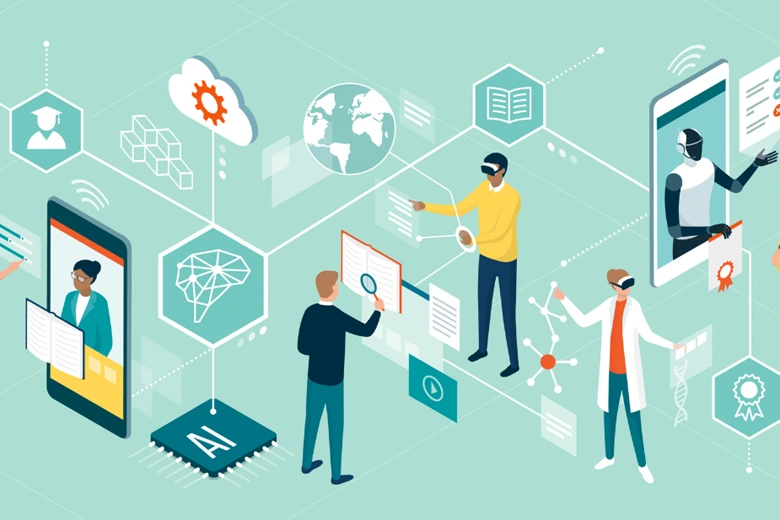
4️⃣ Google Skillshop
Why it’s valuable:
Google Skillshop teaches Google’s own tools, which are widely used across industries.
Skills you can learn:
- Digital marketing & SEO basics
- Google Ads & Analytics
- YouTube marketing
- E-commerce fundamentals
Best for:
- Digital marketers
- Entrepreneurs and freelancers
- Career switchers into marketing
📌 Bonus: Certifications are free and widely recognized by employers.
5️⃣ Microsoft Learn
Why it’s valuable:
Microsoft Learn provides hands-on, modular training for cloud, AI, and software skills, aligned with real-world job roles.
Key learning paths:
- Azure cloud fundamentals
- AI & machine learning basics
- Power Platform & data tools
- Cybersecurity fundamentals
Best for:
- IT professionals
- Beginners in cloud & AI
- Students targeting tech roles
📌 Unique advantage: Interactive labs and real-world scenarios.
📌 Quick Comparison Table
| Platform | Best For | Cost |
| Coursera | Industry-aligned skills | Free (audit) |
| edX | University-level learning | Free (audit) |
| Khan Academy | Fundamentals | 100% free |
| Google Skillshop | Digital marketing | Free + certificates |
| Microsoft Learn | Cloud & AI | 100% free |
💡 Pro Tip for Learners
Don’t chase certificates. Instead:
- Learn the skill
- Apply it through small projects
- Showcase it on LinkedIn or a portfolio
Employers value proof of skill far more than course completion badges.
Best Free Upskilling Platforms (India-Focused)
India has built one of the largest government-supported digital skilling ecosystems in the world. In 2026, these platforms are especially valuable because they offer free, job-oriented, and nationally recognized training, often aligned with industry demand and employment schemes.
For students, fresh graduates, working professionals, and career switchers in India, the platforms below provide credible pathways to employability—without high costs.
1️⃣ Skill India Digital
Why it’s important:
Skill India Digital is a flagship Government of India initiative designed to make India’s workforce job-ready and future-proof.
What it offers:
- Free online skill courses
- Industry-aligned curricula
- Training in digital, technical, and vocational skills
- Integration with employment and apprenticeship programs
Popular skill areas:
- Digital literacy & IT skills
- AI & emerging technologies
- Retail, logistics, and service-sector roles
- Soft skills & workplace readiness
📌 Best for:
Freshers, job seekers, and professionals seeking government-recognized credentials.
2️⃣ SWAYAM
Why it’s important:
SWAYAM (Study Webs of Active Learning for Young Aspiring Minds) is India’s national MOOC platform, supported by UGC, AICTE, and top Indian institutions.
What it offers:
- Free courses from IITs, IIMs, central universities
- Undergraduate and postgraduate-level content
- Technical, management, humanities, and skill courses
Key learning areas:
- Computer science & AI
- Data analytics & mathematics
- Business, finance, and management
- Teacher training & academic upskilling
📌 Note:
Learning is free; proctored exams and certificates are optional and low-cost.
3️⃣ NSDC Skill Courses
Why it’s important:
The National Skill Development Corporation (NSDC) works closely with industry partners to reduce the skill gap between education and employment.
What it offers:
- Sector-specific skill programs
- Short-term, job-ready training
- Industry-recognized certifications
- Alignment with private employers
High-demand sectors:
- BFSI & FinTech
- Healthcare & life sciences
- IT & IT-enabled services
- Logistics, construction, and manufacturing
📌 Best for:
Learners seeking quick employability and industry exposure.
4️⃣ NPTEL (National Programme on Technology Enhanced Learning)
Why it’s important:
NPTEL is jointly run by IITs and IISc, offering some of the most rigorous technical education available for free in India.
What it offers:
- Engineering and technology courses
- Management and economics programs
- Data science, AI, and programming tracks
Strengths:
- Deep conceptual clarity
- Academic credibility
- Widely recognized by Indian employers
📌 Note:
Course content is free; certification exams are optional and affordable.
5️⃣ PMKVY Platforms (Pradhan Mantri Kaushal Vikas Yojana)
Why it’s important:
PMKVY is India’s largest skill certification and placement-linked scheme, focused on improving employability at scale.
What it offers:
- Free skill training programs
- National Skill Qualification Framework (NSQF) certification
- Placement assistance and job linkage
- Short-term and recognition-of-prior-learning (RPL) courses
Target groups:
- Youth and first-time job seekers
- Semi-skilled workers
- Career returnees and informal sector workers
📌 Unique advantage:
Certification + placement support makes PMKVY ideal for entry-level employment.
📊 Quick Comparison: India-Focused Platforms
| Platform | Best For | Cost | Recognition |
| Skill India Digital | Job-ready skills | Free | Government |
| SWAYAM | Academic + professional | Free (exam optional) | UGC/AICTE |
| NSDC | Industry-aligned roles | Free/Low | Industry |
| NPTEL | Tech & management depth | Free (exam optional) | IIT/IISc |
| PMKVY | Entry-level jobs | Free | NSQF |
💡 Pro Tip for Indian Learners
Combine government platforms with global platforms:
- Learn fundamentals from SWAYAM or NPTEL
- Apply skills using Coursera or Google Skillshop
- Build projects and portfolios independently
- This hybrid approach maximizes credibility + employability.
Free Career Paths You Can Start Today (Zero Cost, High Demand)
One of the biggest myths about career growth is that you need paid degrees or expensive bootcamps. In reality, many high-demand roles in 2026 can be entered using free learning resources, provided you follow a clear and structured path.
Below are three proven, free career paths you can start today, along with recommended platforms, skills to build, and expected outcomes.
Path 1: AI / Data Analyst (High Pay + Global Demand)
Why This Career Path Works in 2026
Data and AI-driven decision-making has become central to business operations across industries like finance, healthcare, e-commerce, logistics, and consulting. Data analysts who understand both data and business context are in exceptionally high demand.
Core Skills You Need
- Data analysis & interpretation
- Python programming
- SQL for databases
- Excel for reporting
- Data visualization
Step-by-Step Free Learning Roadmap
Step 1: Learn Python & Data Basics
- Python (NPTEL) – Build strong foundations in programming and data handling
- Focus on: variables, loops, pandas, numpy
Step 2: Master Data Analytics Tools
- Google Data Analytics (Coursera – audit mode)
- Learn: data cleaning, analysis, visualization, case studies
Step 3: Excel + SQL (Free Resources)
- Advanced Excel (pivot tables, dashboards)
- SQL queries for data extraction
Projects to Build
- Sales performance dashboard
- Customer churn analysis
- Market trend analysis
📌 Job Roles You Can Target
- Data Analyst
- Business Analyst
- Junior AI Analyst
📌 India Salary Range (Entry-Level): ₹6–10 LPA
Path 2: Digital Marketing (Fast Entry + Freelance Friendly)
Why This Career Path Works in 2026
Every business needs digital visibility. From startups to MNCs, companies require professionals who can drive traffic, leads, and conversions through digital channels.
Core Skills You Need
- SEO & content marketing
- Paid advertising
- Analytics & reporting
- Social media strategy
Step-by-Step Free Learning Roadmap
Step 1: Digital Marketing Fundamentals
- Google Digital Garage
- Learn SEO basics, content marketing, email marketing, online ads
Step 2: Social Media & Ads
- Meta Blueprint
- Learn Facebook, Instagram ads, audience targeting, campaign optimization
Step 3: SEO + Analytics
- Learn keyword research, on-page SEO
- Google Analytics & Search Console
Projects to Build
- SEO blog or niche website
- Social media growth experiment
- Paid ad mock campaigns
📌 Job Roles You Can Target
- Digital Marketing Executive
- SEO Specialist
- Performance Marketer
📌 India Salary Range (Entry-Level): ₹4–8 LPA
📌 Freelance Potential: ₹50,000–₹1,50,000/month
Path 3: FinTech & Finance (Stability + Industry Growth)
Why This Career Path Works in 2026
India’s digital payments, lending, and fintech ecosystem continues to expand rapidly. Professionals who understand finance + technology + regulation are highly employable.
Core Skills You Need
- Financial markets & instruments
- Digital payments systems
- Excel-based financial modeling
- Regulatory awareness (RBI)
Step-by-Step Free Learning Roadmap
Step 1: Financial Market Basics
- NSE Academy – Free Modules
- Learn equities, derivatives, mutual funds, risk management
Step 2: Excel Financial Modeling
- Build financial statements
- Cash flow and valuation models
Step 3: Digital Payments & RBI Frameworks
- UPI ecosystem
- Digital lending models
- RBI guidelines on fintech and NBFCs
Projects to Build
- Stock portfolio analysis
- Fintech product case study
- Digital lending risk model
📌 Job Roles You Can Target
- FinTech Analyst
- Financial Analyst
- Risk & Compliance Executive
📌 India Salary Range (Entry-Level): ₹5–9 LPA
📌 Quick Comparison: Free Career Paths
| Career Path | Time to Job-Ready | Demand Level | Best For |
| AI / Data Analyst | 4–6 months | Very High | Tech + business roles |
| Digital Marketing | 3–5 months | High | Freelancers & startups |
| FinTech & Finance | 4–6 months | High | Commerce & finance grads |
💡 Pro Tip for Faster Results
Don’t try to learn everything at once.
✔ Pick one career path
✔ Follow a structured roadmap
✔ Build real-world projects
✔ Showcase work on LinkedIn & portfolios
Key Takeaway
In 2026, clear learning paths beat random courses. With the right roadmap, free platforms can help you transition into high-growth careers without spending money.
Step-by-Step: How to Reskill for a New Job in 2026 (Practical Playbook)
Reskilling is no longer about collecting certificates—it’s about demonstrating job-ready skills. Employers in 2026 care far more about what you can do than where you studied.
Below is a proven, step-by-step framework to move from career confusion → skill clarity → job offer.
Step 1: Identify Future-Proof Skills (Market-First Approach)
Why This Step Is Critical
Most people fail at reskilling because they start with courses, not market demand.
How to Do It (Actionable Method)
- Go to LinkedIn Jobs
- Search for your target role (e.g., “Data Analyst”, “Digital Marketer”, “FinTech Analyst”)
- Open 10–20 job listings
- Create a simple list of:
- Required skills
- Tools mentioned repeatedly
- Soft skills expected
- Required skills
📌 Patterns = Skills to Learn
Example:
- If 70% of listings mention SQL + Excel + Python, that’s your priority stack.
💡 Pro Tip:
Focus on skills mentioned across multiple companies, not niche tools used by one employer.
Step 2: Pick ONE Career Track (Focus Beats Speed)
Why Most Learners Fail
- They learn AI + marketing + finance together
- End up average at everything, expert at nothing
What to Do Instead
Choose one clear role and go deep.
Examples:
- ❌ “Tech career”
- ✅ “Entry-level Data Analyst”
- ❌ “Marketing”
- ✅ “SEO & Analytics Specialist”
📌 Rule of Thumb
If your LinkedIn headline can’t describe your role in one line, you’re not focused enough.
Step 3: Build Real Projects (Proof > Certificates)
Why Projects Matter in 2026
Recruiters increasingly use:
- Portfolio reviews
- Assignment-based hiring
- Skill tests instead of degrees
Types of Projects You Must Build
1. Portfolio Website
- Simple site showcasing:
- Skills
- Tools
- Projects
- Contact details
- Skills
2. Case Studies
Explain:
- Problem
- Approach
- Tools used
- Results achieved (even simulated)
Example:
“Analyzed 10,000-row dataset to identify sales decline causes using Python & Excel.”
3. Simulated or Real-World Projects
- Practice datasets
- Mock business problems
- Open-source contributions
📌 Minimum Requirement
At least 3–5 strong projects aligned with your target role.
Step 4: Optimize LinkedIn & Resume (Skill-First Branding)
Resume Optimization (2026 Standard)
Replace:
- “Completed XYZ course”
With: - “Built dashboards using Excel & SQL to analyze customer trends”
📌 Structure
- Skills section at top
- Projects above education
- Quantified outcomes where possible
LinkedIn Optimization Checklist
- Headline: Role + skills (e.g., “Aspiring Data Analyst | SQL | Python | Excel”)
- About section: Your transition story + value
- Featured section: Projects, GitHub, portfolio
- Activity: Share learning insights weekly
💡 Hiring Reality
Recruiters often check LinkedIn before opening resumes.
Step 5: Apply Strategically (Smart Applications, Not Mass Applying)
Where to Apply
- Skill-based startups
- Remote-first companies
- Freelance-to-full-time platforms
- Internship → full-time roles
How to Apply Effectively
- Customize resume for each role
- Highlight matching skills in first half-page
- Attach portfolio or project links
📌 Best Strategy
Apply to 10 highly relevant roles/week instead of 100 random ones.
Common Reskilling Mistakes to Avoid (Career Killers)
1. Learning Without Projects
Courses without application = no hiring value.
2. Chasing Certificates Only
Certificates ≠ skills. Employers test capability.
3. Ignoring Soft Skills
Communication, teamwork, and problem-solving matter more as AI automates tasks.
4. No Networking
Referrals still dominate hiring.
📌 Minimum Networking Goal
- 5 new LinkedIn connections/week
- 2 meaningful conversations/month
📌 Quick Reskilling Timeline (Realistic)
| Month | Focus |
| Month 1 | Skill foundation + tools |
| Month 2 | Projects + case studies |
| Month 3 | Portfolio + applications |
| Month 4–6 | Interviews + role transition |
Key Takeaway
In 2026, reskilling success depends on market alignment, focused learning, real projects, and visibility—not just certificates.
FAQs Section
1. Can I really get a job by learning for free in 2026?
Yes—absolutely, and millions already do.
In 2026, hiring decisions are increasingly based on skills, portfolios, and real-world problem-solving ability, not on how much you paid for a course.
Companies now evaluate:
- Practical projects
- Assignments during interviews
- Skill assessments
- Work samples and case studies
Many global employers (including startups, SaaS companies, and remote-first firms) explicitly state that degrees and paid certificates are optional.
📌 Reality Check:
Free learning + strong projects + visible proof (GitHub, portfolio, LinkedIn) = employability.
2. Are free courses officially recognized in India?
Yes, many free platforms are government-recognized and employer-trusted.
In India, several free learning platforms are backed by official institutions, making them highly credible:
- SWAYAM – Supported by UGC & Ministry of Education
- NPTEL – Led by IITs & IISc
- Skill India Digital – Government of India initiative
- PMKVY platforms – Certification + placement support
📌 Important Note:
Recognition helps, but employers still prioritize demonstrated skills over certificates alone.
3. How long does reskilling actually take?
The timeline depends on your starting point, focus, and consistency, but realistic expectations are:
- 3–6 months: Job-ready for entry-level or junior roles
- 6–9 months: Full career transition with confidence
This includes:
- Learning core skills
- Building 3–5 solid projects
- Creating a portfolio
- Applying and interviewing
📌 Key Insight:
Learning speed matters less than learning direction + practice.
4. Which skills pay the most in 2026?
Based on global hiring data and salary trends, the highest-paying skill clusters include:
- Artificial Intelligence & Generative AI
- Data Analytics & Data Science
- Cloud Computing (AWS, Azure, GCP)
- Cybersecurity
- FinTech & Digital Finance
In India, professionals with these skills can command 30–50% higher salaries than peers in traditional roles.
📌 But remember:
High pay follows high demand + skill depth, not hype alone.
5. Is age a barrier to reskilling or switching careers?
No. Age is becoming less relevant than ever.
Modern hiring focuses on:
- Skill proficiency
- Ability to learn quickly
- Problem-solving mindset
- Communication skills
Many professionals successfully reskill in their:
- 30s
- 40s
- Even 50s
📌 Truth:
Employers care more about “Can you do the job?” than “How old are you?”
6. Do I need coding to work in AI-related jobs?
Not always.
While coding is helpful, many AI-related roles are non-developer roles, such as:
- Data Analyst
- AI Operations Specialist
- Business Analyst (AI-enabled)
- Prompt Engineer
- Product or Strategy roles
These roles focus on:
- Using AI tools
- Interpreting insights
- Applying AI to business problems
📌 Best Approach:
Learn basic coding + strong analytical thinking for maximum flexibility.
7. Can students really upskill for free and get jobs faster?
Yes—and students often benefit the most.
Free platforms allow students to:
- Learn industry-relevant skills early
- Build projects before graduation
- Stand out in campus placements
- Access internships & remote work
Many students secure:
- Paid internships
- Freelance gigs
- Entry-level roles before completing degrees
📌 Big Advantage:
Students have time—using it strategically creates a massive career edge.
8. What about non-tech or non-engineering professionals?
Reskilling is not limited to tech backgrounds.
High-demand, non-coding career paths include:
- Digital Marketing & Growth
- Financial & Business Analytics
- UX/UI Design
- Product Operations
- Content & Strategy roles
Commerce, arts, and management graduates can reskill into these roles without learning heavy programming.
📌 Key Requirement:
Analytical thinking + communication + digital tools.
9. Are free certificates enough to get hired?
Certificates alone are rarely enough.
Employers treat certificates as:
- Proof of interest
- Learning commitment
But hiring decisions are based on:
- Projects
- Case studies
- Skill demonstrations
- Interview performance
📌 Best Strategy:
Use certificates as supporting evidence, not the main selling point.
10. Should I quit my job to reskill full-time?
In most cases, no.
The safest approach is:
- Upskill alongside your current job
- Dedicate 1–2 hours daily
- Transition gradually
Quitting early increases:
- Financial stress
- Pressure to rush learning
- Risk of burnout
📌 Only quit when:
You are job-ready and actively interviewing.
Summary
The job market in 2026 is being reshaped by AI, automation, and skill-based hiring, making continuous learning a necessity rather than a choice. Traditional degrees alone are no longer enough—employers now prioritize practical skills, real-world projects, and problem-solving ability.
The good news is that anyone can upskill or reskill for free using high-quality global and India-focused platforms such as SWAYAM, NPTEL, Skill India Digital, Coursera (audit mode), edX, Google Skillshop, and Microsoft Learn. These platforms offer industry-aligned learning paths in AI, data analytics, digital marketing, fintech, cloud computing, and other future-proof domains.
Key success factors include:
- Choosing one clear career track instead of learning everything
- Building hands-on projects and case studies to prove skills
- Optimizing LinkedIn profiles and resumes around outcomes, not degrees
- Applying strategically to skill-based, startup, and remote roles
- Continuously improving communication and problem-solving skills
Key Takeaway
👉 In 2026, skills are currency. With focused learning, real projects, and smart positioning, free education can lead to high-paying, future-proof jobs—without quitting your current role or spending money on expensive courses.
Conclusion
The employment landscape in 2026 has made one truth unmistakably clear: the fastest and most reliable path to a better job is not another degree, but relevant, practical, and in-demand skills. As automation and AI continue to redefine roles across industries, professionals who rely solely on traditional qualifications risk being left behind—while those who adapt thrive.
Today, free and high-quality learning platforms—both global and India-focused—have eliminated the biggest historical barriers to career growth: cost, access, and geography. Whether you are a student, working professional, freelancer, or someone planning a career switch, you now have the opportunity to:
- Switch careers without quitting your current job
- Increase earning potential by aligning with high-demand skills
- Stay future-ready as industries evolve and new roles emerge
What separates successful career transitions from stalled ones is not intelligence or background—it is consistency, focus, and execution. Even 60–90 minutes of deliberate learning each day, when paired with real projects and visible proof of work, can compound into life-changing results within months.
👉 Your only real investment in 2026 is time, discipline, and commitment to continuous learning.
Those who start early and stay consistent won’t just survive the future of work—they’ll shape it.
References
- World Economic Forum (WEF) – Future of Jobs Report
https://www.weforum.org/reports/the-future-of-jobs-report-2023
Global insights on job disruption, reskilling needs, AI impact, and emerging roles. - India Skills Report (Wheebox, AICTE, CII, NSDC)
https://wheebox.com/india-skills-report
India-focused employability trends, skill gaps, and workforce readiness data. - McKinsey Global Institute – Future of Work & Skills
https://www.mckinsey.com/featured-insights/future-of-work
Deep research on automation, skill shifts, and workforce transformation. - LinkedIn Workforce Report & Economic Graph
https://economicgraph.linkedin.com
Real-time hiring trends, in-demand skills, and skill-based hiring insights. - Skill India Digital Platform (Government of India)
https://www.skillindiadigital.gov.in
Official government portal for free, job-oriented skill development programs. - SWAYAM (Study Webs of Active Learning for Young Aspiring Minds)
https://swayam.gov.in
UGC & Ministry of Education–backed free courses from IITs, IIMs, and top universities. - NPTEL (National Programme on Technology Enhanced Learning)
https://nptel.ac.in
IIT & IISc-led free courses in engineering, data science, management, and AI. - National Skill Development Corporation (NSDC)
https://nsdcindia.org
Industry-aligned skilling initiatives and employment-linked programs. - Coursera – Free Audit Learning Mode
https://www.coursera.org
Global platform offering free access to courses from Google, IBM, Meta, and top universities. - edX (Harvard, MIT, Microsoft)
https://www.edx.org
University-grade free learning with optional paid certifications. - Google Skillshop & Digital Garage
https://skillshop.withgoogle.com
https://learndigital.withgoogle.com
Free certifications in digital marketing, analytics, and business tools. - Microsoft Learn
https://learn.microsoft.com
Free training in cloud computing, AI, cybersecurity, and software fundamentals. - NSE Academy (Free Finance Modules)
https://www.nseindia.com/learn
Financial markets education aligned with India’s fintech and capital markets. - RBI (Reserve Bank of India) – Digital Payments & FinTech Frameworks https://www.rbi.org.in Authoritative source for fintech regulation, digital lending, and payment systems in India.
