







Estimated Reading Time: 30-35 minutes (6,001 words)
Introduction
Every modern brand—whether it’s a bootstrapped Indian startup, a fast-scaling D2C challenger, or a legacy FMCG giant—eventually hits the same strategic crossroads:
👉 Should we sell on marketplaces like Amazon, Flipkart, and Meesho—or invest heavily in building our own Direct-to-Consumer (D2C) website and app?
At first glance, the answer seems simple.
Marketplaces offer instant access to millions of customers, built-in trust, seamless logistics, and massive festive-sale visibility. For brands looking to scale fast—especially in a price-sensitive market like India—marketplaces feel like the obvious choice.
On the other hand, D2C promises something marketplaces never can:
- Higher profit margins
- Full ownership of customer data
- Direct brand storytelling
- Long-term loyalty and repeat purchases
For years, brands believed this was a binary decision—either marketplaces or D2C. Many founders were advised to “pick one lane” to avoid operational complexity and channel conflict.
❌ That thinking no longer works.
In 2025, rising marketplace commissions, increasing digital ad costs, tightening platform algorithms, and growing consumer expectations have completely reshaped the e-commerce landscape. Brands that rely only on marketplaces struggle with margin pressure and zero customer ownership. Meanwhile, brands that go only D2C often face unsustainable customer acquisition costs and slower scale.
✅ The winners? Brands that do both—strategically.
The fastest-growing brands—globally and in India—have cracked a smarter model:
- They use marketplaces as discovery engines
- They use D2C channels for retention, data, and profitability
- They combine online, social, and offline touchpoints into a hybrid, omnichannel strategy
From Indian D2C success stories like Mamaearth, Sugar Cosmetics, and Boat, to global giants like Nike and Apple, one pattern is clear:
👉 Marketplace vs D2C is no longer a dilemma—it’s a distribution mix problem.
What This Article Covers
In this deep-dive, we break down the real-world dynamics behind the marketplace vs D2C debate, backed by data, examples, and future trends:
- 📊 The latest marketplace vs D2C trends (India + global)
- 🧠 Real data, expert insights, and brand case studies
- 🔮 A 10-year outlook (2025–2035) on how e-commerce models will evolve
- 🛠 Actionable strategies smart brands are using right now to win on both channels
Whether you’re a founder, marketer, investor, or e-commerce professional, this guide will help you understand where to sell, how to sell, and how to build a future-proof brand in the next decade of digital commerce.
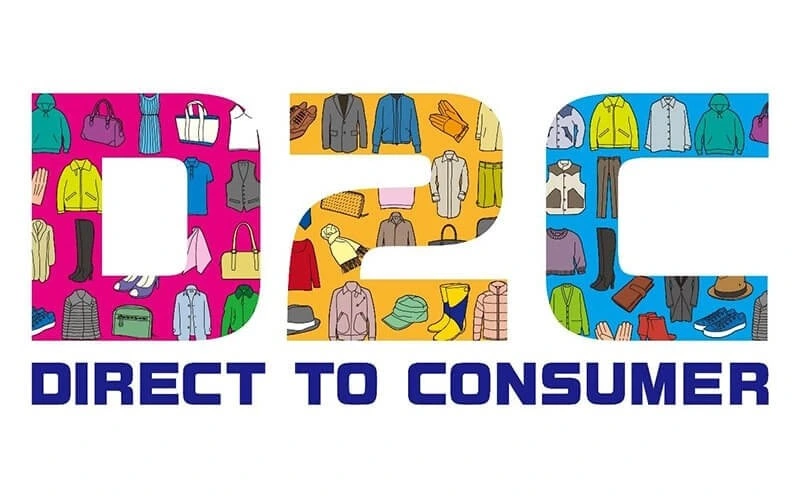
Marketplace vs D2C: The Core Difference
At the heart of the marketplace vs D2C debate lies a fundamental question:
Who controls the customer relationship—the platform or the brand?
While both models enable online selling, they differ significantly in ownership, scalability, profitability, and long-term brand value. Understanding these differences is critical before choosing—or combining—either approach.
🛍 Marketplaces: Scale, Speed, and Built-In Trust
Examples: Amazon, Flipkart, Meesho, Myntra, Ajio
Marketplaces act as digital shopping malls, bringing together millions of buyers and sellers under one trusted platform. For most brands—especially new or emerging ones—marketplaces are often the first step into e-commerce.
✅ Key Strengths of Marketplaces
1. Massive Built-In Traffic
Marketplaces attract hundreds of millions of monthly active users.
- Amazon India alone sees 300M+ visits per month
- Flipkart dominates Tier-2 and Tier-3 demand during festive sales
This allows brands to gain instant visibility without spending heavily on ads initially.
2. Consumer Trust & Purchase Confidence
Customers already trust marketplaces for:
- Authentic products
- Easy returns
- Reliable delivery
For new brands, this borrowed trust significantly improves conversion rates.
3. End-to-End Logistics & Payments
Marketplaces handle:
- Warehousing & fulfillment (FBA, Flipkart Fulfilled)
- Cash-on-Delivery (critical in India)
- UPI, cards, wallets, BNPL
- Customer support & returns
👉 This lowers operational complexity for brands.
❌ Key Weaknesses of Marketplaces
1. High Commissions & Margin Pressure
Marketplace fees typically range between 15% and 30%, including:
- Platform commission
- Logistics fees
- Advertising costs
📉 This eats directly into brand margins, especially for low-ticket products.
2. Little to No Customer Data Ownership
Marketplaces own the customer relationship:
- No access to emails or phone numbers
- Limited remarketing opportunities
- No direct communication post-purchase
This makes long-term loyalty building extremely difficult.
3. Price Wars & Low Brand Loyalty
Products often compete on:
- Discounts
- Ratings
- Sponsored placements
Consumers become platform-loyal, not brand-loyal, switching easily to cheaper alternatives.
D2C (Direct-to-Consumer): Control, Data, and Brand Equity
Examples:
- Brand-owned websites & mobile apps
- WhatsApp Commerce
- Instagram Shops
- Email & subscription-based sales
D2C allows brands to sell directly to customers, without any intermediary. This model has gained massive traction due to better technology, digital payments, and social commerce adoption—especially in India.
✅ Key Strengths of D2C
1. Higher Margins & Pricing Control
Without marketplace commissions, brands:
- Retain 20–40% higher gross margins
- Control discounts & bundling
- Launch subscriptions and memberships
This directly improves profitability.
2. Full Ownership of Customer Data
D2C brands collect:
- Email IDs
- Phone numbers
- Purchase history
- Browsing behavior
📊 This data enables:
- Personalized offers
- Retention campaigns
- Upsells & cross-sells
- Long-term customer lifetime value (LTV) growth
3. Brand Storytelling & Loyalty Building
D2C enables brands to:
- Share their origin story
- Build communities
- Run loyalty programs
- Offer exclusive launches
💡 Customers connect emotionally, not just transactionally.
❌ Key Weaknesses of D2C
1. High Customer Acquisition Cost (CAC)
D2C brands rely heavily on:
- Google Ads
- Meta (Facebook & Instagram) ads
- Influencer marketing
📈 Rising ad competition has pushed CAC up by 30–60% over the last few years.
2. Logistics, Returns & Operations Complexity
Unlike marketplaces, D2C brands must manage:
- Warehousing
- Shipping partners
- COD reconciliation
- Reverse logistics
This requires strong tech and operational discipline.
3. Slower Initial Scale
Without marketplace traffic:
- Brands must build trust from scratch
- Growth is slower in early stages
- Tier-2/3 adoption takes time
Marketplace vs D2C: Quick Comparison Table
| Factor | Marketplaces | D2C |
| Customer Reach | Very High | Moderate (initially) |
| Margins | Low–Medium | High |
| Customer Data | Platform-owned | Brand-owned |
| Trust Factor | High (built-in) | Needs to be built |
| Scalability | Fast | Gradual |
| Brand Loyalty | Low | High |
| Operational Complexity | Low | High |
🔑 Key Insight for Brands
👉 Marketplaces optimize for scale. D2C optimizes for value.
Brands that focus on only one often hit growth or profitability ceilings. That’s why the most successful brands today are combining both models into a hybrid commerce strategy, which we’ll explore next.
Key Facts & Stats Box: Marketplace vs D2C (2025 Snapshot)
📦 The Numbers That Define the E-commerce Power Shift
🌍 Global E-commerce Market (2025):
The global e-commerce industry has crossed $31 trillion in annual transaction value, driven by mobile-first consumers, faster logistics, digital payments, and cross-border selling. Asia-Pacific remains the largest contributor, with India and Southeast Asia among the fastest-growing markets.
🇮🇳 India E-commerce Market (2025):
India’s e-commerce market is now valued at $150+ billion, growing at a CAGR of 18–20%. Growth is being fueled by:
- UPI and digital payments adoption
- Tier-2 & Tier-3 city demand
- Festive sales events (Big Billion Days, Amazon Great Indian Festival)
- Affordable smartphones and data
Marketplaces still dominate total GMV, but their share is gradually declining as D2C and social commerce rise.
🏪 India D2C Market Size:
India’s Direct-to-Consumer (D2C) ecosystem is estimated at ~$100 billion, up from under $15 billion just a few years ago.
Key growth drivers include:
- Social commerce & influencer-led discovery
- WhatsApp-based selling
- Health, beauty, fashion, and food startups
- Increasing preference for “brand-first” shopping
D2C brands now contribute 10–15% of India’s online retail, and this share is expected to keep rising.
💸 Marketplace Commission Reality:
Most major marketplaces charge brands 20–30% per order, including:
- Platform commissions
- Fulfilment & warehousing fees
- Advertising & sponsored listing costs
For low-margin categories, this significantly compresses profitability, pushing brands to diversify beyond marketplaces.
🔁 Repeat Purchase & Loyalty Metrics:
D2C brands consistently outperform marketplaces on customer retention:
- Repeat purchase rates are 2–3× higher on D2C platforms
- Subscription and loyalty programs drive higher lifetime value (LTV)
- Direct communication (email, WhatsApp, app notifications) increases conversion and retention
This is why brands increasingly view marketplaces as customer acquisition channels, while D2C acts as the profit and loyalty engine.
🧠 What These Stats Really Mean for Brands
👉 Marketplaces are excellent for scale and discovery, but weak for long-term value creation.
👉 D2C channels grow slower initially, but deliver higher margins, stronger loyalty, and better data.
👉 The smartest brands design strategies that convert marketplace traffic into D2C relationships.
📚 Sources & Data References
- Statista – Global & India E-commerce Market Data
- Economic Times – India D2C & Marketplace Trends
- McKinsey & Company – Omnichannel & Consumer Insights
- IBEF – India Digital Economy Reports
Why Marketplaces Still Matter in 2025
Despite the explosive rise of D2C brands, social commerce, and brand-owned websites, marketplaces remain a critical pillar of e-commerce growth in 2025—especially in India and other emerging markets.
While D2C channels excel at margins and loyalty, marketplaces continue to dominate when it comes to scale, discovery, trust, and logistics efficiency. For many brands, marketplaces are not optional—they are strategic growth accelerators.
🔍 1. Customer Discovery at Unmatched Scale
Marketplaces function as the starting point of online shopping journeys.
- Millions of users visit Amazon and Flipkart with high purchase intent
- Shoppers search by product category, price, and reviews, not brand name
- New or lesser-known brands can get discovered alongside established players
For early-stage and mid-sized brands, marketplaces act as the fastest route to customer acquisition, especially when brand awareness is still low.
👉 In contrast, D2C brands must spend heavily on ads just to be seen.
🌍 2. Deep Penetration Into Tier-2 & Tier-3 India
One of the biggest reasons marketplaces still dominate India is their unmatched reach beyond metro cities.
Marketplaces excel in:
- Tier-2, Tier-3, and rural logistics
- Cash-on-Delivery (COD) enablement
- Regional language interfaces
- Trust-building through easy returns
📌 Many first-time online shoppers in India prefer marketplaces over unknown brand websites, making platforms like Amazon, Flipkart, and Meesho indispensable for nationwide reach.
🎉 3. Festive Sales & Demand Spikes Are Marketplace-Led
India’s biggest online shopping events are still marketplace-driven:
- Amazon Great Indian Festival
- Flipkart Big Billion Days
- Meesho Mega Sales
During these periods:
- Traffic increases by 2–4×
- Conversion rates spike
- Brands can achieve months of sales in a few days
💡 For many brands, 30–40% of annual online revenue is generated during festive marketplace sales alone.
🚚 4. Logistics, Speed & Convenience Still Win Customers
Marketplaces have invested billions in logistics infrastructure, making them extremely difficult to compete with on speed and reliability.
Key advantages include:
- Same-day and next-day delivery
- Fulfilled-by-Amazon (FBA) & Flipkart Assured
- Seamless returns and refunds
- End-to-end customer support
👉 For customers, speed and convenience often outweigh brand loyalty—especially for utility-driven purchases.
🔒 5. Trust, Reviews & Social Proof
Trust remains a major purchase driver in 2025.
Marketplaces offer:
- Verified reviews & ratings
- Buyer protection policies
- Easy dispute resolution
- Established brand credibility
For new brands, this borrowed trust significantly improves conversion rates compared to standalone D2C websites.
📊 The Market Reality Check
💡 Amazon and Flipkart together still account for over 60% of India’s total online retail GMV, despite the rise of D2C, social commerce, and quick commerce platforms.
This dominance highlights a crucial truth:
Marketplaces may no longer be the most profitable channel—but they are still the most powerful distribution engine.
🧠 Strategic Insight for Brands
Smart brands in 2025 don’t ask:
❌ “Marketplace or D2C?”
They ask:
✅ “How can marketplaces fuel discovery while D2C maximizes lifetime value?”
This mindset shift is what separates scaling brands from struggling ones.
The Explosive Rise of D2C Brands
Over the last decade—and especially post-2020—Direct-to-Consumer (D2C) brands have transformed from niche startups into mainstream competitors. In India, this shift has been even more dramatic, positioning the country as one of the fastest-growing D2C ecosystems globally.
What makes this rise unique is not just consumer demand, but the perfect convergence of technology, payments, logistics, and digital behavior.
🔑 Why India’s D2C Ecosystem Has Exploded
💳 1. UPI & Digital Payments Revolution
India’s digital payments infrastructure has been a game changer for D2C adoption.
- UPI processes 10+ billion transactions per month
- Instant, zero-friction checkout improves conversion rates
- COD alternatives reduce return fraud
- Subscription and repeat billing are easier than ever
📌 For D2C brands, faster payments mean better cash flow and lower operational risk.
📱 2. Social Commerce: Instagram, WhatsApp & Creator Economy
D2C growth in India is deeply tied to social-first buying behavior.
- Instagram Reels and YouTube Shorts drive impulse discovery
- WhatsApp Commerce enables direct selling in chat
- Influencers act as trust proxies, especially for new brands
👉 Many D2C brands now acquire customers without marketplaces, using social platforms as their primary storefront.
🎥 3. Influencer-Led Discovery Replaced Traditional Ads
Instead of expensive TV or print ads, D2C brands leverage:
- Micro-influencers (10k–100k followers)
- Regional & vernacular creators
- Authentic product demos and reviews
📊 Influencer-led campaigns often deliver:
- Lower CAC than paid ads
- Higher engagement
- Better trust and conversion in Tier-2 & Tier-3 markets
🚚 4. Better Logistics APIs & Tech Stack Maturity
Modern D2C brands don’t need massive infrastructure anymore.
Thanks to:
- Plug-and-play logistics APIs
- Shipping aggregators (Shiprocket, Delhivery, etc.)
- Shopify, WooCommerce, headless commerce tools
- Real-time tracking & returns automation
👉 Even small brands can now offer Amazon-like delivery experiences.
High-Growth D2C Categories (India + Global)
Certain categories are naturally suited for the D2C model due to repeat usage, personalization, and brand affinity.
💄 1. Beauty & Personal Care
- Skincare, cosmetics, grooming
- Strong influencer impact
- High repeat purchase rate
- Examples: Sugar, Mamaearth, Plum
👗 2. Fashion & Accessories
- Apparel, footwear, bags, eyewear
- Personal style & community-driven
- Frequent new launches
- Examples: Bewakoof, Zouk, Lenskart
🧠 3. Health & Wellness
- Supplements, fitness products, ayurvedic goods
- Subscription-friendly
- Trust and education-driven
- Examples: HealthKart, Oziva
🥗 4. Food & Nutrition
- Protein brands, snacks, functional foods
- Direct sourcing & storytelling matter
- Strong repeat consumption cycle
- Examples: The Whole Truth, Yogabar
🏡 5. Home & Lifestyle
- Furniture, decor, kitchenware
- Brand aesthetics and quality differentiation
- Long-term brand affinity
- Examples: Wakefit, Pepperfry (hybrid)
📊 What the Data Shows
- D2C brands now contribute 10–15% of India’s total online retail
- Tier-2 & Tier-3 cities account for 50%+ of D2C demand
- D2C customers show 2–3× higher lifetime value than marketplace-only buyers
🧠 Strategic Insight for Brands
The D2C boom is not about replacing marketplaces—it’s about owning the customer relationship.
👉 Brands that use D2C only for transactions often fail.
👉 Brands that use D2C for community, data, and loyalty win long-term.
This is why leading brands now treat D2C as a profit and intelligence engine, while marketplaces act as scale and discovery channels.
Why “Marketplace-Only” Brands Struggle Long-Term
Marketplaces are excellent for short-term scale, but brands that rely exclusively on platforms like Amazon or Flipkart often hit a growth ceiling over time. While initial sales may look promising, long-term sustainability becomes increasingly difficult.
The core problem is simple: marketplace-only brands don’t own the customer or the channel.
💸 1. Margin Erosion Gets Worse Over Time
One of the biggest long-term challenges is shrinking profitability.
Marketplace selling involves:
- Platform commissions
- Fulfilment & warehousing fees
- Returns & reverse logistics costs
- Sponsored ads to stay visible
📉 Over time, these costs compound, often consuming 25–40% of the selling price. As competition increases, brands are forced into deeper discounts to maintain rankings—further eroding margins.
👉 Many brands end up with high revenue but low or negative profits.
🔐 2. Zero Ownership of Customer Data
Marketplaces strictly control customer information.
Brands typically do not get access to:
- Customer email IDs
- Phone numbers
- Browsing behavior
- Cross-category purchase data
Without this data:
- Retargeting is impossible
- Personalization is limited
- Loyalty programs can’t be built
📌 This prevents brands from increasing lifetime value (LTV) and repeat purchases outside the platform.
📢 3. No Direct Communication With Customers
Marketplace rules prevent brands from building direct relationships.
- No email marketing
- No WhatsApp engagement
- No community building
- No post-purchase education
Every interaction is mediated by the platform, which means customers remember Amazon or Flipkart—not the brand.
💡 This makes brands easily replaceable by cheaper or better-ranked alternatives.
🤖 4. Heavy Dependency on Algorithms
Marketplace visibility is driven by opaque algorithms.
Sales depend on:
- Product rankings
- Reviews & ratings
- Sponsored placements
- Platform policy changes
A small algorithm tweak can:
- Push products down search results
- Increase ad costs overnight
- Reduce organic visibility
📉 Brands have no control over these changes, making growth unpredictable.
🧱 5. No Real Brand Moat
Marketplace-only brands struggle to create:
- Emotional brand connections
- Community or advocacy
- Differentiated positioning
Most consumers search generically (“protein powder,” “face serum”), compare prices, and choose the best deal—not the brand story.
👉 Over time, these brands become commoditized sellers, not trusted brands.
📉 Market Reality Check
Many Amazon-only brands:
- Plateau after initial success
- Get undercut by private labels
- Face rising ad and commission costs
- Struggle to launch new categories
📌 This is why many once-successful marketplace-first brands eventually invest in D2C channels to regain control.
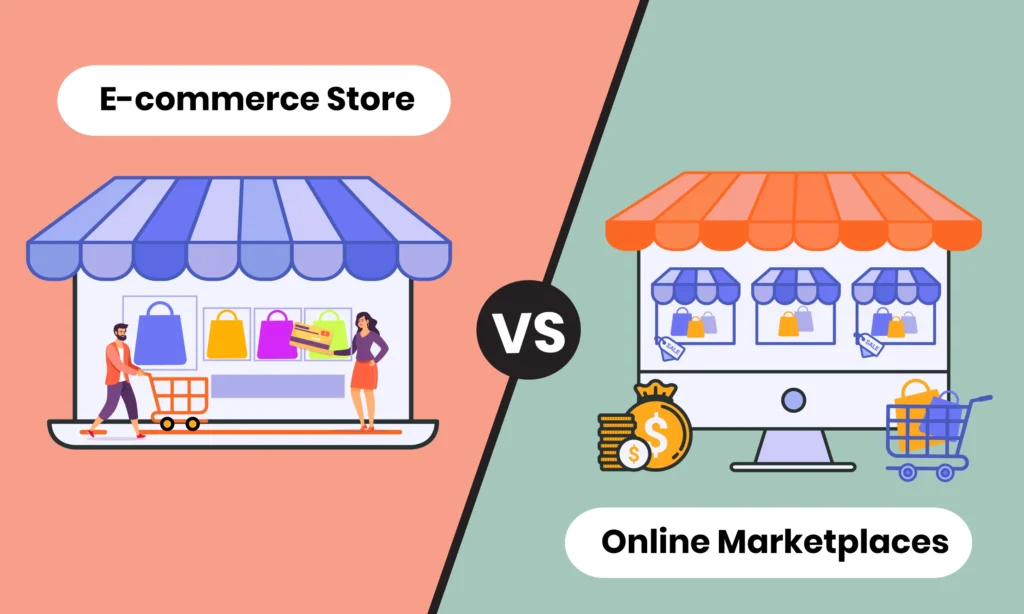
🧠 Strategic Insight for Brands
👉 Marketplaces are powerful distribution platforms, not brand-building platforms.
Brands that fail to diversify beyond marketplaces risk:
- Margin collapse
- Customer invisibility
- Algorithm-driven instability
This is precisely why the most resilient brands today treat marketplaces as one channel—not the business itself.
Why “Only D2C” Is Also Risky (and Often Unsustainable)
While D2C is often positioned as the ideal business model—offering higher margins, customer data, and brand control—going D2C-only comes with its own set of serious challenges. Many brands that avoid marketplaces entirely struggle to scale, particularly in the early and mid-growth stages.
In 2025, pure D2C without any marketplace presence often limits reach, trust, and growth velocity.
📈 1. Rising Facebook & Google Ad Costs (CAC Pressure)
D2C brands rely heavily on paid digital channels for visibility:
- Meta (Facebook & Instagram) ads
- Google Search & Shopping ads
- Influencer partnerships
However, increased competition has driven Customer Acquisition Costs (CAC) up by 30–60% over the last few years.
📉 As ad platforms mature:
- Cost-per-click rises
- Conversion rates flatten
- Margins shrink without scale
👉 This makes profitability difficult, especially for low- to mid-ticket products.
🔒 2. Trust Deficit for New or Unknown Brands
Trust remains a major barrier for D2C adoption—especially in India.
Consumers often hesitate to:
- Enter card details on unknown websites
- Prepay for unfamiliar brands
- Deal with uncertain return policies
📌 Marketplaces solve this with:
- Buyer protection
- Verified reviews
- Easy refunds
Pure D2C brands must invest heavily in social proof, content, and customer support to overcome this trust gap.
🐢 3. Slower Customer Acquisition & Discovery
Unlike marketplaces, D2C brands:
- Don’t benefit from organic product searches
- Must actively drive traffic
- Depend on brand recall or paid reach
This results in:
- Slower initial growth
- Lower impulse purchases
- Higher dependence on performance marketing
👉 For many brands, growth remains linear instead of exponential.
⚙️ 4. High Operational & Execution Complexity
Running a D2C business requires managing:
- Website & app infrastructure
- Payment gateways & fraud prevention
- Shipping, returns & COD reconciliation
- Customer support & CRM
📦 Unlike marketplaces, all operational failures directly impact the brand, not a platform.
This complexity increases costs and requires strong operational discipline.
🌍 5. Limited Reach in Tier-2 & Tier-3 Markets
In India, many consumers in non-metro regions:
- Prefer COD
- Trust marketplaces over standalone sites
- Are first-time online shoppers
Pure D2C brands often struggle to penetrate these markets at scale without marketplace backing.
📌 Reality Check: Why Pure D2C Rarely Scales Alone
Many D2C brands that start “marketplace-free” eventually:
- List on Amazon or Flipkart for visibility
- Use marketplaces during festive sales
- Rely on platforms for customer acquisition
👉 This doesn’t weaken the brand—it strengthens it.
🧠 Strategic Insight for Brands
D2C is a powerful engine for value creation—but a weak engine for mass discovery.
Brands that rely solely on D2C risk:
- High CAC
- Slower growth
- Geographic limitations
- Operational burnout
This is why the most successful brands adopt a hybrid strategy, using marketplaces for scale and D2C for loyalty, data, and profitability.
The Hybrid Model: How Smart Brands Win Both
The most successful e-commerce brands in 2025 are no longer asking “Marketplace or D2C?”
They’re asking a smarter question:
👉 How do we use marketplaces for scale while using D2C for loyalty, data, and profitability?
This thinking has given rise to the hybrid commerce model—a strategic blend of marketplaces, D2C channels, social commerce, and sometimes even offline touchpoints.
The Hybrid Winning Playbook (Step-by-Step)
🛒 Step 1: Acquire Customers on Marketplaces
Marketplaces act as high-intent discovery engines.
Brands use them to:
- Reach millions of ready-to-buy customers
- Enter new geographies quickly
- Leverage festive sales and flash deals
- Test product-market fit at scale
💡 Marketplaces are especially effective for first-time buyers and Tier-2/Tier-3 penetration.
🎯 Step 2: Retarget & Migrate Customers to D2C
Once a customer buys on a marketplace, smart brands begin post-purchase migration—without violating platform policies.
This is where long-term value creation begins.
Common migration hooks:
- QR codes in packaging
- Warranty or authenticity registration
- Instruction manuals & how-to content
- Free extended support or community access
👉 The goal is relationship ownership, not immediate reselling.
🎁 Step 3: Offer Exclusive D2C-Only Benefits
To encourage customers to return directly, brands create clear incentives that marketplaces can’t match.
Examples:
- Exclusive bundles or limited editions
- Better pricing or loyalty discounts
- Subscription plans with auto-refill
- Early access to new launches
- Personalized recommendations
📈 This shifts customers from transactional buyers to repeat loyal users.
🔁 Step 4: Build Loyalty, Subscriptions & Community
D2C becomes the engine for customer lifetime value (LTV).
Brands invest in:
- Loyalty programs (points, tiers, referrals)
- Subscriptions (monthly/quarterly replenishment)
- Email & WhatsApp lifecycle marketing
- Communities (Telegram, Instagram, Discord)
💡 Subscription customers often deliver 3–5× higher LTV than one-time buyers.
🛠 Common Hybrid Tactics Used by Winning Brands
📦 1. QR Codes Inside Marketplace Packaging
A low-cost, high-impact tactic.
Used for:
- Product education
- Brand story & usage tips
- Upsell & cross-sell
- Feedback & reviews
👉 Converts offline unboxing moments into online relationships.
🛡 2. Warranty / Authenticity Registration on D2C Site
Popular in electronics, beauty, wellness, and home categories.
Benefits:
- Captures verified customer data
- Reduces counterfeit risk
- Opens post-purchase communication channels
- Builds trust & credibility
🎯 3. D2C-Only Bundles, Combos & Subscriptions
Bundles increase:
- Average order value (AOV)
- Margin control
- Differentiation from marketplaces
Subscriptions ensure:
- Predictable revenue
- Lower churn
- Better inventory planning
💬 4. WhatsApp CRM for Retention & Reordering
In India, WhatsApp is a D2C superpower.
Brands use it for:
- Order updates
- Refill reminders
- Personalized offers
- Customer support
- Feedback & reviews
📊 WhatsApp open rates often exceed 80–90%, far outperforming email.
📊 Why the Hybrid Model Works So Well
| Objective | Marketplace Role | D2C Role |
| Customer Acquisition | High | Moderate |
| Trust & Reach | Strong | Built over time |
| Margins | Lower | Higher |
| Data Ownership | None | Full |
| Loyalty & Retention | Weak | Strong |
| Scalability | Fast | Sustainable |
👉 Hybrid commerce combines fast growth with long-term profitability.
🧠 Strategic Insight for Brands
The hybrid model is not about channel conflict—it’s about channel specialization.
- Marketplaces = Discovery & scale
- D2C = Data, loyalty & margins
- Social & WhatsApp = Engagement & retention
Brands that master this orchestration build resilient, defensible businesses that aren’t dependent on any single platform.
Global Brand Examples: How World-Class Brands Win with Hybrid Commerce
Looking at global brands helps separate theory from execution. The most successful international brands have moved beyond rigid channel thinking and adopted strategic hybrid models, where each channel plays a specific role in the customer journey.
Below are two iconic examples that perfectly illustrate how to balance marketplaces and D2C without sacrificing scale or brand equity.
👟 Nike: From Marketplace Dependence to D2C-Led Control
Nike is one of the most cited examples of a brand redefining its go-to-market strategy in the digital era.
What Nike Did
- Gradually reduced its dependence on Amazon to avoid brand commoditization
- Invested heavily in Nike.com and the Nike mobile app
- Built a membership-based ecosystem with exclusive drops, training content, and personalization
- Used select retail and platform partnerships strategically, not as primary channels
Why This Worked
- Nike gained full control over customer data
- Direct channels improved margins and pricing power
- The Nike app became a powerful loyalty and engagement engine
- Data from D2C channels enabled hyper-personalized product launches
Key Takeaway for Brands
👉 D2C doesn’t mean zero platforms—it means controlled distribution.
Nike didn’t abandon third-party platforms entirely; it redefined their role in the funnel.
🧼 Dollar Shave Club: Subscription-First, Marketplace-Supported
Dollar Shave Club (DSC) disrupted the grooming industry by making subscriptions mainstream.
What Dollar Shave Club Did
- Built its business around a D2C subscription model
- Focused on predictable recurring revenue and high LTV
- Later expanded into Amazon and retail stores for discovery and accessibility
- Used marketplaces primarily for brand exposure, not core customer ownership
Why This Worked
- Subscriptions ensured stable cash flow
- D2C enabled direct communication and upsells
- Marketplaces reduced friction for first-time buyers
- Retail and Amazon presence boosted brand legitimacy
Key Takeaway for Brands
👉 Marketplaces are excellent top-of-funnel channels, but subscriptions and D2C are where long-term value is created.
🌐 Pattern Across Global Winners
Across categories—sportswear, grooming, electronics, and lifestyle—successful global brands follow similar principles:
- Use marketplaces selectively, not exclusively
- Build D2C as the primary data and loyalty engine
- Invest in apps, communities, and memberships
- Treat platforms as distribution partners, not business owners
🧠 What Indian Brands Can Learn from These Examples
- Avoid over-dependence on any single platform
- Use D2C for customer relationships and profitability
- Leverage marketplaces for reach, trust, and scale
- Build ecosystems, not just storefronts
👉 The future belongs to brands that orchestrate channels—not compete with them.
Role of AI, Data & Personalization: The Real D2C Superpower
In the marketplace vs D2C debate, AI and data are the single biggest structural advantage D2C brands have.
Marketplaces operate at massive scale, but they centralize data at the platform level. D2C brands, on the other hand, collect first-party customer data, which becomes exponentially more valuable when combined with AI-driven insights and automation.
👉 In 2025 and beyond, brands that master AI-powered personalization will consistently outperform those that don’t.
🧠 Why AI Matters More in D2C Than Marketplaces
- D2C brands own customer behavior data
- AI models improve with every interaction
- Personalization increases relevance, trust, and loyalty
- Automation reduces operational costs at scale
📌 Marketplaces use AI to optimize their platform.
📌 D2C brands use AI to optimize their customers’ experience.
That difference is decisive.
🛠 How Smart Brands Use AI (Real-World Applications)
🎯 1. Personalized Product Recommendations
AI analyzes:
- Browsing history
- Purchase behavior
- Time spent on pages
- Past reorders and preferences
It then delivers:
- “Recommended for you” sections
- Personalized homepages
- Smart cross-sell & upsell suggestions
📈 This increases Average Order Value (AOV) and conversion rates significantly.
💰 2. Dynamic Pricing & Smart Discounting
AI enables brands to:
- Adjust pricing based on demand
- Offer personalized discounts instead of blanket sales
- Protect margins during high-demand periods
- Reduce over-discounting
👉 Unlike marketplaces—where pricing is often dictated by competition—D2C brands regain pricing control using AI.
📦 3. Predictive Inventory & Demand Forecasting
AI helps brands forecast:
- Which products will sell
- When replenishment is needed
- Regional demand patterns
- Seasonal spikes (festive, weather-driven)
📉 This reduces:
- Stockouts
- Excess inventory
- Cash flow lockups
Especially critical for subscription-based and fast-moving D2C categories.
💬 4. WhatsApp & Conversational AI Automation (India Advantage)
In India, WhatsApp is the most powerful AI-driven D2C channel.
Brands use AI-powered chatbots for:
- Order confirmations & tracking
- Reorder reminders
- Personalized product suggestions
- Customer support & FAQs
- Payment links via UPI
📊 WhatsApp automation delivers:
- 80–90% open rates
- Faster resolution times
- Higher repeat purchase rates than email
🔁 5. Retention-Based Offers & Lifecycle Marketing
AI enables lifecycle-based marketing, not generic campaigns.
Examples:
- Refill reminders for consumables
- Win-back offers for dormant users
- VIP perks for high-LTV customers
- Subscription nudges at the right moment
📌 These offers feel helpful, not spammy—because they’re timed and personalized.
📊 The Impact of AI-Driven Personalization (By the Numbers)
- 20–30% higher conversion rates
- 10–15% increase in AOV
- 2–3× improvement in customer lifetime value (LTV)
- Lower churn and higher repeat purchases
💡 McKinsey estimates that brands excelling in personalization generate 40% more revenue from these efforts than average players.
🌍 Why This Matters Even More in the Next 10 Years (2025–2035)
As:
- Digital ad costs rise
- Cookies disappear
- Privacy regulations tighten
👉 First-party data + AI becomes the only sustainable growth engine.
Marketplaces will always have traffic—but brands with AI-powered D2C ecosystems will own relationships, insights, and long-term value.
🧠 Strategic Insight for Brands
AI is not a “nice-to-have” feature anymore—it’s a competitive moat.
- Marketplaces = scale without intimacy
- D2C + AI = intimacy at scale
Brands that invest early in AI-driven personalization will:
- Reduce CAC
- Increase LTV
- Build defensible brand ecosystems
- Stay resilient against platform dependency
💰 Monetization & Tooling Opportunities (For Your Blog)
This section also opens strong affiliate and sponsorship angles:
- AI personalization tools
- CRM & CDP platforms
- WhatsApp commerce solutions
- Predictive analytics & inventory tools
- Marketing automation software
10-Year Outlook (2025–2035)
What Will Change:
- D2C brands will act like media companies
- Marketplaces become discovery engines
- AI + data decide winners
- Vernacular & voice commerce rise
- Quick commerce integrates with D2C
📌 Hybrid commerce becomes the default model.
FAQs Section
1. Is D2C better than selling on marketplaces like Amazon or Flipkart?
No—D2C is not “better,” it’s different.
Detailed answer:
D2C (Direct-to-Consumer) is superior for:
- Higher profit margins
- Full ownership of customer data
- Brand storytelling and loyalty
- Long-term customer lifetime value (LTV)
Marketplaces, however, are better for:
- Instant access to massive traffic
- Faster customer acquisition
- Trust, especially for new brands
- Pan-India reach, including Tier-2 and Tier-3 cities
👉 The smartest brands use marketplaces for scale and D2C for sustainability.
2. Can small or new brands afford both marketplace and D2C models?
Yes—and in fact, this is the most common growth path today.
How small brands typically do it:
- Launch first on marketplaces to validate demand
- Use marketplace cash flow to fund D2C infrastructure
- Start with a simple Shopify/WordPress site
- Gradually invest in retention, CRM, and subscriptions
📌 You don’t need to do everything at once. Layer D2C over time.
3. Which model works better for India specifically?
For India, hybrid commerce clearly works best.
Why India is unique:
- High trust in marketplaces
- Strong logistics dependence
- Price-sensitive consumers
- Rapid adoption of WhatsApp & UPI
Marketplaces help with trust and reach, while D2C helps with:
- Repeat purchases
- Regional personalization
- Vernacular and conversational commerce
👉 India favors brands that blend both models intelligently.
4. Are marketplaces dying because of D2C growth?
No—marketplaces are not dying at all.
What is happening:
- Marketplaces are becoming discovery engines
- Brand loyalty is shifting to D2C channels
- Platforms focus more on logistics, ads, and fulfillment
📌 Think of marketplaces as search engines for products, not brand homes.
5. What is the biggest challenge for D2C brands today?
The biggest challenge is Customer Acquisition Cost (CAC).
Why CAC is rising:
- Facebook & Google ads are more expensive
- Competition is intense
- Cookie-based targeting is declining
How successful brands counter this:
- Focus on retention and subscriptions
- Build communities and content
- Use WhatsApp and email automation
- Leverage marketplaces for discovery
6. Do marketplaces hurt brand value in the long run?
They can—if brands depend on them exclusively.
Risks include:
- Price wars
- Limited storytelling
- No customer data access
- Algorithm dependency
However, when used strategically, marketplaces enhance:
- Visibility
- Credibility
- Volume
👉 The key is control, not avoidance.
7. How do brands move customers from marketplaces to D2C?
Brands use several proven tactics:
- QR codes inside packaging
- Warranty registration on brand websites
- D2C-only discounts or bundles
- Subscription offers after first purchase
- WhatsApp opt-ins for support or reorders
📌 This must be done carefully to stay compliant with platform policies.
8. Is D2C profitable in the long run?
Yes—D2C becomes profitable over time, not instantly.
Initial phase:
- High CAC
- Infrastructure costs
- Lower volumes
Growth phase:
- Higher repeat rates
- Better margins
- Lower per-order marketing cost
📊 D2C customers typically have 2–3× higher lifetime value than marketplace-only buyers.
9. Which categories benefit the most from hybrid commerce?
Hybrid models work best in:
- Beauty & personal care
- Health & wellness
- Fashion & lifestyle
- Food, nutrition & supplements
- Home & daily-use products
These categories benefit from repeat purchases and personalization.
10. How important is AI in D2C vs marketplace selling?
AI is far more impactful in D2C.
In D2C, AI enables:
- Personalized recommendations
- Predictive reordering
- Dynamic pricing
- Automated retention campaigns
Marketplaces use AI mainly to optimize their platform, not individual brands.
👉 AI + first-party data is the future growth moat.
11. Will hybrid commerce still matter 10 years from now?
Yes—by 2035, hybrid commerce will be the default, not the exception.
Future brands will:
- Use marketplaces for discovery
- Use D2C for loyalty and data
- Use AI for optimization
- Use content and communities for differentiation
📌 Brands that fail to adopt hybrid strategies will struggle to scale profitably.
12. What is the single biggest takeaway for founders and marketers?
Don’t ask:
❌ Marketplace or D2C?
Ask instead:
✅ How do I design a system where both work together?That mindset shift separates short-term sellers from long-term brands.
Summary
- Marketplace vs D2C is a false choice
The most successful brands no longer treat marketplaces and D2C as competing models. Instead, they recognize that each serves a different role in the customer journey—marketplaces drive discovery and trust, while D2C builds relationships and long-term value. - Hybrid brands scale faster and more sustainably
Brands that combine marketplace reach with D2C control grow faster without sacrificing margins. This hybrid approach reduces dependency on any single channel and creates resilience against platform or algorithm changes. - Customer data ownership is the real competitive advantage
Marketplaces own traffic, but D2C brands own insights. First-party data enables better personalization, smarter marketing, and higher lifetime value—making data the most valuable asset in modern commerce. - AI and personalization are the next growth moats
As acquisition costs rise, AI-driven personalization will determine profitability. Brands that use AI for recommendations, retention, and predictive demand will outperform those relying on generic promotions. - Marketplaces are evolving, not disappearing
Platforms like Amazon and Flipkart will remain dominant, but their role will shift toward discovery, logistics, and fulfillment. Brand loyalty will increasingly live outside these platforms on owned channels. - The future belongs to orchestrators, not channel specialists
Winning brands think like ecosystem builders—integrating marketplaces, D2C, content, communities, and AI into one cohesive system. Execution across channels, not channel choice, will define long-term success.
Conclusion
The future of commerce is no longer a binary choice between marketplaces and D2C. The most successful brands understand that marketplaces drive discovery and scale, while D2C channels create loyalty, higher margins, and full customer ownership. Treating them as mutually exclusive limits growth potential and leaves long-term value on the table. Instead, the winning formula is orchestrating both channels strategically, using marketplaces for reach and D2C for relationship-building and profitability.
Brands that embrace this hybrid approach gain multiple advantages. They can scale faster by leveraging the massive traffic of marketplaces, while simultaneously building stronger, defensible brands on their own platforms. Full access to first-party customer data allows them to personalize experiences, launch AI-driven campaigns, and optimize inventory, all of which improve margins and retention. Over time, this combination creates a loyal customer base that repeatedly chooses the brand, rather than just the marketplace offering the lowest price.
Looking forward to the next decade, hybrid commerce will not be optional—it will be essential for survival and competitive advantage. Brands that fail to balance marketplaces and D2C risk becoming commoditized, losing control over their customer relationships, and facing margin pressures that limit growth. On the other hand, those that master this orchestration will not only thrive in India’s fast-evolving e-commerce landscape but also set a global standard for scalable, data-driven, and customer-centric commerce.
References
- 📊 Statista – D2C & E‑commerce Market Data
Comprehensive statistics on India’s D2C market size and growth trends. Statista: D2C Market in India – Statistics & Facts - 📰 The Economic Times – D2C Brand Trends
Analysis of how D2C brands are flexing growth via own sites and reducing marketplace dependence in India. Economic Times: D2C brands flex muscle via own sites - 📈 India Brand Equity Foundation (IBEF) – E‑commerce Market Growth
Report detailing India’s ecommerce growth, digital adoption trends, quick commerce expansion, and UPI transaction volume. IBEF: India’s E‑commerce Boom & Future Prospects (2025) - 📊 IBEF – Retail & E‑commerce Industry Overview
Market size, projections for 2030 & 2035, and growth drivers like digital payments and Tier‑2/3 adoption. India Brand Equity Foundation - 📉 The Economic Times – India D2C Market Growth Projections
India’s D2C sector growth outlook and contribution to jobs and shipments by FY27. Economic Times: Indian D2C brand market poised to hit $61.3B by FY27 - 🧠 McKinsey & Company – E‑commerce & Omnichannel Insights
Thought leadership on ecommerce shifts (omnichannel, personalization, margins, and customer experience strategy). McKinsey: NeXT Commerce – What’s Next in E‑commerce - 📱 McKinsey – Omnichannel Consumer Trends
Insights into how omnichannel retail and integrated customer journeys help brands compete in hybrid commerce environments. bettercommerce.io - 🪙 Reserve Bank of India (RBI) – Digital Payments Data
RBI data showing the dominance of digital transactions and the role of UPI in India’s payments ecosystem. The Economic Times - 🌐 Wikipedia – E‑commerce in India
Overview of India’s ecommerce market size, CAGR, online shopper growth, and broader digital commerce context. Wikipedia - 🛍 Reuters – Quick Commerce Sector Growth
Report on the rise of quick commerce (e‑grocery and instant delivery) as part of India’s evolving retail landscape. Reuters - 🪪 Statista (General)
Repository of global ecommerce, marketplace, and D2C statistics used for broad industry context. Wikipedia
🔎 Optional Additional Sources You Can Reference (for deeper research)
- Economic Times – Digital Payments & Digital Commerce Trends
https://economictimes.indiatimes.com/tech/technology/indias-ecommerce-market-to-reach-150-billion-by-2026-fuelled-by-rise-in-UPI-transactions-report/articleshow/98933077.cms The Economic Times - Economic Times – D2C Brands Going Offline & Omnichannel
https://economictimes.indiatimes.com/industry/services/retail/nearly-150-200-direct-to-consumer-brands-entered-offline-retail-channel/articleshow/112100433.cms The Economic Times - Economic Times – Retail Sector Expansion Outlook
https://timesofindia.indiatimes.com/business/india-business/indias-retail-sector-market-to-hit-1-trillion-by-2030/articleshow/125360241.cms The Times of India
