








Estimated Reading Time: 21-25 minutes (4,285 words)
Introduction
Buying a car — whether brand-new or pre-owned — has traditionally been an exhausting experience. Most people remember the routine: hopping between dealerships, comparing half-clear price quotes, dealing with pushy sales pitches, and spending hours negotiating without really knowing if they’re getting a fair deal. Add to that the uncertainty of used-car quality, confusing financing options, and stacks of paperwork, and the process often felt overwhelming and inefficient.
But that era is rapidly fading. Artificial Intelligence (AI) is now reshaping almost every touchpoint of the car-buying journey — from the moment you start researching models online to the instant you drive your chosen vehicle home. AI-powered price predictors, virtual sales assistants, automated inspections, personalized recommendations, and digital loan approvals are turning what used to be a stressful multi-week process into a streamlined, data-driven, highly transparent experience.
And in 2025, this shift is even more noticeable in India. With the rise of platforms like CARS24, Spinny, CarDekho, Tata.ev, and OEM-backed digital showrooms, Indian consumers are experiencing some of the fastest and most innovative AI adoption globally. Whether you’re shopping for an affordable hatchback, a family SUV, or an EV, AI is quietly influencing your choices — sometimes saving you money, sometimes steering your decision, and sometimes creating new risks you should be aware of.
In this article, we’ll break down the real, data-backed ways AI is transforming how cars are researched, priced, inspected, financed, and purchased — and what this evolution means for you as a modern buyer. You’ll also learn how to use these tools intelligently, avoid common AI-related pitfalls, and take full advantage of the new capabilities shaping the future of car ownership.
Why AI + Car Buying — What’s Changed?
Digital & mobile-first behaviours
The modern car buyer no longer begins their journey at a dealership — they begin on their phone. Research from TechCircle, Google India Auto Study, and CARS24’s 2025 Consumer Report shows that a majority of Indian car-buyers now conduct extensive online research before stepping into a showroom (if they visit one at all).
Buyers browse models, compare real-world mileage, check owner reviews, estimate resale value, and explore financing options digitally. This shift to mobile-first discovery has created massive demand for platforms that can deliver accurate information quickly — and AI now powers much of that behind the scenes.
Overwhelming complexity of choices
Today’s automotive landscape is more crowded than ever. A single car model can have:
- multiple trims,
- optional feature packs,
- manual/automatic/CVT/DSG choices,
- petrol/diesel/CNG/EV/hybrid variants,
- safety rating differences, and
- significant on-road price variations.
For an average buyer, navigating these combinations is confusing. AI tools — from CarDekho’s recommendation engines to Tata.ev’s virtual advisors — analyze user intent, budget, driving patterns, family size, commute distance, and even resale preferences to recommend the most suitable options. This level of personalization was impossible just a few years ago.
Growing demand for trust & transparency
Consumers no longer tolerate vague quotations, hidden fees, or unclear car histories. Platforms powered by AI now provide:
- real-time, market-based pricing,
- 360° vehicle condition reports,
- accident and service history checks,
- tamper detection (odometer fraud/painting),
- fair-value trade-in estimates, and
- AI-assisted inspection scoring.
This has been especially impactful in India’s fast-growing used-car market, where trust was historically low. AI-driven verification has made online-first buying significantly more credible.
Faster financing & convenience expectations
Car financing has evolved from lengthy paperwork and multiple bank visits to AI-powered instant loan decisions. Lenders now use machine learning models to:
- assess creditworthiness in minutes,
- pre-approve loans based on digital documents,
- calculate EMIs dynamically,
- determine risk-based pricing, and
- detect fraud.
For buyers, this means a smoother, almost one-click process that mirrors the experience of other digital purchases — a standard today’s consumers expect.
In short
Car buying has shifted from “manual + intuition + trust the dealer” to “digital + data + transparency.”
AI is no longer a bonus — it’s becoming the backbone of how vehicles are discovered, evaluated, priced, and financed in 2025.
Key Ways AI is Transforming the Buying Process
Artificial intelligence isn’t just a background tool anymore — it actively shapes how cars are discovered, evaluated, compared, financed, and purchased. Here’s a deep dive into how AI is rewriting each major stage of the car-buying journey:
1. AI-Driven Valuation & Pricing (More Accurate, Instant, and Fair)
Modern AI valuation engines now pull data from millions of data points to determine the most accurate price for a used or new car. These models analyze:
- historical sales transactions from multiple marketplaces
- demand-supply trends within specific cities
- depreciation curves
- car condition scores from inspections
- odometer readings & service history
- fuel type, body type, brand strength
- color, variant & feature desirability
- festival season spikes and year-end discounts
- even micro-market behaviour (prices differ across neighbourhoods)
According to The AI Journal, these AI tools outperform traditional manual pricing by reducing human error and bias, leading to more consistent fair-value predictions.
This eliminates guesswork for both parties. Buyers avoid overpaying; sellers avoid undervaluation. Trade-ins, which once involved uncomfortable negotiations, now get completed within minutes.
Why it matters
- Protects buyers from inflated pricing in both new and used markets.
- Helps sellers get fair market value, reducing negotiation stress.
- Accelerates transactions, making listings and trade-ins far quicker.
- Boosts trust as valuations feel transparent, standardized, and data-backed.
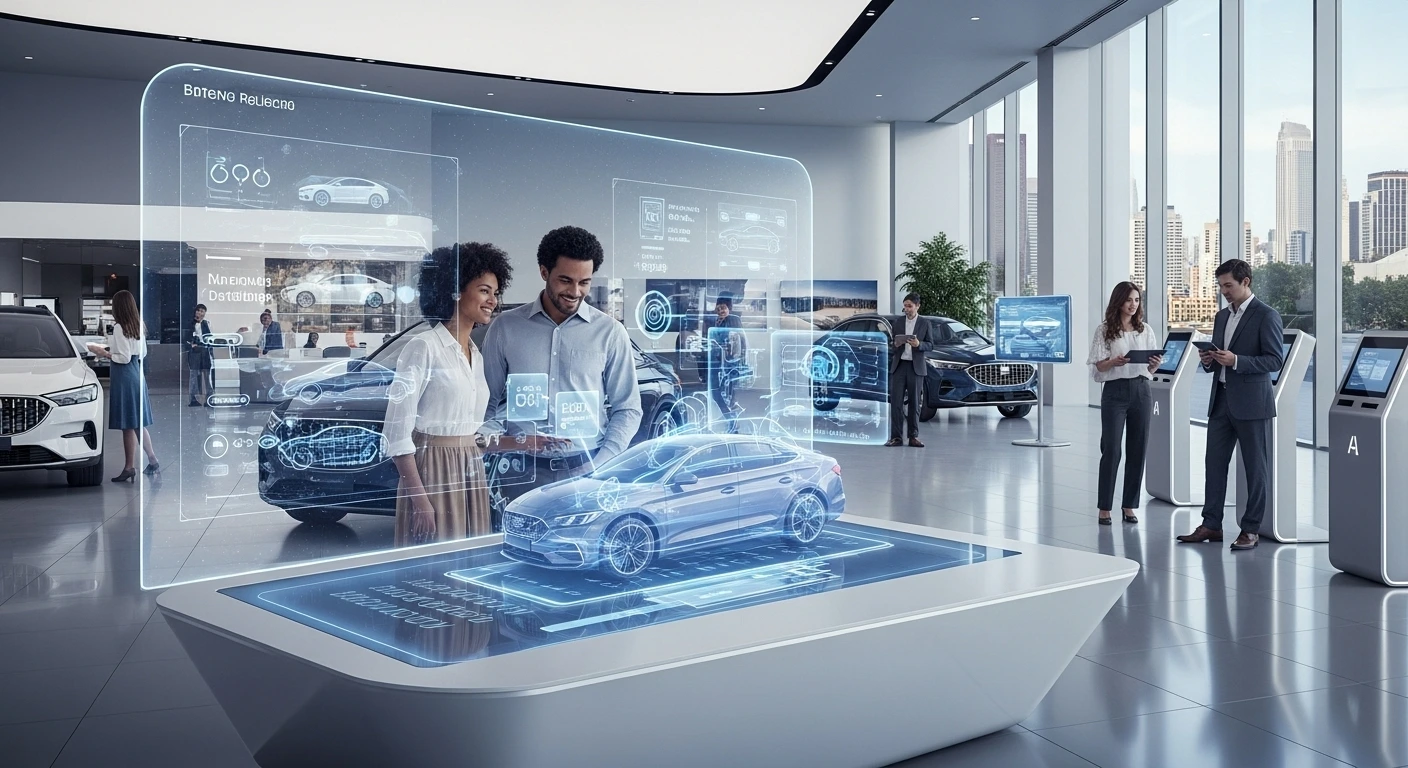
2. Virtual Showrooms, 360° Models & Immersive Digital Browsing
Car buying is becoming highly visual — and AI is powering this shift.
Dealerships, OEMs, and marketplaces now offer:
- AI-enhanced 360° interior/exterior views
- Virtual reality walkarounds
- 3D configurators (try colors, wheels, interiors, feature packs)
- AI-generated lighting & condition correction
- Virtual try-before-you-buy where you can place the car in your parking space using AR
- AI-based flaw detection that highlights dents, scratches, mismatched paint, etc.
Platforms like Car Studio, Spinny, and CARS24 use AI imaging pipelines to produce studio-quality visuals that remove the need for early physical inspection.
For used cars, this has been revolutionary — a buyer in Delhi can shortlist a Mumbai car confidently without flying there.
Why it matters
- Huge time savings — fewer showroom visits.
- Prevents impulse buying by enabling deeper online research.
- Builds confidence, especially for long-distance or first-time buyers.
- Allows personalization before purchase, creating a more engaging experience.
3. AI Chatbots, Virtual Sales Assistants & 24/7 Customer Support
AI chatbots have become the “first sales rep” for many dealerships and portals. They can:
- answer feature differences (e.g., “XUV700 AX7 vs AX7L”)
- help compare models within your budget
- provide real-time offers & availability
- schedule test drives
- auto-notify buyers about price drops
- follow up on leads without human intervention
- send financing options based on user history
- support in multiple languages (especially important in India)
Forbes reports that nearly 67% of dealerships globally now use AI assistants to improve customer support and reduce lead leakage. In India, adoption is even faster due to mobile-first behaviour.
Why it matters
- Buyers get instant answers, even at midnight.
- Dealers close more leads because AI never forgets a follow-up.
- Reduces friction, particularly for Gen Z and millennial buyers.
- Ensures a smoother journey from browsing → inquiry → purchase.
4. Faster Financing, Instant Loan Approvals & AI Underwriting
Financing is often the slowest part of the buying process — but AI is eliminating this bottleneck.
AI underwriting tools now analyze:
- bank statements
- salary slips
- credit score behaviour
- repayment history
- digital footprints
- KYC data
- risk parameters in real-time
This allows lenders to issue pre-approved loan offers in minutes, sometimes even before the buyer visits a dealership.
Platforms like Autocorp, major Indian banks, and fintech lenders are adopting automated scoring systems that make financing more accessible and more accurate. In India’s used-car market, where financing was traditionally weak, AI has increased loan penetration significantly (Business Standard, 2025).
Why it matters
- Massive time savings — loans approved the same day.
- Less paperwork, more digital verification.
- Opens doors for first-time and middle-income buyers.
- Creates an end-to-end digital journey:
search → inspect → negotiate → finance → own
5. Intelligent Inventory Management & Dealership Optimization
Behind the scenes, AI also helps manufacturers and dealerships run more efficiently.
AI systems now forecast:
- which models will sell the fastest in each region
- what variants (colors, trims) consumers prefer
- demand for EV vs ICE vehicles
- seasonal peaks
- localized price sensitivity
- spare parts demand
This helps dealerships stock the right cars and avoid unsold inventory.
AI lead-scoring models also identify buyers who are most likely to purchase soon — allowing sales staff to prioritize high-value leads and improve conversion rates. According to Forbes, dealerships using AI for lead scoring see up to 40% improvement in follow-through.
Why it matters
- Popular cars stay available, reducing waiting times.
- Dealers cut costs, which can translate to better pricing for buyers.
- Smoother overall experience — fewer delays, faster delivery.
Market Trends & Data: Global + India
AI adoption in the automotive retail ecosystem is not happening in isolation — it’s riding on a massive shift toward digital-first car buying worldwide. Both global and Indian markets are experiencing rapid growth in online sales, organized platforms, and data-driven verification processes. Here are the trends that set the foundation for AI’s explosive rise in car retail.
Global Online Car Buying Market: Rapid Digital Adoption
The global online car buying market — which includes new vehicles, used vehicles, and hybrid buying journeys (online research + online transactions) — reached USD 357 billion in 2024, according to IMARC Group. The report shows a strong upward trajectory driven by:
- wider acceptance of contactless and digital-first buying
- AI-powered comparison tools, pricing engines, and virtual showrooms
- global expansion of online-first brands like Carvana, Auto1 Group, Cazoo, and Vroom
- younger buyers preferring digital self-service instead of dealer-heavy processes
- faster financing and paperless onboarding
By 2033, the global market is expected to scale further, supported by improvements in AI imaging, automated inspections, predictive pricing models, and AI-led customer engagement.
What this means: Car buying is no longer dealership-dependent. Digital trust tools — many powered by AI — are normalising online purchases even for big-ticket items like automobiles.
India’s Used-Car Market: One of the Fastest-Growing in the World
India has become a global hotspot for online and organized used-car sales.
Market Size & Growth Outlook
- USD 36.00 billion market size in 2024
(Source: IMARC Group) - Projected to reach USD 101.00 billion by 2033,
at a CAGR of ~12.30% — among the highest globally.
Milestone: Used Cars Have Overtaken New Cars in India
For the first time ever, 2024 marked a turning point:
- ~5,412,945 used cars sold
- vs ~4,163,804 new cars
(Source: Business Standard, citing CARS24 Report)
This means India now officially sells more used cars than new cars — a pattern that was common in countries like the U.S. and Japan but delayed in India due to earlier trust issues.
Why the Shift?
Market analysts attribute India’s rapid transformation to:
- rapidly rising new-car prices (₹12–20 lakh becoming the new mid-range)
- higher fuel cost volatility pushing buyers toward used options
- a fast-growing middle class seeking value-for-money cars
- shorter ownership cycles (4–6 years vs 8–10 years earlier)
- trust and convenience offered by organized players like CARS24, Spinny, OLX Autos, CarDekho, and Mahindra First Choice
- wider availability of financing for pre-owned vehicles
- AI-enabled transparency (condition reports, digital inspections, fair valuations)
What the Numbers Suggest About AI’s Expanding Role
As millions of buyers move toward structured, digital-first buying journeys, AI becomes central to the ecosystem. The data indicates several key things:
1. Transparency is no longer optional
Buyers expect:
- fair, data-backed pricing
- verified car history
- condition reports they can trust
- online-first documentation
AI delivers all of these better than manual processes.
2. Organized online platforms need AI to scale
Digital automotive platforms manage:
- millions of listings
- customer inquiries
- valuation requests
- inspections
- loan applications
AI helps automate these tasks with precision and speed.
3. Financing penetration in used cars will explode
AI-powered underwriting is reducing loan friction, making used cars accessible to new demographics (students, entry-level professionals, gig workers).
4. India’s exponential growth = massive runway for AI
With the Indian used-car market set to hit USD 101B by 2033, and online buying accelerating, AI-centric platforms are positioned to dominate the next decade of automotive retail.
What This Means for Buyers — Benefits & The New Normal
For buyers — particularly in fast-digitizing markets like India — the impact of AI is not just incremental, it’s reshaping the entire end-to-end car-buying journey. What earlier required multiple dealership visits, hours of negotiation, and significant uncertainty is now becoming streamlined, predictable, and far more empowering.
✔ Faster, Smarter Research & Shortlisting
AI-powered discovery tools, comparison engines, and recommendation systems enable buyers to:
- Filter through thousands of listings instantly.
- Compare specs, prices, ownership history, fuel economy, and maintenance costs.
- Receive personalized suggestions based on budget, usage patterns (city, highway, commute), preferred brands, and even lifestyle cues.
This dramatically reduces the time spent researching, while also helping first-time buyers who may not fully understand technical specifications.
✔ Greater Transparency & Trust
One of the biggest advancements AI brings is clarity:
- AI valuation engines ensure prices reflect market realities, not dealer bias.
- Virtual inspections, 360° imaging, and condition reports reduce the risk of unexpected issues.
- Predictive maintenance scoring and accident-detection algorithms add extra layers of confidence.
For Indian buyers — long accustomed to opaque used-car pricing — this is a significant psychological leap.
✔ Easier, Faster Financing & EMI Approvals
Financing, traditionally the most cumbersome part of the process, is now being simplified through:
- Instant eligibility checks.
- AI-driven risk assessment.
- Pre-approved loan options.
- Automated document verification.
This reduces the dependency on in-person visits, manual paperwork, and lengthy follow-ups with banks or NBFCs. Buyers get clarity on budget and affordability much sooner in the journey.
✔ Access to Wider, National Inventory
With AI-driven platforms aggregating inventory across cities:
- Buyers can explore options far beyond their local market.
- Platforms can recommend better deals in nearby states.
- Delivery logistics and RTO assistance are often included.
- Rare models, well-maintained cars, or specific trims become easier to find.
This removes the limitations of small regional markets and gives every buyer nationwide choice.
✔ Better Negotiation Power Through Data
AI-driven insights give buyers factual leverage:
- Real-time price comparisons.
- Depreciation predictions.
- Average market listings for the same model.
- Probability of price drops.
- Dealer rating and reliability signals.
This shifts the power dynamic — negotiation becomes data-backed rather than emotional or sales-driven.
In Short: A New Normal
Buying a car is rapidly evolving into an experience that feels similar to purchasing electronics or booking travel online — frictionless, transparent, and customer-first.
AI is turning what was once a stressful, time-consuming process into a streamlined journey powered by personalization, clarity, speed, and convenience. The result is a new standard of car buying where buyers feel in control, informed, and far more satisfied with the final purchase.
Risks, Caveats & What Buyers Should Watch Out For
AI is transforming car buying in powerful ways, but it’s not a perfect system. Like any technology-driven process, there are limitations, blind spots, and practical risks buyers should stay aware of. Understanding these helps you enjoy the benefits of AI without being blindsided.
✔ Over-Reliance on Automated Valuations
AI-based pricing tools are accurate most of the time, but they are still dependent on:
- Data quality (photos, service history, ownership details)
- Regional supply-demand variations
- The seller accurately declaring the car’s condition
- Past market data that may not reflect sudden price shifts
If the car has hidden wear, flood damage, aftermarket modifications, or odometer tampering, AI models may undervalue or overvalue it.
Smart tip: Always complement an AI-generated valuation with a physical inspection or third-party mechanic review before you finalize the deal.
✔ Virtual Inspections Miss Real-World Issues
360° photos, AI-enhanced imaging, and video walkarounds are helpful — but they don’t reveal everything. Some issues that virtual tools may miss include:
- Suspension problems
- Engine knocking or overheating
- Underbody rust or welding
- Steering/alignment issues
- Brake and tyre wear patterns
- Electrical or ECU-related faults
For used cars, tactile checks, test drives, and full diagnostic scans remain extremely valuable.
In other words: Use virtual tools to shortlist — not to finalize.
✔ Privacy, Data Use & Transparency Concerns
AI-powered platforms rely heavily on personal data such as:
- ID information
- Income data for loan underwriting
- Driving behaviour (in telematics-enabled tools)
- Search patterns and preferences
Not all platforms disclose how this data is stored, shared, or used for marketing.
Buyers should:
- Review T&Cs and privacy policies
- Avoid sharing unnecessary personal documents early in the process
- Be cautious of platforms that request excessive permissions
Trustworthy brands usually offer clear privacy guidelines — choose those.
✔ Reduced Negotiation Opportunities
AI-based valuations bring fairness and transparency, but they also limit the “human buffer” you once had with dealerships.
What you may miss:
- Free accessories
- Complimentary services
- Extended warranties
- Loyalty bonuses or dealer-level discounts
- On-the-spot negotiation advantages
- Add-on offers for insurance, exchange, or EMI deals
Since AI pricing creates a more fixed-pricing ecosystem, buyers may lose some extra perks that were common in traditional showroom interactions.
✔ Digital Divide & Platform Dependency
AI-powered tools work best with:
- Stable, high-speed internet
- Smartphones capable of 3D/AR interactions
- Comfort with digital payments, online documents, and virtual KYC
Buyers in Tier 3/4 cities or older, non-tech-savvy customers may:
- Struggle with digital browsing
- Be skeptical of AI-driven pricing
- Prefer physical showrooms for trust
This means hybrid buying journeys — online research + offline testing — will remain relevant for years, especially in India’s diverse market.
Bottom Line
AI makes car buying faster, cleaner, and more transparent — but not foolproof.
Buyers who blend AI tools with traditional diligence (test drives, physical checks, document verification) enjoy the best of both worlds.
FAQs Section
1. Can I trust AI-based valuations when buying a used car?
Yes — AI valuations are generally reliable for establishing a baseline fair price. These systems analyze millions of data points, including:
- Make, model, variant, and manufacturing year
- Real-time market demand in the buyer’s region
- Historical transaction data for similar vehicles
- Mileage comparisons and age–depreciation curves
- Seasonal pricing trends (e.g., spikes before festivals)
- Platform-wide listing patterns in used-car marketplaces
However, AI tools can only evaluate what they see or what the seller inputs. They may not detect:
- Hidden accidents or unreported repairs
- Tampered odometers
- Engine wear that’s not visible in photos
- Poor maintenance or long service gaps
- Internal rust, flood damage, wiring issues
Best practice:
Use AI valuation as your starting point, then follow it with:
- A physical inspection
- A test drive
- A third-party mechanic evaluation
- A diagnostic scan (OBD-based)
Together, these help eliminate surprises and negotiate confidently.
2. Are virtual showrooms accurate for understanding a car’s condition?
Virtual showrooms have improved dramatically — many platforms now offer:
- 360° interior and exterior views
- Panoramic cabin imaging
- AI-corrected lighting for better clarity
- Close-up shots of dents, tyres, engine bay
- 3D AR models to visualize the car in your parking space
They are excellent for:
- Shortlisting cars
- Comparing features and trims
- Understanding space, design, and layout
- Getting a realistic feel of the model without visiting
But: They cannot replace physical evaluation. Virtual tools can’t reveal:
- Suspension knocking
- Steering rack issues
- HVAC performance
- Engine vibrations, leakages, or overheating
- Underbody corrosion or past welding
- Brake wear or wheel alignment issues
Conclusion:
Virtual showrooms speed up your research, but a physical inspection remains non-negotiable for used cars.
3. Do AI tools make loan approvals easier?
Absolutely. AI-driven underwriting is one of the biggest upgrades in the car-buying ecosystem. These systems evaluate:
- Credit history
- Income patterns
- Employment stability
- Past loan repayment behaviour
- Bank statements and spending trends
- Risk scoring (AI + traditional bureau checks)
Because AI can analyze this data within seconds, buyers get:
- Instant pre-approvals
- Personalized EMI plans
- Higher approval probability for first-time borrowers
- Lower documentation burden
- Faster disbursement timelines
This is especially useful in India’s used-car market, where approval rates traditionally lagged behind new-car loans.
4. Will dealerships still matter if AI and online platforms dominate?
Yes. Dealerships will still play an important — though evolving — role. AI reduces the need for repeated showroom visits, but physical dealers remain essential for:
- Final test drives
- Detailed inspections
- Finance documentation and verification
- Experiential features (touch, feel, build quality)
- Delivery and after-sales support
- Extended warranties and insurance add-ons
Many dealers now incorporate AI tools themselves, including:
- Automated lead management
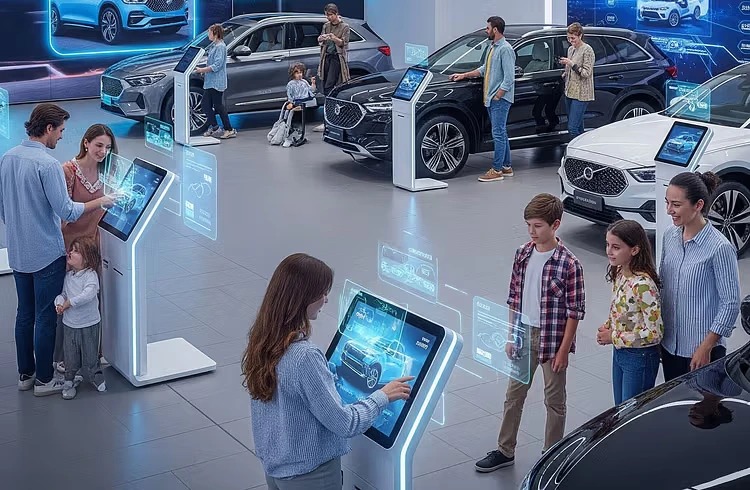
- Digital valuation kiosks
- Inventory optimization systems
- Virtual configurators
The future is hybrid: AI for discovery, dealers for validation.
5. Is online car buying popular in India?
Yes — and it’s growing faster than in most global markets.
According to IMARC Group:
- India’s used-car market was USD 36 billion in 2024
- It is projected to reach USD 101 billion by 2033
This rapid rise reflects:
- Increasing trust in organized online platforms
- Rising new-car prices pushing buyers to used options
- Growth of AI-powered valuations & inspections
- Shorter ownership cycles
- Expanding financing options for used vehicles
Online discovery and purchase journeys, especially among younger buyers, are becoming mainstream.
6. What kind of cars sell best online in India’s used-car segment?
Current trends (Times of India, CARS24 reports) show:
- Hatchbacks (Swift, i20, Baleno, Tiago) lead due to affordability, easy city driving, and lower running costs.
- Compact and mid-size SUVs (Creta, Brezza, Nexon) are growing fastest because buyers want high ground clearance, better road presence, and advanced features.
- Feature-loaded older cars (sunroofs, connected tech, automatic transmissions) are in high demand, even if slightly older, because they offer value for money.
- Used EVs are slowly rising but remain a niche segment due to early adoption hurdles.
7. Does AI change how dealers manage inventory?
Yes — dramatically. AI tools help dealers with:
- Demand forecasting: Predict which models/variants will sell faster in a city or region.
- Pricing optimization: Adjust car prices dynamically based on viewing patterns and market interest.
- Lead scoring: Identify which buyers are more likely to convert.
- Stock planning: Reduce overstocking slow-moving models.
- Replacement cycles: Plan trade-ins more efficiently.
For buyers, this means:
- Better availability of popular models
- Lower waiting times
- More competitive prices due to optimized inventory costs
AI isn’t just changing buying — it’s modernizing dealership operations.
8. Are there any downsides to buying via AI-powered platforms?
Yes — while AI brings many benefits, some challenges persist:
- Automated valuations lack nuance: Hidden damages may go undetected.
- Data privacy risks: Platforms collect income, documents, browsing behaviour — mismanagement could be harmful.
- Virtual inspections can’t detect mechanical flaws.
- Reduced room for negotiation: AI-led pricing creates fixed-price structures.
- Dependence on good internet: Tier 3/4 buyers may struggle with 3D or VR tools.
Buyers should still use traditional checks — test drive, inspection, paperwork verification.
9. Should first-time buyers trust AI-based platforms more than traditional dealers?
First-time buyers often struggle with:
- Price research
- Model comparisons
- Negotiation
- Documentation
- Financing
AI platforms reduce these pain points by offering:
- Transparent pricing
- Verified inspection reports
- Instant financing options
- Doorstep test drives
- Hassle-free documentation
However, the safest strategy is hybrid:
Use AI platforms for research, discovery, valuation, and financing — then validate everything with a physical inspection or test drive before paying.
10. How will AI shape the future of car buying in the next 5–10 years?
Several major shifts are already underway, and will accelerate:
1. Full Online-to-Offline Integration
From browsing → valuation → finance → delivery — the entire journey may happen digitally.
2. AR/VR Replacing Physical Showrooms
You’ll preview cars in virtual spaces, sit virtually in the cabin, and personalize features in real time.
3. Predictive Pricing
AI will estimate future resale value, maintenance costs, and insurance premiums before you buy.
4. Fully Automated Loan Engines
Instant approvals using AI-driven financial modelling will become standard.
5. Subscription Models & Flexible Ownership
AI will help manage month-to-month car subscriptions, EV battery swaps, and pay-as-you-drive models.
6. Smarter Used-Car Grading
Advanced imaging, sensors, and AI diagnostics will create highly accurate “car health reports.”The result:
Car buying will become faster, more transparent, and almost entirely digital, especially for used cars and EVs.
Summary
- AI is rapidly transforming car buying — valuations, showrooms, financing, lead-handling, inventory, and customer experience.
- For buyers, it brings convenience, speed, transparency, and choice.
- For dealers and platforms, AI increases efficiency, reduces costs, and helps scale operations.
- India is at the cusp of this shift: used-car market is growing fast, online adoption is rising, and buyers are embracing digital tools.
- But AI is not a silver bullet: physical inspection, due diligence, and cautious decision-making remain essential.
Conclusion
AI is re-writing the rules of car buying — transforming what was once a long, opaque, dealer-heavy process into a smarter, faster, data-driven and more transparent journey. For buyers in India and across the world, this means more choice, convenience and control.
If you’re planning to buy a car soon — whether new or used — now is the time to embrace AI-driven tools: use virtual showrooms, demand data-backed valuations, compare financing offers, and always do your due diligence.
If you found this useful — subscribe for more insights on AI, auto, financing and buyer guides. Got experiences of using AI-based car-buying tools yourself? Share in the comments below — your story could help other buyers!
References
- “How AI is Transforming Car Dealerships in 2025” — Charter Global, March 2025. How AI is revolutionizing dealership operations, customer engagement, vehicle inspection, financing and more. charterglobal.com
- “How AI is Revolutionising Used-Car Buying & Selling” — CARS24 (2025). Discusses AI-driven pricing, digital convenience, 300-point inspection, online buying flow & delivery/test-own offers. CARS24
- “How AI Adoption Will Change the Car-Buying Journey” — Cognizant Insights Blog (August 2025). Introduces the “AI Inclination Index” and shows where buyers are most likely to adopt AI (research phase more than purchase or usage). www.cognizant.com
- “Will AI Become the Best Car Sales Advisor?” — Boston Consulting Group (BCG) report, Sept 2025. Explains how generative AI (GenAI) could transform vehicle discovery, personalized recommendations, deal negotiation and overall purchase journey. BCG Global
- “The Future of Car Buying: Online, AI-Powered, and Dealership-Free” — MotorFinanceOnline, March 2025. Describes emerging trends of online car buying powered by AI, shifting from traditional dealership-dependent models. motorfinanceonline.com
- “How AI is Turbocharging India’s Automotive Industry (Software-Defined Cars, AI & Future Mobility)” — Times of India (July 2025). Shows the shift towards software-defined vehicles in India, and how AI is central to future mobility, ownership models and digital services. The Times of India+1
- “How Agentic AI Is Transforming Customer Experience in Used Car Marketplaces” — WNS Perspectives (Nov 2025). Describes how advanced AI agents integrate verification, financing, negotiation and post-sale engagement to improve trust and transparency in used-car marketplaces. wns.com
- “India Used Car Market Size, Share, Trends and Forecast (2024–2033)” — IMARC Group report. Estimated value of USD 36.00 billion in 2024; forecast to reach USD 101.00 billion by 2033. Useful for quantifying the growth potential of the used-car segment in India. IMARC Group
- “Used-car sales in India to cross 1 crore annual sales mark by 2030” — CARS24 Report / news via Economic Times (Jan 2025). Projects growth from 4.6 million sales in 2023 to 10.8 million by 2030 (CAGR 13%), underlining the strength of the used-car market. The Economic Times+1
- “Used-Car Market Overtakes New-Car Sales in India (2024)” — Business Standard, Jan 2025. Reports 5,412,945 used-cars sold vs 4,163,804 new cars — a milestone indicating shift in buyer preferences and growing trust in organized/online used-car platforms. business-standard.com+1
