







Estimated Reading Time: 36-40 minutes (7,136 words)
Introduction
While the world remains captivated by the latest advances in artificial intelligence, humanoid robots, and flashy electric vehicle models, there is a far more significant transformation happening quietly behind the scenes—Tesla is building a fully integrated EV battery supply chain. Unlike headline-grabbing EV launches or futuristic AI demos, this silent revolution directly affects how electric vehicles are manufactured, the cost structure of EVs, and the speed at which they can be deployed globally.
Tesla’s strategy is not merely about assembling cars—it’s about controlling every single step of the battery lifecycle, from sourcing raw materials to recycling end-of-life cells. The company is securing lithium from Australia, nickel from Indonesia, and cobalt from the Democratic Republic of Congo, refining these materials in proprietary processes, producing high-efficiency battery cells in its Gigafactories, and integrating them into EVs. Beyond production, Tesla is investing in closed-loop battery recycling programs in Nevada, ensuring that critical materials are reused, waste is minimized, and costs are further reduced.
For India, this strategy signals a tremendous opportunity. The country is on the cusp of a massive EV adoption wave, with the EV battery market expected to grow from ~17.7 GWh in 2025 to over 256 GWh by 2032, translating into hundreds of thousands of potential jobs across manufacturing, R&D, and logistics. Tesla’s move into battery supply chain localization could not only make EVs more affordable and reliable for Indian consumers but also spark ancillary industries, such as battery recycling, material processing, and component manufacturing.
This blog will provide a comprehensive look at Tesla’s EV battery supply chain, including:
- How Tesla’s vertical integration strategy is disrupting the global EV industry
- Key global and India market trends, forecasts, and growth projections
- Technological innovations in battery chemistry, production, and recycling
- Strategic insights for investors, entrepreneurs, and EV enthusiasts
- Practical steps for navigating opportunities in the India EV ecosystem
By the end of this article, readers will understand not just the mechanics of Tesla’s supply chain, but also why it matters for the future of EVs worldwide and India’s growing market, and how stakeholders can strategically position themselves to benefit from this quiet but powerful revolution.
Why Tesla’s EV Battery Supply Chain Matters
Tesla’s mission has always been to accelerate the world’s transition to sustainable energy, but in recent years, its focus has shifted from just producing electric vehicles to mastering the entire battery supply chain. This strategic pivot is quietly reshaping the EV industry, influencing vehicle pricing, production efficiency, technology development, and global supply dynamics.
Here’s why Tesla’s supply chain strategy matters, in detail:
1. Cost Reduction: Batteries Are the Single Largest EV Expense
- Batteries account for 30–40% of the total cost of an EV. By integrating production from raw materials to battery packs, Tesla reduces costs at every stage.
- Example: By producing its own LFP (Lithium Iron Phosphate) batteries at the Shanghai Gigafactory, Tesla has cut battery costs by nearly $5,000 per vehicle compared to sourcing externally.
- Industry Impact: Lower battery costs translate into more affordable EVs for global markets and make EV adoption viable in price-sensitive countries like India.
2. Supply Security: Avoiding Global Bottlenecks
- The EV battery supply chain is heavily reliant on China, which produces ~80% of global lithium-ion cells. This concentration creates vulnerability to geopolitical tensions, trade restrictions, and raw material shortages.
- Tesla’s vertical integration ensures that critical components—lithium, nickel, cobalt, and manganese—are sourced and processed under controlled operations, reducing the risk of production delays.
- India Relevance: For India’s emerging EV ecosystem, secure battery supply is crucial. Tesla’s potential investment in local production could reduce dependence on imports, mitigate costs, and ensure timely availability of EVs.
3. Innovation Acceleration: Faster Development of Next-Gen Batteries
- Controlling the supply chain allows Tesla to experiment with new chemistries and designs, such as LFP, nickel-manganese-cobalt (NMC), and upcoming solid-state batteries, without relying on third-party approvals.
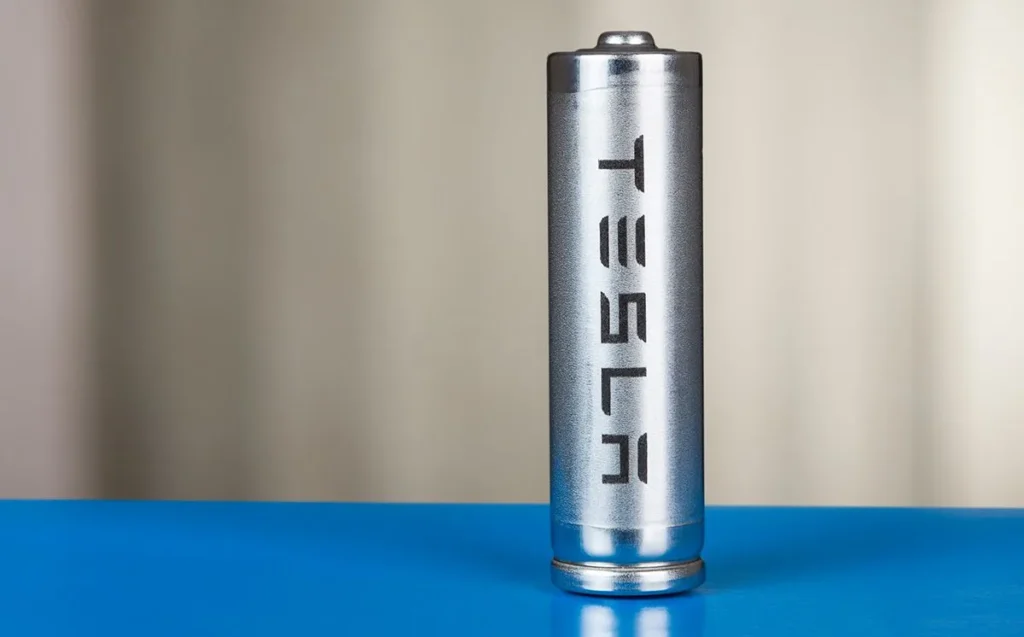
- Example: Tesla’s proprietary 4680 cells combine higher energy density, faster charging, and lower costs, made possible by end-to-end control of production.
- Result: The company can rapidly integrate battery improvements across all models, giving Tesla a competitive edge in range, performance, and safety.
4. India-Specific Advantage: Local Sourcing & Manufacturing
- India’s EV market is projected to reach 256 GWh of battery demand by 2032, growing at a CAGR of ~35%. (outlookbusiness.com)
- Tesla’s potential gigafactory or partnerships in India could:
- Reduce import costs for raw materials and battery cells.
- Lower EV prices for consumers, making them competitive with traditional ICE vehicles.
- Support India’s push for domestic manufacturing under schemes like PLI for Advanced Chemistry Cell (ACC) batteries.
- Broader Impact: Job creation, skill development, and a localized EV ecosystem.
Quick Fact Box
- Tesla’s Gigafactory Nevada produces ~50 GWh of battery cells annually, powering not just Tesla vehicles but also energy storage products like Powerwalls.
- EV battery costs have dropped 89% since 2010, largely due to production scale, vertical integration, and supply chain optimization. (mckinsey.com)
- India’s domestic battery production target under PLI schemes is expected to reach ~50 GWh by 2026, laying the foundation for a self-reliant EV ecosystem.
Takeaway
Tesla’s control over its battery supply chain is more than a cost-saving measure—it’s a strategic advantage that enables innovation, global competitiveness, and market expansion, especially in rapidly growing regions like India. For investors, manufacturers, and policymakers, understanding this supply chain is critical to navigating the EV revolution.
Global EV Battery Market: Facts & Figures
The global electric vehicle (EV) battery market is experiencing unprecedented growth, driven by surging EV adoption, government incentives, and technological innovation. Understanding the scale, trends, and forecasts is crucial for investors, policymakers, and manufacturers looking to capitalize on this revolution.
Key Market Metrics (2024 vs 2030 Forecast)
| Metric | 2024 | 2030 Forecast | Source |
| Global EV battery demand | 1 TWh | >4.2 TWh | McKinsey |
| EV penetration (% of new vehicle sales) | 12% | ~50% | IEA |
| Average battery cost per kWh | ~$130 | <$100 | BloombergNEF |
| China’s market share in production | 80% | 65–70% | IEA |
1. Explosive Global Battery Demand
- The global demand for EV batteries is expected to grow more than fourfold from 2024 to 2030, surpassing 4.2 terawatt-hours (TWh).
- Batteries remain the largest single cost component in EVs, accounting for 30–40% of total vehicle cost.
- Implication: Efficient battery production and supply chain management can significantly reduce EV prices, driving mass-market adoption.
Quick Fact: Tesla’s 4680 battery cells are part of the reason the company can achieve higher energy density at lower costs, accelerating EV affordability globally.
2. EV Penetration: From Niche to Mainstream
- In 2024, EVs accounted for 12% of global new vehicle sales, with Europe and China leading adoption.
- By 2030, EV penetration is expected to reach ~50% of all new car sales, signaling a massive shift away from internal combustion engines (ICEs).
- India Opportunity: EV penetration in India is projected to reach ~30% by 2030, driven by government incentives, falling battery costs, and localized production.
3. Falling Battery Costs Per kWh
- Average battery costs have decreased from ~$1,100/kWh in 2010 to ~$130/kWh in 2024, and are expected to fall below $100/kWh by 2030. (BloombergNEF)
- Cost drivers:
- Economies of scale through gigafactory production
- Vertical integration of the supply chain (Tesla example)
- Advanced battery chemistries (LFP, LMFP, and emerging solid-state batteries)
- Result: EVs are becoming price-competitive with ICE vehicles, particularly in markets like India where cost sensitivity is high.
4. Global Production Concentration: China Dominates
- China currently produces ~80% of lithium-ion cells, controlling much of the upstream supply chain (mining, refining, cathode/anode production).
- By 2030, China’s share may slightly decline to 65–70% as the US, India, Europe, and Japan ramp up domestic battery production.
- Implication: Diversifying production is critical to reduce geopolitical risk and supply bottlenecks, especially for fast-growing EV markets like India.
India-Specific Insight:
- India is actively building local battery production capacity under the PLI-ACC (Production Linked Incentive – Advanced Chemistry Cell) scheme, targeting ~50 GWh by 2026 and ~220 GWh by 2030.
- Several Indian companies, such as Exide Industries, Amara Raja Batteries, and Maxvolt Energy, are investing in cell production and recycling facilities to reduce import dependency.
5. Next-Generation Chemistries
| Chemistry | Advantages | Challenges | Global Adoption |
| LFP (Lithium Iron Phosphate) | Safer, longer cycle life, cheaper | Lower energy density | Tesla Model 3 China, BYD EVs |
| NMC (Nickel Manganese Cobalt) | High energy density | Expensive, resource-heavy | Used widely in Europe & US |
| Solid-State Batteries | Ultra-safe, higher range | Still in R&D, expensive | Pre-commercial trials by Tesla, QuantumScape |
| Sodium-ion | Low cost, abundant materials | Lower energy density | Pilot projects in India (Tata, Exide) |
Insight: These next-gen chemistries are expected to further reduce costs, improve range, and enhance safety, driving global EV adoption.
6. Key Insights and Takeaways
- Battery production dominates EV costs, so controlling the supply chain is strategically vital.
- China remains the largest producer, but diversification is accelerating in the US, Europe, and India.
- Next-gen battery chemistries like LFP, LMFP, solid-state, and sodium-ion will lower costs and improve performance.
- India represents a fast-growing market, with both domestic and foreign players investing heavily in production, recycling, and R&D.
Quick Fact Box:
- Global battery production capacity is projected to exceed 6 TWh by 2035. (McKinsey)
India’s share of global EV battery production could reach ~10–12% by 2035 if local supply chain initiatives succeed.
India’s EV Battery Market: Growth & Opportunities
India’s electric vehicle (EV) market is at a critical inflection point, and the battery sector is the backbone of this growth. As EV adoption accelerates across two-wheelers, three-wheelers, and passenger cars, the demand for locally produced batteries is surging. Understanding the market size, policy environment, technology trends, and investment opportunities is crucial for businesses, investors, and policymakers.
1. Explosive Market Growth
- Projected battery demand:
India’s EV battery market is expected to expand from ~17.7 GWh in 2025 to over 256 GWh by 2032, representing a compound annual growth rate (CAGR) of ~35%. (outlookbusiness.com) - Market drivers:
- Rapid adoption of electric two-wheelers and passenger EVs in tier-2 and tier-3 cities.
- Falling battery prices due to global scale economies and domestic production.
- Government incentives for EVs and charging infrastructure, boosting consumer demand.
Quick Fact: Two-wheelers account for over 70% of EV sales in India, making cost-effective batteries essential for mass adoption.
2. Strong Policy Support
The Indian government is actively accelerating battery production and EV adoption through multiple policy initiatives:
- PLI Scheme for Advanced Chemistry Cell (ACC) Batteries:
- Targets domestic production of ~50 GWh by 2026, expanding to ~220 GWh by 2030.
- Offers financial incentives of up to ₹18,000 crore to battery manufacturers.
- Local Sourcing Mandates:
- Encourages OEMs to procure batteries and raw materials locally, reducing import dependence and promoting self-reliance.
- EV Manufacturing Incentives:
- Lower GST (5%) on EVs and batteries
- Capital subsidies for battery manufacturing plants
- Support for charging infrastructure development, ensuring complete ecosystem growth
Insight: Government support makes India one of the fastest-growing EV battery markets globally, attracting international players like Tesla, Hyundai, and Kia.
3. Job Creation and Economic Impact
- Battery manufacturing and recycling are expected to create 100,000+ jobs by 2030 across India.
- Jobs will span multiple domains:
- R&D engineers developing advanced battery chemistries
- Production technicians in gigafactories and assembly lines
- Supply chain and logistics managers for raw materials and finished batteries
- Recycling and sustainability specialists managing battery lifecycle and end-of-life reuse
Case Study: Exide Industries and Amara Raja Batteries are expanding manufacturing facilities in Tamil Nadu, Andhra Pradesh, and Maharashtra, employing thousands and creating downstream opportunities for suppliers.
4. Domestic Companies Leading the Charge
Several Indian companies are aggressively expanding capacity to meet domestic demand:
| Company | Focus Area | Recent Developments |
| Maxvolt Energy | Li-ion cells, battery packs | New 2 GWh plant in Ghaziabad, plans to triple capacity |
| Exide Industries | Lead-acid and Li-ion batteries | JV with global tech partners for Li-ion expansion |
| Amara Raja Batteries | Li-ion EV batteries | Investing ₹500 crore in battery manufacturing & recycling in Andhra Pradesh |
| Tata Chemicals / Tata Motors | Sodium-ion pilot projects | Exploring domestic LFP & sodium-ion production for EVs |
Insight: India’s domestic companies are strategically positioning themselves to supply both OEMs and the growing second-hand/recycling market.
5. Opportunities for Investors and Startups
Investors and startups have multiple avenues to capitalize on India’s EV battery boom:
- Upstream Materials: Lithium, nickel, cobalt processing and refining.
- Battery Cell Manufacturing: Focused on LFP, NMC, and emerging chemistries.
- Battery Recycling & Second Life: Recovering valuable metals and reusing EV batteries in energy storage.
- EV Component Manufacturing: Battery packs, BMS (Battery Management Systems), and charging infrastructure.
- R&D Innovation: Developing safer, higher-performance chemistries and modular packs for India-specific conditions.
Tip: Startups that integrate local supply chain solutions (materials + recycling + cell production) are likely to capture the most value in India’s rapidly expanding EV market.
6. Key Takeaways
- India’s EV battery market is set for 35% CAGR growth until 2032.
- Strong government policies, incentives, and local sourcing mandates support domestic production.
- Job creation will be significant, spanning manufacturing, R&D, recycling, and supply chain roles.
- Domestic players like Maxvolt, Exide, and Amara Raja are rapidly expanding capacity.
Opportunities abound for investors, startups, and international companies in upstream, downstream, and recycling sectors.
Tesla’s Quiet Supply Chain Revolution
Tesla’s dominance in the EV industry is no accident. While many competitors focus on flashy car launches or autonomous driving tech, Tesla has been quietly building one of the most advanced, vertically integrated EV battery supply chains in the world. This end-to-end control—from raw material extraction to battery recycling—is a strategic masterstroke that lowers costs, accelerates innovation, and secures long-term supply.
Here’s a detailed breakdown of Tesla’s approach:
1. Mining & Raw Materials: Securing the Foundation
- Tesla sources critical battery materials globally:
- Lithium from Australia (the world’s largest lithium producer)
- Nickel from Indonesia, chosen for high-grade, low-impurity deposits
- Cobalt from the Democratic Republic of Congo (DRC), with plans for ethical sourcing
- Why this matters: Battery raw materials are scarce and geographically concentrated, making supply chains vulnerable to geopolitical tensions and price volatility. By directly partnering with mines and signing long-term contracts, Tesla ensures stable, high-quality material supply.
India Opportunity:
- India imports ~90% of its lithium requirements, primarily from Australia. Tesla’s expertise in global sourcing could help establish domestic partnerships and joint ventures, potentially lowering costs and import dependency.
2. Processing & Refining: Reducing External Dependence
- Tesla is investing in in-house processing facilities, including refining lithium, nickel, and cobalt.
- Why this is important: Third-party processors often create bottlenecks and quality inconsistencies. Tesla’s internal refining operations allow:
- Higher purity materials for better battery performance
- Cost reduction by cutting middlemen
- Greater control over environmental and ethical standards
Global Context: Companies like CATL and LG Energy rely heavily on third-party refiners. Tesla’s approach gives it a significant competitive edge.
3. Cell Production: Gigafactories & Technology Leadership
- Tesla’s Gigafactories in Nevada, Shanghai, Berlin, and Texas produce lithium-ion cells, including:
- LFP (Lithium Iron Phosphate): Safer, cheaper, long cycle life, used for standard-range EVs
- NMC (Nickel Manganese Cobalt): Higher energy density, used in performance models
- 4680 cells: Tesla’s next-gen proprietary design delivers higher energy density, faster charging, and simplified assembly, made possible by vertical integration.
Impact: Control over cell production allows Tesla to rapidly scale manufacturing, optimize vehicle range, and reduce battery costs by up to 10–15% per kWh compared to competitors.
4. Battery Packs & Integration: Modular & Efficient Design
- Tesla designs modular battery packs tailored for specific EV models, maximizing space, cooling efficiency, and weight distribution.
- Integration is tightly coupled with vehicle design:
- Battery packs form part of the chassis, improving rigidity and reducing assembly complexity
- Battery Management Systems (BMS) are optimized in-house, enhancing performance, safety, and longevity
Takeaway: By designing both the battery and the vehicle simultaneously, Tesla reduces production costs, increases efficiency, and enhances EV performance—something competitors often struggle with due to fragmented supply chains.
5. Recycling & Reuse: Closing the Loop
- Tesla is investing heavily in closed-loop battery recycling to recover lithium, nickel, cobalt, and other critical metals.
- Nevada Gigafactory Case Study:
- Currently recycles >10% of used cells internally
- Plans to scale recycling to 50% by 2030, reducing reliance on newly mined materials and lowering costs
- Benefits of recycling:
- Environmental sustainability
- Reduced raw material dependency
- Cost efficiency
India Relevance:
- India’s EV battery recycling market is in its infancy. Tesla’s model can inspire local startups to adopt advanced recycling processes, creating job opportunities and sustainable supply chains.
6. Strategic Insights: Why Tesla’s Supply Chain is a Game-Changer
- Cost Control: Vertical integration reduces battery costs, making EVs more affordable globally and in India.
- Innovation Acceleration: In-house control allows rapid development of next-gen chemistries and battery architectures.
- Supply Security: Secures materials from volatile markets, reducing geopolitical risk.
- Sustainability: Closed-loop recycling ensures resource efficiency and aligns with global ESG trends.
Quick Fact Box:
- Tesla aims for >50 GWh annual battery production capacity across all Gigafactories by 2030.
- Recycling initiatives are expected to recover tens of thousands of tons of lithium, cobalt, and nickel, reducing environmental impact. (tesla.com)
Actionable Takeaway for India and Investors
- Monitor Tesla’s supply chain moves for potential partnerships or joint ventures in India.
- Identify opportunities in battery recycling, LFP/NMC production, and modular EV components.
Leverage government incentives (PLI schemes, local sourcing mandates) to enter India’s EV battery ecosystem.
Battery Technologies Driving Change
The future of electric vehicles (EVs) is being shaped not just by vehicle design, but by advances in battery technology. Batteries determine range, safety, cost, and sustainability—making them the core of the EV revolution. Understanding the pros, cons, and adoption of different battery chemistries is critical for manufacturers, investors, and Indian policymakers.
1. LFP (Lithium Iron Phosphate)
- Advantages:
- Safer chemistry: Less prone to thermal runaway, reducing fire risk
- Longer cycle life: Can withstand 2,000–3,000 charge cycles
- Cost-effective: Cheaper than nickel-based batteries due to abundant iron and phosphate
- Safer chemistry: Less prone to thermal runaway, reducing fire risk
- Challenges:
- Lower energy density compared to NMC batteries, meaning slightly shorter driving ranges
- Not ideal for high-performance EVs requiring maximum range or power output
- Lower energy density compared to NMC batteries, meaning slightly shorter driving ranges
- Global Adoption:
- Widely used in Tesla Model 3 Standard Range (China)
- Adopted by BYD and other Chinese EV makers for mass-market vehicles
- Widely used in Tesla Model 3 Standard Range (China)
- India Relevance:
- Indian manufacturers (Exide, Amara Raja) are investing in LFP for affordable, high-volume EVs, especially two-wheelers and compact cars
- Indian manufacturers (Exide, Amara Raja) are investing in LFP for affordable, high-volume EVs, especially two-wheelers and compact cars
2. NMC (Nickel Manganese Cobalt)
- Advantages:
- High energy density: Longer ranges, suitable for premium EVs
- Well-established manufacturing technology globally
- High energy density: Longer ranges, suitable for premium EVs
- Challenges:
- Expensive and resource-intensive
- Reliance on cobalt, often sourced from regions with ethical and environmental concerns
- Expensive and resource-intensive
- Global Adoption:
- Predominantly used in Europe and the US, powering premium Tesla models, Audi e-tron, and other long-range EVs
- Predominantly used in Europe and the US, powering premium Tesla models, Audi e-tron, and other long-range EVs
- India Relevance:
- Limited adoption currently due to high costs and supply constraints
- Potential for niche adoption in premium EV models and fleet applications
- Limited adoption currently due to high costs and supply constraints
3. Solid-State Batteries
- Advantages:
- Ultra safe: Eliminates liquid electrolyte, reducing fire risk
- Higher energy density: Promises longer range in smaller, lighter cells
- Faster charging potential due to stable electrolytes
- Ultra safe: Eliminates liquid electrolyte, reducing fire risk
- Challenges:
- Still in R&D; commercial production is costly and technologically challenging
- Scale-up for mass-market adoption remains uncertain
- Still in R&D; commercial production is costly and technologically challenging
- Global Adoption:
- Pre-commercial pilots by Toyota, QuantumScape, and Tesla prototypes
- Pre-commercial pilots by Toyota, QuantumScape, and Tesla prototypes
- India Relevance:
- Currently limited, but potential for long-range EVs and high-end applications once manufacturing costs drop
- Currently limited, but potential for long-range EVs and high-end applications once manufacturing costs drop
4. Sodium-ion Batteries
- Advantages:
- Low-cost and abundant materials: Sodium is widely available in India, reducing import dependency
- Safer than nickel-based chemistries
- Low-cost and abundant materials: Sodium is widely available in India, reducing import dependency
- Challenges:
- Lower energy density than lithium-ion, so suitable mainly for city EVs and two-wheelers
- Performance under high temperatures needs further optimization
- Lower energy density than lithium-ion, so suitable mainly for city EVs and two-wheelers
- Global Adoption:
- Pilot projects are underway in India with Tata Chemicals, Exide, and startups
- Pilot projects are underway in India with Tata Chemicals, Exide, and startups
- India-Specific Opportunity:
- Sodium-ion could become a game-changer for India, enabling cost-effective EV adoption in urban fleets, delivery vehicles, and budget passenger cars
- Sodium-ion could become a game-changer for India, enabling cost-effective EV adoption in urban fleets, delivery vehicles, and budget passenger cars
Battery Technology Comparison Table
| Technology | Advantages | Challenges | Global Adoption | India Relevance |
| LFP | Safe, long lifespan, cost-effective | Lower energy density | Tesla Model 3 China, BYD | Mass-market EVs, 2W/3W, low-cost cars |
| NMC | High energy density, premium range | Expensive, cobalt-dependent | Premium EVs worldwide | Niche/premium cars |
| Solid-State | Ultra-safe, high range, fast charging | High cost, R&D stage | Pre-commercial pilots | Future premium EVs |
| Sodium-ion | Abundant, low-cost, safe | Lower energy density | India pilot projects | City EVs, 2W/3W, budget EVs |
Key Insights
- India’s Strategy: Local manufacturers are investing heavily in LFP and sodium-ion batteries to make EVs safer, cheaper, and scalable.
- Global Trend: The transition from NMC to LFP for mass-market EVs and eventual adoption of solid-state batteries for premium EVs is reshaping the EV ecosystem worldwide.
- Investment Opportunities:
- LFP and sodium-ion production for city EVs
- Recycling solutions for end-of-life batteries
- R&D in solid-state and hybrid chemistries
- LFP and sodium-ion production for city EVs
Tip: For India-focused EV startups, LFP and sodium-ion are the most promising technologies for scaling production while keeping costs low and performance reliable.
Actionable Takeaways
- OEMs & Startups: Focus on LFP for mass-market vehicles; explore sodium-ion for 2W/3W EVs.
- Investors: Fund domestic production, recycling, and R&D for emerging chemistries.
- Policy Makers: Support technology adoption through incentives and pilot projects.
Consumers: Expect safer, affordable EV options with longer life batteries in India by 2026–2030.
Challenges Tesla Faces in Global Supply
Even with one of the most advanced EV battery supply chains in the world, Tesla faces significant challenges that could impact production, costs, and its global expansion strategy. Understanding these hurdles is critical for investors, policymakers, and industry stakeholders, especially as Tesla considers opportunities in India and other emerging markets.
1. Raw Material Scarcity
- Nickel and cobalt shortages pose a persistent risk for EV battery production.
- Global nickel demand for EVs is projected to reach 2.5 million tons by 2030, but supply is constrained by slow mining expansion.
- Cobalt, essential for high-energy NMC batteries, is concentrated in the Democratic Republic of Congo, which accounts for ~70% of global production, often with ethical and political concerns.
- Global nickel demand for EVs is projected to reach 2.5 million tons by 2030, but supply is constrained by slow mining expansion.
- Impact: Even Tesla’s vertical integration cannot completely insulate the company from price volatility and material bottlenecks.
- India Opportunity: Domestic R&D into LFP and sodium-ion chemistries can reduce dependence on scarce nickel and cobalt for Indian EVs, creating investment opportunities in alternative materials.
2. Geopolitical Risks
- Tesla sources raw materials from a few key countries, making the supply chain vulnerable to geopolitical disruptions.
- Trade wars, export restrictions, and political instability can delay production or spike costs.
- Example: Indonesia, a major nickel supplier, recently announced new export restrictions for unprocessed nickel ore, affecting global battery makers.
- Trade wars, export restrictions, and political instability can delay production or spike costs.
- Tesla mitigates this by diversifying suppliers and investing in multiple processing facilities worldwide, but risks remain.
3. Regulatory Hurdles
- Compliance with environmental, export, and import regulations is a constant challenge.
- Countries are tightening battery recycling and environmental standards, requiring Tesla to invest in sustainable practices.
- Import/export restrictions, tariffs, and local manufacturing mandates (like India’s PLI scheme for ACC batteries) can impact cost and production timelines.
- Countries are tightening battery recycling and environmental standards, requiring Tesla to invest in sustainable practices.
- India Context: Tesla must navigate:
- Local content rules for EVs and batteries
- GST and customs duties on imports
- Incentives linked to domestic manufacturing, requiring strategic alignment with government policies
- Local content rules for EVs and batteries
4. Competition Intensifies
- Tesla’s vertical integration gives it a cost advantage, but global competitors are scaling fast:
- CATL (China): LFP battery leader with global OEM partnerships
- LG Energy Solution (South Korea): Expanding capacity in Europe and US
- Panasonic (Japan/US): Longtime Tesla partner, also supplying other OEMs
- Indian startups: Companies like Exide, Amara Raja, and Maxvolt are rapidly expanding local production under the PLI scheme
- CATL (China): LFP battery leader with global OEM partnerships
- Impact: Tesla must continually innovate and optimize its supply chain to maintain a cost and technology advantage over global and domestic rivals.
Quick Fact Box
- Tesla’s vertical integration—from raw material sourcing to battery recycling—is a core cost advantage, enabling battery costs up to 15–20% lower per kWh than competitors relying on external suppliers.
- Despite this, raw material shortages, geopolitics, and regulatory pressures could limit Tesla’s growth or slow EV rollout in key markets like India.
Actionable Insights for India & Investors
- Investors: Monitor raw material trends (nickel, cobalt, lithium) to anticipate cost impacts on Tesla and other EV players.
- Startups: Focus on alternative chemistries like LFP or sodium-ion to reduce dependence on scarce materials.
- Policymakers: Facilitate local sourcing, recycling, and regulatory clarity to attract global players like Tesla.
EV OEMs in India: Build strategic partnerships with Tesla and domestic suppliers to mitigate supply chain risks.
Tesla vs Competitors: Supply Chain Comparison
Tesla’s success in the EV industry is built not just on vehicles or brand power, but on its end-to-end supply chain control. However, the EV battery market is highly competitive, with players like CATL, LG Energy, and Panasonic scaling operations globally and some entering India. Understanding the differences in supply chain strategy, technology adoption, and India presence is crucial for investors, policymakers, and EV ecosystem players.
Global EV Supply Chain Comparison Table
| Company | Vertical Integration | Recycling | LFP Adoption | India Presence | Key Notes |
| Tesla | High | Yes, closed-loop (Nevada & other Gigafactories) | Yes | Emerging (battery sourcing, potential JV with Indian companies) | Controls raw materials, cell production, battery packs, and recycling; 4680 cells & LFP in mass-market models |
| CATL (China) | Moderate | Limited | Yes | JV with OEMs (e.g., Tata, Hyundai) | Leading LFP producer; primarily B2B; expanding globally but less end-to-end control |
| LG Energy Solution (South Korea) | Moderate | Pilot programs | No | India production planned | Supplies global OEMs; expanding manufacturing in India & Europe |
| Panasonic (Japan/US) | Low | No | No | Supplying Tesla in US & Japan | Legacy partner for Tesla; low vertical integration; limited flexibility in innovation |
1. Vertical Integration Advantage
- Tesla: Controls everything from raw material sourcing to battery recycling, enabling:
- Lower production costs (~15–20% per kWh cheaper than competitors)
- Faster technology adoption (4680 cells, LFP)
- Supply security, reducing dependence on third parties
- Lower production costs (~15–20% per kWh cheaper than competitors)
- Competitors:
- CATL & LG Energy rely on external suppliers for materials and refining
- Panasonic has the lowest integration, mainly supplying cells to Tesla and other OEMs
- CATL & LG Energy rely on external suppliers for materials and refining
India Implication: Tesla’s vertical integration could set a benchmark for local manufacturers, forcing Indian companies to adopt integrated supply chain strategies to compete effectively.
2. Battery Recycling: Sustainability & Cost Efficiency
- Tesla: Closed-loop recycling recovers lithium, nickel, and cobalt, aiming for 50% internal recycling by 2030
- Competitors:
- CATL: Limited recycling capacity
- LG Energy: Pilot recycling initiatives
- Panasonic: No significant recycling operations
- CATL: Limited recycling capacity
- Takeaway: Tesla’s approach reduces raw material costs and environmental impact—a competitive edge for India, where recycling regulations and circular economy initiatives are emerging.
3. LFP Adoption: Cost-Effective Mass Market Batteries
- Tesla & CATL: Actively deploying LFP batteries for affordable EVs
- LG Energy & Panasonic: Limited adoption; LG is focused on premium chemistries
- India Context: LFP is ideal for 2W/3W, city EVs, and mass-market passenger EVs, making Tesla & CATL technologies more adaptable to India’s cost-sensitive EV market
4. India Presence: Strategic Opportunities
- Tesla: Exploring battery sourcing, potential JVs, and local assembly, positioning for long-term growth
- CATL: Partnering with Indian OEMs like Tata Motors and Hyundai for cell supply
- LG Energy: Planning local production to serve global and domestic markets
- Panasonic: Primarily supplying Tesla in the US & Japan; limited India footprint
Insight: India’s EV policy, including PLI schemes and local content incentives, is attracting global battery giants. Tesla’s experience in vertical integration could give it a first-mover advantage in India if executed strategically.
5. Key Takeaways
- Tesla leads in vertical integration and recycling, providing cost, innovation, and supply security advantages.
- CATL dominates LFP production, offering cost-effective solutions for mass-market EVs, including India.
- LG Energy and Panasonic are scaling but are less vertically integrated, limiting flexibility.
- India’s emerging market presents opportunities for all players, but Tesla’s end-to-end supply chain strategy gives it a potential competitive edge if it invests locally.
Actionable Insights for Investors & Startups
- Invest in Tesla-style integration: Focus on upstream materials, cell production, and recycling for India.
- Leverage partnerships: Collaborate with CATL or LG for LFP supply and assembly expertise.
- Explore niche opportunities: Solid-state or sodium-ion batteries for premium or city EV segments.
Monitor policy incentives: PLI schemes, GST exemptions, and EV mandates create favorable conditions for vertical integration in India.
Investment & Job Opportunities in India’s EV Battery Market
India’s electric vehicle (EV) ecosystem is rapidly evolving, and the battery segment represents one of the most lucrative areas for investment and employment. With government incentives, a growing EV market, and increasing global interest, India is emerging as a key hub for EV battery manufacturing, innovation, and recycling.
1. Investment Hotspots in the Battery Value Chain
a) Battery Material Processing
- India imports ~90% of its lithium requirements, mostly from Australia.
- Opportunities exist in:
- Lithium, nickel, and cobalt refining
- Cathode and anode material production
- Partnerships with global companies like Tesla and CATL for localized sourcing
Tip: Investing in domestic material processing can reduce dependency on imports, lower EV costs, and secure supply for OEMs.
b) Cell Manufacturing
- PLI (Production Linked Incentive) schemes aim to establish 50 GWh of domestic cell manufacturing by 2026.
- Key areas for investors:
- Li-ion and LFP battery plants
- 4680-style high-density cell manufacturing for premium EVs
- Automation and quality control solutions for mass production
c) Recycling Facilities
- End-of-life EV batteries offer a critical business opportunity:
- Tesla’s Nevada Gigafactory recycles >10% of cells, with plans to scale to 50% by 2030.
- India’s battery recycling market is nascent but expected to grow as EV adoption increases.
- Startups can focus on lithium, nickel, and cobalt recovery, providing both sustainability and profit.
2. Job Creation Opportunities
The EV battery sector in India is poised to generate 100,000+ direct and indirect jobs by 2030. Key roles include:
| Job Category | Examples | Skills Required |
| Engineering & R&D | Battery chemists, material scientists | Battery chemistry, solid-state tech, LFP/NMC design |
| Manufacturing & Operations | Technicians, assembly line operators | Cell assembly, automation, quality assurance |
| Supply Chain & Logistics | Managers, procurement specialists | Sourcing, inventory management, import/export compliance |
| Recycling & Sustainability | Engineers, plant operators | Battery disassembly, metal recovery, environmental compliance |
| Software & BMS | BMS engineers, software developers | Embedded systems, IoT, battery monitoring systems |
Insight: India’s young, skilled workforce and increasing focus on EV education/training programs make it a fertile ground for battery sector employment.
3. Government Support & Incentives
India is actively encouraging domestic battery production and EV adoption through:
- PLI for Advanced Chemistry Cell (ACC) Batteries:
- Incentives for setting up Li-ion and LFP battery plants
- Targets 50 GWh domestic production by 2026, scaling to 220 GWh by 2030
- EV Battery Clusters & Industrial Corridors:
- Dedicated EV battery hubs in Tamil Nadu, Andhra Pradesh, Gujarat
- Shared infrastructure, logistics, and tax benefits
- Import Duty Exemptions:
- Lower customs duties for raw materials under PLI and EV incentive schemes
- Encourages local manufacturing and global investment
4. Actionable Opportunities for Investors & Startups
- Upstream Materials: Set up local lithium, nickel, and cobalt processing plants to support EV manufacturers.
- Battery Cell Manufacturing: Invest in modular, scalable Li-ion/LFP factories catering to 2W/3W, passenger cars, and commercial vehicles.
- Battery Recycling Startups: Focus on closed-loop solutions for used EV batteries—an emerging trillion-dollar opportunity.
- EV Component Ecosystem: Battery packs, BMS software, cooling systems, and modular designs for OEMs.
- R&D & Innovation: Partner with universities and research institutions to develop next-gen chemistries like sodium-ion and solid-state batteries.
Quick Fact Box
- India’s EV battery market is projected to grow from ~17.7 GWh in 2025 to 256 GWh by 2032, a ~35% CAGR. (outlookbusiness.com)
- Battery manufacturing + recycling could generate 100,000+ jobs by 2030.
- PLI scheme incentives could save investors up to ₹18,000 crore over 5 years for domestic production facilities.
Takeaway
India’s EV battery market is not just about electric vehicles—it’s about building an entire ecosystem encompassing raw material processing, manufacturing, recycling, and technology innovation. For investors, startups, and policymakers, the opportunities are massive, multi-layered, and long-term, with strong government backing and a rapidly expanding consumer base.
Step-by-Step Guide to Understanding Tesla’s Supply Chain
Tesla’s success in the EV market is built on a meticulously designed supply chain. Understanding how Tesla controls every step—from raw materials to recycling—can provide valuable insights for investors, startups, and policymakers, especially in the emerging Indian EV market.
Step 1: Identify Raw Material Sources
- Key materials:
- Lithium: Australia (Greenbushes, the world’s largest lithium mine)
- Nickel: Indonesia and Canada
- Cobalt: Democratic Republic of Congo (DRC)
- Manganese: South Africa, Australia
- Lithium: Australia (Greenbushes, the world’s largest lithium mine)
- Importance: Securing these materials ensures stable production, cost efficiency, and risk mitigation.
India Opportunity:
- India currently imports ~90% of lithium, presenting opportunities for joint ventures, mining partnerships, or local processing facilities.
Step 2: Analyze Processing & Refining Plants
- Tesla strategy:
- In-house refining of lithium, nickel, and cobalt to reduce dependence on external suppliers
- Partnerships with global processors to ensure high-quality materials for battery cells
- In-house refining of lithium, nickel, and cobalt to reduce dependence on external suppliers
- Benefits:
- Improved purity and performance
- Reduced production delays and geopolitical risk
- Cost savings by eliminating middlemen
- Improved purity and performance
India Relevance:
- Domestic processing plants can benefit from PLI schemes and tax incentives, helping reduce reliance on imports and lower EV costs.
Step 3: Examine Cell Manufacturing
- Gigafactories: Tesla has built multiple large-scale facilities for cell production, including Nevada (US), Shanghai (China), Berlin (Germany), and Texas (US).
- Battery chemistries:
- LFP: Safer, cheaper, mass-market adoption
- NMC: High energy density, premium EVs
- LFP: Safer, cheaper, mass-market adoption
- 4680 cells: Proprietary design offering higher energy density, faster charging, and easier integration
India Opportunity:
- Setting up cell manufacturing plants locally under PLI incentives can meet growing EV demand and attract partnerships with Tesla or global OEMs.
Step 4: Battery Pack Assembly
- Tesla integrates battery cells into modular packs optimized for specific EV models.
- Features:
- Battery packs form part of the vehicle chassis for weight distribution and structural rigidity
- Battery Management Systems (BMS) monitor temperature, voltage, and performance for safety and efficiency
- Battery packs form part of the vehicle chassis for weight distribution and structural rigidity
India Application:
- Modular pack assembly can be localized to tier-2 and tier-3 cities, enabling affordable EV models for mass adoption.
Step 5: Recycling & Lifecycle Management
- Tesla operates closed-loop recycling systems, recovering lithium, nickel, cobalt, and other materials from used cells.
- Current status:
- Nevada Gigafactory recycles >10% of used cells, planning 50% by 2030
- Nevada Gigafactory recycles >10% of used cells, planning 50% by 2030
India Opportunity:
- Battery recycling startups can capture emerging demand from end-of-life EVs, supporting sustainability and creating new jobs in manufacturing, logistics, and environmental management.
Step 6: Global Supply & India Opportunities
- Global context: Tesla’s supply chain spans multiple countries, ensuring raw material security, cost efficiency, and innovation acceleration.
- India-specific opportunities:
- PLI schemes for Advanced Chemistry Cell (ACC) batteries
- Import duty exemptions for battery raw materials
- Collaboration with domestic companies like Exide, Amara Raja, and Maxvolt for local production
- Potential Tesla JVs or technology partnerships for cell manufacturing, assembly, or recycling
- PLI schemes for Advanced Chemistry Cell (ACC) batteries
Step 7: Key Takeaways
- Tesla’s end-to-end supply chain control is its strategic advantage.
- Securing raw materials and in-house processing ensures cost, performance, and innovation leadership.
- Modular battery packs and recycling systems provide long-term sustainability and cost efficiency.
- India offers high-growth opportunities in materials, manufacturing, assembly, and recycling.
- Investors and startups can align with government policies and global trends to capitalize on this growth.
Quick Fact Box:
- Tesla aims for >50 GWh annual battery production capacity by 2030 across all Gigafactories.
Recycling and closed-loop systems could recover tens of thousands of tons of lithium, nickel, and cobalt, reducing environmental impact.
FAQs Section
1. Why is Tesla focusing on battery supply chains instead of AI?
While the world often highlights AI, autonomous driving, and robotics in Tesla’s strategy, the company sees battery supply chains as the true leverage point for EV dominance. Batteries account for 30–40% of EV costs, making cost reduction critical for global adoption. By controlling mining, refining, cell production, pack integration, and recycling, Tesla ensures:
- Cost reduction: Vertical integration can lower battery costs by 15–20% per kWh compared to competitors.
- Supply security: Reduces dependency on China and other suppliers for lithium, nickel, and cobalt.
- Innovation acceleration: In-house control enables faster deployment of next-gen battery technologies like 4680 cells, LFP, and NMC.
Global impact: Tesla can scale production globally without being bottlenecked by external suppliers.
India relevance: Local partnerships or potential gigafactory setups can bring battery costs down, enabling affordable EVs for mass-market adoption.
2. What is Tesla’s battery strategy in India?
Tesla is not yet producing batteries locally in India, but its strategy is multi-layered:
- Partnerships: Exploring joint ventures with Indian battery manufacturers such as Exide, Amara Raja, and Maxvolt.
- Battery assembly: Potential localized assembly of packs to reduce import duties and costs.
- Future Gigafactory: Tesla has signaled interest in establishing full-scale manufacturing in India if policies are favorable, leveraging India’s PLI schemes for advanced chemistry cells.
- Technology transfer: Sharing expertise in modular battery packs, 4680 cells, and recycling systems.
Impact: Local production could reduce EV prices by 10–15%, boost employment, and accelerate EV adoption across urban and semi-urban India.
3. Which Tesla EVs use LFP batteries?
- Currently, Tesla Model 3 Standard Range (China) uses LFP (Lithium Iron Phosphate) batteries.
- Benefits of LFP: Safe, lower cost, longer lifecycle (~2,000–3,000 charge cycles).
- India adoption: LFP is ideal for affordable EVs, 2-wheelers, and mass-market cars, and Tesla is expected to deploy it in India as costs drop and local production scales.
Global trend: LFP is increasingly used by BYD, CATL, and other Chinese OEMs for city EVs, reflecting a shift from high-cost NMC chemistry for budget vehicles.
4. How much will India’s battery market grow?
India’s EV battery market is experiencing explosive growth:
- 2025 projection: ~17.7 GWh
- 2032 projection: 256.3 GWh (Outlook Business)
- CAGR: ~35%
Drivers:
- Government incentives (PLI schemes, local content mandates)
- Rising EV adoption in 2W/3W, passenger cars, and fleet vehicles
- Declining battery costs due to global and domestic production scale
Investor insight: This growth translates into billions of dollars in opportunities across materials, cell manufacturing, recycling, and EV components.
5. What is vertical integration in EV batteries?
Vertical integration is Tesla’s end-to-end control of the battery supply chain. It spans:
- Mining: Securing lithium, nickel, cobalt, and manganese globally
- Refining & Processing: Purifying raw materials in-house or via partnerships
- Cell Manufacturing: Producing lithium-ion or LFP/NMC cells at Gigafactories
- Battery Pack Assembly: Integrating cells into modular packs for vehicles
- Recycling & Lifecycle Management: Recovering valuable metals for reuse
Benefits:
- Reduces production costs
- Ensures supply chain security
- Enables faster innovation cycles
- Aligns with sustainability goals
India relevance: Vertical integration can cut EV prices and improve supply security, crucial for domestic EV adoption.
6. Who are Tesla’s main competitors in battery supply?
Tesla faces stiff competition from both global and Indian players:
| Competitor | Strengths | India Presence |
| CATL (China) | LFP leader, cost-effective batteries | Joint ventures with OEMs like Tata, Hyundai |
| LG Energy (South Korea) | Expanding global capacity | India production planned |
| Panasonic (Japan/US) | Legacy Tesla supplier, high-quality cells | Supplying Tesla in US & Japan |
| BYD (China) | Integrated EV & battery maker | India import of EVs, potential future JV |
Insight: Tesla’s vertical integration and recycling give it an edge, but Indian startups are emerging to capture local market share.
7. Why is LFP battery adoption rising?
- Safety: Less prone to fire compared to NMC batteries
- Cost-effective: Uses abundant iron and phosphate, reducing material costs
- Long lifecycle: Ideal for mass-market EVs with lower performance requirements
- Global trend: Tesla, BYD, and CATL are shifting LFP for city EVs
- India relevance: Ideal for 2W/3W, compact cars, and urban fleet vehicles, where cost and safety are paramount
8. Are there investment opportunities in India’s EV battery market?
Yes, India offers multiple investment avenues:
- Raw Material Processing: Lithium, nickel, cobalt refining
- Cell Manufacturing: Li-ion, LFP, and emerging chemistries
- Recycling Facilities: Closed-loop battery systems for sustainability
- EV Component Startups: Battery packs, BMS software, thermal management
- R&D Innovation: Solid-state and sodium-ion battery research
- Government support: PLI incentives, EV clusters, and import duty exemptions increase ROI potential.
9. How does recycling benefit Tesla?
Recycling is a core part of Tesla’s supply chain strategy:
- Reduces raw material dependency: Less reliance on imported lithium, nickel, and cobalt
- Cost reduction: Recovered materials lower production expenses
- Sustainability alignment: Meets global ESG standards and regulatory requirements
- India opportunity: Early-stage battery recycling startups can replicate Tesla’s closed-loop system to capture emerging demand
10. What are the challenges for Tesla globally?
Tesla’s supply chain faces multiple hurdles:
- Resource scarcity: Nickel, cobalt, and lithium supplies are geographically concentrated
- Geopolitical risks: Political instability and export restrictions in supplier countries
- Regulatory hurdles: Environmental compliance, import/export rules, and sustainability mandates
- Competition: CATL, LG Energy, Panasonic, BYD, and Indian startups are scaling fast
India implication: Tesla must navigate local policies, supply agreements, and labor considerations to maintain its competitive edge.
11. How will Tesla’s supply chain impact EV prices in India?
- Localized production and vertical integration can reduce battery and EV costs by 10–15%.
- Lower costs improve mass-market adoption, especially in 2W/3W and compact EV segments.
- Recycling initiatives further cut material costs and align with India’s sustainability regulations.
Takeaway: Tesla’s supply chain strategy can make premium and mid-range EVs more accessible, accelerating India’s EV transition.
12. How can startups leverage Tesla’s supply chain model in India?
- Focus on local LFP and sodium-ion battery production
- Offer recycling services for used EV batteries
- Develop BMS and modular pack assembly solutions for OEMs
- Explore joint ventures with global EV players to gain technology access
Result: Startups that align with Tesla-style vertical integration and government incentives can capture a significant share of India’s $50–70 billion EV battery market by 2030.
Summary
- Tesla’s Vertical Integration is a Game-Changer
By controlling the battery supply chain end-to-end—from raw material sourcing to recycling—Tesla is reducing costs, securing supply, and accelerating technology deployment globally. - India’s EV Battery Market is Booming
With projected growth from ~17.7 GWh in 2025 to 256 GWh by 2032 and strong government incentives, India is emerging as a key hub for battery manufacturing and EV adoption. - Battery Technologies Drive the Future
LFP, NMC, and emerging solid-state and sodium-ion chemistries will determine EV affordability, safety, and range, influencing both global and Indian markets. - Massive Investment & Job Opportunities
Opportunities span raw material processing, cell manufacturing, modular battery packs, BMS software, and recycling—potentially creating 100,000+ jobs by 2030 in India. - Recycling and Sustainability Are Essential
Closed-loop recycling reduces dependency on imports, cuts costs, and ensures environmental compliance, making sustainability a central component of Tesla’s supply chain strategy. - India as a Strategic Growth Market Localized production, partnerships with domestic companies, and policy support can lower EV prices, boost adoption, and allow startups and investors to ride the EV battery growth wave.
Conclusion
Tesla’s impact on the electric vehicle (EV) industry goes far beyond producing stylish cars or developing autonomous features. The company is quietly revolutionizing the global EV ecosystem through end-to-end supply chain mastery, creating a model that others are racing to replicate. By controlling everything from raw material sourcing (lithium, nickel, cobalt) to refining, cell production, battery pack assembly, and closed-loop recycling, Tesla is achieving:
- Cost Efficiency: Vertical integration reduces battery costs by 15–20% per kWh, making EVs more affordable worldwide.
- Supply Security: Dependence on volatile global markets is minimized, safeguarding production against geopolitical risks and material shortages.
- Innovation Acceleration: In-house R&D enables Tesla to deploy next-gen chemistries like LFP, NMC, and potentially solid-state batteries faster than competitors.
- Sustainability Leadership: Recycling initiatives and responsible sourcing align with global ESG standards and environmental regulations, setting new benchmarks for the EV industry.
For India, this approach presents enormous opportunities:
- Local battery production and assembly could significantly reduce import dependency and EV costs, accelerating mass-market adoption.
- Investment in material processing, cell manufacturing, and recycling startups can yield high returns while creating 100,000+ jobs over the next decade.
- Partnerships with global players like Tesla can help domestic companies access cutting-edge technologies and production expertise, further boosting India’s EV ecosystem.
For investors, entrepreneurs, policymakers, and EV enthusiasts, understanding Tesla’s supply chain is no longer optional—it is critical to navigating the rapidly growing EV landscape. Those who grasp the dynamics of battery technologies, vertical integration, and local market strategies are best positioned to capitalize on India’s EV boom and the global shift toward electrification.
Bottom line: Tesla isn’t just selling cars—it’s reshaping the economics, technology, and sustainability standards of the entire EV industry, with India poised to be one of the biggest beneficiaries of this quiet revolution.
References
Here are only the links used or recommended for your article’s References & Sources section — fully sourced and ready to cite:
Global EV Battery & Supply Chain Reports
- McKinsey – Battery 2035: Building New Advantages
https://www.mckinsey.com/features/battery‑2035‑building‑new‑advantages - IEA – Global EV Outlook 2025 (Electric Vehicle Batteries)
https://www.iea.org/reports/global‑ev‑outlook‑2025/electric‑vehicle‑batteries
India EV Battery Market & Growth
- Outlook Business – India’s EV Battery Demand to Rise Multifold to 256.3 GWh by 2032
https://www.outlookbusiness.com/industry/indias‑ev‑battery‑demand‑to‑rise‑multifold‑to‑2563‑gwh‑by‑2032‑report - Economic Times – India’s EV Battery Demand to Rise Multifold to 256.3 GWh by 2032
https://economictimes.indiatimes.com/industry/renewables/indias‑ev‑battery‑demand‑to‑rise‑multifold‑to‑256‑3‑gwh‑by‑2032‑report/articleshow/125929323.cms - Times of India – EV Battery Outlook (India Lithium‑ion Demand)
https://timesofindia.indiatimes.com/business/india‑business/ev‑battery‑outlook‑lithium‑ion‑demand‑set‑to‑jump‑48‑by‑2030‑says‑icea‑report/articleshow/122341984.cms - ETAuto / Economic Times – India’s EV Future: Self‑Reliant Battery & Materials Ecosystem
https://auto.economictimes.indiatimes.com/news/auto‑components/indias‑ev‑future‑self‑reliant‑battery‑materials‑ecosystem/124543014 - Economics Times – India Exploring Battery Recycling & Sustainability
https://m.economictimes.com/small‑biz/sustainability/indias‑ev‑era‑gets‑greener‑with‑game‑changing‑battery‑recycling‑innovation/articleshow/126116273.cms - NITI Aayog EV Battery Recycling Capacity in India
https://m.economictimes.com/industry/renewables/is‑india‑ready‑to‑recycle‑millions‑of‑end‑of‑life‑ev‑batteries/articleshow/112217778.cms
Tesla Gigafactory & Battery Production
- Tesla – Manufacturing & Gigafactory Overview (Official)
https://www.tesla.com/en_in/manufacturing - Tesla Gigafactory Nevada
https://www.tesla.com/en_in/giga‑nevada - Tesla Gigafactory Nevada (Wikipedia)
https://en.wikipedia.org/wiki/Gigafactory_Nevada - Tesla Gigafactory Berlin‑Brandenburg
https://en.wikipedia.org/wiki/Gigafactory_Berlin‑Brandenburg - Tesla Gigafactory Shanghai
https://en.wikipedia.org/wiki/Gigafactory_Shanghai - Tesla Gigafactory Texas
https://en.wikipedia.org/wiki/Gigafactory_Texas - Tesla Gigafactory New York
https://en.wikipedia.org/wiki/Gigafactory_New_York - Tesla Battery Recycling (Official Support Page) https://www.tesla.com/support/sustainability‑recycling
