









Estimated Reading Time: 22-25 minutes (4,576 words)
Introduction
For centuries, banks and financial institutions controlled how money moved, who could access credit, and how long transactions took. Opening a bank account meant paperwork. Sending money across borders took days. Getting a loan required collateral, credit history, and patience.
Then came the internet, followed by smartphones—and with them, a quiet but powerful shift began.
Today, fintech—short for financial technology—is fundamentally rewriting the rules of global finance, not through dramatic disruption, but through everyday convenience that has become so seamless we barely notice it.
Every time you:
- Scan a UPI QR code to pay a local shop in seconds
- Use Buy Now, Pay Later (BNPL) at checkout without a credit card
- Receive instant loan approval based on alternative data, not paperwork
- Invest via a mobile app without a broker or physical branch
- Send money abroad instantly, bypassing traditional banking delays
👉 You are actively participating in a global fintech revolution that is transforming finance from a slow, centralized system into a real-time, digital-first, and increasingly inclusive ecosystem.
What makes this transformation remarkable is its quiet nature. There are no long queues disappearing overnight or bank buildings shutting down en masse. Instead, fintech works in the background—embedded into apps, platforms, and daily transactions—making financial services faster, cheaper, and more accessible for billions of people.
Countries like India have become global case studies, using innovations such as UPI and digital public infrastructure to leapfrog legacy systems, while fintech startups worldwide are leveraging AI, data, and automation to reimagine lending, payments, insurance, and investing.
This raises a crucial question for consumers, businesses, and policymakers alike:
Is the fintech market quietly reshaping global finance—and what does it mean for India and the world over the next decade?
In this article, we break down the data, trends, case studies, and future outlook to understand how deep this transformation goes—and why it matters more than most people realize.
🧠 What Is Fintech? (More Than Just Apps and Wallets)
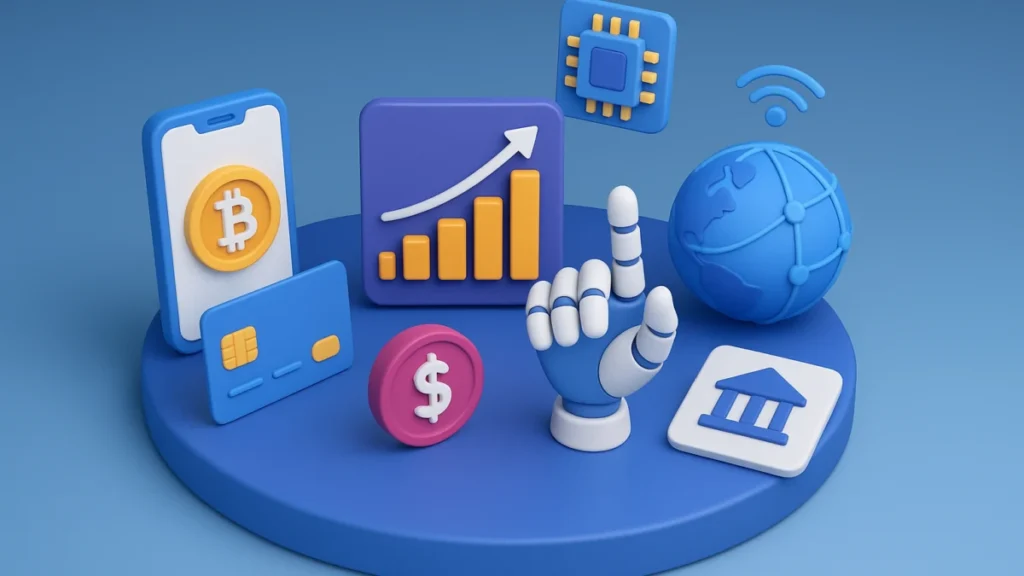
Fintech, short for financial technology, refers to the use of modern technology to improve, automate, and reimagine financial services that were traditionally offered only by banks and large financial institutions. While many people associate fintech with mobile payment apps or digital wallets, its real impact goes far deeper.
At its core, fintech is about making financial services faster, cheaper, more accessible, and more personalized by leveraging technologies such as cloud computing, artificial intelligence (AI), big data, APIs, and mobile platforms.
Instead of relying on physical branches, paperwork, and manual approvals, fintech platforms operate in real time, often delivering financial services in seconds—anywhere, anytime.
🌐 How Fintech Differs from Traditional Finance
Traditional financial systems were built decades ago for a world of physical branches and limited data. Fintech, on the other hand, is:
- Digital-first, not branch-first
- Customer-centric, not institution-centric
- API-driven, allowing seamless integration across platforms
- Data-powered, enabling smarter decision-making
This shift has allowed fintech companies to serve underserved populations, reduce transaction costs, and create entirely new financial experiences.
🔑 Core Fintech Segments Powering the Industry
💳 1. Payments & Money Movement
This is the most visible and widely adopted fintech segment.
Examples:
- UPI (India): Real-time, zero-cost bank-to-bank payments
- Digital Wallets: Apple Pay, Google Pay, Paytm
- Cross-Border Transfers: Faster and cheaper international remittances
Impact: Payments that once took days now happen in seconds, reducing reliance on cash and card networks.
💰 2. Digital Lending & Credit
Fintech has transformed how individuals and businesses access credit.
Includes:
- Instant digital loans
- Buy Now, Pay Later (BNPL)
- Peer-to-peer (P2P) lending platforms
How it works:
AI-driven models assess creditworthiness using alternative data like transaction history, mobile usage, and spending behavior—making credit accessible even without traditional credit scores.
📈 3. WealthTech & Digital Investing
Fintech has democratized investing by lowering entry barriers.
Key offerings:
- Robo-advisors offering automated portfolio management
- Mobile trading platforms with low or zero commissions
- Crypto & alternative investment platforms
Result: Retail investors can now invest, track, and rebalance portfolios with just a smartphone.
🛡 4. InsurTech (Insurance Technology)
Insurance is becoming more transparent, flexible, and data-driven.
Innovations include:
- Digital policy issuance
- Usage-based and on-demand insurance
- AI-powered claims processing
Example: Pay-per-use motor insurance and health plans priced based on real-time data.
⚖ 5. RegTech (Regulatory Technology)
RegTech focuses on compliance, risk management, and fraud prevention.
Key functions:
- Automated KYC & AML checks
- Real-time fraud detection
- Regulatory reporting automation
Why it matters: As regulations grow stricter worldwide, RegTech helps financial institutions stay compliant at scale while reducing operational costs.
💡 Key Insight: Fintech Re-Engineers Finance, It Doesn’t Replace It
Contrary to popular belief, fintech is not eliminating banks. Instead, it is re-engineering the financial system by:
- Modernizing legacy banking infrastructure
- Enhancing customer experience
- Enabling financial inclusion
- Supporting banks through partnerships and APIs
Most successful fintechs today collaborate with banks, acting as innovation layers on top of traditional systems rather than outright replacements.
📌 Bottom Line:
Fintech is not a competitor to finance—it is the technology backbone powering the next generation of global financial services.
🌍 Global Fintech Market: Size, Stats & Momentum
The global fintech market has moved well beyond its early “startup disruption” phase. Today, it represents a core layer of the global financial system, supporting everything from payments and lending to insurance, wealth management, and regulatory compliance. What’s most striking is that this transformation is happening quietly but at massive scale.
📊 Key Global Fintech Market Statistics
According to data from Statista, McKinsey, and Expert Market Research, the global fintech industry has entered a sustained high-growth phase:
- Global Fintech Market Size (2025):
Approximately $260–270 billion, driven largely by payments, digital lending, and wealthtech platforms. - Long-Term Market Projection:
The market is expected to cross $1 trillion and potentially reach $1.5 trillion by 2035, as fintech becomes embedded across industries such as e-commerce, travel, healthcare, and logistics. - Compound Annual Growth Rate (CAGR):
Estimated at 15–18% over the next decade, significantly outpacing traditional banking and financial services growth.
📌 What this signals:
Fintech is no longer a niche sector—it is becoming financial infrastructure, similar to how cloud computing became the backbone of modern software.
🌐 Why Fintech Is Scaling Worldwide
Fintech’s global momentum is not driven by hype alone. It is powered by structural shifts in consumer behavior, technology, and economics.
📱 1. Explosive Smartphone & Internet Penetration
- Over 6.8 billion smartphone users globally
- Affordable mobile data in emerging markets (India, Africa, Southeast Asia)
- Smartphones act as portable bank branches
👉 This has enabled fintech platforms to reach populations that traditional banks never could.
💸 2. Decline of Cash Usage
- Digital payments are replacing cash in both developed and emerging economies
- Governments actively promote cashless ecosystems to improve transparency and tax compliance
Examples:
- India’s UPI ecosystem
- Europe’s contactless payments
- Mobile money platforms in Africa
📌 Fintech thrives where cash dependency declines.
⚡ 3. Demand for Instant, Always-On Financial Services
Modern consumers expect:
- Instant payments
- Real-time loan approvals
- 24/7 access to investments
- Same-day cross-border transfers
Traditional banking systems, built on batch processing and legacy infrastructure, struggle to meet these expectations—creating a natural advantage for fintech platforms.
💰 4. Lower Operational Costs Compared to Banks
Fintech companies:
- Operate without large branch networks
- Use cloud-based infrastructure
- Automate onboarding, underwriting, and support
📊 Result:
Lower costs allow fintech firms to offer cheaper loans, zero-fee payments, and better interest rates, especially in price-sensitive markets like India.
🤖 5. AI-Driven Personalization at Scale
Artificial intelligence has become a major fintech growth engine.
AI enables:
- Personalized financial recommendations
- Smarter credit scoring using alternative data
- Real-time fraud detection
- Automated customer support
McKinsey estimates AI could add over $1 trillion annually to global banking and fintech productivity.
📌 Quick Fact Box: Global Fintech Adoption
- Over 70% of adults worldwide now use at least one fintech product (payments, lending, investing, or insurance).
- Emerging markets account for the fastest fintech growth, driven by:
- Underbanked populations
- Mobile-first users
- Government-backed digital infrastructure
- Underbanked populations
🌍 Countries like India, Brazil, Indonesia, Nigeria, and Vietnam are leapfrogging traditional banking models entirely through fintech adoption.
🔍 What This Momentum Means for the Future
The rapid scaling of fintech globally suggests a clear shift:
- Finance is becoming embedded, invisible, and automated
- Financial access is expanding beyond urban and affluent users
- Traditional banks are increasingly partnering with fintechs rather than competing head-on
📌 Bottom Line:
The global fintech market’s momentum reflects a deeper transformation—finance is evolving from a centralized institution into a distributed digital service layer, and fintech is leading that change.
🇮🇳 India’s Fintech Boom: A Global Case Study
India is not merely participating in the global fintech revolution — it is actively shaping its direction. Over the last decade, India has emerged as one of the world’s most influential fintech ecosystems by combining scale, affordability, public digital infrastructure, and regulatory support in a way few countries have managed.
What makes India’s fintech story unique is that it didn’t follow the traditional Western banking evolution. Instead, it leapfrogged legacy systems, creating digital-first financial rails that now serve as global reference models.
📊 India Fintech Market Snapshot
According to estimates from the Reserve Bank of India (RBI), NPCI, Economic Times, and BCG, India’s fintech market is on a steep upward trajectory:
- Market Size Projection:
Expected to reach $900 billion to $1 trillion by 2032, making India one of the largest fintech markets globally by value. - Startup Ecosystem:
Home to 10,000+ fintech startups, ranging from digital payments and lending platforms to wealthtech, insurtech, and regtech innovators. - Global Ranking:
India is currently the 3rd largest fintech ecosystem in the world, after the US and the UK, in terms of startup count and innovation depth. - Digital Payments Adoption:
Over 87% of Indian consumers actively use at least one digital payment or fintech service — significantly higher than many developed economies.
📌 Why this matters:
India has proven that mass-scale fintech adoption is possible even in a price-sensitive, diverse population, redefining assumptions about financial inclusion.
🏗 The Foundation: India’s Digital Public Infrastructure (DPI)
India’s fintech success rests on a powerful backbone known as Digital Public Infrastructure (DPI), which includes:
- Aadhaar (digital identity)
- UPI (real-time payments)
- Account Aggregator (AA) framework
- DigiLocker and e-KYC systems
This open, interoperable infrastructure has dramatically reduced onboarding costs and enabled fintech startups to scale at unprecedented speed.
💥 UPI: India’s Global Fintech Weapon
At the heart of India’s fintech transformation lies the Unified Payments Interface (UPI) — a real-time payment system that has redefined how money moves.
📈 UPI by the Numbers
- 18+ billion transactions per month
- Trillions of dollars in annual transaction value
- Near-zero transaction costs
- 24/7 instant settlement
UPI’s simplicity — phone number or QR code-based payments — has driven adoption across urban, semi-urban, and rural India, from street vendors to large enterprises.
🌍 UPI’s Global Expansion
UPI is no longer limited to India. It is rapidly evolving into a global payment rail:
- 🇸🇬 Singapore: Linked with PayNow for cross-border transfers
- 🇦🇪 UAE: UPI accepted for merchant payments and remittances
- 🇫🇷 France: UPI-enabled payments for Indian travelers
- 🌏 Future Potential: Expansion into Southeast Asia, Africa, and other emerging markets
📌 Key Insight:
UPI is becoming a global public digital infrastructure, similar to how SWIFT functions for banks — but faster, cheaper, and consumer-friendly.
🌐 Why the World Is Watching India
India’s fintech model is now being studied and adopted by:
- Governments seeking financial inclusion
- Central banks building real-time payment systems
- Emerging economies looking to bypass legacy banking
Institutions like the World Bank, IMF, and G20 have highlighted India’s DPI and UPI framework as a replicable blueprint for other nations.
🔍 What India’s Fintech Boom Means for Global Finance
- Proof that low-cost, high-scale fintech works
- Public-private collaboration can outperform closed systems
- Financial inclusion and innovation can grow together
- Real-time payments can become a public utility
📌 Bottom Line:
India has transformed fintech from a startup-led innovation into a national digital utility — and in doing so, has positioned itself as one of the most influential forces shaping the future of global finance.
🔑 Key Fintech Trends Reshaping Global Finance
Fintech’s impact on global finance is not driven by a single breakthrough but by multiple interconnected trends that are collectively redefining how money moves, credit is assessed, and wealth is created. These trends are quietly becoming part of everyday life—often unnoticed, yet profoundly transformative.
1️⃣ Digital Payments Are Becoming Invisible
Digital payments are evolving from a deliberate action into a background experience. Users no longer “think” about paying; payments simply happen.
🔄 Key Developments
- Tap-to-pay & contactless cards for instant in-store transactions
- QR-based payments like UPI enabling peer-to-merchant and P2P payments
- Auto-debits & background transactions for subscriptions, tolls, utilities, and in-app purchases
🌍 Global + India Context
- In India, UPI has normalized zero-friction payments even for small-value transactions.
- In developed markets, contactless payments dominate retail spending.
🔍 Impact
- Cash usage is declining rapidly
- Transaction speed is measured in seconds, not days
- Rich financial data is generated, enabling better insights, credit assessment, and personalization
📌 Why it matters:
Payments are becoming an invisible layer of daily life, turning fintech into essential infrastructure rather than a standalone service.
2️⃣ AI & Machine Learning Are Powering Smarter Finance
Artificial intelligence has become the core engine behind modern fintech platforms, enabling them to operate at scale while making better, faster decisions.
🤖 Key Use Cases
- Credit scoring without traditional credit history, using alternative data
- Fraud detection in milliseconds, analyzing transaction patterns in real time
- Personalized financial advice, tailored to income, spending, and goals
- AI chatbots & virtual assistants for 24/7 banking support
📊 According to McKinsey, AI could add over $1 trillion annually to global banking and fintech profits through productivity gains and improved risk management.
🇮🇳 India Angle
AI-driven underwriting is enabling lenders to serve first-time borrowers, MSMEs, and gig workers previously excluded from formal credit systems.
3️⃣ Embedded Finance: Finance Is Everywhere
Finance is no longer confined to banks or finance apps. It is being embedded directly into non-financial platforms, creating seamless user experiences.
📦 Real-World Examples
- Amazon and e-commerce platforms offering instant working capital loans to sellers
- Ride-hailing apps providing drivers with insurance, fuel credit, and payouts
- E-commerce platforms offering instant EMI and BNPL at checkout
💡 Key Insight:
Finance is no longer a destination you visit — it’s a feature built into platforms you already use.
🌐 Why Embedded Finance Is Exploding
- Improves conversion rates for businesses
- Reduces customer acquisition costs
- Delivers contextual financial services at the moment of need
4️⃣ Digital Lending & BNPL Are Expanding Access to Credit
Digital lending is one of the fastest-growing fintech segments globally, reshaping how individuals and businesses access credit.
🚀 What’s Changing
- Instant loan approvals without paperwork
- Alternative credit data replacing traditional credit scores
- Short-term, flexible repayment models
🇮🇳 India Snapshot
- Over 11 crore digital loans were issued in FY 2024–25, driven by fintech lenders and NBFC partnerships.
- BNPL has grown rapidly among young consumers and first-time credit users.
📌 Impact:
Digital lending is improving financial inclusion, but also prompting regulators to introduce stronger consumer protection norms.
5️⃣ WealthTech & Retail Investing Are Being Democratized
Fintech has fundamentally changed who can invest — and how.
📈 Key Innovations
- Zero-commission trading platforms
- Robo-advisors offering algorithm-based portfolio management
- Fractional investing, enabling users to invest with small amounts
🌍 Global Shift
Retail investors now participate actively in:
- Equity markets
- Mutual funds & ETFs
- Alternative assets
🔍 Why it matters:
Wealth creation is no longer limited to high-net-worth individuals. Fintech is democratizing investing, especially in emerging markets like India.
🔮 What These Trends Mean Collectively
When combined, these trends point to a future where:
- Finance is instant, invisible, and embedded
- AI handles decision-making at scale
- Credit and investing are accessible to millions more people
- Traditional financial boundaries continue to blur
📌 Bottom Line:
Fintech trends are not just improving financial services — they are reshaping the structure of global finance itself, with India playing a central role in this transformation.
⚖ Fintech vs Traditional Banking: Competition or Collaboration?
Fintech is often portrayed as a disruptive force set to replace traditional banks. In reality, the relationship is far more nuanced. Fintechs and banks operate on different strengths, and the future of global finance lies in strategic collaboration rather than outright competition.
📊 Fintech vs Traditional Banking: A Deeper Comparison
| Feature | Traditional Banks | Fintech Platforms |
| Speed | Multi-day processing, batch settlements, manual approvals | Real-time payments, instant onboarding, automated approvals |
| Cost Structure | High overhead due to branches, staff, and legacy IT systems | Low operating costs using cloud, APIs, and automation |
| Accessibility | Limited by branch presence, working hours, and paperwork | Mobile-first, 24/7 access from anywhere |
| Customer Experience | Product-centric, standardized offerings | User-centric, personalized financial journeys |
| Innovation Cycle | Slow due to regulatory complexity and legacy systems | Rapid experimentation and continuous iteration |
| Risk Management | Strong capital buffers and regulatory oversight | Agile risk models, increasingly regulated |
| Trust & Stability | High trust built over decades | Growing trust through usability and transparency |
📌 Key Insight:
Banks bring stability, scale, and trust, while fintechs deliver speed, innovation, and superior user experience. Together, they form a more resilient financial ecosystem.
🤝 The Rise of Bank–Fintech Partnerships
Rather than replacing banks, most fintech companies:
- Partner with banks for licenses and balance sheets
- Act as technology and distribution layers
- Improve last-mile delivery of financial services
Examples include:
- Banks using fintech APIs for digital onboarding
- Fintech lenders operating under NBFC or bank partnerships
- Wealthtech platforms distributing regulated financial products
📌 Reality Check:
The future of finance is “Banking-as-a-Service (BaaS)”, where fintechs innovate on top of regulated banking infrastructure.
⚠ Risks, Regulations & Challenges in the Fintech Ecosystem
Despite its growth and innovation, fintech faces critical risks and regulatory challenges that must be addressed to ensure sustainable and inclusive development.
🚨 Major Fintech Risks and Concerns
🔐 1. Data Privacy & Cybersecurity
- Fintech platforms handle massive volumes of sensitive personal and financial data.
- Cyberattacks, data breaches, and fraud pose significant reputational and financial risks.
📌 Governments worldwide are tightening data protection laws to safeguard consumer information.
💳 2. Over-Lending & Consumer Debt Risks
- Instant credit and BNPL models can encourage excessive borrowing.
- Younger consumers and first-time borrowers are particularly vulnerable.
📌 Poor credit practices can lead to rising defaults and financial stress if left unchecked.
⚖ 3. Regulatory Arbitrage
- Some fintechs initially operated in regulatory grey areas.
- Differences in regulation across countries create compliance gaps.
📌 Regulators are now closing these gaps to ensure a level playing field.
🤖 4. AI Bias & Algorithmic Risks
- AI-driven credit decisions can unintentionally reinforce bias if training data is flawed.
- Lack of transparency in AI models raises fairness and accountability concerns.
📌 Ethical AI and explainability are becoming regulatory priorities globally.
🇮🇳 India’s Regulatory Approach to Fintech
India has adopted a balanced, innovation-friendly regulatory framework that encourages fintech growth while protecting consumers.
🏛 Key Regulatory Measures
🧪 1. RBI Regulatory Sandbox
- Allows fintech startups to test new products in a controlled environment.
- Reduces risk while encouraging innovation.
📜 2. Tighter BNPL & Digital Lending Norms
- Mandatory disclosure of loan terms
- Restrictions on unauthorized lending apps
- Clear accountability for lending partners
📌 These measures aim to curb predatory lending practices.
🛡 3. Strong Focus on Consumer Protection
- Enhanced KYC and AML requirements
- Data privacy and consent-based frameworks
- Grievance redressal mechanisms
India’s approach seeks to balance rapid fintech adoption with financial stability and user trust.
🔮 What This Means for the Future of Finance
- Fintech innovation will continue—but within stronger regulatory frameworks
- Banks will increasingly become platforms, not just institutions
- Consumer trust, data security, and ethical AI will define winners
📌 Bottom Line:
Fintech is not here to overthrow traditional banking. It is here to modernize, complement, and strengthen the global financial system, with regulation acting as the stabilizing force.
🔮 10-Year Outlook: Fintech by 2035
🌍 Global Outlook
- Finance becomes invisible & automated
- AI-driven financial decisioning
- Embedded finance dominates
🇮🇳 India Outlook
- UPI as a global payments rail
- Fintech-bank hybrids
- Deeper rural & MSME penetration
📊 Prediction:
By 2035, most financial interactions will happen without visiting a bank or branch — ever.
FAQs Section
1. Is fintech replacing banks?
No, fintech is not replacing banks—it is transforming how banking works. Traditional banks still play a critical role in holding deposits, managing risk, and complying with regulations. Fintech companies, on the other hand, specialize in technology, user experience, and speed.
In practice, the future of finance is built on bank–fintech collaboration, where banks provide regulated infrastructure and capital, while fintechs deliver innovation through digital platforms, APIs, and automation. This model is often referred to as Banking-as-a-Service (BaaS).
2. Why is India considered a global fintech leader?
India is a fintech leader due to its unique combination of scale, infrastructure, and policy support. The country’s Digital Public Infrastructure (DPI)—including Aadhaar, UPI, Account Aggregators, and e-KYC—has drastically reduced onboarding and transaction costs.
With UPI processing billions of real-time payments monthly, widespread smartphone adoption, and a young, tech-savvy population, India has achieved fintech adoption levels that many developed economies are still striving for. Global institutions like the World Bank and G20 now view India’s fintech model as a blueprint for emerging markets.
3. Is fintech safe for consumers and businesses?
Fintech platforms are generally safe when they operate under regulated frameworks, but safety depends on cybersecurity, data protection, and regulatory oversight. Most reputable fintechs use encryption, multi-factor authentication, and real-time fraud monitoring.
However, risks still exist—especially from unregulated lending apps, data breaches, and social engineering frauds. This is why regulators like the RBI, EU regulators, and US agencies are tightening fintech compliance rules to ensure consumer protection and financial stability.
4. What is embedded finance, and why is it important?
Embedded finance refers to financial services—such as payments, lending, insurance, or investments—being integrated directly into non-financial platforms. Users can access financial services without leaving the app or platform they’re already using.
Examples include instant EMIs on e-commerce websites, insurance bundled with ride-hailing apps, or loans offered to sellers on digital marketplaces. Embedded finance is important because it makes financial services contextual, frictionless, and more accessible, driving higher adoption and better user experiences.
5. How does AI help fintech platforms?
Artificial intelligence is the backbone of modern fintech operations. AI helps fintech companies:
- Assess creditworthiness using alternative data
- Detect fraud in real time
- Offer personalized financial recommendations
- Automate customer support with AI chatbots
By reducing human bias and improving speed and accuracy, AI allows fintechs to scale efficiently. According to McKinsey, AI has the potential to add over $1 trillion annually to global banking and fintech profits.
6. What are the biggest risks in the fintech industry?
The main risks facing fintech include:
- Data breaches and cybersecurity threats
- Over-lending and consumer debt accumulation
- Regulatory gaps across jurisdictions
- Bias and lack of transparency in AI-driven decisions
As fintech adoption grows, these risks can impact both consumers and financial stability. That’s why regulators worldwide are focusing on ethical AI, stronger data protection laws, and responsible lending practices.
7. Is the fintech business model profitable?
Yes, fintech is becoming increasingly profitable—especially in segments like payments, digital lending, and wealth management. Many fintechs initially focused on growth and user acquisition, but are now shifting toward sustainable revenue models.
Revenue streams include transaction fees, interest margins, subscriptions, data services, and partnerships with banks. While profitability varies by segment, mature fintechs are now demonstrating strong unit economics and long-term viability.
8. Will UPI expand beyond India globally?
Yes, UPI is already going global. India has begun linking UPI with international real-time payment systems in countries like Singapore, UAE, and France, enabling seamless cross-border payments.
Over time, UPI is expected to expand into Southeast Asia, Africa, and other emerging markets, positioning it as a global alternative to traditional cross-border payment networks. Many experts view UPI as a global public digital payment infrastructure in the making.
9. What are the best fintech investment opportunities?
The most promising fintech investment areas include:
- Digital payments infrastructure
- AI-driven lending and credit platforms
- WealthTech and robo-advisory services
- Embedded finance and Banking-as-a-Service platforms
- RegTech and cybersecurity solutions
Investors are increasingly favoring fintechs that combine strong compliance, scalable technology, and clear paths to profitability.
10. What jobs and skills will dominate the future of fintech?
The future of fintech will demand a blend of technology, finance, and regulatory expertise. High-demand roles include:
- AI and machine learning engineers
- Data scientists and risk analysts
- Compliance and regulatory specialists
- Product managers and UX designers
As fintech becomes more regulated and AI-driven, professionals who understand both financial systems and advanced technology will be especially valuable.
Summary
- Fintech is transforming finance at a structural level, moving beyond apps and payments to reshape how people save, borrow, invest, and transact globally through AI, automation, and digital-first platforms.
- The global fintech market is on a strong growth trajectory, projected to cross $1 trillion in value by the next decade, driven by rising smartphone adoption, embedded finance, and demand for instant financial services.
- India has emerged as a global fintech powerhouse, led by UPI’s real-time, low-cost payment infrastructure, a fast-growing startup ecosystem, and one of the world’s highest digital payments adoption rates.
- Key trends like AI-driven credit scoring, digital lending, BNPL, and embedded finance are making financial services faster, more accessible, and more personalized for consumers and businesses alike.
- Fintech is not replacing traditional banks but reshaping them, forcing collaboration, modernization, and customer-centric innovation while reducing costs and improving financial inclusion.
- Despite challenges like regulation, data privacy, and cybersecurity risks, fintech’s long-term outlook remains strong, positioning it as a foundational pillar of global finance over the next decade.
Conclusion
Fintech doesn’t arrive with grand announcements or dramatic disruption headlines.
It works silently in the background—embedded in everyday actions like scanning a QR code, tapping a phone, receiving an instant loan approval, or investing with a few clicks.
Yet, beneath this simplicity lies a fundamental shift in the DNA of global finance.
Fintech is dismantling long-standing barriers:
- It is compressing time, turning days into seconds.
- It is lowering costs, making financial services viable for the previously underserved.
- It is democratizing access, bringing payments, credit, insurance, and investments to anyone with a smartphone.
Finance is no longer a place you go—it’s an invisible layer woven into daily life.
At the heart of this transformation stands India.
With UPI as a global benchmark, a population operating at unprecedented digital scale, and a government-backed Digital Public Infrastructure (DPI) model, India has shown the world that fintech growth doesn’t have to come at the expense of inclusion, affordability, or regulation. Instead of building closed, profit-first systems, India has demonstrated how open, interoperable platforms can power both innovation and public good.
As fintech evolves—from digital payments to embedded finance, AI-driven lending, and global payment rails—the next decade will not be defined by banks versus fintechs, or technology versus regulation. It will be shaped by collaboration, trust, and intelligent infrastructure.
The future of finance won’t feel revolutionary.
It will feel effortless.
And when finance finally disappears into the background—working for everyone, everywhere—that is when the fintech revolution will be complete.
📌 Quiet. Inclusive. Global.
That is the true power of fintech—and India is helping lead the way.
References & Sources
To ensure accuracy, credibility, and up-to-date insights, this article draws from the following authoritative global and Indian sources:
🇮🇳 India-Focused & Regulatory Sources
- Reserve Bank of India (RBI) – Regulations, fintech guidelines, digital lending norms
👉 https://www.rbi.org.in - National Payments Corporation of India (NPCI) – UPI transaction data, digital payments growth
👉 https://www.npci.org.in - Ministry of Electronics & IT (MeitY), Government of India – Digital Public Infrastructure, India Stack
👉 https://www.meity.gov.in - Economic Times – BFSI & Fintech Section – Industry news, startup funding, policy updates
👉 https://economictimes.indiatimes.com/industry/banking/finance - NITI Aayog – Digital economy and financial inclusion frameworks
👉 https://www.niti.gov.in
🌍 Global Fintech & Market Intelligence
- McKinsey & Company – Global Banking & Fintech Reports
(AI in banking, embedded finance, digital transformation)
👉 https://www.mckinsey.com/industries/financial-services - Statista – Global & India Fintech Market Data
(Market size, CAGR, adoption rates, segment analysis)
👉 https://www.statista.com/markets/413/fintech - World Bank – Financial Inclusion & Digital Finance Reports
(Global Findex, emerging market adoption)
👉 https://www.worldbank.org/en/topic/financialinclusion - Bank for International Settlements (BIS) – Central bank digital payments & policy insights
👉 https://www.bis.org - International Monetary Fund (IMF) – Fintech risks, global financial stability
👉 https://www.imf.org/en/Topics/Fintech
📊 Industry Research & Consulting Insights
- Boston Consulting Group (BCG) – Fintech & Payments Reports
👉 https://www.bcg.com/industries/financial-institutions/fintech - PwC Global Fintech Survey
👉 https://www.pwc.com/fintech
Deloitte – Banking & Fintech Insights
👉 https://www2.deloitte.com/global/en/pages/financial-services
