








Estimated Reading Time: 25-30 minutes (5,125 words)
Introduction
India is witnessing a digital entertainment revolution, with over 600 million OTT users and counting, a number projected to grow steadily over the next decade. From metropolitan cities to tier-2 towns and hilly regions like Himachal Pradesh, the way people consume content has shifted dramatically — traditional TV is taking a backseat, and mobile devices, smart TVs, and connected devices are now the primary portals for streaming movies, web series, live sports, and short-form content.
However, the foundation of this digital surge is network performance. High-quality video streaming, especially HD, 4K, and live content, requires consistent download speeds, low latency, minimal jitter, and reliable coverage. In regions with challenging geography — steep hills, valleys, and remote villages — ensuring this level of service is technically demanding, but crucial for delivering a seamless entertainment experience.
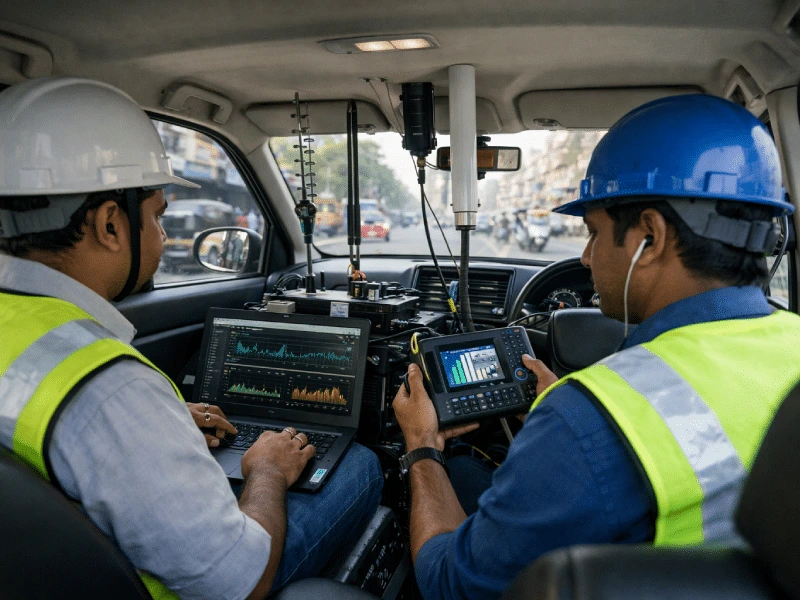
Recognizing this, the Telecom Regulatory Authority of India (TRAI) conducted its latest Independent Drive Test (IDT) in Himachal Pradesh, meticulously measuring the real-world performance of mobile networks across multiple operators. Unlike lab tests or self-reported metrics, these drive tests capture actual user experiences on the road, including call success rates, drop call percentages, data throughput, upload/download speeds, and streaming readiness — both in urban hubs and rural areas.
This blog dives deep into the TRAI drive test results from an OTT streaming perspective, explaining what the numbers mean for mobile, smart TV, and connected device users. We’ll break down key performance indicators, highlight the best-performing operators, explore rural challenges, and assess whether the current network landscape can support India’s growing appetite for high-definition, uninterrupted digital entertainment. By the end, readers will understand not just the technical metrics, but also the practical implications for consumers, content creators, and marketers aiming to tap into the booming Indian OTT ecosystem.
What is TRAI’s Drive Test & Its Methodology
🔎 The Telecom Regulatory Authority of India (TRAI) is responsible for ensuring that mobile networks across India deliver high-quality, reliable, and user-friendly services. One of the key tools TRAI uses to monitor service quality is the Independent Drive Test (IDT), a field-based, on-the-ground assessment of telecom performance.
Purpose of TRAI’s Drive Test
The IDT aims to provide real-world data on how networks perform under everyday conditions. Unlike lab-based tests or operator-reported statistics, drive tests reflect actual user experiences, making them a critical benchmark for network reliability. With India’s OTT market booming — over 600 million users streaming daily across smartphones, smart TVs, and tablets — understanding network readiness is vital for uninterrupted digital entertainment.
Key Metrics Measured
TRAI’s drive test evaluates a range of technical performance indicators that directly affect the quality of voice calls, data services, and video streaming:
- Call Setup Success Rate (CSSR) – The percentage of calls successfully connected without errors. A high CSSR indicates that users can make calls reliably, even in areas with challenging topography.
- Drop Call Rate (DCR) – The frequency at which active calls are unexpectedly disconnected. Low DCR ensures consistent connectivity, which is particularly important for live streaming or video calls.
- Download & Upload Throughput – Measures the speed at which data can be downloaded and uploaded over the network. High throughput is essential for HD/4K video streaming, online gaming, and large content uploads.
- Latency & Jitter – Latency measures the delay in data transfer, while jitter measures the variation in delay. Low latency and minimal jitter are critical for buffer-free video streaming and live content delivery.
- Video Streaming Delay & Quality Metrics – Assesses whether video content loads quickly, plays smoothly, and maintains consistent resolution. This metric is directly linked to user satisfaction on OTT platforms.
- Coverage Across Diverse Conditions – Evaluates network performance across urban, suburban, rural, and hilly terrains. This is especially important in regions like Himachal Pradesh, where geography can significantly affect network performance.
Methodology & Execution
The TRAI drive test is highly structured and scientifically rigorous:
- Data Collection Devices: Calibrated smartphones, tablets, and measurement tools are installed in test vehicles or carried on foot.
- Routes Covered: City roads, highways, towns, hotspots, and even remote villages are included to ensure comprehensive coverage.
- Technology Scope: Tests span 2G, 3G, 4G, and 5G networks, capturing a holistic view of connectivity.
- Real-Time Data Logging: Every call attempt, data download/upload, and video playback session is logged, timestamped, and geotagged for analysis.
- Standardized Procedures: To maintain consistency, TRAI follows nationally and internationally recognized protocols, ensuring that results are objective, comparable, and actionable.
📌 Why it Matters for OTT Streaming
For OTT platforms, the results of TRAI’s drive tests are critical indicators of user experience potential. High CSSR, low DCR, and strong data throughput mean users can enjoy:
- Smooth HD and 4K streaming
- Buffer-free live sports and events
- Reliable video calls and interactive content
- Seamless access to on-demand movies and shows, even in remote locations
By understanding the network performance across operators and terrains, both consumers and content providers can make informed decisions — from choosing the best telecom plan to optimizing content delivery networks (CDNs) for regions like Himachal Pradesh.
Key Results from Himachal Pradesh
TRAI’s Independent Drive Test (IDT) conducted in May 2025 provides the first granular view of network performance in Himachal Pradesh, capturing real-world data across urban centers, highways, and rural valleys. The results reveal how prepared networks are to support OTT streaming, HD video, live sports, and interactive digital entertainment.
📊 5G & Network Performance Highlights
The drive test assessed multiple operators, including Bharti Airtel, Reliance Jio, Vodafone Idea, and BSNL, measuring download/upload speeds, latency, and video streaming capabilities.
- Bharti Airtel:
- Peak 5G Download Speeds: ~573 Mbps in hotspot zones such as Shimla city, Manali, and Dharamshala.
- Upload Speeds: ~62 Mbps, sufficient for live streaming, cloud uploads, and high-quality video conferencing.
- Airtel’s performance indicates excellent capacity to handle HD and 4K streaming, even in high-traffic areas.
- Reliance Jio:
- Peak 5G Download Speeds: ~326 Mbps — lower than Airtel but still robust enough for multi-device streaming, gaming, and interactive OTT apps.
- Upload Speeds: ~53 Mbps, ensuring smooth live content sharing and uploads from users.
📌 Why these speeds matter:
- For HD video streaming, platforms typically require 5–10 Mbps. Airtel and Jio’s peak performance exceeds this by 30–100 times, ensuring buffer-free playback and adaptive streaming.
- Even 4K streaming, which requires 15–25 Mbps, is well within reach for these networks, demonstrating OTT-ready infrastructure in hotspot locations.
These results reflect real-world usage, beyond lab simulations, meaning users can expect similar performance during peak viewing hours. (TelecomTalk)
📞 Voice & Call Quality
Network readiness for OTT isn’t just about speed; voice and stability metrics indicate overall reliability, which also impacts VoD streaming and real-time interactive apps.
- Call Setup Success Rate (CSSR):
- Airtel and Jio both achieved >98% CSSR, meaning nearly all call attempts successfully connected — a strong indicator of network stability.
- Drop Call Rate (DCR):
- Airtel: 0.67%
- Jio: 0.66%
- These impressively low drop rates ensure that users can switch seamlessly between calls and video streams, and also reduce interruptions during live OTT content.
📊 Interpretation:
- High CSSR + low DCR implies robust infrastructure capable of handling multiple simultaneous data and voice sessions, which is critical for OTT apps that rely on adaptive bitrate streaming.
- Stability in hilly and rural terrains like Himachal Pradesh demonstrates operators’ ability to extend network reach beyond urban centers. (Himachal Punjab Kesari)
⚡ Key Takeaways for OTT Streaming
- Seamless HD/4K Streaming: Both Airtel and Jio can handle multi-device streaming without buffering in hotspot zones.
- Interactive Content Ready: Upload speeds allow for user-generated content uploads, live gaming, and conferencing apps.
- Real-World Reliability: Low drop call rates and high CSSR suggest networks can support live OTT events, webinars, and video calls even in challenging terrain.
- Room for Improvement: While hotspot zones show excellent speeds, rural and remote areas may still experience slower average speeds, highlighting opportunities for expansion.
💡 Expert Insight
“TRAI’s drive test confirms that the foundation for India’s OTT growth is strong in Himachal Pradesh. Operators delivering consistent speeds and stable voice performance are now enabling consumers to stream, interact, and share content at levels previously only possible in metro cities.” — Telecom Analyst, Digital Studio India
Network Quality & Its Impact on OTT Streaming
As OTT platforms become the primary source of entertainment for millions of Indians, network quality is no longer a background technical detail — it is the core determinant of user satisfaction. Whether someone is binge-watching a Netflix series, streaming live IPL matches on Disney+ Hotstar, attending a live YouTube event, or uploading short-form content on Instagram and YouTube Shorts, the experience depends heavily on how well the mobile network performs in real-world conditions.
In regions like Himachal Pradesh, where terrain includes hills, valleys, tunnels, and remote settlements, network consistency becomes even more critical. This is where TRAI’s drive test metrics directly translate into OTT performance outcomes.
📺 Why These Network Metrics Matter for OTT Platforms
OTT services such as Netflix, Amazon Prime Video, Disney+ Hotstar, YouTube, JioCinema, SonyLIV, and regional streaming apps rely on a combination of network parameters to deliver seamless content. Each metric measured by TRAI plays a specific role:
1. Download Throughput (Speed)
- Determines how quickly video data reaches the user’s device.
- Higher throughput allows:
- Faster video start times
- Higher resolution playback (HD/4K)
- Less buffering during peak usage
- Faster video start times
- Essential for long-form video, movies, live sports, and binge watching.
2. Latency
- Measures the time it takes for data to travel from server to device.
- Low latency ensures:
- Faster app response
- Quick video start and seek times
- Smooth live interactions (polls, chats, live comments)
- Faster app response
- Critical for live sports streaming, gaming streams, and interactive OTT formats.
3. Upload Speeds
- Often overlooked, but increasingly important.
- Affects:
- Live video uploads (YouTube Live, Instagram Live)
- Video calls and conferencing
- User-generated content creators and vloggers
- Live video uploads (YouTube Live, Instagram Live)
- Strong upload speeds empower local creators in Himachal Pradesh to participate in the global creator economy.
4. Jitter (Network Stability)
- Measures fluctuations in data packet delivery.
- Low jitter ensures:
- Stable video quality over time
- Fewer sudden drops in resolution
- Consistent audio-video synchronization
- Stable video quality over time
- Particularly important in hilly regions, where signal variations are common.
📌 Bottom line: Even if peak speeds are high, inconsistent latency or jitter can ruin OTT experiences — making TRAI’s holistic evaluation extremely valuable.
🎯 OTT Performance Expectations: What Speeds Do Users Actually Need?
Different types of OTT content have different network requirements. Based on global streaming standards and platform recommendations:
| Streaming Requirement | Minimum Speed Needed | Recommended for Best Experience |
| SD Video (480p) | ~3–4 Mbps | 5 Mbps |
| HD Video (720p–1080p) | ~5–10 Mbps | 10–15 Mbps |
| 4K / Ultra HD Video | ~15–25 Mbps | 25+ Mbps |
| Live Streaming & Sports | ~8–15 Mbps | 15–20 Mbps |
| Multi-Device Streaming | — | 30+ Mbps |
🔍 Contextual Insight:
When Airtel records peak speeds of ~573 Mbps and Jio ~326 Mbps in Himachal Pradesh hotspot zones, these networks are delivering 10–20 times more bandwidth than what even 4K streaming requires.
👉 This means users can:
- Stream 4K content without buffering
- Watch live sports in real time
- Use multiple OTT apps simultaneously on different devices
- Enjoy better quality even during peak evening hours
(Source: TelecomTalk analysis of TRAI drive test results)
📡 What This Means for OTT Streaming in Himachal Pradesh
The TRAI drive test results indicate that network infrastructure in key areas of Himachal Pradesh is OTT-ready, especially in:
- Urban centers (Shimla, Dharamshala, Manali)
- Tourist hotspots
- Major highways and transit routes
Practical implications include:
- Tourists can stream content seamlessly while traveling
- Local households can shift from DTH to OTT
- Smart TV adoption becomes more viable
- Regional OTT content consumption increases
However, the data also highlights that network readiness is uneven, with rural and remote pockets still needing improvement — a critical consideration for inclusive digital growth.
⚠️ Quick Reality Check (Highlight Box)
High peak speeds ≠ universal experience
While hotspot zones show excellent performance, sustained OTT quality depends on coverage density, backhaul capacity, and rural 5G expansion — areas where further investment is required.
💡 Expert Takeaway
“TRAI’s drive test metrics clearly show that where 5G and strong 4G networks are available, OTT streaming is no longer constrained by infrastructure. The challenge ahead is ensuring consistency across rural and hilly regions, so digital entertainment access is truly universal.”
— Digital Media & Telecom Analyst
Comparison: Mobile Network Operators in Himachal Pradesh
TRAI’s Independent Drive Test provides a side-by-side view of how major telecom operators perform under real-world conditions in Himachal Pradesh. This comparison is especially important for OTT consumers, content creators, tourists, and remote workers who rely on consistent high-speed mobile internet for streaming and digital entertainment.
Below is an operator-wise breakdown, followed by a deeper analysis of what these numbers actually mean for OTT streaming experiences.
📊 Operator Performance Comparison (Hotspot Zones)
| Telecom Provider | 5G Download Speed (Peak) | Upload Speed | Key Strengths | OTT Streaming Impact |
| Bharti Airtel | ~573 Mbps | ~62 Mbps | Highest peak throughput, low latency | Ideal for 4K streaming, live sports, multi-device usage |
| Reliance Jio | ~326 Mbps | ~53 Mbps | Balanced speed & coverage | Excellent for HD/4K streaming and everyday OTT usage |
| Vodafone Idea (Vi) | Lower speeds (current phase) | Limited | Network modernization in progress | Adequate for SD/HD in select areas |
| BSNL | Significantly lower speeds | Limited | Wide legacy coverage | Suitable mainly for basic browsing & SD streaming |
(Source: TelecomTalk analysis of TRAI IDT data)
📡 Operator-wise Analysis & OTT Readiness
🔴 Bharti Airtel: Best-in-Class Streaming Performance
- Airtel recorded the highest peak 5G download speeds (~573 Mbps) during the drive test.
- Upload speeds (~62 Mbps) comfortably support:
- Live video streaming
- High-quality video calls
- Content uploads by creators
- Live video streaming
- Airtel’s network demonstrates excellent capacity handling, which is crucial during:
- Prime-time OTT viewing
- Live sports events
- Tourist season traffic spikes
- Prime-time OTT viewing
🎯 OTT Verdict:
Airtel currently offers the best experience for HD and 4K streaming, especially on smart TVs and multiple devices. This makes it ideal for heavy OTT consumers and households moving away from traditional DTH connections.
🔵 Reliance Jio: Strong All-Rounder for OTT Users
- Jio delivered peak 5G speeds of ~326 Mbps, well above OTT requirements.
- Upload performance (~53 Mbps) ensures:
- Smooth content sharing
- Reliable live streaming
- Smooth content sharing
- Jio’s biggest strength lies in its balanced performance across regions, making it reliable for both urban and semi-rural users.
🎯 OTT Verdict:
Jio is a solid choice for most OTT users, offering consistent HD/4K streaming with fewer fluctuations. It performs particularly well for mobile-first viewers and budget-conscious users.
🟡 Vodafone Idea (Vi): Transitional Phase
- Vi’s performance lagged behind Airtel and Jio in Himachal Pradesh during the test period.
- Limited 5G availability and lower average speeds affect:
- Buffer-free streaming
- Peak-time video quality
- Buffer-free streaming
- However, Vi continues to invest in network upgrades and spectrum utilization.
🎯 OTT Verdict:
Currently suitable for SD or limited HD streaming, but not ideal for heavy OTT usage or 4K content. Performance may improve as 5G rollout accelerates.
🟢 BSNL: Legacy Network Challenges
- BSNL recorded the lowest data speeds, reflecting its dependence on legacy infrastructure.
- While coverage is relatively widespread, performance constraints include:
- High latency
- Limited throughput
- High latency
- BSNL users may experience buffering, especially with HD or live content.
🎯 OTT Verdict:
Best for basic browsing and SD streaming. Not recommended for live sports, 4K content, or multi-device streaming.
📺 What This Comparison Means for OTT Viewers
👉 Airtel’s speed advantage can translate into:
- Faster video start times
- Higher sustained resolution
- Better performance during peak hours
👉 Jio’s balanced network ensures:
- Consistent everyday streaming
- Good experience across most locations
👉 Vi and BSNL users may need:
- Lower streaming resolution settings
- Wi-Fi or broadband backups for heavy usage
💡 Quick Tip (Highlight Box)
If OTT streaming is your primary internet use, prioritize operators with high sustained speeds and low latency, not just peak speed claims. TRAI’s drive test results are a reliable indicator of real-world performance.
🔮 Forward-Looking Insight
As 5G coverage expands and backhaul capacity improves, competition among operators in Himachal Pradesh is expected to intensify. This will:
- Improve OTT accessibility in rural areas
- Reduce buffering during peak hours
- Encourage smart TV and connected device adoption
(Source: TelecomTalk, TRAI Drive Test Analysis)
Challenges for Rural & Hilly Networks in Himachal Pradesh
While TRAI’s drive test highlights impressive peak speeds in urban centers and hotspot locations, it also exposes a persistent digital divide in rural and hilly regions of Himachal Pradesh. The state’s unique geography — characterized by steep mountains, deep valleys, dense forests, and scattered settlements — creates structural challenges that directly affect mobile network performance and, by extension, OTT streaming quality.
⚠️ Key Network Challenges in Rural & Hilly Areas
1. Lower Average Speeds Outside Hotspot Zones
- Drive test results show that once users move away from city centers, highways, or designated test hotspots, average data speeds drop significantly.
- Many rural users experience sub-5 Mbps speeds, which:
- Struggle with HD video streaming
- Cause frequent buffering
- Force OTT apps to downgrade resolution to SD
- Struggle with HD video streaming
- This directly impacts user satisfaction and time spent on OTT platforms.
📊 According to regional assessments, rural users in hilly states often receive less than 5 Mbps, which is below the recommended threshold for stable HD streaming. (Source: ABC Live)
2. High Network Variability Due to Topography
- Hills, tunnels, and valleys disrupt signal propagation, leading to:
- Sudden drops in connectivity
- Fluctuating speeds
- Increased latency and jitter
- Sudden drops in connectivity
- Even within the same village, users may experience inconsistent performance depending on:
- Line of sight to towers
- Weather conditions
- Distance from the nearest base station
- Line of sight to towers
📌 OTT Impact:
High variability causes OTT apps to constantly switch video quality, resulting in poor viewing experience, especially for long-form content and live events.
3. Limited 5G Coverage Beyond Towns
- Most 5G deployments in Himachal Pradesh are currently concentrated in:
- District headquarters
- Tourist hubs
- Major transport corridors
- District headquarters
- Vast rural areas still rely on 4G or even 3G networks, which:
- Have limited capacity during peak hours
- Are more prone to congestion
- Have limited capacity during peak hours
- As a result, 4K streaming and live sports remain largely inaccessible for rural users.
📉 This coverage imbalance slows the adoption of smart TVs, connected devices, and OTT subscriptions in non-urban households.
4. Infrastructure & Economic Constraints
- Building and maintaining telecom infrastructure in hilly regions is:
- Capital intensive
- Logistically complex
- Weather dependent
- Capital intensive
- Power availability, fiber backhaul limitations, and land access further constrain network expansion.
💡 Operators often prioritize high-revenue urban zones, delaying upgrades in sparsely populated rural areas.
📺 What This Means for OTT Users in Rural Himachal
For rural users, the challenges translate into:
- Frequent buffering during movies and web series
- Difficulty watching live sports or events
- Lower engagement with OTT platforms
- Preference for offline downloads over streaming
This also affects regional content creators, who struggle to upload videos or go live consistently.
📦 Highlight Box: Reality Check for Rural OTT Streaming
Even the best OTT apps can’t overcome poor network quality.
Until rural speeds consistently cross 10 Mbps, HD streaming and live digital entertainment will remain unreliable outside towns.
🔮 The Road Ahead: Bridging the Gap
Despite these challenges, the outlook remains cautiously optimistic:
- Expansion of 5G mid-band spectrum
- Government-backed initiatives like BharatNet
- Infrastructure sharing among telecom operators
- Satellite and fixed-wireless broadband pilots
Together, these efforts could significantly improve OTT accessibility in rural and hilly regions over the next few years.
💡 Expert Insight
“TRAI’s drive test underscores a clear truth — India’s digital entertainment future depends not just on peak speeds, but on consistent coverage across rural and hilly regions. Bridging this gap will unlock the next wave of OTT growth.”
— Telecom Infrastructure Analyst
OTT Streaming Readiness Checklist
As OTT platforms increasingly replace traditional TV and cable services, users need more than just “internet access” — they need network readiness. TRAI’s drive test metrics provide a clear framework to evaluate whether a region (or a household) is truly prepared for high-quality OTT streaming and digital entertainment.
Below is a detailed OTT Streaming Readiness Checklist, breaking down each requirement and explaining why it matters in real-world usage.
✔ 1. 5G or Strong 4G Coverage in User Zones
- Why it matters: Coverage determines whether high speeds are consistently available, not just at a single point.
- 5G networks offer:
- Higher throughput
- Lower latency
- Better performance during peak hours
- Higher throughput
- In areas without 5G, strong and uncongested 4G can still support HD streaming.
📌 OTT Impact:
Users in well-covered zones experience fewer drops in resolution and faster video loading, especially on smart TVs and large screens.
✔ 2. Sustained Download Speeds of ≥ 10 Mbps
- Peak speeds are less important than sustained, consistent speeds.
- A minimum of 10 Mbps sustained speed ensures:
- Buffer-free HD streaming
- Smooth playback even during peak evening hours
- Buffer-free HD streaming
- For households with multiple users or smart TVs, 25 Mbps or more is ideal.
📊 Reality Check:
TRAI’s drive test shows that while hotspot zones exceed 300 Mbps, rural averages may fall below 5 Mbps, limiting OTT quality.
✔ 3. Low Latency (Below 30 ms)
- Latency measures the time taken for data to travel between server and device.
- Low latency is crucial for:
- Fast video start times
- Seamless seeking and rewinding
- Live sports and interactive OTT content
- Fast video start times
- Latency above 50 ms often results in noticeable delays.
🎯 OTT Impact:
Lower latency = snappier apps and real-time engagement, especially for live events.
✔ 4. Adaptive Bitrate Streaming (ABR) Support
- Most modern OTT platforms use adaptive bitrate technology, which dynamically adjusts video quality based on network conditions.
- ABR ensures:
- Fewer interruptions during speed fluctuations
- Better viewing experience in variable network conditions
- Fewer interruptions during speed fluctuations
- Platforms like Netflix, YouTube, and Prime Video excel in this area.
📌 User Tip:
Always keep OTT apps updated to benefit from the latest ABR optimizations.
✔ 5. Low Jitter & Stable Network Performance
- Even with good speeds, high jitter can cause:
- Sudden quality drops
- Audio-video sync issues
- Sudden quality drops
- Stable networks are essential for:
- Long-form content
- Live sports and concerts
- Video calls and watch parties
- Long-form content
📉 Hilly terrain often increases jitter — making stability just as important as raw speed.
✔ 6. Content Caching & CDN Integration
- OTT platforms rely on Content Delivery Networks (CDNs) to store content closer to users.
- Local caching reduces:
- Latency
- Buffering
- Network congestion
- Latency
- Telecom operators with strong CDN partnerships offer better streaming quality, even during peak times.
📌 OTT Insight:
CDN optimization is one reason why popular OTT apps perform better than smaller regional platforms on the same network.
✔ 7. Device & Home Network Readiness
- Network readiness must extend to the user’s setup:
- Updated smartphones or smart TVs
- Compatible routers and modems
- Proper Wi-Fi placement in homes
- Updated smartphones or smart TVs
- Older devices can bottleneck even fast networks.
🧪 Quick Self-Test: Is Your Area OTT-Ready?
Ask yourself:
- Can I stream HD/4K content without buffering during evenings?
- Do videos load quickly and stay at high resolution?
- Can multiple devices stream simultaneously?
✔ If yes — your area likely meets OTT readiness benchmarks.
💡 Highlight Box: Expert Tip
OTT readiness isn’t about the fastest speed — it’s about consistency.
A stable 20 Mbps connection often delivers a better streaming experience than an unstable 100 Mbps one.
📌 Final Takeaway
💡 If your area meets most of these criteria, you can expect smoother OTT streaming, better live content experiences, and reliable interactive app usage — even in challenging terrains like Himachal Pradesh.
FAQs Section
1. What is the TRAI Drive Test and why is it important?
The TRAI Independent Drive Test (IDT) is a large-scale, field-based assessment conducted by the Telecom Regulatory Authority of India to evaluate real-world mobile network performance. Unlike lab tests or operator-submitted data, the drive test measures how networks actually perform for users while moving through cities, highways, towns, and rural areas.
It evaluates both voice and data services, helping TRAI:
- Monitor quality of service (QoS)
- Identify coverage gaps
- Ensure fair competition among operators
- Protect consumer interests
📌 Why it matters for OTT users:
OTT streaming quality depends entirely on real-world conditions like speed consistency and latency — exactly what drive tests capture.
(Source: Telecom Regulatory Authority of India)
2. Does the TRAI drive test include OTT video streaming metrics?
Yes. While the drive test is not OTT-platform specific, it includes all core network metrics that directly impact OTT video streaming, such as:
- Download and upload throughput
- Latency (delay in data transmission)
- Jitter (variation in latency)
- Video streaming start delay
- Session stability
These parameters determine whether a user experiences:
- Buffering
- Sudden drops in video quality
- Long loading times
- Disruptions during live streams
📺 In practical terms, the test provides a reliable proxy for OTT streaming readiness.
3. Why is 5G especially important for OTT streaming and digital entertainment?
5G is a game-changer for OTT because it offers:
- Much higher speeds than 4G
- Ultra-low latency
- Better handling of simultaneous users
This enables:
- Seamless HD and 4K streaming
- Lag-free live sports and concerts
- Interactive formats like live chats, polls, and cloud gaming
- Faster downloads for offline viewing
📊 In regions like Himachal Pradesh, where tourism spikes network demand seasonally, 5G helps maintain stable performance even during peak loads.
4. Can users in Himachal Pradesh stream 4K content smoothly?
In 5G hotspot zones, yes.
TRAI drive test data shows:
- Airtel peak speeds ~573 Mbps
- Jio peak speeds ~326 Mbps
📌 4K streaming typically requires only 15–25 Mbps, meaning these networks deliver 10–20x the required bandwidth in covered areas.
However:
- Performance depends on coverage availability
- Rural and remote areas may still face limitations
(Source: TelecomTalk analysis of TRAI IDT data)
5. Which telecom operator performed best in Himachal Pradesh?
According to the drive test:
- Bharti Airtel recorded the highest peak download and upload speeds
- Reliance Jio delivered strong, balanced performance across most routes
📺 OTT Perspective:
- Airtel currently offers the best experience for heavy OTT users, smart TVs, and multi-device households
- Jio is a strong all-rounder for consistent everyday streaming
(Source: TelecomTalk)
6. Are rural and remote regions ready for OTT streaming?
Partially — but not fully.
While coverage is improving, reports show:
- Many rural users experience average speeds below 5 Mbps
- This is insufficient for stable HD streaming
- Live sports and real-time events remain challenging
📉 As a result, rural users often rely on:
- SD streaming
- Offline downloads
- Limited viewing during non-peak hours
(Source: ABC Live)
7. How do these results affect users outside Himachal Pradesh?
Himachal Pradesh serves as a representative case study for other non-metro and geographically complex regions in India.
Similar TRAI drive tests across:
- North-East India
- Hill states
- Tier-2 and Tier-3 cities
…show comparable operator performance variation and rural-urban gaps.
📌 This means:
- The insights apply nationally
- Network readiness for OTT is improving, but uneven
(Source: ETGovernment.com)
8. What do low latency and low jitter mean for everyday OTT users?
- Low latency ensures:
- Faster app loading
- Instant video start
- Smooth seeking and rewinding
- Faster app loading
- Low jitter ensures:
- Stable video quality
- No sudden drops in resolution
- Better audio-video synchronization
- Stable video quality
🎯 Together, they are critical for:
- Live sports
- Interactive OTT features
- Video calls and watch parties
Even high speeds can’t compensate for poor latency or jitter.
9. Which devices benefit the most from strong mobile networks?
Strong networks enhance performance across:
- Smartphones – mobile streaming, shorts, live content
- Smart TVs – HD/4K viewing, family OTT usage
- Tablets & laptops – long-form content and hybrid work
- Connected TV devices – Chromecast, Fire TV, Apple TV
🎥 Content creators also benefit from faster uploads and stable live streaming.
10. How will expanding 5G coverage impact the future of OTT streaming?
Wider 5G rollout will:
- Reduce buffering and quality drops
- Enable immersive formats (AR/VR streaming)
- Support cloud gaming and interactive shows
- Boost regional and vernacular OTT content growth
📈 Over the next decade, consistent 5G coverage is expected to:
- Accelerate smart TV adoption
- Replace DTH with OTT in many households
Turn rural India into the next OTT growth engine
11. Does peak speed guarantee a good OTT experience?
No.
Peak speeds only show maximum potential, not everyday performance.
What truly matters:
- Sustained speeds
- Coverage consistency
- Low latency and jitter
📌 A stable 20 Mbps connection often delivers a better OTT experience than an unstable 100 Mbps connection.
12. What can OTT users do if their network performance is poor?
Practical steps include:
- Lowering video resolution
- Using offline downloads
- Switching to Wi-Fi or broadband when possible
- Choosing operators with better local coverage
- Streaming during non-peak hours
These optimizations can significantly improve viewing experience even on limited networks.
Summary
- TRAI’s Independent Drive Tests offer real-world validation of mobile network performance, capturing on-ground user experience rather than theoretical or operator-claimed speeds.
- Himachal Pradesh’s mobile networks show strong readiness for digital entertainment, especially in urban centers, highways, and identified hotspot zones.
- 5G performance in key locations is more than sufficient for OTT consumption, supporting smooth HD, 4K video streaming, live sports, and interactive content.
- Bharti Airtel and Reliance Jio emerged as leading performers, with Airtel posting higher peak speeds and Jio delivering balanced, reliable throughput.
- OTT streaming quality remains highly dependent on coverage availability, not just peak speeds — consistent signal strength is critical for a stable experience.
- Rural and hilly regions still face network variability, highlighting the need for deeper 5G rollout, fiber backhaul expansion, and infrastructure investment.
Conclusion
The latest TRAI Independent Drive Test (IDT) for Himachal Pradesh offers a valuable, ground-level view of how prepared regional mobile networks are for India’s rapidly expanding OTT streaming and digital entertainment ecosystem. The findings clearly show that 5G networks from leading operators like Bharti Airtel and Reliance Jio are capable of delivering high-quality HD and 4K streaming, live sports, and interactive content — particularly in urban centers, tourist hotspots, and high-traffic corridors.
However, the report also highlights a crucial reality: peak speeds alone do not define user experience. For Himachal Pradesh’s diverse geography, consistent coverage, low latency, and stable throughput across rural valleys and hilly terrain are just as important as headline download numbers. Many non-hotspot areas still face variability that can limit seamless OTT consumption, especially for live and high-definition content.
As India’s digital entertainment consumption continues to surge — driven by affordable smartphones, regional content, and expanding 5G rollouts — bridging the rural-urban connectivity gap will be key. Strategic investments in last-mile infrastructure, fiber backhaul, and wider 5G coverage will not only improve viewer satisfaction but also unlock new opportunities for OTT platforms, content creators, advertisers, and local economies.
📢 What this means for users and stakeholders:
Now is the ideal time for consumers to optimize their devices, data plans, and streaming settings, while operators and policymakers focus on extending reliable network access beyond hotspots. With the right infrastructure push, Himachal Pradesh has the potential to become a strong model for OTT-ready connectivity in hilly and tourism-driven regions across India.
👉 Stay tuned for more region-wise network performance insights, OTT readiness analyses, and actionable digital infrastructure trends.
References
Below are all the credible industry sources referenced in this blog, including official reports, expert analyses, and network performance data — complete with links for easy access and verification:
- TRAI Drive Test Report — Himachal Pradesh (May 2025)
Official independent drive test detailing network metrics, routes, and methodology in Himachal Pradesh. TRAI Independent Drive Test Report – Himachal Pradesh LSA (PDF) - TRAI Drive Test Overview & Methodology
Government guideline on how TRAI conducts Independent Drive Tests, including technologies tested and QoS parameters. Telecom Regulatory Authority of India - TRAI Releases Independent Drive Test Results (Press Release)
Government press release summarising IDT results for multiple regions including Himachal’s Una & Mandi zones. TRAI IDT Report – Press Release (PDF) - TRAI 5G & 4G Performance in Himachal Hotspots — TelecomTalk
Detailed analysis of Airtel and Jio 5G speeds showing peak download/upload numbers in Himachal Pradesh hotspots. Airtel Hits 572 Mbps, Jio Trails at 326 Mbps in Himachal’s 5G Hotspots - Network Quality & Call/Data Performance Across Operators
Expanded network quality stats across operators — voice call success rates, drop call rates, and average speeds. TRAI Drive Test Results Including Voice & Data Quality Metrics - Rural Network Performance & OTT Streaming Challenges — ABC Live
Insights into rural mobile network performance, coverage gaps, and implications for stable streaming. TRAI Drive Test 2025 vs. Q4 Report — Rural QoS Analysis - Additional Network Quality Perspective — NDTV Profit
Broader independent reporting on national drive test findings and variations in operator performance across regions. Jio Delivers Speed, Airtel Wins on Voice — TRAI Drive Test Mixed Performance - Official TRAI Reports Repository (for ongoing & historical IDT reports) Archive of independent drive test reports covering all licensed service areas in India. TRAI Independent Drive Test Reports Database
