







Estimated Reading Time: 40-45 minutes (7,981 words)
Introduction
For decades, fast-moving consumer goods (FMCG) giants built their dominance on scale-driven manufacturing, deep distribution networks, and mass-market pricing. Growth was fueled by expanding shelf space, aggressive trade promotions, and nationwide advertising. This model worked exceptionally well—until consumer behavior began to change.
Over the last five years, a structural shift has quietly but decisively reshaped the FMCG landscape.
👉 Digital-native Direct-to-Consumer (D2C) brands—built on e-commerce, social media, and first-party consumer relationships—have started capturing high-value, premium-seeking consumers at a pace traditional FMCG portfolios struggled to match. These brands are lean, founder-led, and highly data-driven, enabling them to launch faster, personalize better, and build stronger emotional connections with younger, digitally savvy buyers.
Instead of engaging in costly, time-consuming head-on competition, FMCG majors are increasingly choosing acquisition as a strategic shortcut.
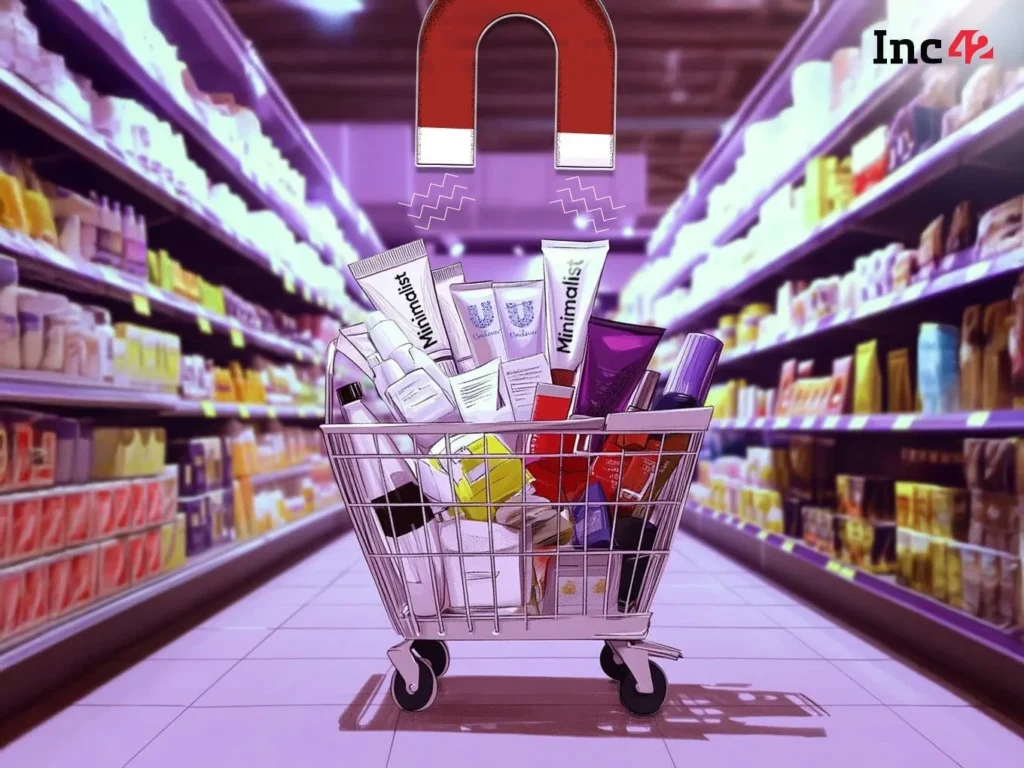
High-profile deals such as Hindustan Unilever’s acquisition of Minimalist, ITC’s investment in Yoga Bar, and Marico’s purchase of Plix highlight a clear pattern: large FMCG companies are buying D2C brands to fast-track premiumisation, modernize their portfolios, and gain access to rich digital consumer data that was previously out of reach through traditional retail channels.
These acquisitions are not just about adding new brands—they are about transforming how FMCG companies understand consumers, develop products, and drive long-term growth in an era defined by personalization, health consciousness, sustainability, and digital engagement.
This report explores:
- Why FMCG companies are aggressively acquiring D2C brands instead of building premium labels in-house
- How premiumisation and first-party digital data have become the real growth engines for modern FMCG businesses
- How India’s FMCG-D2C acquisition wave compares with global trends, and why India stands out as a key market
- What the next 10 years hold for FMCG companies, D2C founders, investors, and consumers as this convergence accelerates
Together, these insights explain why FMCG-D2C acquisitions are no longer optional—but central to the future strategy of consumer goods companies worldwide.
The Rise of D2C Brands in FMCG
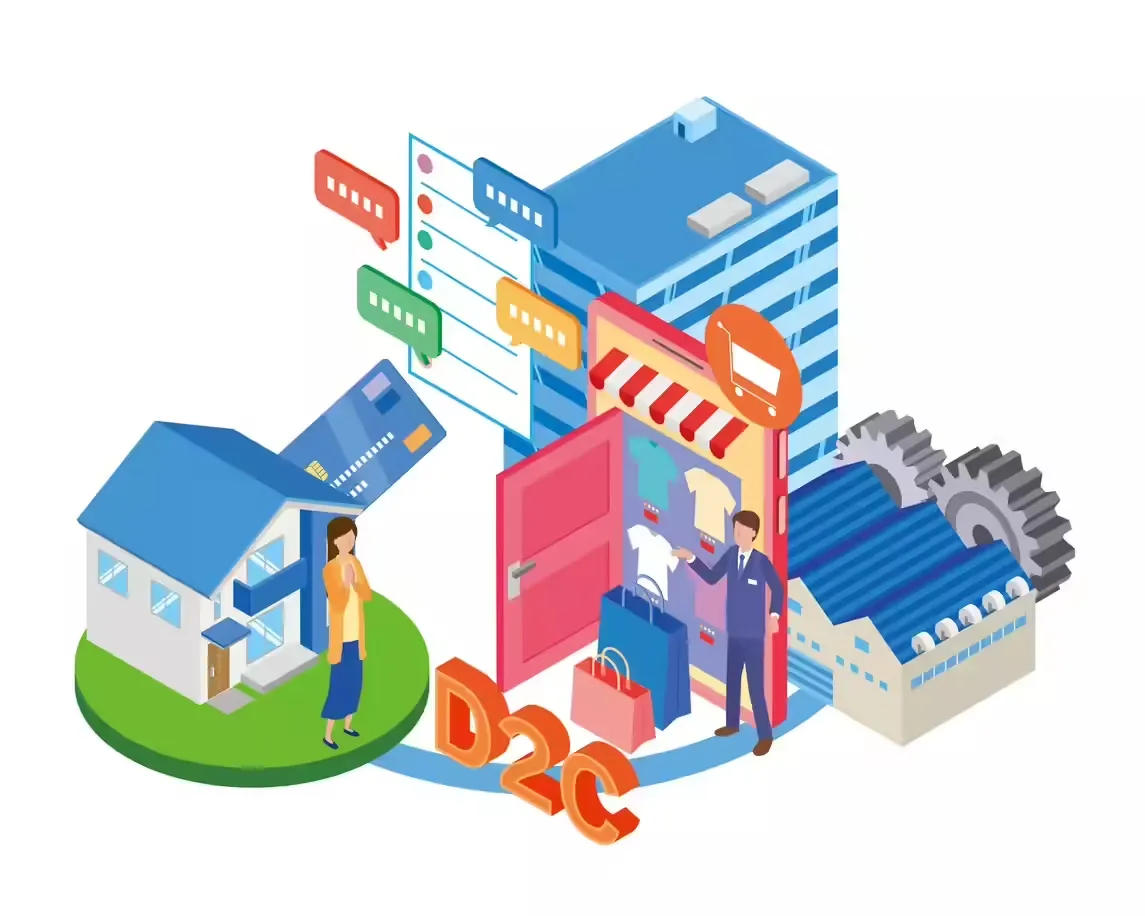
Direct-to-Consumer (D2C) brands sell products directly to end customers through their own websites, mobile apps, and online marketplaces, effectively bypassing traditional layers of distributors, wholesalers, and offline retailers. This model has fundamentally altered how FMCG brands are built, marketed, and scaled—especially in the digital era.
Over the last decade, D2C brands have evolved from niche online experiments into serious competitors for legacy FMCG companies, particularly in premium, health-focused, and lifestyle-oriented categories.
🚀 Why D2C Took Off: Key Growth Catalysts
The rapid rise of D2C brands in FMCG has been driven by a powerful combination of technology, changing consumer behavior, and structural shifts in retail.
1. Explosion of E-commerce & Social Commerce
The widespread adoption of smartphones, UPI payments, and affordable mobile data has made online shopping mainstream—especially in India. Platforms like Instagram, YouTube, WhatsApp, and influencer marketplaces have enabled brands to sell directly through content and community, without relying on traditional retail shelves.
Digital storefronts allowed even small FMCG startups to reach national and global audiences from day one.
2. Initially Lower Digital Advertising Costs
In the early stages of the D2C boom, digital advertising on platforms such as Facebook, Instagram, and Google was relatively inexpensive. This allowed D2C brands to:
- Test multiple products quickly
- Acquire customers at low cost
- Scale faster than traditional FMCG launches
Although customer acquisition costs (CAC) have risen sharply in recent years, early movers built strong brand recall and loyal customer bases, giving them a long-term advantage.
3. Rising Demand for Clean, Functional & Premium Products
Modern consumers—particularly millennials and Gen Z—are increasingly conscious about:
- Ingredients and sourcing
- Health and wellness benefits
- Sustainability and ethical practices
Traditional FMCG portfolios, built for mass markets, often struggled to adapt quickly. D2C brands filled this gap with clean-label, organic, vegan, functional, and personalized products, commanding higher prices and stronger loyalty.
4. Trust in Founder-Led & Community-Driven Brands
D2C brands often feature visible founders, transparent storytelling, and direct consumer engagement, building trust faster than faceless corporate brands.
This authenticity resonated strongly with digital-native consumers who value:
- Honest communication
- Social proof and reviews
- Brand purpose and values
📈 High-Growth FMCG D2C Categories
While D2C adoption spans multiple FMCG segments, certain categories have consistently outperformed due to repeat purchase behavior and premium positioning:
- Personal Care & Beauty: Clean skincare, derma-backed formulations, natural cosmetics
- Health Foods & Nutrition: Protein supplements, functional snacks, plant-based nutrition
- Pet Care: Premium pet food, supplements, and grooming products
- Men’s Grooming: Skincare, hair care, and wellness products tailored for men
- Sustainable Home Care: Eco-friendly cleaning, refillable packaging, toxin-free formulations
These categories benefit from higher margins, strong digital storytelling, and subscription potential, making them especially attractive to both D2C founders and acquiring FMCG companies.
📊 Key Growth Statistic (India Focus)
D2C FMCG brands in India recorded an estimated ~40% CAGR between FY21 and FY24, significantly outperforming traditional FMCG growth of ~8–10% during the same period.
This sharp growth differential explains why D2C brands—despite being smaller in absolute size—have become strategic acquisition targets for large FMCG companies seeking faster, premium-led expansion.
💡 Why This Matters for FMCG Giants
The rise of D2C brands has demonstrated that brand-building is no longer dependent on distribution scale alone. Instead, data, digital engagement, speed, and consumer trust have become equally important—setting the stage for the current wave of FMCG-D2C acquisitions.
Why FMCG Giants Are Acquiring D2C Players
The accelerating wave of FMCG–D2C acquisitions is not opportunistic—it is highly strategic. At its core, this trend is driven by one critical factor: speed.
⏱️ The Core Motivation: Speed to Market
In today’s fast-evolving consumer landscape, time is a competitive advantage.
Building a premium, digital-first FMCG brand internally typically takes 5–7 years, involving:
- Multiple product iterations
- Long approval and compliance cycles
- Heavy brand-building investments
- Slow cultural adaptation to digital marketing
In contrast, acquiring an established D2C brand can deliver the same outcome in just 6–12 months—complete with an existing customer base, proven product-market fit, and live digital data pipelines.
For FMCG giants facing slowing growth in mass categories, acquisitions provide a fast-track route to relevance.
🔑 Key Strategic Reasons Behind FMCG–D2C Acquisitions
1️⃣ Instant Entry into Premium & High-Growth Segments
D2C brands are often born in premium niches—clean beauty, functional nutrition, sustainable home care—where traditional FMCG companies have limited presence.
By acquiring D2C players, FMCG majors can:
- Immediately enter high-margin categories
- Expand their premium portfolio without diluting legacy brands
- Capture consumers willing to pay more for quality and differentiation
This is especially important as premium products are growing 1.5–2x faster than mass FMCG categories globally.
2️⃣ Access to Digitally Loyal, High-Value Consumers
D2C brands typically cultivate direct relationships with their customers through:
- Owned websites and apps
- Email, WhatsApp, and SMS marketing
- Loyalty programs and subscriptions
For FMCG companies that traditionally rely on retailer-owned data, acquiring D2C brands unlocks:
- First-party consumer data
- High repeat purchase visibility
- Deep insights into customer lifetime value (CLV)
This direct access to digitally loyal consumers is one of the most valuable assets driving acquisition decisions.
3️⃣ Faster Product Innovation & Market Testing
D2C brands operate with shorter innovation cycles, often launching new products in:
- Weeks instead of years
- Limited batches based on real-time feedback
When FMCG companies acquire these brands, they inherit:
- Agile product development processes
- Consumer feedback loops
- Data-backed experimentation culture
This capability allows FMCG giants to test, refine, and scale premium products faster across both online and offline channels.
4️⃣ Stronger Margins Compared to Mass FMCG Products
Traditional FMCG businesses operate on thin margins, relying on high volumes to drive profitability.
In contrast, D2C brands often enjoy:
- Premium pricing power
- Better gross margins
- Lower dependency on trade discounts
Even after accounting for higher digital marketing costs, successful D2C brands typically deliver superior unit economics, making them highly attractive acquisition targets.
5️⃣ Digital Transformation Without Cultural Disruption
Instead of attempting to overhaul legacy systems and mindsets internally, FMCG companies use D2C acquisitions as a “digital transformation shortcut.”
These brands bring with them:
- Digital-native teams
- Performance marketing expertise
- Influencer and community-led growth models
This allows FMCG majors to modernize their operations without disrupting core mass-market businesses.
📌 Report Insight (India Focus)
Nearly two-thirds of FMCG acquisitions in India over the last five years were D2C-led, highlighting how central digital-first brands have become to FMCG growth strategies.
This statistic underscores a broader reality: D2C brands are no longer fringe experiments—they are now core strategic assets in the FMCG ecosystem.
💡 Strategic Takeaway
For FMCG giants, acquiring D2C players is not just about buying brands—it’s about buying speed, data, innovation capability, and future-proof relevance in a market where consumer expectations are evolving faster than ever.
Premiumisation: The Real Growth Engine of FMCG
Premiumisation has emerged as the single most important growth lever for FMCG companies worldwide. Rather than relying solely on selling larger volumes at razor-thin margins, premiumisation focuses on selling higher-value products at better margins by offering superior quality, functionality, experience, and brand storytelling.
For FMCG giants facing slowing volume growth in mass categories, premiumisation is no longer optional—it is essential for sustainable profitability.
💡 What Premiumisation Really Means in FMCG
Premiumisation is not just about higher prices. It is about perceived value. Premium FMCG products typically offer one or more of the following:
- Better ingredients or formulations
- Clear functional or health benefits
- Ethical, sustainable, or clean-label positioning
- Personalisation or niche targeting
- Superior packaging and brand experience
D2C brands are naturally designed around these attributes, making them ideal vehicles for premiumisation strategies.
📈 Why Premium Matters More Than Ever
1️⃣ Rising Middle-Class Incomes & Aspirational Consumption
India’s expanding middle class and rising disposable incomes have fundamentally altered consumption patterns. Consumers are increasingly willing to:
- Pay more for products that align with their health goals
- Choose quality over quantity
- Experiment with new, premium brands
This shift is not limited to metros. Aspirational consumption is now visible across Tier-2, Tier-3, and even rural markets, driven by digital exposure and social media influence.
2️⃣ Consumers Are Actively Trading Up
Modern consumers are consciously “trading up” from basic FMCG products to value-added alternatives. Key premium drivers include:
- Clean Labels: Products with fewer chemicals, transparent ingredient lists, and safer formulations
- Functional Ingredients: Protein-enriched foods, derma-backed skincare, herbal or clinically tested ingredients
- Sustainability: Eco-friendly packaging, cruelty-free products, ethical sourcing
- Customization: Products tailored to specific needs, skin types, dietary preferences, or lifestyles
These factors justify higher pricing while building long-term brand loyalty.
3️⃣ Higher Margins and Stronger Brand Moats
Premium FMCG products typically deliver:
- Higher gross margins
- Lower dependence on deep trade discounts
- Stronger brand differentiation
- Greater resistance to price wars
This margin advantage is especially attractive to FMCG giants operating in low-margin mass categories.
📊 Data Snapshot: Premium vs Mass FMCG Growth
Premium FMCG products are growing approximately 1.5–2x faster than mass-market FMCG products globally, driven by health awareness, sustainability, and lifestyle upgrades.
In India, the rise of “affordable premium”—products priced slightly above mass brands but well below luxury—has unlocked demand across Tier-2 cities and rural markets, significantly expanding the premium consumer base.
This trend explains why FMCG companies prefer acquiring premium-first D2C brands instead of launching new mass products.
🔍 Why D2C Brands Are Perfect Premiumisation Vehicles
D2C brands are built for premiumisation because they:
- Control the entire consumer journey
- Educate customers directly through content
- Test premium pricing without retailer pressure
- Build communities around lifestyle and values
When FMCG giants acquire such brands, they gain a ready-made premium growth engine—without disrupting their mass-market portfolios.
🧠 Strategic Takeaway
Premiumisation is no longer about niche luxury—it is about scalable, profitable growth. As consumers continue to trade up, FMCG companies that fail to build strong premium portfolios risk stagnation, while those leveraging D2C acquisitions are positioning themselves for the next decade of consumer growth.
Digital Consumer Data: The Hidden Goldmine Behind FMCG–D2C Acquisitions
In the traditional FMCG model, companies sell primarily through distributors, wholesalers, and large retailers. While this ensures massive reach, it comes at a cost: limited visibility into the end consumer. Most customer data—who bought what, how often, and why—remains with retailers and platforms.
D2C brands fundamentally change this equation.
Unlike legacy FMCG brands, D2C companies own first-party consumer data, making data—not just products—the most valuable asset FMCG giants acquire.
🔍 What Kind of Data FMCG Companies Gain
When an FMCG major acquires a D2C brand, it gains access to rich, real-time consumer intelligence across the entire purchase journey.
1️⃣ Purchase Frequency & Repeat Behavior
D2C platforms track exactly:
- How often customers repurchase
- Time gaps between purchases
- Product replenishment cycles
This helps FMCG companies identify high-frequency SKUs, optimize pack sizes, and design subscription or refill models—something traditional retail data cannot easily reveal.
2️⃣ Customer Lifetime Value (CLV)
D2C brands calculate CLV by linking:
- Average order value (AOV)
- Repeat purchases
- Retention rates
For FMCG companies, this insight helps:
- Prioritize high-value customer segments
- Allocate marketing budgets more efficiently
- Design premium loyalty and retention programs
CLV-focused decision-making shifts FMCG strategy from volume-driven growth to value-driven growth.
3️⃣ Pricing Sensitivity & Willingness to Pay
D2C brands continuously test pricing through:
- A/B experiments
- Limited-time offers
- Bundle pricing
- Subscription discounts
This provides FMCG companies with granular insights into:
- Price elasticity by consumer segment
- Optimal premium price points
- Trade-offs between discounts and margins
Such pricing intelligence is extremely difficult to obtain in offline retail ecosystems.
4️⃣ Real-Time Product Feedback Loops
D2C brands receive instant consumer feedback via:
- Reviews and ratings
- Direct surveys
- Social media comments
- Customer support interactions
This feedback enables:
- Faster product improvement
- Early identification of quality issues
- Data-backed product extensions
For FMCG giants, these feedback loops dramatically reduce the risk of failed product launches.
5️⃣ Cohort-Based & Behavioral Insights
D2C data allows consumers to be grouped into cohorts based on:
- Acquisition channel
- First product purchased
- Geography
- Lifestyle or usage patterns
These insights help FMCG companies:
- Predict long-term value of new customers
- Customize messaging for different cohorts
- Identify early signals of churn or loyalty
This level of consumer understanding was nearly impossible in the traditional FMCG model.
💡 Why Digital Consumer Data Matters So Much
First-party data is not just informative—it is transformational. When used effectively, it powers multiple growth levers across the FMCG value chain.
What This Data Enables:
- Hyper-Targeted Marketing:
Personalized offers, content, and recommendations based on real behavior—not assumptions. - Faster New Product Launches:
Products are ideated, tested, and scaled using live consumer feedback and demand signals. - Reduced Advertising Wastage:
Marketing budgets are focused on high-intent, high-CLV customers instead of broad, inefficient mass campaigns. - Better Demand Forecasting:
Predictive analytics based on actual consumption patterns improve inventory planning and reduce stock-outs or overproduction.
🧠 Strategic Advantage for FMCG Companies
In a future shaped by AI-driven marketing, personalization, and omnichannel retail, owning clean, first-party consumer data is a decisive competitive advantage.
By acquiring D2C brands, FMCG giants are not just buying revenue—they are buying data infrastructure, consumer intelligence, and a direct line to future demand.
🔑 Key Takeaway
Digital consumer data is the hidden goldmine that makes D2C brands disproportionately valuable. For FMCG companies, this data transforms how they market, innovate, price, and plan—turning D2C acquisitions into a cornerstone of long-term strategy rather than a short-term growth bet.
India Case Studies: FMCG–D2C Acquisitions
India has emerged as a hotspot for FMCG–D2C mergers and acquisitions, as digital adoption accelerates and premiumisation reshapes consumer behavior. The following case studies illustrate why these acquisitions make strategic sense, the value each brand brings, and the digital-first advantage they offer.
🧴 HUL + Minimalist
Deal Overview:
Hindustan Unilever (HUL), India’s largest FMCG company, acquired a majority stake in Minimalist, a science-backed skincare D2C brand, to strengthen its presence in the premium personal care segment.
Why This Acquisition Matters:
- Entry into Science-Backed Skincare: Minimalist specializes in dermatologist-tested, ingredient-focused formulations, filling a gap in HUL’s existing portfolio.
- Strong Gen-Z & Millennial Base: Minimalist has built a highly engaged digital community, primarily through Instagram and YouTube, giving HUL instant access to digitally savvy younger consumers.
- Digital-First Brand DNA: Minimalist’s operations, marketing, and customer engagement are digitally native, including personalized product recommendations, subscription-based sales, and influencer-led campaigns.
Strategic Takeaway:
HUL acquired more than a brand—they acquired a digital-first growth engine capable of driving premiumisation and building long-term loyalty in the fast-growing online skincare market.
🥗 ITC + Yoga Bar
Deal Overview:
ITC, a diversified Indian conglomerate, acquired Yoga Bar, a D2C brand offering premium health and snack foods, to expand its wellness and nutrition portfolio.
Why This Acquisition Matters:
- Premium Health Foods: Yoga Bar’s products focus on high-quality, functional, and natural ingredients, appealing to health-conscious consumers.
- Portfolio Complementarity: The acquisition strengthens ITC’s existing food business by adding high-margin, premium, and digitally engaged products, without cannibalizing traditional offerings.
- Strong Online Repeat Customers: Yoga Bar has established direct relationships with repeat buyers, enabling ITC to harness first-party data for marketing, product development, and retention strategies.
Strategic Takeaway:
The deal allowed ITC to enter the fast-growing health foods segment rapidly and leverage D2C capabilities to scale beyond traditional retail distribution channels.
🌿 Marico + Plix
Deal Overview:
Marico, a leading Indian FMCG player in health and wellness, acquired Plix, a plant-based nutrition and functional food brand, to strengthen its position in the premium nutrition market.
Why This Acquisition Matters:
- Plant-Based Nutrition: Plix offers protein-rich, plant-based products aligned with modern health trends, complementing Marico’s wellness-oriented brands like Saffola and Fitternity.
- Influencer-Led Digital Growth: Plix has a strong presence on social media platforms and leverages influencer marketing to drive brand awareness and community engagement.
- Subscription-Friendly Model: The brand has subscription-based delivery options, ensuring recurring revenue and predictable customer lifetime value.
Strategic Takeaway:
Marico’s acquisition of Plix provides a ready-made digital-first nutrition brand, enabling it to target health-conscious millennials and Gen Z consumers while experimenting with data-driven marketing and subscription models.
📊 Key Insights Across These Acquisitions
| FMCG Giant | D2C Brand | Premium Segment | Digital Advantage | Growth Lever |
| HUL | Minimalist | Skincare | Social-first, Gen Z engagement | Fast premium portfolio expansion |
| ITC | Yoga Bar | Health foods | Repeat buyer analytics | Wellness & functional food growth |
| Marico | Plix | Plant-based nutrition | Influencer & subscription model | Direct digital revenue & retention |
Overall Lessons:
- Acquisitions shortcut the innovation timeline for FMCG companies.
- D2C brands bring digital-first infrastructure, from e-commerce to consumer analytics.
- Premiumisation is the common growth theme across all deals.
- First-party data from D2C brands is a critical strategic asset for marketing, pricing, and product development.
Global FMCG–D2C M&A Trends
The D2C acquisition trend is not limited to India—global FMCG giants are rapidly following the same playbook, recognizing that premiumisation, digital engagement, and first-party consumer data are critical for long-term growth.
🌎 Global FMCG Majors Are Following the Same Playbook
Major multinational FMCG companies have been actively acquiring digital-native D2C brands to diversify their portfolios, strengthen premium offerings, and modernize digital capabilities.
Examples of Global Leaders:
- Unilever
- Acquisitions include The Vegetarian Butcher (plant-based foods) and Tatcha (clean beauty)
- Objective: Capture niche, premium segments while gaining loyal, digitally engaged consumers.
- Acquisitions include The Vegetarian Butcher (plant-based foods) and Tatcha (clean beauty)
- Nestlé
- Invested in D2C brands like Freshly (meal delivery) and Sweet Earth Foods (plant-based foods)
- Strategy: Enter emerging health and wellness segments with data-driven product insights.
- Invested in D2C brands like Freshly (meal delivery) and Sweet Earth Foods (plant-based foods)
- Procter & Gamble (P&G)
- Acquired Billie (female grooming D2C brand) and Native (natural deodorants)
- Goal: Modernize portfolio, access premium and socially conscious consumers, and gain digital-first operational capabilities.
- Acquired Billie (female grooming D2C brand) and Native (natural deodorants)
- L’Oréal
- Bought brands like Thrive Causemetics and Youth to the People
- Focus: Direct engagement with consumers, social-first marketing, and premium skincare expansion.
- Bought brands like Thrive Causemetics and Youth to the People
Across all cases, the playbook is consistent: Acquire niche, premium D2C brands to accelerate growth and capture digitally loyal consumers instead of building new brands from scratch.
🔑 Common D2C Targets for FMCG Giants
Global FMCG companies are primarily acquiring D2C brands in categories that are:
- High-margin & premium
- Digitally native and community-driven
- Aligned with emerging consumer trends
Most Common Targets:
- Clean Beauty & Skincare Brands:
Focused on natural ingredients, cruelty-free products, and premium formulations. - Functional Nutrition & Wellness Startups:
Plant-based proteins, supplements, and health-focused snacks. - Sustainable Household Products:
Eco-friendly cleaning products, refillable packaging, and sustainable home essentials. - Subscription-Based & Lifestyle Products:
Brands with recurring revenue models or strong social commerce traction.
These categories not only command higher margins but also provide access to first-party data for targeted marketing and product innovation.
📊 Global D2C Market Forecast
The global D2C ecosystem is rapidly expanding, and acquisitions are a reflection of its long-term potential:
| Metric | Value |
| Global D2C Market (2024) | ~$225B |
| Projected Market (2034) | ~$880B |
| CAGR | ~14–15% |
Insights from the Forecast:
- D2C adoption is accelerating across North America, Europe, and APAC, with emerging markets like India and Southeast Asia showing the fastest growth rates.
- Premium, sustainable, and health-focused products are driving the majority of this expansion.
- FMCG companies that acquire D2C brands early gain first-mover advantage in digital and premium segments, positioning them for long-term leadership.
💡 Strategic Implications for Global FMCG Giants
- Speed to Market: Acquisitions are faster than internal brand-building.
- Digital Intelligence: D2C brands provide critical first-party consumer data.
- Premiumisation Play: Allows expansion into high-margin categories without risking legacy brands.
- Global Scale: Many FMCG giants leverage acquired D2C brands to test new markets internationally.
- Future-Proofing: Direct-to-consumer engagement is becoming essential as traditional retail margins shrink and consumer expectations evolve.
🔑 Key Takeaway
The global trend mirrors India: FMCG giants are no longer relying on mass-market growth alone. By acquiring D2C brands, they are combining premiumisation, digital-first consumer engagement, and actionable data insights to future-proof their businesses for the next decade.
Benefits for FMCG Companies
Acquiring D2C brands offers FMCG companies more than just new products—it provides strategic advantages across growth, innovation, and digital transformation. Here’s a detailed breakdown of the key benefits:
✔ 1️⃣ Faster Premium Growth
Why it matters:
Building a premium brand internally can take 5–7 years, from product development to consumer adoption. D2C acquisitions allow FMCG giants to enter high-margin premium segments almost immediately.
Example:
- HUL’s acquisition of Minimalist gave the company instant credibility in science-backed skincare, capturing millennials and Gen-Z consumers in months instead of years.
- ITC’s Yoga Bar acquisition allowed immediate penetration into health and wellness foods, a segment that has been growing faster than traditional staples.
Strategic Insight:
By leveraging D2C brands, FMCG companies can fast-track portfolio diversification, gaining premium market share without the risk or time associated with launching a new in-house brand.
✔ 2️⃣ Better Margins
Why it matters:
Premium D2C products often carry higher unit prices and healthier gross margins compared to mass-market products. Even after accounting for marketing and digital costs, these brands outperform traditional FMCG in profitability per unit.
Example:
- Plix, acquired by Marico, sells plant-based nutrition products at higher price points than traditional snacks, delivering sustainable margins through subscriptions and repeat purchases.
Strategic Insight:
Higher-margin products not only boost profitability but also provide FMCG companies with flexibility to invest in innovation and digital marketing without eroding overall returns.
✔ 3️⃣ Access to a Younger, Digitally Engaged Consumer Base
Why it matters:
D2C brands are built for digital-first, Gen-Z, and millennial consumers, who are increasingly difficult for traditional FMCG brands to reach via offline retail.
Example:
- Minimalist has cultivated a community of young, health-conscious users through Instagram, YouTube, and influencer campaigns.
- Yoga Bar leverages online subscription models to retain health-conscious, repeat buyers.
Strategic Insight:
Acquiring these brands allows FMCG companies to engage directly with younger audiences, build brand loyalty early, and reduce dependency on traditional retail channels for customer insights.
✔ 4️⃣ Accelerated Digital Transformation
Why it matters:
Digital capabilities are no longer optional—they are a core growth driver. D2C brands come with built-in infrastructure:
- E-commerce platforms
- First-party consumer data
- Digital marketing expertise
- Influencer & community management
Example:
- Marico’s acquisition of Plix gave it a ready-to-use digital sales and subscription model, avoiding years of trial-and-error digital transformation internally.
Strategic Insight:
This accelerates digital transformation across the organization, enabling FMCG companies to modernize operations, improve consumer targeting, and experiment with direct-to-consumer channels at scale.
✔ 5️⃣ Reduced Innovation Risk
Why it matters:
Launching new products internally carries high uncertainty: consumer acceptance, formulation effectiveness, and market timing are all risks. D2C brands have already proven product-market fit, validated by digital engagement and repeat purchases.
Example:
- HUL did not have to test Minimalist’s skincare formulations from scratch—the brand already had strong online adoption, reviews, and community trust.
- ITC benefited from Yoga Bar’s established product lines and customer base, reducing experimentation risk in the fast-growing health food segment.
Strategic Insight:
By acquiring a proven D2C brand, FMCG companies minimize the risk of failed launches while retaining the flexibility to innovate on top of an existing foundation.
📌 Additional Benefits
- Supply Chain Insights: FMCG companies can optimize their distribution and inventory strategies using D2C sales data.
- Market Intelligence: First-party consumer data allows predictive analytics for future trends, new product categories, and regional preferences.
- Brand Differentiation: Premium D2C acquisitions help large FMCG companies stand out in increasingly crowded markets.
🧠 Strategic Takeaway
For FMCG giants, acquiring D2C brands is a multi-dimensional growth strategy. It is not just about adding a product—it delivers speed, profitability, digital capabilities, consumer engagement, and reduced innovation risk, all of which are critical in a market where premiumisation and digital-first behavior are defining the future of consumer goods.
Benefits for D2C Founders & Investors
While FMCG companies clearly gain strategic advantages from D2C acquisitions, the benefits for founders and early-stage investors are equally compelling. Acquisitions offer more than capital—they provide a path for scale, profitability, and long-term sustainability in a competitive market.
✔ 1️⃣ Scale Distribution Nationwide
Why it matters:
D2C brands typically start online and focus on digital-first sales, often limiting geographical reach. Acquiring an established FMCG partner instantly provides:
- Access to national retail networks
- Shelf space in offline stores, modern trade, and supermarkets
- Expansion into Tier-2, Tier-3, and rural markets
Example:
- Minimalist, initially online-only, leveraged HUL’s pan-India distribution network to reach consumers beyond urban digital hubs.
- Plix, post-Marico acquisition, could supply plant-based nutrition products to offline grocery and health-food stores nationwide.
Strategic Insight:
For D2C founders, this instantly amplifies brand visibility and drives exponential growth without building a distribution network from scratch.
✔ 2️⃣ Access to Capital for Growth
Why it matters:
Scaling a D2C brand, especially in FMCG, requires significant investment in:
- Manufacturing
- Packaging innovation
- Digital marketing
- Customer acquisition and retention
By partnering with or being acquired by an FMCG giant, D2C brands gain immediate access to capital for:
- Expanding product lines
- Launching in new geographies
- Scaling marketing campaigns
Example:
- Yoga Bar could accelerate product development and launch new health-focused snacks after ITC’s acquisition, without worrying about fundraising constraints.
Strategic Insight:
Access to capital allows founders to focus on brand and product innovation rather than cash flow or fundraising challenges.
✔ 3️⃣ Improved Profitability Through Economies of Scale
Why it matters:
D2C brands often operate with higher operational costs per unit due to small-scale production, limited supplier leverage, and digital marketing spend. Acquisition by an FMCG giant provides:
- Bulk procurement discounts
- Optimized production facilities
- Shared logistics networks
Example:
- Post-acquisition, Plix leveraged Marico’s manufacturing and procurement infrastructure, lowering production costs while maintaining product quality.
Strategic Insight:
Improved economies of scale increase gross margins and make premium D2C brands financially sustainable at larger volumes.
✔ 4️⃣ Enhanced Supply Chain Efficiency
Why it matters:
Managing logistics, warehousing, and distribution is one of the biggest operational challenges for D2C brands. Partnering with an FMCG giant provides:
- Established supply chain expertise
- Optimized inventory management
- Faster delivery times
- Better forecasting using historical sales data
Example:
- Minimalist could ensure consistent product availability across India, reducing lost sales and improving customer satisfaction after HUL’s acquisition.
Strategic Insight:
Improved supply chain efficiency allows D2C brands to focus on brand-building and consumer engagement, rather than operational bottlenecks.
✔ 5️⃣ Attractive Exit Opportunities
Why it matters:
Many D2C founders start with the goal of creating scalable, high-value brands, but sustaining growth in a competitive market is challenging. Acquisitions provide:
- Financial liquidity for founders and investors
- Brand continuity and scale under a larger corporate umbrella
- Opportunities for partial or full exits, unlocking capital for new ventures
Example:
- Minimalist founders gained not only a substantial financial return but also the ability to expand the brand nationally and internationally with HUL’s resources.
Strategic Insight:
Acquisition deals represent a win-win, allowing founders and investors to realize value while ensuring the brand’s long-term growth trajectory.
📌 Additional Benefits
- Professional Mentorship & Governance: Access to experienced FMCG executives for strategic guidance.
- Global Expansion Opportunities: Some acquisitions provide international market reach via parent company networks.
- Enhanced Brand Credibility: Being associated with a trusted FMCG giant increases consumer trust and retailer acceptance.
🧠 Strategic Takeaway
For D2C founders and investors, being acquired by a large FMCG company is more than a financial event—it is a launchpad for scale, profitability, operational efficiency, and long-term sustainability. The combination of capital, infrastructure, and market expertise enables D2C brands to realize their full potential while reducing business risks in a competitive digital landscape.
Risks & Challenges of FMCG–D2C Acquisitions ⚠️
While acquiring D2C brands offers rapid growth, premiumisation, and digital insights, it is not without risks and operational challenges. Understanding these pitfalls is critical for both FMCG companies and D2C founders to ensure long-term value creation.
⚠️ Key Risks & Challenges
1️⃣ Cultural Mismatch
Why it matters:
D2C brands are typically lean, agile, and founder-led, emphasizing fast decision-making and digital-first strategies. In contrast, FMCG giants often operate with hierarchical structures and legacy processes.
Potential issues:
- Slower decision-making
- Conflicts over product or marketing strategies
- Loss of entrepreneurial culture
Example:
Some global FMCG acquisitions have seen founder teams leave post-integration because the corporate environment clashed with the D2C brand’s agile culture.
Mitigation Tip:
- Preserve founder involvement in strategic decisions
- Implement hybrid governance models that maintain D2C agility
2️⃣ Brand Dilution
Why it matters:
Integrating a niche, premium D2C brand into a mass-market FMCG portfolio risks losing the brand’s unique identity.
Potential issues:
- Consumers perceive the brand as “corporate”
- Premium positioning eroded by bundling or mass-market pricing
- Reduced engagement from loyal early adopters
Example:
- Premium D2C skincare brands globally sometimes lose credibility when sold in mass retail or co-branded marketing campaigns.
Mitigation Tip:
- Maintain brand autonomy in marketing, pricing, and product development
- Avoid aggressive cross-branding that undermines the original ethos
3️⃣ Over-Dependence on Digital Advertising
Why it matters:
D2C brands often rely heavily on performance marketing via social media, Google Ads, and influencers. Post-acquisition, scaling these campaigns can be expensive and volatile.
Potential issues:
- Rising customer acquisition costs (CAC)
- Reliance on algorithms or platforms outside the company’s control
- Slower ROI if campaigns fail to convert
Example:
- Several D2C brands in India faced spiking ad costs after scaling nationwide campaigns, reducing margins despite revenue growth.
Mitigation Tip:
- Diversify channels with subscriptions, influencer communities, and offline touchpoints
- Build in-house marketing capabilities instead of relying solely on paid ads
4️⃣ Integration Complexity
Why it matters:
Combining a small, nimble D2C brand with a large FMCG organization involves operational, technological, and HR challenges.
Potential issues:
- Aligning ERP, supply chain, and IT systems
- Integrating finance, HR, and compliance functions
- Preserving brand-specific processes within a larger corporate structure
Example:
- Global studies show that ~50% of M&A deals fail to meet revenue or profit expectations due to integration challenges.
Mitigation Tip:
- Create a dedicated integration team
- Maintain separate operational units where necessary to preserve speed
5️⃣ Loss of Founder Agility
Why it matters:
D2C founders are often the driving force behind innovation, culture, and digital-first thinking. Post-acquisition, excessive control by the parent company can stifle creativity.
Potential issues:
- Slow product launches
- Reduced experimentation with new formats, flavors, or SKUs
- Founder burnout or exit
Example:
- Some acquired global D2C brands experienced slower iteration cycles after integrating into FMCG parent companies with multi-layered approvals.
Mitigation Tip:
- Retain founder and senior D2C team autonomy for critical decisions
- Encourage internal innovation pods to operate independently
⚠️ Summary Table: Risks vs Mitigation
| Risk | Potential Impact | Mitigation Strategy |
| Cultural mismatch | Founder exits, slow decision-making | Preserve founder involvement, hybrid governance |
| Brand dilution | Loss of premium positioning | Maintain marketing & product autonomy |
| Over-dependence on digital ads | Rising CAC, reduced ROI | Diversify channels, build in-house marketing |
| Integration complexity | Operational delays, lost synergies | Dedicated integration team, separate units |
| Loss of founder agility | Slower innovation | Retain autonomy, innovation pods |
🧠 Strategic Takeaway
While FMCG–D2C acquisitions unlock growth, premiumisation, and digital data, companies must carefully manage integration, brand identity, and founder involvement. Failure to do so can erode the very advantages that motivated the acquisition.
Success lies in balancing scale with agility, and efficiency with brand authenticity.
10-Year Outlook for FMCG–D2C Convergence (2026–2035)
The next decade promises major structural shifts in the FMCG industry, driven by premiumisation, digital transformation, AI-driven personalization, and evolving consumer behavior. Both India and global markets are expected to see robust growth, with D2C brands playing a central role in shaping the future.
🇮🇳 India: The Digital-First Premium Playground
1️⃣ Overall FMCG Growth
- The Indian FMCG sector is projected to grow at a 6–9% CAGR between 2026 and 2035, slightly above global averages due to rising incomes, urbanization, and increasing digital adoption.
- Mass-market products will continue to be the backbone, but premium categories will significantly outpace volume-driven segments, especially in health foods, personal care, and sustainable home products.
2️⃣ Premiumisation & D2C Dominance
- Premium and “affordable premium” FMCG products are expected to grow 1.5–2x faster than traditional mass-market SKUs.
- D2C acquisitions will continue to be a strategic lever, as FMCG giants seek instant access to premium consumers, first-party data, and agile innovation.
3️⃣ Digital & Data-Driven Innovation
- AI and machine learning will enable hyper-personalized marketing, predictive demand forecasting, and dynamic pricing.
- Brands will increasingly adopt subscription-based models, automated replenishment, and direct-to-consumer loyalty programs, especially in urban and semi-urban areas.
4️⃣ Regional Expansion
- Tier-2, Tier-3 cities, and rural markets will emerge as high-growth zones for D2C premium brands, thanks to rising digital penetration and aspirational consumption.
- FMCG companies will combine offline distribution with digital-first strategies to capture these markets efficiently.
🌎 Global Market Outlook
1️⃣ Overall FMCG Market Growth
- The global FMCG market is projected to exceed $23 trillion by 2035, driven by population growth, rising disposable incomes, and evolving consumer preferences.
- Emerging markets, particularly India, Southeast Asia, Latin America, and Africa, will drive much of this growth.
2️⃣ Premiumisation & Health Trends
- Premium and functional categories—including plant-based nutrition, clean beauty, and sustainable home products—will outpace traditional staples, reflecting global consumer trends toward health, wellness, and sustainability.
- Consumers will increasingly trade up for quality, convenience, and ethical consumption, creating opportunities for D2C brands to capture loyal audiences.
3️⃣ AI & Data-Driven Product Launches
- Artificial Intelligence will transform product innovation by:
- Analyzing first-party consumer data
- Forecasting emerging trends
- Optimizing formulations and SKUs for niche segments
- Analyzing first-party consumer data
- FMCG giants will increasingly rely on data-driven decisions rather than traditional market research, reducing product launch risk and accelerating innovation cycles.
4️⃣ Subscription-Led FMCG Models
- Subscription-based models are expected to gain 10–15% share of D2C FMCG sales by 2035.
- Benefits include:
- Predictable revenue streams
- Higher customer lifetime value (CLV)
- Stronger brand loyalty
- Predictable revenue streams
- FMCG companies will integrate subscription services into mass-market brands, blending convenience with premiumization.
📊 Key Forecast Highlights
| Metric | India (2026–2035) | Global (2026–2035) |
| FMCG CAGR | 6–9% | 4–6% |
| Premium Category Growth | 1.5–2x mass-market | 1.5–2x staples |
| D2C Acquisition Trend | Increasing | Accelerating globally |
| Subscription Share | 15–20% of D2C sales | 10–15% of D2C sales |
| AI-Driven Product Launches | 50–60% of new SKUs | 40–50% of new SKUs |
🔑 Strategic Takeaways
- D2C acquisitions will remain a primary strategy for FMCG giants in India and globally, particularly in premium, health-focused, and sustainable segments.
- Premiumisation will drive faster revenue and margin growth compared to mass-market categories.
- AI and data-driven innovation will reduce product launch risk and enable hyper-personalization.
- Subscription and direct-to-consumer models will become mainstream, creating predictable revenue and higher consumer lifetime value.
- FMCG companies that balance digital-first agility with scale and distribution will dominate the next decade.
By 2035, FMCG will not just be about products—it will be about data, digital-first consumer relationships, and premium experiences, with D2C at the center of growth strategies worldwide.
What This Means for Consumers
The wave of FMCG–D2C acquisitions is not just reshaping corporate strategy—it is transforming the consumer experience. Consumers stand to benefit in multiple ways, from broader product choices to faster innovation cycles.
✔ 1️⃣ More Premium Choices
Why it matters:
D2C acquisitions allow FMCG giants to bring premium products directly to the mass market, including categories that were previously niche or urban-only.
Impact on Consumers:
- Access to science-backed skincare, plant-based nutrition, and functional health foods
- Availability of affordable premium options in Tier-2 and Tier-3 cities
- Easier discovery of innovative and lifestyle-focused products via e-commerce and retail
Example:
- Minimalist skincare products, previously online-only, are now available through HUL’s wider network, reaching millions of new consumers.
✔ 2️⃣ Better Quality Products
Why it matters:
D2C brands are often ingredient-led and quality-focused, and FMCG giants bring robust manufacturing, regulatory compliance, and supply chain expertise.
Impact on Consumers:
- Higher consistency in product quality and safety
- Access to premium formulations at scale
- Greater confidence in authenticity and efficacy of products
Example:
- ITC’s Yoga Bar snacks maintain high-quality standards, while leveraging ITC’s food-grade manufacturing capabilities to ensure product safety and consistency across India.
✔ 3️⃣ Competitive Pricing
Why it matters:
While D2C brands often charge a premium initially, FMCG acquisitions allow for economies of scale, wider distribution, and marketing optimization, which can make products more affordable without compromising quality.
Impact on Consumers:
- Access to premium D2C products at more competitive price points
- Greater value for money through bundles, subscriptions, and offers
- Encourages FMCG giants to innovate in pricing strategies, benefiting consumers
Example:
- Subscription-based models by Plix (Marico) allow consumers to lock in recurring purchases at discounted rates, making plant-based nutrition more accessible.
✔ 4️⃣ Faster Innovation Cycles
Why it matters:
D2C brands thrive on rapid experimentation, real-time consumer feedback, and agile product development. Post-acquisition, this capability scales across the FMCG giant’s ecosystem.
Impact on Consumers:
- New flavors, formulations, or variants launched more frequently
- Products evolve based on real-world user feedback
- Consumers can influence product development through reviews, surveys, and digital communities
Example:
- Minimalist can now launch targeted skincare ranges faster, informed by HUL’s market insights and analytics, reaching more consumers with innovative solutions.
📌 Additional Consumer Benefits
- Greater Convenience: Direct-to-consumer channels and subscription models make shopping faster and easier.
- Transparency & Trust: First-party data insights allow brands to personalize recommendations and offer curated solutions.
- Sustainability Options: Consumers gain access to eco-friendly and clean-label products, increasingly important in purchasing decisions.
🧠 Strategic Takeaway
For consumers, the FMCG–D2C convergence means more choices, higher quality, and better experiences. With premiumisation, subscription models, and digital-first strategies, every purchase becomes smarter, faster, and more satisfying, making the next decade of FMCG more consumer-centric than ever.
FAQs Section
1️⃣ Why are FMCG companies buying D2C brands?
FMCG companies acquire D2C brands to fast-track growth in premium and niche segments that are difficult to capture through traditional retail. These acquisitions provide:
- Instant access to digitally savvy consumers, particularly Gen-Z and millennials.
- First-party data, including purchase frequency, lifetime value (CLV), pricing sensitivity, and product feedback.
- Agile innovation capability, allowing FMCG giants to test products faster and reduce time-to-market compared to building a brand internally.
- Premium positioning, enabling companies to diversify portfolios without cannibalizing mass-market brands.
Example: HUL’s acquisition of Minimalist enabled immediate entry into science-backed skincare, capturing younger consumers who were previously online-only.
2️⃣ Are D2C brands more profitable than traditional FMCG products?
D2C brands generally have higher gross margins because they sell premium products directly to consumers. However, overall profitability depends on:
- Customer Acquisition Cost (CAC): High ad spending, especially on social media and paid search, can reduce margins if not optimized.
- Supply chain efficiency: Small-scale production or logistics challenges can impact cost per unit.
- Repeat purchase and retention rates: Subscription models and loyalty programs improve profitability.
Example: Plix (acquired by Marico) uses subscriptions and influencer-led marketing to maintain high margins while controlling CAC, making the brand more sustainable financially.
3️⃣ Is this trend specific to India or global?
This trend is global. FMCG giants worldwide—including Unilever, Nestlé, P&G, and L’Oréal—have been acquiring digital-native D2C brands to capture premium segments, gain first-party data, and innovate faster.
India is unique because:
- D2C adoption is growing rapidly due to high smartphone penetration and e-commerce expansion.
- Premiumisation is occurring not just in metros but also in Tier-2/3 cities and rural markets, increasing the scale and appeal of acquisitions.
4️⃣ Will D2C brands lose their identity post-acquisition?
It depends on integration strategy:
- Some brands are fully absorbed into the parent company, risking brand dilution.
- Many operate as independent subsidiaries, maintaining product autonomy, marketing freedom, and digital-first DNA.
Example: Minimalist continues to maintain its digital-first positioning, despite being under HUL, while benefiting from scale, distribution, and operational support.
5️⃣ Which FMCG categories see the most D2C acquisitions?
Most acquisitions target high-margin, premium, and fast-growing segments, including:
- Beauty & Personal Care: Skincare, haircare, clean beauty, grooming products.
- Health & Wellness: Nutritional supplements, plant-based snacks, functional foods.
- Sustainable Household Products: Eco-friendly cleaning, refillable packaging.
- Pet Care: Premium foods and wellness products for pets.
Rationale: These categories combine high consumer willingness to pay, strong digital engagement, and repeat purchase potential.
6️⃣ How do D2C acquisitions benefit consumers?
Consumers benefit from:
- More premium choices at accessible prices
- Better quality and consistency due to FMCG manufacturing expertise
- Faster innovation cycles, with new flavors, formulations, or variants launched more frequently
- Subscription convenience, loyalty programs, and personalized experiences
- Access to eco-friendly and clean-label products that were previously niche
Example: Yoga Bar snacks, post-ITC acquisition, became more widely available without compromising quality, giving consumers a premium health option nationwide.
7️⃣ Do FMCG giants face risks in acquiring D2C brands?
Yes. Key risks include:
- Cultural mismatch: Agile, lean D2C teams may clash with corporate hierarchy.
- Brand dilution: Premium or niche positioning may weaken if integrated poorly.
- Over-dependence on digital advertising: Rising CAC can affect profitability.
- Integration complexity: IT, supply chain, and HR alignment can be challenging.
- Loss of founder agility: Innovation pace may slow if founders are sidelined.
Mitigation: Companies often preserve brand autonomy, retain founders, and create separate operational units to reduce these risks.
8️⃣ How fast do FMCG companies scale D2C brands post-acquisition?
Scaling varies by category and brand maturity, but typical timelines include:
- Distribution expansion: 6–12 months to move from digital-only to pan-India retail presence
- Marketing scale-up: 3–6 months to integrate performance marketing with parent company tools
- Product innovation: 6–18 months for new SKUs leveraging parent company’s R&D
Example: Plix quickly scaled subscriptions and offline distribution under Marico, leveraging existing logistics and marketing teams.
9️⃣ How important is first-party data in these acquisitions?
First-party consumer data is a strategic asset, enabling:
- Hyper-targeted marketing
- Predictive demand forecasting
- Pricing optimization based on willingness-to-pay
- Faster, data-driven product launches
Example: Minimalist’s purchase behavior and review data allow HUL to forecast new skincare trends and optimize formulations for premium consumers.
🔟 Are D2C acquisitions a long-term strategy or short-term growth hack?
They are a long-term strategic play. Benefits include:
- Sustainable premium revenue streams
- Digital transformation acceleration
- Access to younger, digitally engaged consumers
- Data-driven product innovation
Evidence: Over the last five years, two-thirds of FMCG acquisitions in India were D2C-led, indicating a structural shift rather than a temporary trend.
1️⃣1️⃣ How will subscription models impact FMCG–D2C growth?
Subscriptions create predictable revenue and higher customer lifetime value. Benefits include:
- Consumers receive convenient, recurring deliveries
- FMCG companies gain data on consumption patterns
- Enables testing of new flavors, SKUs, or limited editions
Example: Plix’s subscription model under Marico ensures repeat revenue while collecting valuable usage data.
1️⃣2️⃣ What role does premiumisation play in acquisitions?
Premiumisation is the core driver of D2C value:
- Allows FMCG brands to charge higher margins
- Expands product lines without cannibalizing mass-market offerings
- Aligns with health, sustainability, and lifestyle trends
Example: Yoga Bar allowed ITC to enter the fast-growing functional foods market, targeting health-conscious consumers willing to pay for quality.
1️⃣3️⃣ Are D2C acquisitions more common in India than other markets?
While global FMCG giants are acquiring D2C brands, India is a particularly fertile ground due to:
- Rapid digital adoption and e-commerce growth
- Rising middle-class incomes and aspirational consumption
- Increasing demand for premium, functional, and clean-label products
Forecast: India will likely see more D2C acquisitions in health foods, skincare, and sustainable home care over the next decade.
Summary
- FMCG companies are acquiring D2C brands to accelerate premium growth
Traditional FMCG players face slower growth in mass categories, pushing them to acquire D2C brands that already operate in high-margin, premium segments such as beauty, wellness, nutrition, and clean-label foods. - Access to first-party digital consumer data is a major strategic driver
D2C brands provide FMCG giants with direct access to valuable customer data—purchase behavior, repeat rates, pricing sensitivity, and feedback—helping them build data-driven marketing, faster innovation cycles, and better product targeting. - Premiumisation is reshaping consumer demand in India and globally
Consumers, including those in Tier-2 cities and rural India, are increasingly trading up to “affordable premium” FMCG products, making premium-focused D2C brands a powerful growth engine for large FMCG portfolios. - India has emerged as a hotspot for FMCG–D2C acquisitions
Deals like HUL–Minimalist, ITC–Yoga Bar, and Marico–Plix show how Indian FMCG companies are using acquisitions to quickly enter new categories, attract younger digital-first consumers, and stay competitive. - These acquisitions benefit both FMCG companies and D2C founders
FMCG firms gain speed, innovation, and digital capabilities, while D2C brands receive capital, scale, distribution reach, and operational efficiency—improving long-term sustainability and exit opportunities. - The trend signals a long-term structural shift, not a short-term phase Over the next decade, FMCG growth will increasingly be driven by premium products, personalization, and data-led decision-making, making D2C acquisitions a core strategy for future-ready FMCG companies.
Conclusion
The wave of FMCG giants acquiring D2C brands represents more than a passing trend—it is a structural transformation reshaping the consumer goods industry globally and in India. The convergence of digital-first strategies, premiumisation, and data-driven insights is redefining how companies grow, innovate, and connect with consumers.
🔑 Key Takeaways from This Trend
- Strategic Shortcut to Premium Growth
- Acquiring D2C brands allows FMCG companies to enter high-margin segments faster, bypassing the years it would take to build premium brands in-house.
- Premium categories such as health foods, clean beauty, plant-based nutrition, and sustainable home care are experiencing 1.5–2x faster growth than mass-market products.
- Acquiring D2C brands allows FMCG companies to enter high-margin segments faster, bypassing the years it would take to build premium brands in-house.
- Digital Intelligence as a Competitive Edge
- D2C brands provide first-party consumer data, offering actionable insights on purchase frequency, lifetime value, pricing sensitivity, and cohort behavior.
- This data enables hyper-targeted marketing, faster product launches, and optimized inventory management, giving FMCG companies a future-ready competitive advantage.
- D2C brands provide first-party consumer data, offering actionable insights on purchase frequency, lifetime value, pricing sensitivity, and cohort behavior.
- Faster Innovation Cycles
- Founder-led D2C brands operate with agility and speed, allowing experimentation with new products, flavors, and formulations.
- Post-acquisition, FMCG giants can scale these innovations nationwide, combining startup-level creativity with legacy operational scale.
- Founder-led D2C brands operate with agility and speed, allowing experimentation with new products, flavors, and formulations.
- Consumer-Centric Benefits
- Consumers gain better quality products, more premium choices, subscription convenience, and faster innovation, all at increasingly competitive prices.
- With D2C acquisitions, brands can tailor offerings to emerging urban and Tier-2/Tier-3 markets, making premium products more accessible.
- Consumers gain better quality products, more premium choices, subscription convenience, and faster innovation, all at increasingly competitive prices.
- Global & India Alignment
- This trend is mirrored globally, with companies like Unilever, Nestlé, P&G, and L’Oréal actively acquiring digital-first brands.
- India is a particularly fertile market, given its rising incomes, aspirational consumption, and rapid digital adoption.
- This trend is mirrored globally, with companies like Unilever, Nestlé, P&G, and L’Oréal actively acquiring digital-first brands.
💡 Strategic Insight
The next decade (2026–2035) will reward FMCG brands that can combine the strengths of legacy operations—scale, distribution, and supply chain efficiency—with the agility, data intelligence, and premium appeal of D2C brands. Companies that fail to adapt risk losing relevance to digitally native competitors and emerging D2C players.
🔮 Final Thought
FMCG–D2C convergence is more than a growth tactic—it’s a blueprint for the future. Success in this new era will be defined by:
- Speed: Bringing new products to market quickly.
- Premiumisation: Offering high-value products that meet evolving consumer expectations.
- Data Intelligence: Using first-party insights to drive marketing, innovation, and retention.
- Consumer-Centricity: Meeting consumers wherever they are, online or offline, and providing meaningful, high-quality experiences.
In essence, the next decade will belong to brands that master the fusion of legacy scale with digital intelligence—those that can operate like startups in spirit, while leveraging the power of a global FMCG infrastructure.
References
- Crisil Ratings – FMCG & D2C M&A Reports
Detailed data on the share of D2C acquisitions by FMCG firms and market dynamics.
🔗 https://www.ibef.org/news/two-third-of-acquisitions-by-fmcg-firms-in-last-five-fiscals-in-direct-to-consumer-d2c-space-crisil-ratings India Brand Equity Foundation - IBEF – Indian FMCG & Consumer Market Data
Insights on market size, growth, and emerging models including D2C expansion within FMCG.
🔗 https://www.ibef.org/industry/fmcg-presentation India Brand Equity Foundation - Economic Times – FMCG & D2C Startup Coverage
Reports on FMCG companies acquiring D2C brands to drive growth and premiumisation.
🔗 https://retail.economictimes.indiatimes.com/news/food-entertainment/personal-care-pet-supplies-liquor/fmcg-companies-acquiring-d2c-brands-for-growth-and-premiumisation/124148908 ETRetail.com - Crisil Ratings Official Press Releases
Analysis of D2C acquisitions, their strategic rationale, and their financial impact.
🔗 https://www.crisilratings.com/en/home/newsroom/press-releases/2025/09/fmcg-companies-on-a-d2c-buyout-spree-for-growth-premiumisation.html Crisil Ratings - BestMediaInfo – Crisil D2C Acquisition Insights
Summarised M&A data showing real examples like Minimalist, Plix, and Yoga Bar.
🔗 https://bestmediainfo.com/insights/about-two-thirds-of-fmcg-ma-deals-in-past-five-fiscals-were-d2c-driven-crisil-10503001 BMI - McKinsey – New Model for Consumer Goods
Global strategic perspective on premium niches, digital execution, and future growth in FMCG.
🔗 https://www.mckinsey.com/industries/consumer-packaged-goods/our-insights/the-new-model-for-consumer-goods McKinsey & Company - Statista & D2C Market Trend Data
Data on the direct-to-consumer market’s growth and sales patterns (via Statista compilations).
🔗 https://inbeat.agency/blog/direct-to-consumer-dtc-brand-statistics-trends inBeat - HTF Market Insights – Premiumization in FMCG Market research on how premiumisation is expanding within global FMCG categories. 🔗 https://www.htfmarketinsights.com/report/4376670-premiumization-in-fmcg-market HTF Market Insights
