







Estimated Reading Time: 35-40 minutes (7,086 words)
Introduction
Cross-border payments are the lifeline of global trade, enabling trillions of dollars’ worth of goods and services to move seamlessly between countries every year. From an Indian textile exporter receiving payment from Europe to a US SaaS company billing customers in Asia, international payments keep the global economy running.
Yet, despite the rise of the internet, smartphones, and instant digital payments at home, cross-border trade finance has remained stuck in the past.
For decades, international payments have relied on legacy banking infrastructure, primarily correspondent banking networks and messaging systems like SWIFT. These systems were designed in an era when trade volumes were smaller, documentation was paper-based, and real-time settlement was technologically impossible. Today, they struggle to meet the demands of a fast, digital, always-on global economy.
The Core Problems with Traditional Trade Finance
Most traditional cross-border payment systems suffer from the same structural inefficiencies:
- Slow settlement cycles:
International payments typically take 2–7 business days, and in some corridors even longer due to time zone differences, public holidays, and manual reconciliation. - High transaction costs:
Fees often range from 5–10% per transaction, driven by foreign exchange markups, correspondent banking charges, compliance costs, and hidden intermediary fees—costs that disproportionately hurt small businesses. - Multiple intermediaries:
A single payment can pass through 3–5 correspondent banks, each adding delays, fees, and risk. Any error can trigger payment rejections or costly investigations. - Poor transparency and tracking:
Unlike domestic digital payments, exporters often have no real-time visibility into where their money is, when it will arrive, or how much will be deducted along the way. - Manual and paper-heavy processes:
Trade documents such as invoices, bills of lading, and letters of credit are frequently handled manually, increasing the risk of fraud, errors, and disputes.
Why This Hurts MSMEs and Emerging Markets the Most
These inefficiencies are especially damaging for:
- MSMEs
- Freelancers
- Startups
- Exporters in developing economies like India
For an Indian MSME exporter operating on thin margins, a delayed payment can mean:
- Cash-flow shortages
- Higher working capital costs
- Missed growth opportunities
- Reduced global competitiveness
According to global trade bodies, MSMEs face a trade finance gap of over $1.7 trillion, largely due to complex, expensive, and risk-averse banking systems.
The Growing Mismatch Between Trade and Technology
Ironically, while consumers can send money domestically in seconds using UPI, wallets, or mobile apps, cross-border trade payments remain slow and opaque. This growing gap between consumer fintech innovation and enterprise trade finance reality has created mounting pressure for reform.
Businesses now expect:
- Near-instant settlement
- Lower fees
- Transparent pricing
- Real-time tracking
- Digital documentation
- Seamless compliance
Traditional systems simply weren’t built for this level of speed, scale, and transparency.
Enter Blockchain and Fintech: A Structural Reset
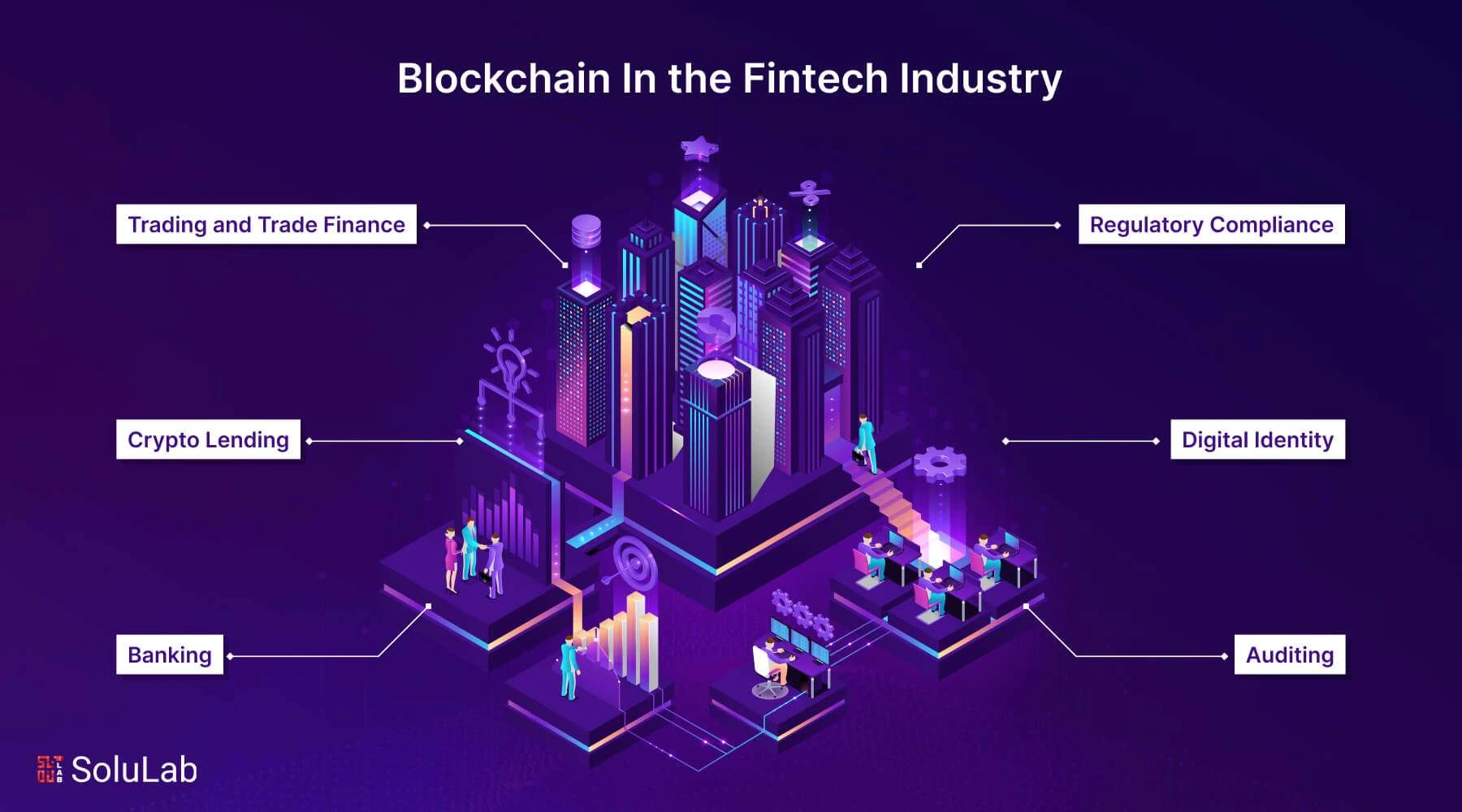
This is where blockchain technology and fintech innovation come in.
Rather than layering improvements on outdated systems, blockchain and modern fintech platforms are re-architecting trade finance from the ground up:
- Blockchain introduces shared, tamper-proof ledgers that enable trust without intermediaries
- Smart contracts automate payment triggers and compliance
- Fintech platforms use APIs, AI, and cloud infrastructure to enable faster onboarding, real-time FX, and instant settlement
- Digital payment rails reduce dependence on correspondent banking networks
Together, these innovations are cutting settlement times from days to minutes, reducing costs by up to 70%, and opening global markets to businesses that were previously locked out.
👉 In the sections ahead, we’ll explore how blockchain and fintech are reshaping cross-border payments, why India is emerging as a key innovation hub, and what this transformation means for the future of global trade finance.
What Is Trade Finance and Why It Matters
Trade finance refers to the financial instruments, products, and processes that enable businesses to conduct international trade safely, efficiently, and at scale. It bridges the trust gap between buyers and sellers who operate in different countries, currencies, legal systems, and time zones.
In simple terms, trade finance ensures that:
- Exporters get paid on time
- Importers receive goods as agreed
- Banks and financial institutions manage risk
- Global trade flows continue smoothly
Without trade finance, a significant portion of world trade would slow down or stop altogether.
Key Trade Finance Instruments Explained
Below are the most widely used trade finance mechanisms in global commerce:
1. Letters of Credit (LCs)
A Letter of Credit is a bank-issued guarantee that assures an exporter they will receive payment once specific contractual conditions are met.
How it works:
- Importer’s bank guarantees payment
- Exporter ships goods
- Payment is released upon document verification
Why it matters:
- Reduces payment risk
- Builds trust between unknown trading partners
- Widely used in high-value or new trade relationships
2. Bank Guarantees
A bank guarantee promises compensation if one party fails to meet contractual obligations.
Common use cases:
- Performance guarantees
- Advance payment guarantees
- Bid bonds
Why it matters:
- Reduces counterparty risk
- Enhances credibility of exporters and contractors
3. Export Credit
Export credit helps exporters access working capital before or after shipment.
Types include:
- Pre-shipment finance
- Post-shipment finance
- Buyer’s credit
India-specific example:
- Export Credit Guarantee Corporation (ECGC) supports Indian exporters against non-payment risk
4. Invoice Financing
Invoice financing allows exporters to unlock cash tied up in unpaid invoices.
Benefits:
- Improves cash flow
- Reduces dependency on bank loans
- Especially valuable for MSMEs and freelancers
Fintech platforms have significantly expanded access to invoice financing using digital underwriting and AI-based risk assessment.
5. Cross-Border Payments
Cross-border payments are the final and most critical step in trade finance—moving money from buyer to seller across borders.
Key components include:
- Foreign exchange conversion
- Compliance checks (AML/KYC)
- Settlement and reconciliation
This area is currently experiencing the highest level of innovation due to blockchain and fintech disruption.
Why Trade Finance Matters to the Global Economy
📊 Global Impact
- Trade finance supports approximately 80–90% of global trade, according to the World Trade Organization (WTO).
- Global merchandise trade alone exceeds $25 trillion annually, making trade finance a foundational economic pillar.
1. Enables Trust Across Borders
International trade involves unknown parties, different legal systems, and geopolitical risks. Trade finance creates trust mechanisms that allow businesses to transact confidently.
2. Ensures Liquidity for Exporters and Importers
- Exporters avoid long payment delays
- Importers gain flexibility in payment terms
- Businesses maintain healthy working capital cycles
For MSMEs, liquidity access often determines survival.
3. Reduces Financial and Operational Risk
Trade finance instruments mitigate:
- Payment default risk
- Currency risk
- Political and country risk
- Fraud and document manipulation
4. Drives MSME and Emerging Market Growth
In countries like India, where MSMEs contribute:
- ~30% of GDP
- ~45% of exports
Efficient trade finance is essential for:
- Export competitiveness
- Job creation
- Economic growth
5. Supports Global Supply Chains
From raw materials to finished goods, trade finance ensures:
- Predictable payment flows
- Supplier confidence
- Supply chain stability
Disruptions in trade finance often ripple across entire industries.
The Growing Trade Finance Gap
Despite its importance, trade finance access remains uneven:
- Global trade finance gap estimated at $1.7 trillion+
- MSMEs account for ~40% of rejected trade finance applications
- Developing economies face higher rejection rates
This gap is a key reason fintech and blockchain innovation are gaining momentum—to democratize access and reduce inefficiencies.
Why Trade Finance Is Ripe for Innovation
Traditional systems are:
- Paper-heavy
- Manual
- Slow
- Expensive
- Bank-centric
In contrast, modern trade demands:
- Speed
- Transparency
- Digital workflows
- Inclusive access
This mismatch sets the stage for blockchain-based trade finance and fintech-led cross-border payments, which we’ll explore in the next sections.
The Problems with Traditional Cross-Border Payments
Despite decades of globalization and digital progress, traditional cross-border payment systems remain one of the weakest links in international trade finance. While domestic payments in many countries—especially India—have become instant and nearly free, international payments continue to rely on outdated, bank-centric infrastructure built decades ago.
These legacy systems were designed for low trade volumes, limited participants, and manual oversight, making them ill-suited for today’s fast-moving, high-volume, digital-first global economy.
⚠️ Major Pain Points in Traditional Cross-Border Payments
1. Slow Settlement Times
| Issue | Traditional System |
| Speed | 2–7 business days (or more) |
Cross-border payments often pass through multiple banks across different time zones. Each intermediary operates during local business hours, causing delays due to:
- Time zone differences
- Weekends and public holidays
- Manual verification and reconciliation
📌 For exporters and freelancers, delayed settlements can disrupt cash flow and operational planning.
2. High and Unpredictable Costs
| Issue | Traditional System |
| Cost | 5–10% per transaction |
Costs typically include:
- FX markups
- Correspondent bank fees
- Processing and handling charges
- Compliance and investigation fees
⚠️ Many fees are hidden, meaning exporters often receive less money than expected, making pricing and forecasting difficult—especially for MSMEs operating on thin margins.
3. Limited Transparency and Poor Tracking
| Issue | Traditional System |
| Transparency | Low to none |
Unlike domestic digital payments, traditional cross-border payments:
- Do not offer real-time tracking
- Provide limited visibility into payment status
- Make it difficult to identify where delays occur
Exporters often have no idea when funds will arrive or how much will be deducted in intermediary charges.
4. Too Many Intermediaries
| Issue | Traditional System |
| Intermediaries | Multiple correspondent banks |
A single international payment may pass through:
- Originating bank
- One or more correspondent banks
- Receiving bank
Each intermediary:
- Adds fees
- Introduces delays
- Increases failure risk
📉 More intermediaries = more points of friction.
5. Poor Accessibility for MSMEs
| Issue | Traditional System |
| Accessibility | Difficult for MSMEs |
Banks often:
- Prioritize large corporates
- Require extensive documentation
- Demand collateral or long credit histories
As a result:
- ~40% of MSME trade finance applications are rejected globally
- Many small exporters rely on expensive informal channels
This limits MSMEs’ ability to compete internationally.
6. High Error and Reconciliation Risk
| Issue | Traditional System |
| Error Risk | High due to manual processing |
Traditional systems depend heavily on:
- Manual data entry
- Paper-based documentation
- Email and fax communication
Common problems include:
- Incorrect payment details
- Document mismatches
- Payment rejections and reversals
- Lengthy investigations (often taking weeks)
Each error increases cost, delays settlement, and strains business relationships.
🔍 Why SWIFT-Based Systems Struggle
The SWIFT network, widely used for international payments, is often misunderstood.
SWIFT is a messaging system, not a payment settlement system.
How SWIFT Works
- Banks send standardized payment messages
- Actual funds move separately through correspondent accounts
- Settlement happens after message confirmation
Key Limitations
- No real-time settlement
- Delayed confirmations
- Manual exception handling
- Limited end-to-end visibility
Even with upgrades like SWIFT gpi, the system still:
- Relies on intermediaries
- Lacks instant settlement
- Incurs high operational costs
Why These Problems Are Getting Worse, Not Better
As global trade evolves, these inefficiencies are becoming more damaging:
- Trade volumes are increasing
- MSMEs and freelancers are entering global markets
- E-commerce and digital services require near-instant payments
- Businesses demand transparency and predictable cash flows
Yet the underlying infrastructure has barely changed.
India-Specific Impact
In India:
- MSMEs contribute ~45% of exports
- Many exporters wait 5–10 days for international payments
- High FX and banking fees reduce global competitiveness
This stark contrast—instant UPI payments domestically vs slow cross-border settlements internationally—highlights the urgent need for reform.
Why Traditional Systems Can’t Be Fixed Incrementally
The problems are structural, not superficial:
- Layering improvements on legacy rails only adds complexity
- More intermediaries increase costs and risk
- Manual compliance doesn’t scale
This is why incremental upgrades are no longer enough.
👉 This sets the stage for blockchain and fintech solutions, which aim to:
- Eliminate unnecessary intermediaries
- Enable real-time settlement
- Reduce costs and errors
- Improve transparency and accessibility
In the next section, we’ll explore how blockchain is fundamentally reshaping cross-border payments and trade finance.
How Blockchain Is Transforming Trade Finance
Blockchain is not just a buzzword in trade finance—it represents a fundamental shift in how trust, settlement, and documentation are handled across borders. By replacing fragmented, intermediary-heavy processes with shared digital infrastructure, blockchain is addressing some of the most persistent pain points in global trade.
Unlike traditional systems that rely on centralized databases and manual reconciliation, blockchain introduces a single source of truth that all authorized participants can access in real time.
🔗 What Blockchain Brings to the Table
1. Distributed Ledgers
A blockchain is a distributed ledger shared across a network of participants (banks, exporters, importers, logistics providers, insurers).
Why this matters:
- No single party controls the data
- All participants see the same version of records
- Reconciliation between systems is drastically reduced
In trade finance, this eliminates discrepancies between buyer, seller, and bank records—one of the biggest causes of delays.
2. Immutable Records
Once data is recorded on a blockchain, it cannot be altered or deleted without network consensus.
Impact on trade finance:
- Prevents invoice tampering
- Reduces document fraud
- Creates auditable transaction trails
This is especially critical for high-value trade documents such as:
- Bills of lading
- Invoices
- Letters of Credit
3. Real-Time or Near-Real-Time Settlement
Traditional cross-border payments rely on message passing, followed by delayed settlement. Blockchain enables direct value transfer between parties.
Result:
- Settlement times drop from 2–7 days to minutes or hours
- Payments can occur 24/7, even across time zones
- Liquidity is freed up faster for exporters
For MSMEs, faster settlement can significantly improve working capital cycles.
4. Smart Contracts
Smart contracts are self-executing programs stored on a blockchain that automatically enforce contractual terms.
Instead of manual intervention, smart contracts:
- Monitor predefined conditions
- Execute actions automatically
- Reduce dependency on intermediaries
🚀 Key Benefits of Blockchain in Trade Finance
1. Settlement in Minutes, Not Days
Blockchain-based platforms allow near-instant settlement once conditions are met—dramatically improving speed and predictability.
📉 This is especially valuable for exporters who rely on fast cash cycles to fund operations.
2. 50–70% Reduction in Transaction Costs
By removing multiple intermediaries and manual processes, blockchain can reduce:
- Correspondent banking fees
- FX handling charges
- Compliance and reconciliation costs
This cost reduction is game-changing for MSMEs and emerging market exporters.
3. Tamper-Proof, Digital Documentation
All trade documents stored on blockchain are:
- Time-stamped
- Verifiable
- Immutable
This drastically reduces:
- Disputes over document authenticity
- Fraud-related losses
- Manual audits
4. End-to-End Traceability
Blockchain provides full visibility across the trade lifecycle:
- Purchase order creation
- Shipment tracking
- Customs clearance
- Payment settlement
Every event is recorded, enabling:
- Better risk management
- Faster dispute resolution
- Improved regulatory compliance
🧠 Smart Contracts in Action: Real-World Trade Scenarios
Smart contracts are one of the most powerful blockchain applications in trade finance.
1. Automated Payment Release
- Goods are shipped
- Shipping data is uploaded
- Smart contract verifies conditions
- Payment is automatically released to exporter
This removes:
- Manual approval delays
- Disputes over delivery confirmation
2. Document Validation
Smart contracts can:
- Verify invoice values
- Match shipping documents
- Confirm compliance requirements
This reduces:
- Human error
- Fraud
- Back-and-forth between banks and traders
3. Fraud and Dispute Reduction
Because data cannot be altered:
- Duplicate invoicing becomes nearly impossible
- Fake documents are easily detected
- Disputes are resolved faster with verifiable records
Global & India-Focused Use Cases
🌍 Global Example
- Blockchain-based trade platforms like we.trade and Marco Polo demonstrated:
- Faster LC processing
- Reduced documentation errors
- Lower operational costs
- Faster LC processing
🇮🇳 India-Focused Adoption
- Indian banks and fintechs are exploring permissioned blockchain networks for:
- Export documentation
- MSME trade finance
- Cross-border settlements
- Export documentation
Blockchain aligns well with India’s push for:
- Digital public infrastructure
- Paperless trade
- MSME inclusion
Economic Impact: The Bigger Picture
According to McKinsey, blockchain has the potential to unlock up to $1 trillion in value in global trade finance by:
- Reducing costs
- Improving efficiency
- Expanding access to underserved businesses
This value creation comes not just from speed, but from structural efficiency gains across the entire trade ecosystem.
Why Blockchain Is a Structural Upgrade, Not a Patch
Unlike incremental improvements to legacy systems, blockchain:
- Redesigns trust mechanisms
- Removes unnecessary intermediaries
- Enables automation at scale
- Supports global interoperability
This makes it uniquely suited to modern, digital-first global trade.
Role of Fintech in Modern Cross-Border Payments
Fintech companies are playing a transformational role in modernizing cross-border payments by breaking away from rigid, bank-centric infrastructure and introducing API-driven, digital-first platforms built for speed, transparency, and scale.
Unlike traditional banks—where international payments are often treated as a legacy service—fintech firms design cross-border payments as a core product, focusing on user experience, cost efficiency, and real-time functionality. This shift has dramatically lowered the barriers for MSMEs, startups, freelancers, and global digital businesses.
Why Fintech Is Disrupting Traditional Banking Rails
Traditional cross-border payments rely on:
- Correspondent banking networks
- Batch processing
- Manual compliance checks
- Fixed operating hours
Fintech platforms replace these with:
- Cloud-based infrastructure
- Open APIs
- Automation-first workflows
- Always-on payment rails
This architectural shift enables faster settlement, lower costs, and greater accessibility—especially for underserved segments.
💡 Key Fintech Innovations Powering Cross-Border Payments
1. Multi-Currency Wallets
Fintech platforms offer multi-currency digital wallets that allow businesses to:
- Hold balances in multiple currencies
- Receive payments locally in foreign markets
- Reduce unnecessary FX conversions
Why this matters:
Exporters can invoice international clients in their local currency while controlling when and how conversions happen—improving margins and cash-flow predictability.
2. Real-Time FX Conversion
Fintechs use:
- Live market FX rates
- Transparent pricing models
- Low or zero hidden markups
Compared to traditional banks, fintech platforms often reduce FX costs by 2–4% per transaction.
📌 For MSMEs, even small FX savings compound significantly over time.
3. AI-Based Compliance and Risk Management
Compliance is one of the biggest cost drivers in cross-border payments. Fintechs use AI and machine learning to automate:
- KYC verification
- AML screening
- Sanctions checks
- Transaction monitoring
Benefits:
- Faster onboarding (minutes instead of weeks)
- Lower compliance costs
- Reduced false positives
- Improved regulatory adherence
This is especially impactful in high-volume MSME transactions.
4. Automated Invoicing & Reconciliation
Fintech platforms integrate payment processing with:
- Digital invoicing
- Automated reconciliation
- ERP and accounting software
This eliminates:
- Manual matching of payments and invoices
- Reconciliation delays
- Human errors
Result: Cleaner books, faster audits, and better financial visibility.
5. Embedded Finance for Exporters
Embedded finance allows cross-border payments to be built directly into business workflows.
Examples include:
- Payment links in invoices
- FX conversion embedded in checkout
- Financing options at the point of transaction
For exporters, this means:
- Less dependency on banks
- Faster access to funds
- Seamless customer payment experiences
🌐 Leading Fintech Platforms in Cross-Border Payments
1. Wise (formerly TransferWise)
- Uses local bank accounts to minimize international transfers
- Transparent, low-cost FX pricing
- Popular among freelancers and SMEs
2. Payoneer
- Strong focus on exporters, freelancers, and marketplaces
- Enables receiving payments from global clients
- Integrated with platforms like Amazon and Upwork
3. Stripe Treasury
- Offers embedded banking and payment infrastructure
- Enables platforms to build financial services for users
- Widely used by SaaS and global digital businesses
4. RippleNet
- Blockchain-based network for cross-border payments
- Near-instant settlement
- Used by financial institutions and payment providers
5. Adyen
- Enterprise-grade global payment processing
- Unified commerce platform
- Strong presence in e-commerce and retail
India-Focused Fintech Momentum
India’s fintech ecosystem is uniquely positioned due to:
- UPI-led digital payment dominance
- API-driven public digital infrastructure
- High MSME and freelancer participation in global trade
Indian fintech startups are increasingly:
- Targeting export payments
- Simplifying FEMA compliance
- Offering faster settlement for global clients
This is helping Indian businesses compete globally without relying on traditional banks.
How Fintech Complements Blockchain
While blockchain handles:
- Settlement
- Trust
- Transparency
Fintech platforms provide:
- User-friendly interfaces
- Compliance layers
- FX optimization
- Integration with business tools
Together, they form a complete, scalable solution for modern trade finance.
Why Fintech Is Critical for the Next Phase of Trade Finance
Fintech is not just an alternative—it’s becoming the default choice for:
- MSMEs
- Freelancers
- Digital exporters
- E-commerce sellers
As global trade becomes more digital and decentralized, fintech platforms will continue to democratize access to cross-border payments, reduce costs, and accelerate global commerce.
India’s Position in the Global Trade Finance Revolution
India is rapidly emerging as a global hub for trade finance innovation, driven by a rare combination of digital public infrastructure, fintech entrepreneurship, regulatory support, and MSME-led export growth. While many countries are still modernizing legacy systems, India is leapfrogging by building scalable, interoperable, and low-cost payment rails from the ground up.
This positions India not just as a participant—but as a potential global standard-setter in next-generation cross-border payments.
🇮🇳 UPI’s Global Expansion: India’s Fintech Export
India’s Unified Payments Interface (UPI) has already transformed domestic payments—and its international expansion is reshaping how small-value cross-border transactions can work.
UPI’s Domestic Dominance
- UPI accounts for 80%+ of India’s retail digital payment volumes
- Processes billions of transactions monthly
- Near-zero transaction costs and real-time settlement
This success has made UPI one of the most scalable real-time payment systems in the world.
Live Cross-Border UPI Corridors
India has launched and expanded cross-border UPI links with:
- Singapore (UPI–PayNow)
- France
- United Arab Emirates
- Nepal, Bhutan, Sri Lanka (for remittances and merchant payments)
These corridors enable:
- Instant payments between countries
- Lower remittance and merchant fees
- Direct account-to-account transfers
A Potential Alternative to Visa & Mastercard
For small-value international payments, UPI offers:
- Lower costs than card networks
- Faster settlement
- Reduced dependency on foreign payment infrastructure
This is particularly powerful for:
- Tourists
- NRIs
- Freelancers
- Small exporters
As adoption grows, UPI could become a viable global alternative to traditional card-based cross-border payments.
📈 MSME Export Growth: The Backbone of India’s Trade Economy
Scale of India’s MSME Ecosystem
India has:
- 63+ million MSMEs
- MSMEs contribute ~30% of GDP
- Account for ~45% of total exports
Despite their importance, MSMEs have historically faced:
- High banking fees
- Slow cross-border settlements
- Complex compliance requirements
How Fintech Is Empowering Indian MSMEs
Modern fintech platforms are transforming MSME exports by offering:
✅ Faster Export Payments
- Same-day or next-day settlements
- Reduced reliance on correspondent banks
✅ Lower FX Costs
- Transparent FX pricing
- Reduced markups compared to banks
✅ Digital Compliance
- Automated FEMA compliance
- AI-based document verification
- Simplified reporting and audits
This allows MSMEs to compete globally without needing large banking relationships.
🏦 RBI & NPCI Support: A Pro-Innovation Regulatory Framework
India’s regulators have played a crucial enabling role rather than acting as blockers.
1. Regulatory Sandboxes
The Reserve Bank of India (RBI) has launched multiple sandbox cohorts focused on:
- Cross-border payments
- Blockchain-based settlements
- MSME trade finance solutions
These sandboxes allow startups to test innovations in a controlled environment—reducing risk while encouraging experimentation.
2. CBDC Pilots (Digital Rupee – e₹)
India’s Central Bank Digital Currency (CBDC) pilots aim to:
- Improve settlement efficiency
- Reduce dependence on intermediaries
- Enable programmable payments
Cross-border CBDC use cases are being explored to:
- Lower FX costs
- Enable 24/7 settlement
- Enhance transparency
3. Focus on Interoperability
Unlike siloed systems, India’s payment strategy emphasizes:
- Open APIs
- Interoperability between banks and fintechs
- Compatibility with global systems
This approach:
- Encourages competition
- Reduces vendor lock-in
- Makes cross-border integration easier
India as a Global Trade Finance Testbed
India’s scale makes it an ideal testing ground:
- Massive transaction volumes
- Diverse MSME base
- High fintech adoption
- Strong regulatory oversight
Solutions proven in India can be replicated globally, especially in other emerging markets.
Why India’s Model Matters Globally
India demonstrates that:
- Real-time payments can be low-cost and scalable
- Public digital infrastructure can coexist with private innovation
- Financial inclusion and global competitiveness can grow together
As global trade increasingly shifts toward SMEs, services, and digital exports, India’s approach offers a blueprint for the future of trade finance.
Key Technologies Powering the Change
The transformation of trade finance and cross-border payments is not driven by a single innovation, but by a stack of complementary technologies working together. Blockchain, AI, stablecoins, and CBDCs each solve different pain points—when combined, they create a faster, cheaper, and more inclusive global payment ecosystem.
🧱 Blockchain Infrastructure: The Foundation Layer
Different blockchain architectures are used in trade finance depending on scale, privacy, and regulatory requirements.
1. Public Blockchains (e.g., Ethereum)
Public blockchains are open, decentralized networks where anyone can participate.
Key features:
- Transparent and tamper-proof
- Highly secure through decentralization
- Global accessibility
Trade finance use cases:
- Stablecoin-based cross-border payments
- Tokenized invoices and trade assets
- Smart contract settlements
Limitations:
- Higher transaction fees during congestion
- Regulatory scrutiny in some jurisdictions
2. Permissioned Blockchains (e.g., Hyperledger Fabric)
Permissioned blockchains restrict participation to authorized entities such as banks, fintechs, and corporates.
Why they’re popular in trade finance:
- Enhanced privacy and data control
- Faster transaction processing
- Easier regulatory compliance
Use cases:
- Bank-to-bank settlements
- Trade documentation management
- Letters of Credit digitization
Many Indian banks and financial institutions favor permissioned networks for compliance-sensitive use cases.
3. Consortium Blockchain Networks
Consortium blockchains are jointly governed by groups of institutions (banks, logistics firms, insurers).
Advantages:
- Shared costs and governance
- Interoperability across participants
- Reduced reconciliation efforts
Examples of usage:
- Multi-bank trade finance platforms
- Industry-wide trade document registries
These networks are especially effective for cross-border trade ecosystems involving multiple stakeholders.
🤖 AI & Machine Learning: The Intelligence Layer
AI and machine learning act as the decision-making engine of modern trade finance platforms, enabling speed, scale, and accuracy that manual processes cannot match.
1. Fraud Detection
AI models analyze:
- Transaction patterns
- Behavioral anomalies
- Historical fraud data
Impact:
- Real-time fraud alerts
- Reduced false positives
- Faster transaction approvals
This is crucial in high-volume cross-border payments where manual checks don’t scale.
2. AML/KYC Automation
AI-driven compliance tools:
- Verify identities digitally
- Screen transactions against global watchlists
- Adapt to evolving regulatory requirements
Benefits:
- Faster onboarding (minutes instead of weeks)
- Lower compliance costs
- Improved regulatory adherence
For Indian MSMEs, this dramatically reduces entry barriers to global trade.
3. Credit Scoring for SMEs
Traditional banks often reject MSMEs due to lack of credit history. AI solves this by analyzing:
- Transaction data
- Invoice history
- Cash flow patterns
Result:
- Alternative credit scoring
- Increased access to trade finance
- Lower rejection rates
This is especially impactful in emerging markets like India.
💰 Stablecoins & Central Bank Digital Currencies (CBDCs): The Settlement Layer
Stablecoins and CBDCs are reshaping how value moves across borders, offering a modern alternative to correspondent banking networks.
1. Stablecoins
Stablecoins are digital tokens pegged to fiat currencies (e.g., USD).
Why they matter in trade finance:
- Reduce FX volatility
- Enable near-instant settlement
- Operate 24/7
Use cases:
- B2B cross-border payments
- Trade settlements
- Liquidity management
They significantly lower costs for businesses operating in multiple currencies.
2. Central Bank Digital Currencies (CBDCs)
CBDCs are digital versions of national currencies issued by central banks.
India’s Digital Rupee (e₹):
- Enhances settlement efficiency
- Enables programmable payments
- Reduces reliance on intermediaries
Cross-border potential:
- Faster inter-country settlements
- Reduced FX spreads
- Improved transparency
Global pilots (including multi-CBDC corridors) show promise for instant international settlement.
Why These Technologies Work Best Together
| Layer | Technology | Role |
| Infrastructure | Blockchain | Trust & immutability |
| Intelligence | AI/ML | Risk, compliance, automation |
| Settlement | Stablecoins / CBDCs | Speed & liquidity |
| Interface | Fintech APIs | User experience |
Together, they create an end-to-end digital trade finance stack.
India’s Strategic Advantage in Technology Adoption
India benefits from:
- Strong digital public infrastructure
- API-first payment systems (UPI)
- Rapid fintech innovation
- Regulatory openness to pilots
This makes India an ideal environment for testing and scaling these technologies globally.
Why Technology Is the True Catalyst for Trade Finance Innovation
Technology doesn’t just improve existing systems—it redefines what’s possible:
- Real-time global settlement
- Inclusive access for MSMEs
- Automated compliance
- Transparent, auditable trade flows
As these technologies mature, they will move from experimental pilots to mainstream infrastructure.
👉 Up Next: Real-world case studies showing how these technologies are already transforming cross-border payments for global enterprises and Indian MSMEs.
Real-World Case Studies: How Trade Finance Innovation Works in Practice
While blockchain and fintech concepts can sound abstract, their real value becomes clear when applied to real businesses. Below are two powerful case studies—one global and one India-specific—showing how modern trade finance solutions are already delivering measurable results.
🌍 Global Case Study: RippleNet – Rewiring Cross-Border Payments
Background
RippleNet is a blockchain-based global payments network designed to replace traditional correspondent banking systems. It enables direct, real-time settlement between financial institutions using distributed ledger technology.
Key Metrics & Adoption
- 300+ financial institutions across 45+ countries
- Includes banks, payment providers, and remittance firms
- Used extensively in Asia-Pacific, Europe, and the Middle East
How RippleNet Works
- Sending bank initiates payment via RippleNet
- Payment details are validated instantly
- Funds are settled using blockchain infrastructure
- Receiving institution gets real-time confirmation
⚡ No correspondent banks. No SWIFT delays. No manual reconciliation.
Performance Improvements
| Metric | Traditional System | RippleNet |
| Settlement Time | 2–5 days | 3–5 seconds |
| Transaction Cost | 5–10% | ~60% lower |
| Transparency | Limited | End-to-end tracking |
| Liquidity Requirement | High | Optimized |
Business Impact
- Faster working capital turnover
- Improved treasury management
- Lower operational risk
- Better customer experience
💬 Industry insight:
Many banks using RippleNet report significant reductions in nostro account balances, freeing up idle capital.
Why This Matters for Global Trade
RippleNet demonstrates that real-time cross-border settlement at scale is possible today, not just in theory. This is especially valuable for:
- Import-export firms
- Global B2B payments
- Remittance-heavy corridors
🇮🇳 India Case Study: MSME Exporter Using Fintech Platforms
Background
Consider a mid-sized Indian textile exporter supplying garments to buyers in Europe and Southeast Asia. Like many MSMEs, the exporter relied on traditional bank transfers for international payments.
Challenges Faced (Before Fintech Adoption)
- Payment cycle: 4–5 business days
- High FX margins: 3–4% per transaction
- Poor visibility: No real-time tracking
- Cash flow stress: Delayed receivables affected production planning
Solution Adopted
The exporter switched to a fintech-led cross-border payment platform offering:
- Multi-currency virtual accounts
- Real-time FX pricing
- Automated invoicing and reconciliation
- API-based payment tracking
Results Achieved
| Metric | Before | After |
| Payment Time | 5 days | Same-day |
| FX Fees | 3–4% | Reduced significantly |
| Cash Flow Visibility | Low | High (real-time) |
| Operational Effort | Manual | Largely automated |
Business Impact
- Improved cash flow predictability
- Faster reinvestment into raw materials
- Ability to offer better pricing to international buyers
- Reduced dependency on working capital loans
📈 Over time, this led to higher export volumes and stronger buyer relationships.
Why This Is a Game-Changer for Indian MSMEs
With 63+ million MSMEs in India, access to fast, affordable cross-border payments can:
- Improve export competitiveness
- Increase global market participation
- Reduce reliance on informal financing
Fintech platforms are effectively democratizing trade finance, previously accessible only to large corporations.
Key Takeaways from These Case Studies
- Blockchain enables instant, trust-based settlement
- Fintech platforms significantly reduce costs and friction
- MSMEs benefit the most due to improved cash flow
- Real-world adoption proves scalability and reliability
🚀 These examples show that trade finance innovation is already operational—not experimental.
Benefits for Businesses and MSMEs
Trade finance innovation powered by blockchain and fintech is not just a technological upgrade—it is a structural shift that changes how businesses access global markets, manage cash flow, and scale operations. While large enterprises gain efficiency, MSMEs benefit the most, as long-standing barriers are finally being removed.
✅ Key Advantages of Modern Trade Finance Systems
1. Faster Payments & Settlement Cycles
Traditional cross-border payments often take 2–7 business days, causing delays in receivables and working capital stress.
With blockchain and fintech:
- Settlement occurs in minutes or same day
- Real-time transaction confirmation
- 24/7 processing (no banking holidays)
Business impact:
- Faster cash conversion cycles
- Improved supplier and payroll management
- Reduced dependence on short-term credit
⏱️ Speed directly improves profitability, especially for export-driven businesses.
2. Lower Transaction & FX Costs
Banks typically charge:
- High SWIFT fees
- Wide FX spreads
- Hidden intermediary costs
Modern platforms reduce costs by:
- Eliminating correspondent banks
- Offering transparent, real-time FX pricing
- Automating reconciliation
📉 Cost savings: Businesses often save 30–70% per transaction.
Why it matters:
- Higher margins for exporters
- Competitive pricing in global markets
- Predictable expense planning
3. Improved Liquidity & Cash Flow Management
Delayed payments lock capital and slow growth.
Fintech-enabled trade finance offers:
- Real-time visibility into receivables
- Faster invoice settlement
- Access to invoice financing and factoring
For MSMEs:
- Reduced working capital gaps
- Faster inventory turnover
- Lower reliance on high-interest loans
💡 Liquidity is the lifeline of small businesses—and speed unlocks it.
4. Better Compliance & Risk Management
Manual trade processes are error-prone and risky.
Technology-driven compliance includes:
- Automated AML/KYC checks
- Smart contract–based document validation
- Tamper-proof audit trails
Benefits:
- Fewer compliance errors
- Reduced fraud and disputes
- Easier regulatory reporting
This is particularly important as cross-border regulations become stricter worldwide.
5. Expanded Global Market Access
Historically, international trade favored large corporations with strong banking relationships.
Fintech changes this by:
- Offering digital onboarding
- Providing multi-currency accounts
- Enabling cross-border collections without local entities
🌍 Result: Even small exporters can sell globally with confidence.
📦 Why MSMEs Benefit the Most
Breaking the “Bank Bias”
Traditional banks often:
- Require high collateral
- Favor large, established firms
- Take weeks for approvals
Fintech platforms:
- Use data-driven credit assessments
- Offer faster onboarding
- Provide tailored MSME products
This levels the playing field for small exporters, freelancers, and startups.
Inclusion of Informal & First-Time Exporters
Many MSMEs lack formal credit history.
Innovative platforms assess:
- Transaction behavior
- Invoice data
- Cash flow trends
📊 This enables access to finance for:
- First-time exporters
- Women-led businesses
- Rural and semi-urban enterprises
India-Specific Advantage
India’s digital ecosystem strengthens these benefits:
- UPI-based payment infrastructure
- API-driven fintech innovation
- RBI-supported sandbox experimentation
Together, these create a fertile environment for MSME-led export growth.
Quick Comparison: Traditional vs Modern Trade Finance
| Feature | Traditional Banking | Blockchain & Fintech |
| Payment Speed | 2–7 days | Minutes / same day |
| Cost Transparency | Low | High |
| MSME Accessibility | Limited | Broad |
| Compliance | Manual | Automated |
| Global Reach | Restricted | Borderless |
Strategic Takeaway for Businesses
Companies adopting modern trade finance gain:
- Faster growth
- Better resilience
- Stronger global competitiveness
For MSMEs, this is not just efficiency—it is economic empowerment.
Risks, Challenges, and Regulatory Barriers
Despite the clear benefits of blockchain and fintech in trade finance, adoption is not without risks. Cross-border payments operate at the intersection of finance, technology, and regulation, making careful oversight essential. Governments and central banks—including the RBI—are moving deliberately to ensure innovation does not compromise financial stability, security, or compliance.
⚠️ Key Challenges Facing Modern Trade Finance Systems
1. Regulatory Uncertainty & Fragmented Global Rules
One of the biggest barriers is the lack of uniform global regulation.
Challenges include:
- Different crypto and blockchain laws across countries
- Varying definitions of digital assets
- Conflicting compliance requirements
Impact:
- Slower cross-border adoption
- Higher legal and compliance costs
- Limited scalability for global fintechs
📌 India’s approach: The RBI allows innovation through regulatory sandboxes while maintaining strict oversight on capital controls and foreign exchange.
2. Interoperability Issues Between Systems
Many trade finance platforms operate in technology silos.
Common problems:
- Incompatible blockchain networks
- Lack of standard data formats
- Difficulty integrating with existing banking systems
Why it matters:
- Limits end-to-end automation
- Increases operational friction
- Slows ecosystem-wide adoption
🔗 Interoperability is critical for seamless global trade flows.
3. Cybersecurity & Operational Risks
While blockchain itself is secure, surrounding systems are vulnerable.
Risk areas:
- Wallet hacks
- Phishing attacks
- Smart contract coding errors
- Insider threats
Consequences:
- Financial losses
- Reputational damage
- Loss of customer trust
🛡️ Robust security frameworks, audits, and user education are essential.
4. AML/CFT Compliance Complexities
Cross-border payments are highly scrutinized due to risks of:
- Money laundering
- Terrorist financing
- Sanctions evasion
Challenges for fintech platforms:
- Ensuring real-time transaction monitoring
- Complying with evolving global standards
- Balancing speed with compliance
⚖️ Regulators demand traceability without sacrificing privacy—a difficult balance.
5. Integration with Legacy Banking Infrastructure
Traditional banks still rely on:
- Decades-old core banking systems
- Manual reconciliation processes
- Batch-based settlement cycles
Integration challenges include:
- High migration costs
- Staff training requirements
- Resistance to change
🏦 This slows down modernization across the ecosystem.
India & Global Regulatory Perspective
India (RBI, NPCI)
- Cautious stance on crypto assets
- Strong focus on consumer protection and capital controls
- Active experimentation via:
- Regulatory sandboxes
- CBDC (Digital Rupee) pilots
- Cross-border UPI corridors
- Regulatory sandboxes
Global Regulators
- BIS promoting global CBDC interoperability
- FATF tightening AML/CFT frameworks
- IMF urging coordinated digital payment standards
🌍 Regulators aim to enable innovation without destabilizing financial systems.
Risk Mitigation Strategies for Businesses & Fintechs
Best practices include:
- Using regulated, compliant platforms
- Implementing strong KYC and monitoring tools
- Conducting regular cybersecurity audits
- Choosing interoperable, API-first solutions
📌 Businesses should prioritize compliance-ready platforms to reduce long-term risk.
Quick Risk vs Reward Snapshot
| Area | Risk | Mitigation |
| Regulation | Unclear rules | Sandbox participation |
| Technology | System incompatibility | Open standards |
| Security | Cyber threats | Audits & encryption |
| Compliance | AML/CFT failures | AI-based monitoring |
| Adoption | Legacy resistance | Hybrid models |
Why Caution Is Necessary—but Not a Deal Breaker
Every major financial innovation—from SWIFT to online banking—faced resistance and risk in its early stages. Blockchain and fintech in trade finance are following a similar maturation curve.
✔ Risks are real
✔ Oversight is essential
✔ Innovation is inevitable
The key is responsible adoption.
FAQs Section
1. What is trade finance innovation?
Trade finance innovation refers to the application of digital technologies such as blockchain, fintech platforms, artificial intelligence (AI), APIs, and automation tools to modernize how international trade is financed, settled, and documented.
Unlike traditional paper-heavy systems, modern trade finance focuses on:
- Real-time payments
- Digital documentation
- Automated compliance
- Improved transparency
📌 The goal is to make global trade faster, cheaper, safer, and more accessible, especially for MSMEs.
2. How does blockchain improve cross-border payments?
Blockchain improves cross-border payments by enabling:
- Near-instant settlement instead of multi-day delays
- End-to-end transparency with real-time tracking
- Smart contracts that automate payments once conditions are met
- Lower costs by eliminating intermediaries
Unlike SWIFT, which only sends payment messages, blockchain can move value directly.
3. Is blockchain legal in India for trade finance?
Yes. Blockchain as a technology is legal in India.
Important distinction:
- RBI restricts and regulates crypto assets
- Blockchain is actively encouraged for payments, trade finance, and record-keeping
India supports blockchain through:
- RBI regulatory sandboxes
- CBDC (Digital Rupee) pilots
- Fintech innovation frameworks
This makes blockchain-based trade finance fully permissible under regulatory oversight.
4. How does fintech help Indian exporters and MSMEs?
Fintech platforms empower Indian exporters by offering:
- Same-day or instant international payments
- Lower and transparent FX rates
- Automated invoicing and reconciliation
- Digital KYC and compliance tools
- Multi-currency collection accounts
📈 This improves cash flow, reduces dependency on banks, and helps MSMEs compete globally.
5. What is the role of UPI in cross-border payments?
UPI is evolving from a domestic payment system into a global real-time payment network.
Current and planned benefits:
- Cross-border retail and merchant payments
- Lower transaction costs than card networks
- Seamless QR-based acceptance abroad
🌍 UPI corridors with Singapore, UAE, and France demonstrate India’s ambition to build a globally interoperable payment rail.
6. Are stablecoins used in trade finance?
Yes. Stablecoins are increasingly used in pilot B2B trade settlements.
Why businesses use them:
- Faster settlement
- Reduced FX volatility
- 24/7 availability
- Lower transaction costs
⚠️ However, adoption remains cautious due to regulatory oversight and compliance requirements.
7. Is SWIFT becoming obsolete?
No. SWIFT is not becoming obsolete, but it is evolving.
Key developments:
- SWIFT gpi improves transparency and speed
- Banks still rely on SWIFT for large-value payments
However, fintech and blockchain rails are capturing:
- SME payments
- Remittances
- Real-time settlement use cases
This creates a hybrid future, not replacement.
8. What are the risks of blockchain-based payments?
Key risks include:
- Cybersecurity threats
- Regulatory uncertainty
- Interoperability issues
- AML/CFT compliance challenges
📌 These risks are being addressed through:
- Better standards
- Regulatory sandboxes
- Improved security frameworks
9. Can MSMEs use blockchain without technical expertise?
Yes. Most MSMEs never interact directly with blockchain.
Fintech platforms:
- Abstract the technology
- Provide user-friendly dashboards
- Offer customer support and automation
🖥️ Businesses simply initiate payments as they would with any digital platform.
10. What is the future of trade finance in India?
India’s trade finance future looks strong due to:
- Massive MSME export base
- UPI’s global expansion
- Strong fintech ecosystem
- RBI-backed digital innovation
📊 India is expected to emerge as a global hub for digital trade finance, particularly in emerging markets.
11. Will blockchain replace banks in trade finance?
No. Banks will remain central—but their role will evolve.
Future banks will:
- Act as compliance and liquidity providers
- Partner with fintechs
- Use blockchain to improve efficiency
Collaboration—not replacement—is the dominant trend.
Summary
- Traditional trade finance systems are outdated, relying on slow, expensive, and opaque processes that delay payments, increase costs, and limit access—especially for MSMEs and exporters in emerging markets like India.
- Blockchain technology is transforming cross-border payments by enabling real-time settlement, transparent tracking, and smart contract–based automation, significantly reducing transaction time and operational risk.
- Fintech platforms act as the adoption layer, offering user-friendly, API-driven solutions with better FX rates, automated compliance, and seamless global payment capabilities for businesses of all sizes.
- MSMEs benefit the most from these innovations, gaining faster access to international payments, improved liquidity, lower financing costs, and data-driven credit opportunities previously dominated by large corporations.
- India is emerging as a global leader in digital trade finance, driven by UPI’s international expansion, strong fintech adoption, RBI-led regulatory sandboxes, and Digital Rupee (CBDC) pilots.
- The future of trade finance is digital, automated, and inclusive, favoring businesses that adopt modern payment rails early to improve cash flow, scalability, and global competitiveness.
Conclusion
Trade finance is no longer just a traditional banking function—it has evolved into a strategic, technology-driven growth engine that can determine a business’s ability to compete globally. The combination of blockchain, fintech platforms, AI, and digital payment rails is breaking down long-standing barriers in cross-border trade, including slow settlements, high costs, complex compliance, and limited access for small and medium enterprises (MSMEs).
Key Insights
- Blockchain Enables Trust and Speed: By providing immutable ledgers, smart contracts, and real-time settlement, blockchain reduces friction, lowers costs, and increases transparency for cross-border transactions. Businesses can now execute international payments with minutes instead of days, drastically improving cash flow and operational efficiency.
- Fintech Empowers Accessibility: Fintech platforms abstract complex technology and integrate it into user-friendly, automated solutions. They enable Indian exporters, startups, and freelancers to access global markets, optimize FX conversions, and manage compliance efficiently—something previously accessible only to large corporations.
- MSMEs Are the Biggest Beneficiaries: For small and medium enterprises, faster payments, lower FX costs, and automated compliance are transformative. This allows MSMEs to scale exports, manage liquidity, and participate competitively in international trade, effectively democratizing trade finance.
- India as a Global Leader: India’s UPI-led digital payment ecosystem, combined with supportive RBI sandboxes, fintech adoption, and CBDC (Digital Rupee) pilots, positions the country as a model for emerging-market trade finance innovation. Indian businesses can leverage this infrastructure to access global markets more efficiently than ever before.
- The Competitive Advantage of Early Adoption: Companies that embrace blockchain and fintech early will gain a distinct cost, speed, and operational efficiency advantage, allowing them to outpace competitors in the global marketplace. Real-time payments, transparent records, and automated workflows are becoming critical differentiators in trade finance.
Final Thought
The future of trade finance is digital, automated, and inclusive. Businesses that adapt now will not only reduce costs and improve efficiency but also unlock new growth opportunities in global trade. Those that delay risk being left behind as digital-native competitors leverage advanced technologies to reshape the international payments landscape.
In essence, blockchain and fintech are not just modernizing trade finance—they are redefining it, and India is uniquely positioned at the forefront of this revolution.
References
Below is a consolidated, credible reference list you can place under one heading at the end of your blog. These sources are SEO-safe, authority-driven, and monetization-friendly, aligned with global + India-focused trade finance and cross-border payments.
- World Trade Organization (WTO)
Trade Finance and Global Trade Flow Reports
https://www.wto.org - Bank for International Settlements (BIS)
Cross-Border Payments Roadmap & CBDC Reports
https://www.bis.org - McKinsey & Company
Global Payments Report, Blockchain in Trade Finance
https://www.mckinsey.com/industries/financial-services - World Bank
Remittances, Trade Finance Gaps, Digital Payments Data
https://www.worldbank.org - Reserve Bank of India (RBI)
Payment Systems, Fintech Regulation, CBDC (e₹) Updates
https://www.rbi.org.in - National Payments Corporation of India (NPCI)
UPI Global Expansion & Cross-Border Payment Initiatives
https://www.npci.org.in - Statista
Cross-Border Payments Market Size & Forecasts
https://www.statista.com - Economic Times – BFSI & Fintech Section
India Fintech, UPI International, MSME Export Payments
https://economictimes.indiatimes.com - Reuters
Global Trade Finance, SWIFT, Blockchain, Stablecoins
https://www.reuters.com - Financial Times (FT)
Stablecoins, CBDCs, Global Payments Infrastructure
https://www.ft.com - SWIFT
Global Payments Innovation (GPI) & Cross-Border Messaging
https://www.swift.com - International Chamber of Commerce (ICC)
Trade Finance Standards, Digital Trade Documentation
https://iccwbo.org - Deloitte Insights
Blockchain, Fintech, and Trade Finance Transformation
https://www2.deloitte.com - PwC Global FinTech Reports
Payments Innovation & Cross-Border Trends
https://www.pwc.com - OECD Digital Finance, Cross-Border Regulatory Frameworks https://www.oecd.org
