








Estimated Reading Time: 22-26 minutes ( 4,603 words)
Introduction
Global payments are entering a new era — and India is preparing to play a much larger role.
In a significant development for the country’s booming digital economy, Airpay Payment Services has received approval from the Reserve Bank of India (RBI) to operate as a Cross-Border Payment Aggregator (PA-CB) under the unified PA framework.
This isn’t just another licence — it’s a high-impact regulatory milestone that will influence how Indian businesses collect money from international customers, how compliant these inflows are, and how scalable India’s digital exports can become.
Airpay already had licences for:
- Online Payment Aggregation (PA)
- Offline / Physical Payment Aggregation (PA-P)
The new Cross-Border PA licence completes the triangle — enabling Airpay to support domestic payments, in-person payments, and now global payments under a single unified regulatory umbrella.
Why This Blog Matters
Cross-border payments are the backbone of India’s fast-growing sectors:
- IT/ITeS exports
- SaaS startups
- Freelancers & remote service providers
- D2C brands targeting overseas customers
- E-commerce exporters
- Edtech, travel, hospitality, wellness & professional services
Until recently, most Indian merchants depended heavily on foreign intermediaries for global collections — often at high fees, long settlement cycles, and limited transparency.
Airpay’s RBI accreditation signals a major shift toward India-controlled, India-regulated, India-centric cross-border payment infrastructure.
This blog explains:
✔ What Airpay’s new licence means
✔ Why RBI introduced the PA-CB framework
✔ How Indian businesses benefit
✔ Challenges, compliance rules, and what merchants need to know
✔ The future of India’s global payment ecosystem
Let’s dive in.
What Is a Cross-Border Payment Aggregator (PA-CB)?
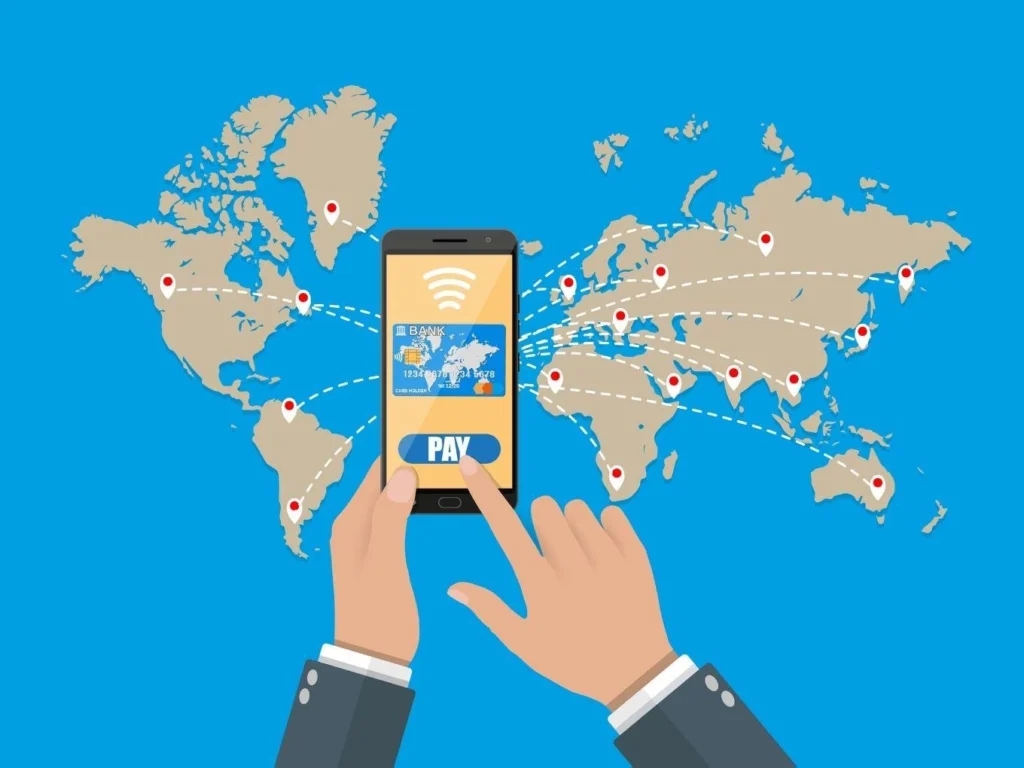
A Cross-Border PA is an RBI-regulated entity that enables Indian businesses to collect payments from customers located outside India in a safe, compliant, and transparent manner.
A PA-CB is responsible for:
- Providing merchants with international payment collection solutions
- Ensuring all inflows follow FEMA & AML rules
- Settling funds in India in permitted currencies
- Managing KYC, KYB, fraud risk, and security standards
- Routing payments through regulated banking channels
- Offering a compliant digital interface for exporters
Why RBI introduced this licence
Global payments used to fall into a grey area with varied regulations. RBI introduced PA-CB norms to:
- Increase compliance & transparency
- Reduce money-laundering risks
- Bring all cross-border aggregators under a unified structure
- Promote fintech innovation in global payments
- Reduce merchant dependence on foreign platforms
With this, India now has a formal, regulated pathway for inbound digital payments.
What Airpay’s RBI Approval Really Means
The RBI’s approval for Airpay under the Cross-Border Payment Aggregator (PA-CB) framework significantly expands the company’s capabilities. This licence does not merely allow Airpay to process foreign payments; it places Airpay in a unique position to reshape how Indian exporters — small and large — interact with global customers.
Below is a deeper breakdown of what this approval empowers Airpay to do and why it matters.
3.1 Offer Cross-Border Payment Collection Services
With the PA-CB licence, Airpay can now officially provide end-to-end inbound international payment acceptance to Indian merchants. This is crucial for India’s rapidly growing digital exports sector.
Indian businesses can now accept payments from:
a) International Credit & Debit Cards
Including networks like:
- Visa
- Mastercard
- American Express
- Diners Club
- JCB
- Discover
These card networks are used widely across North America, Europe, APAC, and the Middle East — enabling Indian merchants to expand globally without friction.
b) Global Digital Wallets (Where Permitted by RBI)
Merchants can accept payments through popular international wallets such as:
- Apple Pay
- Google Pay International
- Samsung Pay
- PayPal (where integrated through banking partners)
- Regional wallets (e.g., Alipay, WeChat Pay — subject to RBI permissions)
Digital wallets significantly improve mobile checkout conversion rates, making it easier for cross-border customers to pay.
c) Overseas Bank Accounts
Airpay can enable features like:
- Direct debit from foreign bank accounts
- International banking rails (ACH, SEPA, etc., if partnered)
- Cross-border account-to-account transfers through authorized banking partners
This is especially useful for B2B exporters and SaaS companies billing international clients monthly.
d) Foreign Payment Methods
Airpay can integrate region-specific payment instruments such as:
- iDEAL (Netherlands)
- Giropay (Germany)
- Sofort (Europe)
- Interac (Canada)
- POLi (Australia)
- Local wallets in ASEAN, Middle East, Africa, etc.
Regional payment options dramatically improve trust and conversion rates among international customers.
e) Any International Instrument Approved by the RBI
This includes future payment systems such as:
- Cross-border UPI rails
- Digital currency rails (subject to regulations)
- Additional global wallets
- Alternative payment networks
In short, Airpay now becomes a unified global collection gateway for Indian exporters — eliminating the need to use multiple foreign intermediaries.
3.2 Manage Foreign Currency Flows
Handling foreign currencies compliantly is one of the biggest challenges for Indian exporters. The PA-CB licence empowers Airpay to manage FEMA-compliant foreign currency acquisition, conversion, reporting, and settlement.
Airpay can handle collections in major global currencies such as:
- USD — US Dollar
The world’s dominant billing currency for SaaS, exports, and B2B services. - EUR — Euro
Essential for merchants dealing with EU customers. - GBP — British Pound
Critical for services, consulting, e-commerce, and digital exports to the UK. - AUD — Australian Dollar
Popular for education, wellness, tourism, and professional services. - CAD — Canadian Dollar
Important for IT services, freelancing, immigration-related consulting, and digital services.
Beyond these, Airpay can support:
- JPY (Japan)
- AED (UAE)
- SGD (Singapore)
- CHF (Switzerland)
- SAR (Saudi Arabia)
- NZD (New Zealand)
- And any other currency permitted under FEMA guidelines
What this means for businesses
- Transparent FX conversion
- Better forex rates compared to foreign payment processors
- Compliance with RBI reporting rules
- Clear documentation for export of services
- Smooth reconciliation across currencies
Airpay essentially becomes a currency management engine that simplifies global billing for Indian companies.
3.3 Serve a Larger Base of Exporters
Airpay’s new capabilities expand its potential customer base across multiple sectors. Nearly every business category dealing with global customers benefits from its cross-border infrastructure.
Industries that stand to gain the most:
a) SaaS & Software Companies
These companies need recurring billing, subscription payments, and multi-currency support.
Airpay can help them handle:
- International subscription collections
- Global card payments
- Automated invoicing & FX reconciliation
- Country-wise tax document generation
b) Freelancers & Independent Professionals
This includes:
- Writers, designers, developers
- Consultants & coaches
- Digital marketers
- Content creators
- Editors, translators, analysts
Freelancers finally get a regulated Indian alternative to platforms like PayPal, Payoneer, and Wise.
c) Professional Service Providers
Such as:
- Accounting & legal firms
- IT/ITeS agencies
- Management consultants
- Research & data analytics firms
These industries often work with foreign B2B clients and need compliant FX handling.
d) D2C & E-Commerce Exporters
Brands selling on:
- Shopify
- WooCommerce
- Etsy
- Amazon Global
- eBay
- Their own websites
Airpay helps them reduce global transaction costs and increase checkout conversions.
e) Education, Training & Coaching Firms
Many Indian EdTech and coaching platforms serve NRI and foreign students. Airpay helps them accept global payments seamlessly.
f) Tourism, Wellness & Hospitality Providers
Businesses serving foreign clients often face issues with:
- Deposit collection
- Reservation payments
- Advance bookings
Airpay reduces these inefficiencies.
In short, Airpay opens the door for millions of Indian service exporters to operate more efficiently in the global market.
3.4 Reduce Dependency on Foreign Gateways
Historically, Indian exporters have relied on a handful of global payment processors like:
- Stripe
- PayPal
- Payoneer
- Wise
- Skrill
- 2Checkout (Verifone)
- WorldPay
While these platforms are widely used, they come with challenges:
- High MDR (3–6%+)
- Inconsistent account freezes
- Slower settlement timelines
- Limited customer support
- Complex compliance documentation
- Foreign exchange markups
- Data storage outside India
- Lack of alignment with RBI/FEMA requirements
What Airpay offers instead:
- Indian regulatory oversight
- Localized merchant support
- Faster settlement cycles
- Lower fees
- Transparent FX conversion
- Indian KYC processes
- Reduced risk of sudden service disruptions
This strengthens India’s payment sovereignty and promotes domestic fintech innovation.
3.5 Improve Transaction Transparency & Settlement Speed
Airpay’s PA-CB approval ensures that all global payments collected for Indian merchants will be routed through RBI-regulated Indian banks, which drastically improves trust, visibility, and control.
Benefits include:
a) Enhanced Transaction Visibility
Merchants get:
- Real-time dashboards
- Granular transaction logs
- Tracking for each FX conversion
- Transparent settlement timelines
b) Full Audit Trails
This is crucial for:
- Income tax filings
- GST compliance (for certain exports)
- FEMA reporting
- Company audits
- Investor due diligence
c) Faster Settlements (Compared to Foreign Gateways)
Foreign processors often take:
- 7–14 days for payouts
- Longer for disputed transactions
With Airpay, merchants may receive:
- T+1 / T+2 settlements, depending on the bank and risk profile
d) Better Dispute Management
Since the processor is Indian, merchants can escalate issues through:
- Local banking partners
- Indian customer support
- RBI grievance redressal mechanisms
e) Reduced Chargeback Risks
Airpay can offer better fraud filters, risk scoring, and KYC-led underwriting.
In Summary
Airpay’s RBI approval means faster, safer, cheaper, and more compliant cross-border payments for Indian businesses of all sizes. The benefits span across:
- Collections
- Settlements
- FX management
- Transparency
- Regulatory compliance
- Merchant experience
This regulatory nod positions Airpay as one of the few Indian players capable of delivering a full-suite cross-border payment ecosystem, reducing reliance on international gateways and boosting India’s digital export capabilities.
Why This Is Big for India’s Payment Ecosystem
RBI’s approval for Airpay is significant because it aligns with India’s broader fintech ambitions.
4.1 India wants to become a global digital export hub
SaaS, EdTech, consulting, gaming, and digital services are booming. A local PA-CB boosts this growth.
4.2 More control over cross-border flows
Instead of data, compliance, and fees going abroad, RBI’s framework ensures:
- Indian oversight
- Indian settlement
- Indian data storage
- Lower costs for merchants
4.3 Enables MSMEs and freelancers
A huge chunk of India’s freelancers still rely on:
- PayPal
- Payoneer
- Wise
- Fiverr Upwork internal payment systems
A regulated Indian PA-CB gives them a stable alternative.
4.4 Expands India’s fintech regulatory strength
It shows RBI is:
- Allowing innovation
- Encouraging domestic players
- Increasing compliance-based competition
- Building a unified payments ecosystem
Benefits for Indian Businesses
5.1 Lower transaction costs
Foreign processors charge 3%–6% or more.
Domestic aggregators = significantly lower fees + better forex rates.
5.2 Faster settlements
Instead of waiting 7–14 days, merchants get quicker settlement cycles.
5.3 Better compliance
Airpay ensures:
- KYC / KYB
- AML screening
- FEMA-compliant flows
- Transparent FX conversion
- Accurate invoicing & documentation
5.4 One platform for domestic + international payments
Merchants avoid juggling multiple dashboards.
5.5 Easy onboarding for SMEs, D2C & freelancers
Airpay can onboard:
- Exporters
- Small service providers
- Digital creators
- Agencies
- Boutique D2C brands
5.6 Improved conversion rates
Localized global payment options = higher international sales.
What This Means for the Fintech Industry
Airpay’s approval will reshape competition.
6.1 Indian fintechs will now compete with global processors
Instead of relying on Stripe or PayPal clones, India will build its own compliant alternatives.
6.2 More fintech innovation
Expect:
- Multi-currency wallets
- Real-time FX dashboards
- Cross-border UPI pilots
- Global invoicing tools
- Exporter-friendly credit lines
6.3 Banking partnerships will increase
Banks benefit from more cross-border inflow routes.
6.4 Better fraud control
RBI-mandated security standards reduce risk for merchants.
Challenges That Lie Ahead
7.1 Stringent compliance rules
RBI keeps a close eye on:
- AML risks
- Transaction monitoring
- Data localisation
- Beneficial ownership checks
7.2 High competition
Other PA-CB applicants and established global players are strong contenders.
7.3 Merchant education
Businesses must understand:
- FEMA rules
- Export documentation
- Inbound remittance categorization
7.4 Adoption speed
Merchants accustomed to international gateways may take time to switch.
Opportunities Going Forward
8.1 Cross-border UPI
India is already partnering with:
- UAE
- Singapore
- France
- Nepal
- Sri Lanka
Once inbound UPI cross-border ramps up, PA-CB companies will play a key role.
8.2 Growth of Indian SaaS exports
India’s SaaS exports could reach $25–30 billion in the next few years.
PA-CB players will power this growth.
8.3 E-commerce exports via ONDC
As ONDC expands globally, cross-border payment aggregation becomes crucial.
8.4 Support for digital freelancers
A massive, underserved segment finally gets a compliant local platform.
Who Stands to Benefit the Most?
The RBI’s approval for Airpay to operate as a Cross-Border Payment Aggregator (PA-CB) creates a ripple effect across India’s digital economy. While practically every business selling to global customers gains from this, certain categories stand to benefit disproportionately.
Below is a deeper, industry-by-industry analysis of who wins the most — and why.
9.1 Freelancers & Independent Professionals
India has one of the largest freelancer populations in the world, with over 15 million+ independent workers earning from global clients (Nasscom, Payoneer).
Who this includes:
- Content writers & copywriters
- Software developers & app builders
- UI/UX designers
- Video editors, animators & graphic designers
- Digital marketers & SEO specialists
- Consultants & strategists
- Coaches, trainers, and online mentors
- Virtual assistants, project managers, researchers
Why Airpay is a game-changer for them:
a) Lower transaction fees compared to PayPal/Payoneer
Most freelancers lose 3–6% to foreign platforms. Airpay can help reduce these costs significantly, increasing net income.
b) Faster settlement in Indian bank accounts
No more waiting 7–14 days for international payouts.
c) Better compliance & documentation
Freelancers often struggle with:
- FIRC (Foreign Inward Remittance Certificates)
- Payment proofs for tax filings
- Transaction audits
Airpay provides automated, RBI-compliant documentation, simplifying taxation.
d) Less chance of sudden account freezes
Global platforms often freeze accounts without notice.
With Airpay, merchants deal with a regulated Indian ecosystem.
e) Multi-currency acceptance
Useful for freelancers with clients in:
- US
- UK
- EU
- Australia
- Middle East
This dramatically expands earning potential.
9.2 SaaS & Software Companies
India’s SaaS industry is projected to reach $50–70 billion by 2030 (Bain & Co.).
Almost all SaaS companies rely on global recurring billing, which requires stable, compliant cross-border infrastructure.
Key advantages for SaaS businesses:
a) Smooth subscription billing
Airpay can support:
- Recurring card payments
- International wallets
- Automated renewals
- Multi-country billing
Perfect for SaaS products catering to global users.
b) Improved FX & tax compliance
SaaS companies often struggle with:
- FX conversion
- International invoices
- FEMA documentation
- GST treatment for export of services
Airpay simplifies all backend paperwork.
c) Lower failure rates for global payments
Many global card payments fail due to:
- Geo-restrictions
- Payment routing issues
- Legacy gateways
Airpay’s updated rails reduce decline rates.
d) Better margins
Lower acquiring fees = higher profitability.
9.3 D2C Brands Selling Internationally
India’s D2C export sector is booming — especially in categories like:
- Beauty & skincare
- Ayurvedic / herbal products
- Clothing & accessories
- Home décor
- Furnishings
- Indian ethnic wear
- Wellness products
- Food products (where permitted)
Platforms they sell on:
- Shopify
- Amazon Global
- Etsy
- WooCommerce
- eBay
- TikTok Shop (globally)
- Their own websites
Airpay benefits for D2C exporters:
a) Reduced dependency on expensive foreign payment gateways
Stripe, PayPal, and 2Checkout charge high fees + FX markups.
Airpay can significantly lower the cost of international transactions.
b) Higher checkout conversions
Accepting local payment methods in each country boosts trust and reduces cart abandonment.
c) Handling of customs documentation and export compliance
Airpay’s settlement documentation aids with:
- IEC requirements
- Export invoicing
- Shipping documentation
- GST filings (for exporters)
d) Faster payouts
Crucial for D2C brands with tight cashflow cycles.
This is especially beneficial for small Indian brands going global.
9.4 Startups Offering International Services
A large pool of Indian startups sell services globally. Key sectors include:
Industries that benefit:
- EdTech (courses, coaching, test prep)
- IT/ITeS firms
- Analytics & data services
- Gaming startups
- Online learning platforms
- AI tools & automation services
- Healthcare & wellness (teleconsulting for NRIs)
- Content & media platforms
- Digital marketing agencies
Why Airpay supports their growth:
a) Enables multi-country monetisation
Startups can accept payments from customers in 100+ countries without needing multiple foreign gateways.
b) Simplifies international scaling
Startups avoid the pain of:
- Complex onboarding with foreign gateways
- Bank verification delays
- High-risk merchant monitoring
- Sudden service suspensions
c) Supports modern payment methods
Crucial for digital-native businesses.
d) Helps with audits & investor due diligence
RBI-compliant documentation increases investor trust.
e) Lower operational costs
Startups can save millions annually on foreign processing charges.
9.5 MSMEs & Exporters
India has over 63 million MSMEs, many of which want to sell internationally.
However, traditional cross-border payments have been challenging for them due to:
- High bank charges
- Lengthy paperwork
- Slow settlements
- Limited support from foreign gateways
- Difficult FEMA compliance
- Currency conversion losses
- Need for multiple intermediaries
How Airpay transforms MSME exports:
a) Lower cost of cross-border acceptance
MSMEs save money on every transaction — critical for thin-margin businesses.
b) Simplified documentation
Airpay provides export-related payment records automatically.
c) Faster settlement improves working capital
Exporters often struggle with cash flow; faster payouts help them scale faster.
d) Greater global reach
MSMEs can now accept payments from:
- Foreign retailers
- International bulk buyers
- Global marketplaces
- Overseas distributors
- Importers
e) Enhanced transparency
Real-time transaction tracking builds trust and helps during audits.
Summary: Who Benefits the Most?
| Category | Key Benefit |
| Freelancers | Lower fees, faster payouts, reliable compliance |
| SaaS companies | Smooth recurring billing, multi-currency support |
| D2C brands | Reduced dependency on foreign gateways |
| Startups | Scalability + smoother global monetization |
| MSMEs | Lower cost + simpler compliance |
Airpay vs Other Cross-Border Aggregators
| Feature | Airpay | Other PA-CB Providers |
| Full-stack solution | ✔️ Yes — Airpay offers an end-to-end payment infrastructure that covers onboarding, KYC, invoicing, domestic payments, international collections, reconciliation, settlements, compliance workflows, dashboards, and API integrations — all on a single platform. | Varies — Many players offer partial stacks (e.g., collections only, or just payouts). Merchants often need multiple vendors for invoicing, FX settlement, accounting, or compliance management. |
| Unified domestic + cross-border payments | ✔️ Integrated system — Businesses can manage Indian (INR) payments and international (USD/EUR/GBP/etc.) flows in one dashboard, with unified reporting, settlements, dispute handling, and automated reconciliation. | Often separate systems — Domestic and international collections usually sit on different platforms, requiring separate dashboards, API keys, onboarding processes, and customer support teams. |
| SME-focused | ✔️ Strong focus on MSMEs, freelancers, startups, and emerging exporters — offers easier onboarding, simplified documentation, transparent pricing, and support for low-volume merchants. | Mixed focus — Many global providers prefer mid-market or large enterprise clients, have stricter eligibility, higher minimum volumes, or complex verification requirements. |
| Local compliance expertise | ✔️ Deep India-first compliance infrastructure — fully aligned with RBI PA/PG norms, FEMA rules, export documentation norms, and Indian banking settlement systems. Helps SMEs navigate LRS, FCS, SOFTEX, GST implications, and cross-border invoicing rules. | Depends on provider — International players may not fully understand India-specific rules, paperwork, FEMA restrictions, or RBI audits. Local support for compliance gaps is often limited. |
FAQs Section
1. What exactly is a Cross-Border Payment Aggregator (PA-CB)?
A Cross-Border Payment Aggregator (PA-CB) is a specialized, RBI-regulated financial intermediary that enables Indian businesses to collect payments from international customers in foreign currencies. Its responsibilities include:
- Accepting payments through overseas cards, global wallets, international bank transfers, and other cross-border methods.
- Handling all FEMA-compliant processes, including documentation related to exports, regulatory reporting, invoicing norms, and settlement under authorized dealer banks.
- Converting foreign currency to INR (where required) at bank-approved FX rates without hidden markups.
- Ensuring secure routing of international transactions through authorized Indian banks and compliant payment networks.
- Managing dispute resolution, chargebacks, fraud checks, and anti-money-laundering (AML) screening.
- Offering a single platform for reconciliation, real-time reports, merchant onboarding, KYC/KYB, transaction tracking, and audit trails.
In short, a PA-CB acts as an RBI-approved bridge between global customers and Indian merchants.
2. What can Airpay do now with this licence?
With the RBI’s PA-CB approval, Airpay can officially:
- Accept global payments on behalf of Indian businesses for goods and services exported digitally or physically.
- Support multi-currency collections, including USD, EUR, GBP, AED, AUD, CAD, SGD, and any currency permitted under FEMA regulations.
- Process payments via international cards, wallets, and other cross-border networks, providing merchants multi-channel global acceptance.
- Enable FEMA-compliant settlements, ensuring all overseas revenue is settled through authorized dealer (AD-I) banks in line with RBI export norms.
- Provide automated invoicing, including export invoices, GST considerations (where applicable), and compliant payment links.
- Offer reconciliation dashboards, enabling merchants to track each transaction, FX rate, net settlement amount, and chargeback status.
- Integrate KYC/KYB tools, allowing seamless onboarding of freelancers, SMEs, and exporters under Indian regulatory guidelines.
- Route all international transactions through Indian banking rails for better speed, transparency, and auditability.
3. What types of businesses can use Airpay for cross-border payments?
Airpay’s PA-CB approval allows a wide range of exporters to use its services, including:
- Freelancers & independent service providers (writers, developers, consultants, designers, financial advisors, marketers, trainers).
- SaaS & software companies offering subscriptions, digital tools, licensing, or API-based services to global customers.
- D2C brands & online retailers selling physical products internationally via Shopify, Etsy, Amazon Global, or brand websites.
- Consulting agencies in legal, finance, HR, branding, IT, and management services.
- Digital creators & educators monetizing content, courses, coaching, workshops, or digital downloads.
- Tourism, wellness & hospitality services taking advance bookings, reservations, and packages from overseas clients.
- Education & coaching platforms handling international student payments for certification programs or digital academies.
- E-commerce merchants exporting India-made goods through marketplaces or independent storefronts.
Essentially, any Indian entity earning legitimate foreign exchange can use Airpay.
4. Will transaction fees reduce for Indian merchants?
Yes — using a domestic, RBI-regulated PA-CB like Airpay can reduce costs significantly. Merchants benefit from:
- Lower MDR (Merchant Discount Rate) compared to many international gateways that charge high cross-border fees.
- Transparent FX rates, with conversion visible directly in the dashboard and no excessive markup.
- No hidden currency conversion charges, which global platforms often bundle into “processing fees.”
- India-specific pricing, optimized for SMEs, freelancers, and new exporters who struggle with global platform minimums.
- Reduced operational overhead, using a single unified platform for documentation, invoicing, and reconciliation.
Overall, the cost of accepting international payments becomes more predictable and affordable.
5. Is Airpay safer than foreign gateways?
Foreign gateways are not unsafe — many are highly reputable. However, Airpay offers India-first regulatory safety, which includes:
- Full compliance with Indian law, ensuring every transaction aligns with RBI, FEMA, and export regulations.
- Local data storage, meaning sensitive financial and personal data is stored within India, following data sovereignty norms.
- Strict KYC, AML, and fraud prevention, as mandated by the RBI’s PA-CB framework.
- Domestic dispute resolution, making chargebacks and dispute management faster and legally accessible.
- Better audit trails, since all transactions are routed through Indian banks and recorded in systems accessible to Indian authorities.
This results in higher transparency and easier compliance management for Indian businesses.
6. Will settlements be faster?
In most cases — yes.
- Indian PA-CBs typically offer T+1 or T+2 settlements, depending on banking partners and risk profiles.
- Many international gateways take 7 to 14 days or even longer for cross-border settlements, especially for small merchants or high-risk sectors.
- Local settlement also ensures predictable cash flow, faster reconciliation, and easier financial planning.
- Because Airpay works with domestic AD banks, there is less friction in the settlement pipeline.
Merchants should experience visibly quicker payouts.
7. Does this affect PayPal, Stripe, Payoneer users?
Not directly.
- PayPal, Stripe, Payoneer, and similar platforms will continue operating globally.
- However, Airpay now becomes a strong Indian alternative — especially attractive for:
- freelancers wanting local support
- SMEs preferring RBI-backed compliance
- merchants frustrated with long settlement cycles or high global fees
- freelancers wanting local support
- Some businesses may shift partially or fully to Airpay for cost efficiency and regulatory transparency.
- Others may continue using a combination of global and domestic providers based on customer geography.
Overall, it increases choice and reduces dependency on foreign gateways.
8. Will Airpay support international cards and wallets?
Yes — subject to RBI and card network guidelines.
Supported methods will likely include:
- Visa, Mastercard, and American Express international cards
- Global wallets (where permissible)
- International debit/credit payment rails
- Bank-based cross-border payment methods supported by partner banks
- Other payment options approved under India’s cross-border framework
Exact availability depends on interoperability agreements with networks and partner banks.
9. Will businesses need special RBI permissions to use Airpay?
No.
- Merchants don’t need any extra RBI approvals to use a PA-CB.
- The aggregator (Airpay) handles all compliance, including FEMA norms, export reporting, AD bank approvals, and settlement rules.
- Merchants only need to complete standard KYC/KYB onboarding and adhere to export documentation requirements (if applicable).
This greatly simplifies global payment acceptance, especially for smaller businesses.
10. Does this support outward remittances?
No.
- A PA-CB licence covers inbound collections only — i.e., accepting foreign currency from international buyers.
- It does not permit outward remittances, international payouts, or fund transfers outside India.
- For outward payments, businesses must use authorized dealer banks or LRS-compliant remittance services.
Inbound and outbound flows are governed separately under RBI rules.
11. Can individuals use Airpay to collect money from abroad?
Yes — but conditions apply.
Individuals can use Airpay if they:
- Offer legitimate export services (freelancing, consulting, digital work).
- Complete full KYC verification (PAN, identity proof, address proof).
- Provide basic documentation to validate nature of earnings (invoices, service descriptions).
- Comply with FEMA export service norms.
Non-commercial personal remittances (gifts, family transfers, personal payments) cannot be collected through PA-CBs.
12. How soon will Airpay launch cross-border services?
The launch depends on several critical components being completed, including:
- Banking partnerships with authorized dealer (AD) banks.
- Technology integrations with card schemes, FX engines, and cross-border networks.
- Compliance approvals, audits, system certifications, settlement routing tests.
- Merchant onboarding flows, documentation modules, and KYC pipelines.
- Operational readiness, including fraud monitoring, customer support, reconciliation modules.
Once these foundational systems are aligned with RBI requirements, Airpay will begin phased rollout to merchants.
Summary
- Airpay’s RBI approval as a Cross-Border PA strengthens India’s fintech infrastructure
By enabling a regulated, India-based platform to process international payments, Airpay adds depth to the country’s digital financial ecosystem. This reduces reliance on foreign gateways and aligns with India’s push toward financial sovereignty, digital exports, and compliant FX management. - It unlocks seamless global commerce for SMEs, freelancers, and digital-first businesses
Millions of small exporters, SaaS founders, creators, and service professionals can now accept international payments more easily. With simplified onboarding, transparent FX, and faster settlements, global selling becomes less complex — allowing Indian businesses to scale beyond domestic markets without heavy documentation or expensive intermediaries. - Projected revenue acceleration and higher payment volumes signal strong future adoption
With rising global demand for Indian talent, D2C products, IT exports, SaaS tools, and digital services, Airpay’s PA-CB capabilities will likely see rapid merchant onboarding. Early indicators suggest significant increases in transaction throughput, FX settlements, and cross-border payment volumes as SMEs shift to domestic providers. - Stronger compliance under RBI, FEMA, AML, and KYC frameworks ensures safer international transactions
Airpay’s operations run through authorized dealer banks, real-time monitoring systems, and Indian regulatory scrutiny. This reduces the risks associated with chargebacks, fraud, cross-border documentation errors, and data security — particularly compared to foreign processors outside Indian jurisdiction. - The move aligns with India’s broader digital economy goals and export-led growth strategy
India is pushing to boost digital exports, support MSME globalization, and build locally controlled fintech systems. Airpay’s approval directly supports these national objectives by enabling regulated, scalable, and transparent channels for global earnings to flow into the country. - Merchants gain cost efficiency, operational clarity, and easier reconciliation through a unified platform With domestic pricing, integrated invoicing, automated compliance, and faster T+1/T+2 settlements, Airpay offers an end-to-end solution. Businesses avoid fragmented tools and enjoy better financial control — from payment acceptance to FX conversion to bank settlement.
Conclusion
Airpay’s approval to operate as a cross-border payment aggregator marks a watershed moment for India’s rapidly evolving fintech sector. At a time when global demand for Indian products, digital services, SaaS tools, and freelancing talent is surging, the country urgently needs compliant, scalable, and cost-efficient infrastructure to collect payments from international customers. Airpay’s entry into the PA-CB ecosystem fills this gap by giving Indian businesses a homegrown, RBI-regulated alternative to expensive foreign processors — creating a smoother, safer path for global earnings to flow into India.
This approval doesn’t just strengthen digital payment rails; it directly empowers India’s MSMEs, startups, D2C exporters, and independent professionals to participate more confidently in the global economy. With faster settlements, FEMA-aligned FX handling, improved transparency, and reduced cross-border friction, Airpay helps level the playing field for smaller merchants who previously struggled with documentation hurdles, slow payouts, or high fees from international gateways. The result? A more inclusive, export-friendly financial ecosystem where even small creators or early-stage founders can access global customers without operational bottlenecks.
In the bigger picture, Airpay’s new capability reinforces India’s ambition to become a digital-first export powerhouse over the next decade. As digital commerce, remote work, and cross-border SaaS markets continue expanding, solutions like Airpay will play a critical role in enabling millions of Indian businesses to scale beyond borders. This is not just a regulatory milestone — it is a strategic shift toward strengthening India’s position in the global digital economy.
References
- RBI – Cross-Border Payment Aggregator Framework (Official Circular)
https://www.rbi.org.in/Scripts/NotificationUser.aspx?Id=12620&Mode=0 - RBI – Payment Aggregators & Payment Gateways Guidelines (PA/PG Framework)
https://www.rbi.org.in/Scripts/NotificationUser.aspx?Id=11942&Mode=0 - RBI – FEMA Guidelines for Cross-Border Payments
https://www.rbi.org.in/scripts/Fema.aspx - The Week – Article on Airpay Receiving RBI Approval
https://www.theweek.in/news/biz-tech.html - Business Standard – Cross-Border Payments Market Insights
https://www.business-standard.com/markets - Economic Times – Indian Fintech & Payment Aggregator Coverage
https://economictimes.indiatimes.com/tech/startups - Telangana Today – Report on Airpay’s Approval & Cross-Border Expansion
https://telanganatoday.com/business - Statista – Global Cross-Border Payments Market Size Forecast
https://www.statista.com/topics/8753/cross-border-payments - McKinsey – Global Payments Report 2023–2024
https://www.mckinsey.com/industries/financial-services/our-insights/global-payments-report - World Bank – Remittances & Global Payment Flow Trends
https://www.worldbank.org/en/topic/migrationremittancesdiasporaissues - IMF – Digital Payments & Regulatory Compliance Insights
https://www.imf.org/en/Topics/fintech - NPCI – India’s Digital Payments Ecosystem Overview
https://www.npci.org.in/ - Deloitte – Cross-Border Payments Transformation Research
https://www2.deloitte.com/global/en/pages/financial-services - EY – Fintech & Digital Payments India Growth Reports https://www.ey.com/en_in/financial-services
