







Estimated Reading Time: 24-28 minutes (5,006 words)
Introduction
Picture this: you’re attending live classes from a top business school, collaborating with peers across countries, completing industry projects, and building a global network — all without quitting your job or moving cities. This blend of flexibility and credibility is exactly why Digital MBAs (online, hybrid, and executive formats) are becoming one of the fastest-growing segments in higher education.
Over the last few years, the workplace has changed dramatically. Companies now expect managers to understand data-driven decision-making, digital transformation, leadership in remote teams, AI adoption, fintech operations, and product strategy. Traditional classroom-only programs often struggle to keep up with this pace, whereas Digital MBAs update their curriculum faster, integrate real-world case studies, and offer a mix of asynchronous and live learning designed for busy professionals.
Affordability is another major driver. A traditional MBA from a top school can cost ₹20–45 lakh in India or $80,000–$200,000 globally, not including living expenses or career break costs. Digital MBAs cut this burden significantly — often by 40–70% — while maintaining recognized accreditation (AACSB, EQUIS, AMBA) and strong employer acceptance.
But despite the convenience and cost benefits, one big question remains: Do Digital MBAs truly deliver a strong return on investment (ROI)? Can they accelerate promotions, enable career switches, or open global opportunities as effectively as traditional MBAs?In this guide, we explore market trends, salary outcomes, value-for-money analysis, program quality indicators, and who benefits the most. Whether you’re planning for 2025, 2030, or beyond, this article will help you decide if a Digital MBA is the right move for your career and financial goals.

Market Trends: Global & India Snapshot
2.1 Global Scale & Growth Projections
The global business education ecosystem is undergoing a major shift, with Digital MBAs emerging as the fastest-growing MBA format worldwide. Several industry studies highlight how demand is rising due to flexible learning models, employer acceptance, and cost efficiency.
- Global MBA Education Market Size
Recent industry research estimates the worldwide MBA education sector at USD 44.5 billion in 2024, expected to almost double to USD 93.5 billion by 2030, reflecting a strong CAGR of ~13.2%. This growth is driven by increased enrollment in online and hybrid programs, especially among mid-career professionals who prefer short, flexible formats. - Growth of Shorter, Modular Digital Programs
Sub–12-month MBA and executive-level digital programs — typically designed for working professionals — are expanding even faster. These modular formats are projected to grow at ~14.2% CAGR through 2030, supported by corporate sponsorships, accelerated global mobility, and learners’ shift toward skill-focused certifications. - E-Learning Market Expansion (Macro Trend)
The broader worldwide e-learning market — which includes digital MBAs, micro-degrees, corporate L&D, and MOOCs — reached USD 342.4 billion in 2024. Forecasts suggest it will surpass USD 680 billion by 2033, growing at ~8% CAGR, fueled by next-gen platforms, AI-driven personalization, and high-speed internet access even in emerging economies. - MOOC Market – A Key Pipeline for Digital MBAs
MOOCs (Coursera, edX, FutureLearn, Udacity) are becoming feeder channels for full-fledged online degrees. The MOOC market stood at USD 31.7 billion in 2025, and analysts predict it could hit ~USD 165.9 billion by 2030, with organizations using MOOCs as an affordable entry point before learners commit to a full MBA or PG program.
Global Takeaway
The macro landscape for online education — especially digital MBAs — is strengthening rapidly. Rising demand, technological upgrades (AI tutors, VR classrooms), and the credibility of accredited online programs are creating a global tailwind for digital and hybrid MBA formats.
2.2 India’s MBA & Online Education Boom
India is experiencing a dramatic surge in demand for affordable, career-linked MBA programs, especially those that fit the schedules of young professionals and mid-level managers. With UGC recognizing fully online degrees and top institutes entering the digital space, the category is scaling faster than ever.
- India’s MBA Market Forecast
According to recent insights, India’s MBA education market — spanning full-time, online, executive, and hybrid formats — is projected to grow from USD 9.87 billion in 2024 to USD 19.13 billion by 2033, at a robust 7.63% CAGR. This growth is driven by the country’s massive working-age population and rising aspirations for managerial roles. - Explosion in India’s Online Education Sector
India’s broader online education space (PG programs, executive courses, distance learning) was valued at ~USD 3.6 billion in 2025. Forecasts project it to skyrocket to USD 23.9 billion by 2034, implying a spectacular ~23.3% CAGR—making it one of the fastest-growing e-learning markets globally. - EdTech + Universities = Hybrid Growth
The expansion is accelerated by partnerships between global edtech giants and universities. Indian and international institutions now offer UGC-approved online MBAs with live classes, AI-enabled platforms, industry mentorship, and global faculty. This trend is strengthened by:
- Widespread smartphone usage
- Low data costs
- Tier-2/3 learners seeking premium education without relocation
- Employer-friendly executive formats
- Widespread smartphone usage
- Rising Employability of MBA Graduates
A 2025 report highlights that MBA employability in India has jumped to 78%, compared to 47% in 2021. This improvement is strongly linked to curriculum modernization: analytics, digital marketing, fintech, supply chain tech, product management, and AI-focused modules — areas where digital MBAs specifically excel.
India Takeaway
India’s combination of digital literacy, affordability needs, and professional upskilling demand positions it as one of the strongest future markets for Digital MBAs. With flexible formats, recognized online degrees, and increased employer acceptance, digital MBAs are becoming mainstream for ambitious professionals.
What’s Driving the Surge in Digital MBAs?
Digital MBAs aren’t just a temporary trend — they are becoming a mainstream, highly preferred alternative to traditional business degrees. Several structural, economic, and technological forces are converging to fuel this rapid rise. Here’s a deeper look at what’s accelerating the demand:
3.1 Flexibility & Convenience for Working Professionals
One of the biggest attractions of digital MBAs is the ability to learn without pausing or disrupting your career.
- Learners can attend live classes during evenings, weekends, or fully asynchronous sessions.
- No need to relocate, take a career break, or miss out on promotions or salary earning potential.
- Ideal for young managers, entrepreneurs, parents, and professionals with demanding schedules.
This flexibility allows students to balance work, family, and study, making digital MBAs significantly more practical than traditional full-time programs.
3.2 Lower Cost & Higher Affordability
Traditional MBAs come with high tuition fees plus hidden expenses — relocation, rent, commute, textbooks, and the opportunity cost of lost salary.
Digital MBAs reduce these burdens by:
- Eliminating physical campus infrastructure costs
- Cutting hostel, travel, and living expenses
- Offering EMI-based or pay-per-module fee structures
- Providing globally accredited degrees at a fraction of on-campus fees
Many online MBAs cost 40–70% less than equivalent in-person programs, making them accessible to a larger audience in India and worldwide.
3.3 Strong Employer Demand for Digital & Managerial Skills
Digital transformation across industries has changed what employers expect from managers. Companies now look for professionals skilled in:
- Data analytics & business intelligence
- Digital marketing & growth strategies
- AI, automation, and tech-driven decision-making
- Agile leadership & remote team management
- Product, operations, and fintech management
Most digital MBA curricula evolve faster than traditional universities, incorporating current tools, industry case studies, and capstone projects that improve employability.
3.4 Robust Online-Education Infrastructure
In the past decade, the online learning environment has transformed dramatically:
- India has one of the world’s cheapest and fastest mobile internet ecosystems.
- Platforms like Coursera, edX, Emeritus, UpGrad, and Udacity offer university-backed MBA degrees.
- AI-powered LMS platforms provide personalized learning paths, discussion forums, quizzes, and analytics dashboards.
- Virtual classrooms, simulations, peer learning, and online mentoring replicate traditional campus experiences.
This infrastructure makes online MBAs not only feasible but highly effective.
3.5 Lifestyle Changes & Reduced Opportunity Cost
For many early and mid-career professionals, a two-year full-time MBA is impractical:
- Higher financial responsibilities
- Rising cost of living
- Difficulty pausing a growing career
- Fear of losing competitive advantage during a break
Digital MBAs allow professionals to learn while working, preserving income and maintaining career momentum.
3.6 Scalability & Global Reach of Universities
Digital MBAs give universities access to global student pools, enabling them to:
- Enroll thousands of learners without physical capacity limits
- Offer multicultural cohorts and international networking
- Scale faculty presence through recorded content + live mentorship
- Bring diverse perspectives into virtual classrooms
For students — especially in emerging markets like India — this means access to top-ranked global MBAs without visa issues, relocation costs, or geographic barriers.
Overall Takeaway
The surge in Digital MBAs is powered by a mix of flexibility, affordability, employer demand, modern curriculum design, technological readiness, and global accessibility. The shift toward online and hybrid learning is likely to accelerate further, making digital MBAs one of the most viable and future-proof pathways for professional advancement.
Pros & Cons: What Online MBAs Do (and Don’t) Give You
Digital MBAs offer many advantages, but they also come with trade-offs. Understanding both sides helps you evaluate whether this format fits your learning style, career stage, and expectations.
✅ Pros of Digital MBAs
4.1 Flexibility & Work–Study Balance
One of the strongest advantages of a digital MBA is the ability to learn without pausing your career.
- Ideal for working professionals, entrepreneurs, parents, and those with irregular schedules.
- Classes often run in evenings/weekends or offer fully on-demand sessions.
- No need for relocation, visa processes, or campus attendance.
This makes the degree highly accessible for learners in Tier-2/3 Indian cities and global professionals with demanding jobs.
4.2 Lower Cost + Better ROI Potential
Digital MBAs drastically reduce total expenditure by cutting out:
- Accommodation and relocation costs
- Campus infrastructure charges
- Loss of income from taking 1–2 years off
Many online programs cost 40–70% less than traditional MBAs, making ROI stronger — especially for mid-career professionals looking for career acceleration without financial strain.
4.3 Industry-Relevant, Updated Curricula
Digital MBAs often refresh their curriculum faster than traditional universities.
These programs emphasize modern business skills, such as:
- Data analytics and visualization
- Product management
- Digital marketing and growth
- Fintech systems and financial innovation
- Leadership in digital workplaces
This alignment improves employability and prepares learners for tech-driven business environments.
4.4 Global Exposure & Diverse Peer Groups
Top international online MBAs attract students from multiple countries, offering:
- Cross-cultural discussions
- Global case studies
- International faculty
- Broader professional networks
This global classroom experience is particularly valuable for Indian students seeking international exposure at a lower cost.
4.5 Speed, Modularity & Stackability
Many digital MBAs offer:
- 12–18 month accelerated options
- Modular learning with stackable micro-credentials
- Transferable credits from online courses
This allows learners to upskill quickly, customize their path, and continuously build expertise while earning recognized credentials.
⚠️ Cons / Limitations of Digital MBAs
4.6 Limited Networking & Campus Experience
While online platforms offer forums and group projects, they rarely match the:
- Deep peer bonding
- Campus culture
- Informal networking
- In-person alumni events
Networking is considered one of the biggest advantages of traditional MBA programs — and it’s harder to replicate online.
4.7 Brand Perception Varies Across Employers
Although employer acceptance is improving, certain fields — especially elite consulting, investment banking, PE/VC — still favor full-time, on-campus degrees from top business schools.
Some online MBAs from lesser-known institutions may not carry strong brand value in competitive job markets.
4.8 Quality & Rigor Differ Widely
The digital MBA landscape is uneven. Challenges include:
- Programs with weak accreditation
- Outdated content or limited faculty involvement
- Lack of experiential learning or real business projects
Choosing the right program requires careful evaluation of accreditation, curriculum design, faculty experience, and career outcomes.
4.9 Requires High Self-Discipline
Online learning demands:
- Consistent time management
- Strong self-motivation
- A distraction-free environment
Learners without structured learning habits may struggle to keep up with deadlines or participate actively.
4.10 Fewer Hands-On Projects & Internships (in Some Programs)
Depending on the university, digital MBAs may offer limited opportunities for:
- Internships
- Live industry consulting projects
- Campus recruitment
- Experiential simulations
This can impact career switchers who rely heavily on such experiences to break into new fields.
ROI & Employability — What the Data Really Shows
Return on investment is the biggest deciding factor for most professionals considering a digital MBA — and recent data paints a promising picture. A 2025 employability survey in India reported that overall MBA graduate employability has risen to 78%, a dramatic jump from 47% in 2021 (Source: India Today). This signals a clear shift: companies are hiring more MBA talent across domains, and digital/online MBAs are increasingly being absorbed into this broader hiring trend.
Global industry forecasts also indicate that the market for online and hybrid MBA programs is expanding rapidly, driven by rising demand for flexible, skills-focused, and digitally aligned management education (Source: Market Research+1). This expansion is not just on the supply side — employer acceptance is growing as organizations prioritize agility, digital literacy, and managerial skills over the traditional “campus-only” pedigree.
In India specifically, online learning adoption has surged among working professionals, thanks to better internet infrastructure, more credible universities entering the online space, and strong demand from mid-career managers who cannot afford a career break. Reports highlight that digital MBAs are increasingly viewed as a practical alternative, especially for those seeking promotions, role transitions, or leadership readiness without sacrificing current income (Source: IMARC Group+1).
Interpretation:
While the industry still lacks precise, large-scale data comparing salary uplift between online MBA graduates and full-time campus MBA graduates, the broader trend offers encouraging signals. Stronger employability rates, expanding hiring pipelines, and growing institutional trust in online education all indicate that a digital MBA can deliver meaningful ROI — especially when the program is:
- from a reputed, accredited university
- aligned with high-demand skills (analytics, finance, product, leadership)
- supported by strong self-discipline and career planning
In short, the ROI of a digital MBA is increasingly positive — but the value you receive still depends heavily on the brand, curriculum design, networking opportunities, and your own career goals.
Who Should Consider a Digital MBA — and When
A digital MBA isn’t for everyone — but for the right profile and timing, it can be a strategic, high-ROI career investment. Consider choosing a digital MBA if you fall into any of these categories:
- You’re a mid-career professional aiming for managerial or leadership roles, but cannot afford to pause your career. Online MBAs let you transition into roles such as team lead, project manager, product owner, operations manager, or strategy analyst — all while maintaining your income and work experience.
- You have significant time constraints, whether due to family responsibilities, financial commitments, or geographic limitations. Digital MBAs eliminate travel, relocation, and strict class schedules, making them ideal for professionals balancing multiple priorities.
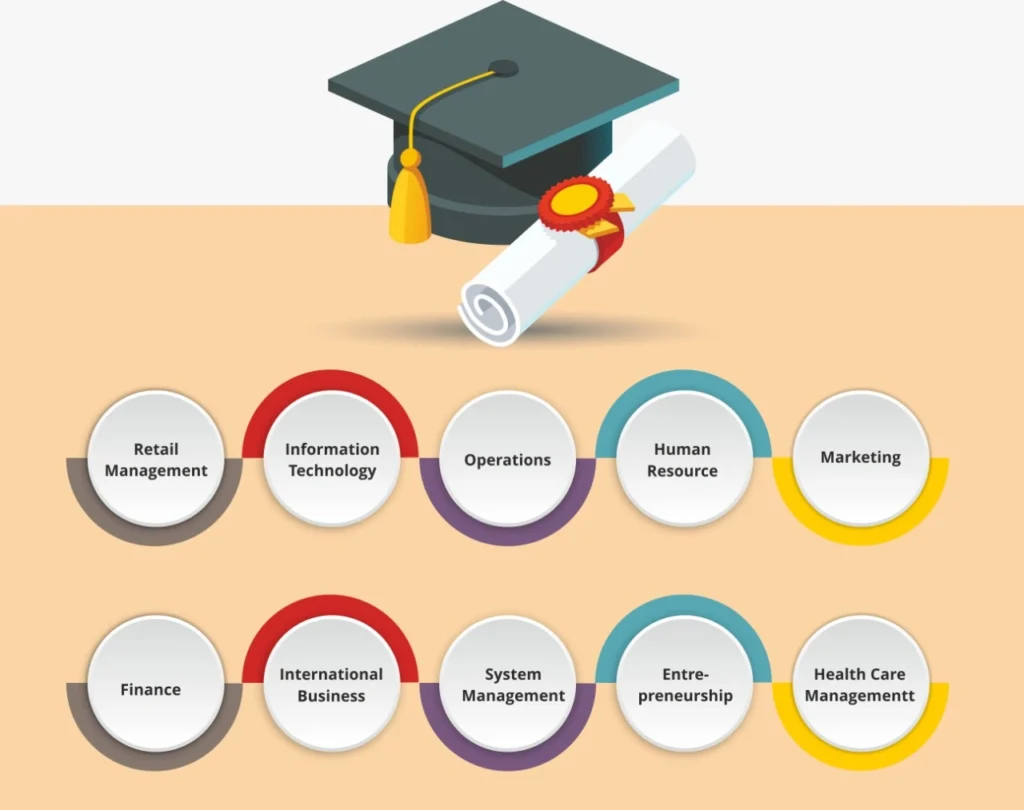
- You want to build expertise in modern business areas like analytics, digital marketing, product management, fintech, business strategy, and technology management. Many online MBAs update their curricula faster than traditional programs, offering industry-aligned content delivered by practitioners.
- You prefer modular, stackable learning. Digital programs often offer micro-credentials, certificates, or specializations that can be “stacked” into a larger MBA — allowing you to pace your learning or focus on niche skills first.
- You value flexibility but possess strong internal discipline. Online MBAs rely heavily on self-paced study, virtual participation, and consistent time management. If you are motivated and comfortable working independently, the flexibility becomes a major advantage.
- You want global exposure without the cost of studying abroad. International digital MBAs can connect you with diverse classmates worldwide, giving you cross-cultural perspectives without the expense of international travel.
However, a digital MBA may not be the best fit if:
- You’re aiming for elite consulting (MBB), investment banking, or top private equity roles, where traditional full-time MBAs from top global institutes still carry more weight.
- You prioritise deep networking, campus immersion, or in-person mentorship, which online formats cannot fully replicate.
- You need structured, face-to-face learning to stay motivated or accountable.
- You want access to internships, on-campus recruitment, or student clubs, which are typically stronger in full-time, on-campus programs.
In essence, a digital MBA shines when your goals include career acceleration, skill upgrades, and flexibility, but it may fall short if your aspirations depend heavily on brand signalling, in-person networking, or traditional campus advantages.
Risks, Drawbacks & What to Watch Out For
While digital MBAs offer flexibility and affordability, they also come with certain risks and limitations that you should assess carefully before committing. A smart evaluation upfront can help you avoid spending money on a low-quality programme or choosing a degree that doesn’t serve your long-term professional goals.
1. Accreditation, Legitimacy & Brand Recognition
One of the biggest concerns with online MBAs is the wide variation in credibility.
Before enrolling, verify:
- Accreditation status (national and international) — many countries require specific regulatory approval for degrees to be considered valid.
- Institution reputation — employer perception often depends on the university brand, not just the online format.
- Recognition in target countries — if you plan to work abroad, ensure the degree is accepted by global employers or immigration systems.
- Industry partnerships — programmes backed by corporate tie-ups or global academic alliances often signal higher trustworthiness.
A lack of accreditation can severely limit your opportunities in government roles, global mobility, and even private-sector hiring.
2. Curriculum Quality & Industry Relevance
Not all digital MBAs offer a modern, future-focused curriculum.
Watch out for:
- Outdated syllabi heavily focused on traditional management theory with little emphasis on digital strategy, analytics, or tech-driven decision making.
- Minimal practical exposure, such as the absence of case studies, simulations, real-world projects, or collaborative assignments.
- Limited specialization options, which may restrict your ability to build expertise in areas like product management, AI in business, digital marketing, or fintech.
Choose programs that are refreshed frequently and co-created with industry experts.
3. Depth of Support, Engagement & Learning Experience
A major drawback of some online MBAs is the lack of meaningful interaction.
Before applying, evaluate:
- Live faculty sessions vs. purely recorded lectures — real-time classes enhance clarity, motivation, and engagement.
- Student support systems, including mentorship, academic advisors, and placement assistance.
- Peer-to-peer interaction opportunities through group projects, discussion forums, or virtual networking.
- Feedback loops, such as graded assessments, instructor feedback, and personalized learning guidance.
The more interactive and immersive the learning experience, the higher the value.
4. Cost–Benefit Alignment
Even though digital MBAs are usually more affordable, they are still a significant investment.
Consider:
- Total programme cost — tuition, technology fees, certification add-ons, etc.
- Time investment — online MBAs can be demanding, often requiring 8–12 hours per week or more.
- Expected ROI — will the specialization and institution significantly enhance your salary prospects, promotion chances, or career mobility?
- Alternative pathways — sometimes a micro-degree, professional certification, or domain-specific course provides better value than a full MBA.
A clear cost-benefit analysis helps ensure you’re not paying for a credential you won’t use.
5. High Self-Motivation & Completion Risk
Online programmes demand sustained self-discipline — something many learners underestimate.
Risks include:
- Procrastination and inconsistent study schedules
- Reduced accountability, since attendance is flexible
- Lower completion rates for fully self-paced courses
- Burnout, especially for working professionals juggling career, family, and academics
If you tend to learn better through structured, in-person environments, you may find an online MBA challenging to complete successfully.
5- to 10-Year Outlook: Where MBA Education Is Headed
The next decade will reshape what an MBA looks like, how it is delivered, and who pursues it. Multiple global and India-specific forces — from digital adoption to employer expectations — indicate major shifts ahead.
1. Massive Global Expansion of MBA and Online Business Education
The global MBA education market, valued at ~USD 44.5 billion in 2024, is projected to almost double to ~USD 93.5 billion by 2030, growing at a CAGR of ~13%.
This growth is driven by:
- Rising global demand for management and leadership skills
- Corporate investments in talent development
- Rapid adoption of digital-learning infrastructures
- Universities expanding online/remote-learning capacities
Even in saturated Western markets, demand for flexible, shorter, and more industry-aligned business degrees is rising.
2. Online MBAs and Executive Short-Duration Programs Will Dominate Future Growth
Among all MBA formats, the biggest growth is expected in:
- Digital / online MBAs
- Executive MBAs
- Hybrid MBAs
- Short-duration business programs (6–12 months)
Reasons include:
- Significantly lower fees and high affordability
- Ability to study without a career break
- Easier scalability for universities
- Appeal to global and emerging-market learners
- Integration with MOOC platforms (Coursera, edX, Emeritus, UpGrad, etc.)
For working professionals, the flexibility of a digital MBA aligns closely with modern work-life realities. Universities see this as an opportunity to scale globally without massive infrastructure costs.
3. India Will Become One of the Fastest-Growing Digital-MBA Markets
India’s higher-education landscape is undergoing a major digital transition.
Drivers of growth include:
- Internet penetration ~82%+ (and rising)
- Over 750M smartphone users
- Growing digital literacy among young and mid-career professionals
- Massive appetite for skill-based PG programs
- Increasing adoption of remote and hybrid work cultures
According to market forecasts, the online education market in India is set to grow from ~USD 3.6B in 2025 to ~USD 23.9B by 2034, making online MBAs one of the country’s most significant education segments.
This positions India as a global leader in online MBA enrollments, especially in domains like analytics, fintech, digital marketing, and product management.
4. Rise of Specialized, Modular & Stackable MBA Credentials
The traditional 2-year general MBA may no longer remain the default option.
The future will likely include:
- Micro-MBAs
- Stackable certificates (marketing analytics, product strategy, AI in business)
- Career-focused specializations (fintech, AI/ML, supply chain, sustainability, healthcare)
- Executive “skill bridges” designed to plug talent gaps rapidly
- Blended hybrid formats mixing online content with periodic campus immersions
This shift mirrors workplace demands: employers increasingly want specific, demonstrable competencies rather than broad, generic management theory.
5. Greater Employer Acceptance & Reduced Stigma for Online Degrees
A key barrier for digital MBAs has historically been perception.
But the next decade will likely erase this stigma due to:
- Talent shortages in digital and tech-first roles
- Proven performance of online-MBA graduates
- Global acceptance of remote work and remote learning
- Accreditation improvements and stronger regulatory frameworks
- Increasing involvement of top-tier universities in the digital space (e.g., Wharton Online, HBS Online, ISB, IIMs)
Employers are shifting from “Where did you study?” to “What skills do you bring?” — a trend that benefits online MBA graduates.
6. Bottom Line: Digital MBAs Will Shift from “Alternative” to “Mainstream”
Over the next 5–10 years, MBA education worldwide will become:
- More flexible
- More digital-first
- More skill-driven
- More globally accessible
- Less tied to physical campuses
- More modular and customizable
For emerging markets like India, Southeast Asia, and Africa, digital MBAs will not just be an option — they will become the primary pathway for higher management education among working professionals.
In short: The digital MBA is on track to become a mainstream global MBA format, shaping how the next generation of managers, leaders, and entrepreneurs learn and grow.
FAQs Section
1. What is a digital MBA?
A digital MBA (also known as an online MBA, online executive MBA, or hybrid MBA) is a postgraduate business degree delivered primarily through online learning platforms such as LMS portals, recorded lectures, virtual classrooms, live sessions, and interactive case-study tools.
It allows students — especially working professionals — to:
- Study remotely without relocating
- Balance work, family, and education
- Learn part-time or full-time
- Access global faculty and diverse cohorts
- Complete assessments, projects, and exams online
Many digital MBAs now offer:
- Industry-led specializations (analytics, fintech, marketing, product, AI/ML)
- Live capstone projects with companies
- Hybrid immersion weeks for networking
- Stackable credentials (micro-MBA → MBA pathway)
In short, a digital MBA delivers the core MBA curriculum through flexible, tech-enabled formats designed for modern career demands.
2. Is an online MBA recognized / valid as a “real MBA”?
Yes — absolutely, provided the program is offered by:
- An accredited university, and
- A recognized regulatory body (UGC, AICTE in India; AACSB, AMBA, EQUIS internationally)
Today, several prestigious institutions offer accredited online MBAs, including:
- Wharton Online (University of Pennsylvania)
- Indiana Kelley School of Business
- Imperial College Business School
- IIM Bangalore, IIM Kozhikode, IIM Calcutta (online/hybrid EMBA formats)
- ISB, XLRI, SPJIMR (executive & online programs through platforms)
Global education platforms like Coursera, edX, Emeritus, UpGrad partner with reputed universities to ensure degrees are recognized and fully equivalent to on-campus qualifications.
Key point: To employers and regulatory bodies, a recognized online MBA is legally and academically equivalent to a classroom MBA.
3. Is employer acceptance of online MBAs growing?
Yes — and the trend is accelerating rapidly.
According to India Today (2025):
- MBA employability rose from 47% in 2021 to 78% in 2025, driven significantly by digital and hybrid MBA models.
In global markets:
- Talent shortages in product, analytics, digital marketing, supply chain & strategy roles have increased acceptance of skill-focused online MBAs.
- Companies now prioritize skills + demonstrable capability over pure campus prestige.
- Remote-first companies (tech, consulting, fintech) routinely hire online MBA graduates.
Employer acceptance is particularly strong for:
- Working professionals
- Lateral promotions
- Digital-first roles
- Hybrid/remote job environments
Perception barriers remain mostly for elite consulting (MBB) or high-finance (IB), but even these industries now recognize top-tier online programs from globally accredited universities.
4. How much does an online MBA cost compared to a campus MBA?
Online MBAs are generally 40–70% cheaper than full-time campus MBAs.
Typical cost ranges:
India
- Digital MBAs: ₹1.5 lakh – ₹6 lakh
- Hybrid/Executive MBAs from top B-schools: ₹6 lakh – ₹15 lakh
- Full-time top-tier IIM MBA: ₹20 lakh – ₹28 lakh + living expenses
Global
- Accredited online MBAs: USD 10,000 – 40,000
- Full-time global MBAs (on-campus): USD 60,000 – 150,000 + relocation + lost salary
Additional savings:
Students save on accommodation, relocation, exam fees, campus charges, and — most importantly — opportunity cost (lost salary), which can be ₹6–30 lakh+ for Indian professionals.
5. Will an online MBA help me switch careers (e.g., tech → management, engineering → product, operations → analytics)?
Yes — but with strategy.
A digital MBA is effective for transitions if combined with:
- A relevant specialization (product, analytics, finance, leadership)
- Practical projects (case studies, capstones, internships, portfolio pieces)
- Certifications (SQL, Python, Google PM, Lean Six Sigma, CFA Level 1)
- A strong LinkedIn profile + interview prep
- Industry networking (communities, alumni groups, webinars)
Career switches are strongest in:
- Product management
- Business analytics
- Digital marketing
- Fintech & financial analytics
- Consulting (mid-tier + tech consulting)
- Operations & supply chain
For highly competitive roles (MBB consulting, elite IB), traditional MBAs still retain an advantage — but the gap is narrowing.
6. Does a digital MBA offer networking and peer interaction like a campus MBA?
It depends on the format.
High-quality online MBAs offer:
- Weekly live classes
- Discussion groups
- Peer collaboration assignments
- Group capstone projects
- Networking forums
- Campus immersion weeks
- Alumni events
- Corporate mentorship sessions
Some international programs create virtual cohorts with students across 30–100 countries, offering genuine global exposure.
Lower-tier programs, however, may rely heavily on passive content with minimal interaction.Tip:
Choose programs that explicitly mention live, interactive learning, not just “self-paced”.
7. What are the risks or downsides of a digital MBA?
Common risks include:
1. Wide variation in quality
From globally accredited programs to poor-quality providers — legitimacy and value differ drastically.
2. Limited on-campus experience
You may miss:
- In-person clubs
- Social bonding
- On-ground recruiting drives
- Campus placements
3. Networking may be weaker
Unless the program heavily emphasizes collaborative learning.
4. Requires very high self-discipline
Online MBAs have higher dropout rates due to:
- Poor time management
- Lack of motivation without classroom pressure
- Work + family responsibilities
5. Perception issues (declining but present)
Some old-school employers still prefer traditional MBAs, especially for:
- Investment banking
- Top-tier consulting
- High-signal leadership pipelines
6. Risk of non-accredited or fake programs
Unregulated players often market “low-cost MBAs” — verify before enrolling.
8. Who should consider a digital MBA (vs a full-time campus MBA)?
A digital MBA is ideal for:
- Working professionals seeking upskilling without quitting their job
- Mid-career managers targeting leadership roles
- Career switchers entering product, analytics, marketing, finance
- People with family or financial responsibilities
- Students in Tier-2/3 cities who want global education access
- Entrepreneurs wanting structured business knowledge
- Professionals seeking international exposure without relocating
A traditional MBA is better if you want:
- Intensive on-campus recruiting
- Elite consulting/IB roles
- Full-time immersive campus life
- Strong social and alumni networking
9. Is a digital MBA good value in India in 2025?
Yes — and more so than ever.
Reasons:
- Online education market in India expected to grow 6–7x by 2034
- MBA employability rising to ~78% in 2025
- Massive demand for digital-led managerial roles
- Increasing employer trust in accredited online degrees
- Access to high-quality global programs without relocation
- Lower fees + no salary break
- High ROI for mid-career professionals
In India’s evolving job market — digital MBAs are becoming a smart, practical, value-driven path for most working professionals.
10. Will digital MBAs replace traditional MBAs completely?
Not fully — but digital MBAs will grow into a major parallel mainstream path.
Traditional MBAs will still dominate:
- Elite consulting (MBB)
- Investment banking (IB)
- High-competition global leadership programs
- Students seeking campus experience
- Fresh graduates wanting placements
Digital MBAs will dominate:
- Working professionals
- Career switchers
- Managers boosting leadership skills
- Tech, product, analytics, fintech roles
- Students in emerging markets (India, APAC, Africa)
Expected future scenario (2030 and beyond):
- Campus MBA = immersive, premium, selective
- Digital MBA = flexible, scalable, accessible, skill-focused
They will coexist — serving different segments of professionals and career goals.
Summary
- Digital MBAs have shifted from niche alternatives to mainstream global degrees, driven by flexible learning, lower total costs, and strong ROI for working professionals.
- Top universities (Wharton, Michigan Ross, IU Kelley, IIMs, ISB) now offer accredited online MBAs with the same curriculum and faculty as on-campus programs.
- India is witnessing a surge in adoption: UGC-approved online MBAs grew ~50% YoY, fueled by edtech platforms like Coursera, UpGrad, and Emeritus partnering with global universities.
- Average salaries for online MBA graduates globally range $90,000–$150,000, while Indian online MBA grads often move into roles paying ₹10–40 LPA, depending on prior experience.
- The value of a digital MBA depends on accreditation (AACSB, EQUIS, AMBA), brand reputation, peer networking quality, live projects, and placement ecosystem.
- Hybrid options (online + occasional campus immersion) are increasingly popular and offer better networking and experiential learning.
- Digital MBAs are particularly worthwhile for working professionals, career switchers, entrepreneurs, and people in tier-2/3 Indian cities who want high-quality education without relocation.
- Over the next decade, AI-driven learning, virtual simulations, and global classrooms will make digital MBAs more immersive, affordable, and employer-accepted.

Conclusion
- Digital MBAs are rising, backed by strong global and Indian market trends, growing demand for flexible upskilling, and expanded supply from universities and ed-tech platforms.
- For working professionals, they offer a compelling value proposition: flexibility, lower cost, comparable employability, and updated business-relevant skills.
- However — they are not magic bullets. Their value depends heavily on institution quality, curriculum relevance, learner’s discipline, and career goals.
- If you choose wisely (top/reputed institution or well-structured program, relevant specialization, self-motivation), a digital MBA can definitely be worth it — especially for career switchers, upskillers, or working professionals in India and globally.
- Over the next 5–10 years, digital MBAs are poised to become a standard tool in the upskilling arsenal — not just for students, but for mid-career professionals and corporates alike.
References
- GMAC – Graduate Management Admission Council Reports (2024)
https://www.gmac.com/market-intelligence-and-research/research-library - Coursera Global Skills Report 2024
https://www.coursera.org/reports/global-skills-report - Statista – Online Education & MBA Market Data
https://www.statista.com/topics/7822/online-learning/ - World Economic Forum – Future of Jobs Report 2024
https://www.weforum.org/reports/the-future-of-jobs-report-2024/ - McKinsey – The Future of Digital Learning & Workforce Skills
https://www.mckinsey.com/capabilities/people-and-organizational-performance/our-insights - Financial Times – Online MBA Rankings 2024
https://rankings.ft.com/rankings/2959/online-mba-ranking-2024 - IIM Ahmedabad – ePGP (Online/Hybrid MBA)
https://www.iima.ac.in/academics/programmes/epgp - IIM Bangalore – Online MBA & Digital Learning Programs
https://www.iimb.ac.in/online-programmes/ - Deloitte India – Higher Education Reports
https://www2.deloitte.com/in/en/pages/public-sector/articles/higher-education.html - Economic Times – UGC Online Degree & EdTech Coverage
https://economictimes.indiatimes.com/topic/online-education - Business Standard – Online Education & EdTech Trends
https://www.business-standard.com/search?query=online+education - UGC-DEB – List of Approved Online MBA Programs (Updated)
https://deb.ugc.ac.in
