








Estimated Reading Time: 18 – 20 minutes (4189 words)
Introduction
The Indian automotive market is entering one of its most exciting phases in recent history. As we move toward 2026, the industry is preparing for an unprecedented wave of launches — from long-range electric SUVs and next-gen hybrids to major updates of India’s bestselling compact and mid-size SUVs. With stricter safety norms, rising competition, and rapid advancements in battery and hybrid technology, automakers are gearing up to deliver smarter, safer, and more feature-rich vehicles than ever before.
For buyers, this upcoming year represents a unique opportunity. Not only will there be more choices across every price segment, but also significant improvements in real-world performance, charging convenience, ADAS capabilities, connected features, and overall value for money. Whether you are a tech-savvy early adopter waiting for the next big EV, a mileage-focused family buyer exploring hybrids, or an SUV enthusiast looking for a fresh upgrade, 2026 promises something for everyone.
In this article, we break down India’s most anticipated car launches of 2026 — covering electric vehicles, strong hybrids, and major SUV facelifts and new generations. You’ll learn what each model offers, what makes these launches significant, and how you can use these insights to plan your next car purchase smartly and confidently. Let’s dive into the future of India’s car market, one upcoming model at a time.
What’s Driving the Surge in 2026 Car Launches
The Indian automotive market is set for a significant expansion in 2026, with numerous launches across EVs, hybrids, and next-generation SUVs. Several key factors are driving this flurry of activity:
- Shift Toward Electrification and Hybrids
Global and Indian demand for cleaner, sustainable mobility is at an all-time high. Governments are promoting EV adoption through incentives, tax breaks, and stricter emission norms, pushing automakers to accelerate their EV and hybrid roll-outs. In India, OEMs like Maruti Suzuki, Tata Motors, and Mahindra are positioning 2026 as a major year for EV launches, targeting both urban consumers and early adopters in tier-2 cities. This trend reflects a broader global movement toward electrification, ensuring that automakers stay competitive while catering to environmentally conscious buyers. (India Car News, MIET Chennai) - Refreshing Aging Line-Ups
Many popular SUVs and hatchbacks in India are due for facelifts or full next-generation redesigns. Automakers aim to refresh their aging line-ups to retain market relevance and attract both new and existing customers. Vehicles like the Kia Seltos, Renault Duster, and Tata Sierra are undergoing major updates, combining modern design, improved features, and upgraded safety standards to match evolving buyer expectations. These refreshed models ensure brands remain competitive against rivals in their segments. (India Car News, CarnBikeCafe) - Rising Consumer Demand for Choice and Value
India’s rapidly growing middle class and rising disposable incomes are shaping consumer preferences. Buyers increasingly demand cars that offer a combination of value, features, safety, and flexibility. They are now more informed and have access to data on vehicle performance, fuel efficiency, and total cost of ownership. As a result, automakers are responding with diverse line-ups — EVs, hybrids, and updated ICE vehicles — ensuring buyers across different budget segments have multiple options. - Automaker Strategies for Market Share and Localization
To expand their footprint, OEMs are localizing production and tailoring portfolios to suit India’s urban, semi-urban, and rural markets. Offering a mix of powertrains — from affordable EVs and hybrid models to reliable ICE options — helps brands capture a wider audience. This strategy also mitigates risks associated with supply chain challenges and pricing volatility while catering to region-specific preferences, such as compact cars for congested cities or SUVs for long-distance travel. (India Car News) - Technology and Feature-Driven Competition
Buyers in 2026 are seeking vehicles equipped with the latest technology, including connected car features, ADAS (Advanced Driver Assistance Systems), infotainment upgrades, and improved safety systems. Automakers are leveraging these trends to differentiate their launches, often bundling innovative tech in both premium and mid-range models. This feature-driven competition is prompting faster launch cycles and frequent updates. - Global Automotive Trends Influencing India
India’s automotive market is increasingly influenced by global trends, including the push for sustainability, EV adoption in key markets like Europe and China, and the proliferation of hybrid technologies. Automakers entering India align their product launches with global timelines to maintain consistency, benefit from economies of scale, and meet evolving consumer expectations. This synchronization is another reason why 2026 is expected to be a landmark year for new car launches.
Top 8 Most-Anticipated Cars in India in 2026
Here are the leading cars generating buzz for 2026 — with expected specs, variants, and what makes them special:
3.1 Maruti Suzuki eVitara (EV SUV)
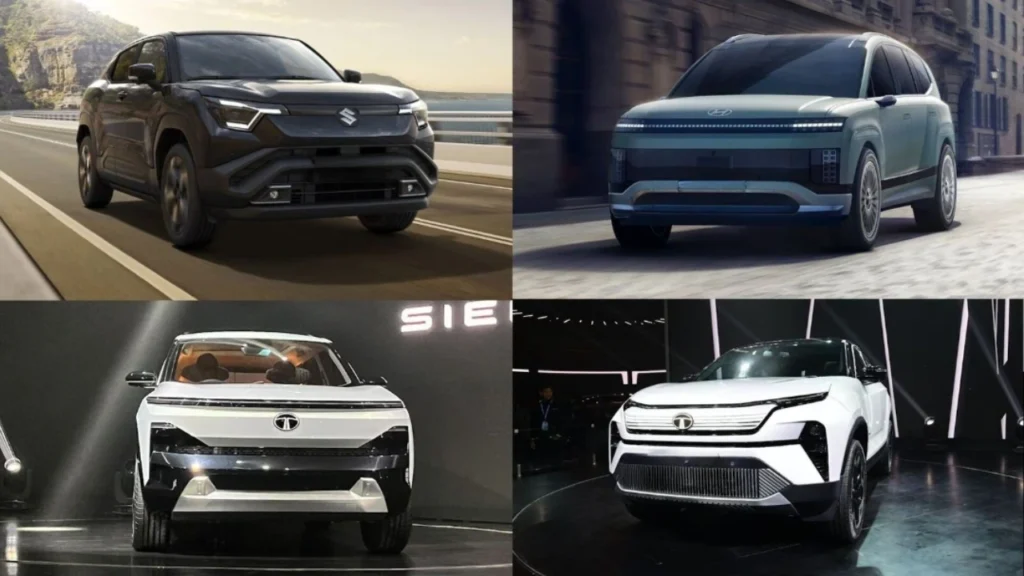
What is it: The first full-electric SUV from Maruti Suzuki — a major step for the mass-market EV segment in India. Positioned in the subcompact/mid-size EV SUV category, it aims to attract urban families and first-time EV buyers. (MIET Chennai, CarDekho)
Expected launch: By early 2026 according to several launch lists. (India Car News)
Expected variants: Likely 2–3 trims including standard and long-range versions; potential AWD variant for premium trims.
Battery & Range: ~45–55 kWh battery with expected real-world range of 350–400 km.
Estimated pricing: INR 15–20 lakh, making it one of the most affordable EV SUVs for mass-market buyers.
What makes it special: Affordable EV SUV segment entry, competitive pricing, modern infotainment, connected car features, ADAS, and regenerative braking — ideal for first-time EV adopters.
What to watch: Real-world driving range, charging infrastructure in metro and tier-2 cities, delivery timelines, after-sales support, and resale value.
3.2 Tata Sierra EV / ICE Version
What is it: The revival of the iconic Tata Sierra — returning both as EV and ICE variants. It combines the nostalgia of the classic SUV with modern powertrains, targeting both traditional SUV buyers and EV enthusiasts. (India Car News)
Expected launch: Early 2026 for ICE; EV variant around the same timeframe.
Expected variants: Multiple trims including standard, premium, and adventure-focused editions.
Powertrain & Range: ICE – petrol/diesel engines; EV – ~50–60 kWh battery, range ~350–400 km.
Estimated pricing: ICE – INR 14–18 lakh, EV – INR 20–25 lakh.
Why it matters: Nostalgic nameplate meets new-age technology; appeals to a wide audience including those looking for value SUVs or early EV adoption.
What to watch: Specifications, EV vs ICE price gap, real-world interior space, comfort, and feature list.
3.3 Kia Seltos (2026) — Next Gen
What is it: A next-generation version of the popular Kia Seltos, expected to launch in early 2026. The refresh brings modern design, improved interiors, and upgraded tech features. (CarnBikeCafe, CarLelo)
Expected updates: Redesigned exterior and interior, premium infotainment, ADAS safety features, better fuel efficiency, and potential hybrid/EV variants.
Expected variants: Petrol, diesel, and hybrid trims; multiple feature-based trims.
Estimated pricing: INR 12–20 lakh depending on variant and powertrain.
Why many are waiting: Seltos has been a bestseller; next-gen launch expected to bring best-in-class features, enhanced fuel efficiency, and improved value proposition.
What to watch: Pricing against competitors, hybrid/EV availability, and whether new features meet market expectations.
3.4 Renault Duster (2026) — New-Gen SUV
What is it: The facelift / next-generation version of the rugged Renault Duster SUV, expected in early to mid-2026. It retains its reputation for value-for-money while adding modern features. (CarLelo, carsjovo.com)
Expected variants: Petrol, diesel, and possibly hybrid options with improved safety and infotainment features.
Estimated pricing: INR 11–16 lakh.
Why it stands out: Strong SUV legacy; new-gen Duster may refresh design, add modern safety tech, and attract first-time SUV buyers.
What to watch: Engine/powertrain options, safety features, and updated technology compared with competitors like Seltos, Sierra, and XUV700.
3.5 Mahindra XUV700 Facelift (XUV 7XO)
What is it: Facelifted version of the popular XUV700, rebranded as XUV 7XO — expected to debut in early 2026. (Times of India)
Expected variants: Petrol and diesel trims, premium interiors, advanced infotainment, and safety features.
Estimated pricing: INR 15–24 lakh.
Why it matters: Retains brand recognition and loyal customer base; facelift brings refreshed styling, new tech, and possibly upgraded powertrains.
What to watch: Price difference from current XUV700, feature upgrades, and competition with new-gen SUVs (Seltos, Sierra, Duster).
3.6 Mahindra XEV 7e (EV SUV)
What is it: Upcoming electric SUV under Mahindra’s INGLO platform — part of the growing EV push in India. (India Car News)
Expected launch: 2026.
Expected variants: Standard and long-range trims; possible premium variants with AWD.
Battery & Range: ~50 kWh battery, 350–400 km range.
Estimated pricing: INR 18–22 lakh.
Why keep an eye: Growing demand for affordable EV SUVs; addresses buyers seeking electric mobility without premium EV prices.
What to watch: Battery specs, charging time, real-world range, price, and after-sales support.
3.7 Tata Harrier (2026 Petrol) & Tata Safari (2026 Petrol)
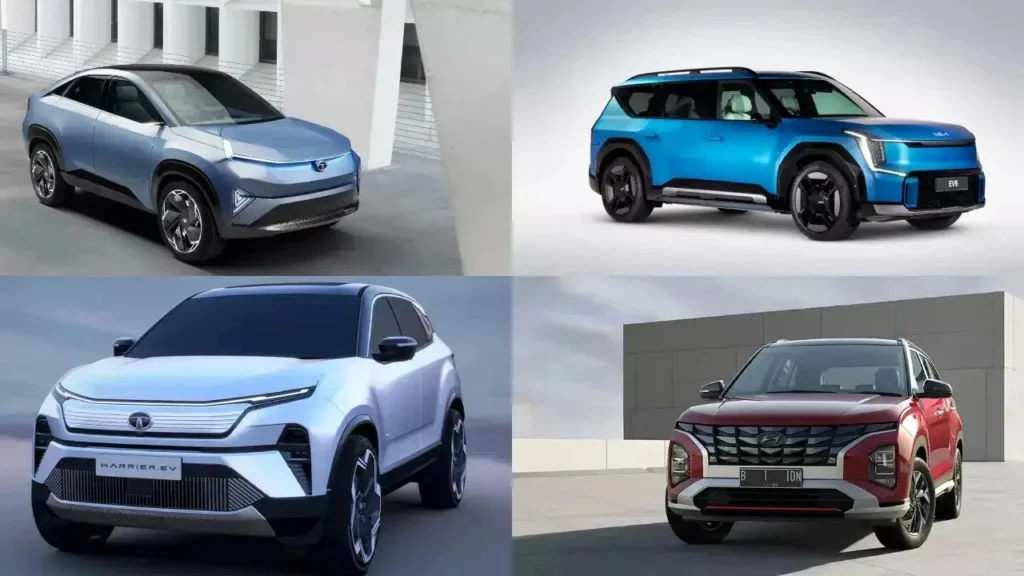
What’s new: Updated petrol variants of Tata Harrier and Safari with refreshed tech, design, and features. (India Car News, CarLelo)
Expected variants: Multiple trims for each SUV with petrol engines; upgraded interiors and infotainment.
Estimated pricing: Harrier – INR 15–21 lakh; Safari – INR 18–25 lakh.
Why it matters: For buyers not ready for EV/hybrid, these SUVs offer proven reliability, updated design, and tech — ideal for mid-segment SUV buyers.
What to watch: Engine specs, feature upgrades, price competitiveness, and comparison against upcoming 2026 SUVs.
3.8 Select Hybrids & Compact Cars (e.g., Maruti Fronx Hybrid)
What to watch: Automakers like Maruti Suzuki, Toyota, and Honda are planning hybrid variants of compact cars and small SUVs — e.g., Maruti Fronx or Baleno hybrid. (India Car News)
Expected launch: Throughout 2026.
Expected variants: Standard and premium trims; likely petrol-electric hybrid configuration.
Estimated pricing: INR 8–14 lakh.
Why this matters: Hybrids offer better fuel efficiency and lower running costs than ICE vehicles, while avoiding EV charging limitations — good for budget-conscious buyers.
What to watch: Real fuel efficiency, pricing vs ICE and EV options, availability across cities, and feature trade-offs.
What Buyers Should Watch: Key Considerations
When evaluating India’s 2026 car launches — whether EV, hybrid, or ICE — it’s important to make informed decisions beyond just design or brand hype. Here are key factors to keep in mind:
- Price vs Features vs Powertrain
- EVs typically have a higher upfront cost than ICE vehicles due to battery technology.
- Compare the incremental cost against potential long-term savings in fuel and maintenance. For example, an EV might cost ₹5–7 lakh more than its petrol equivalent but save ₹1–1.5 lakh over 5 years in running costs.
- Consider the feature set included in each variant — connected tech, safety systems (ADAS, airbags), infotainment, and comfort features often differ between trims.
- EVs typically have a higher upfront cost than ICE vehicles due to battery technology.
- Charging / Fuel Infrastructure
- EV buyers: Evaluate the availability of public fast-charging networks in your city and whether home charging (AC or DC) is feasible. Consider whether the vehicle supports standard fast-charging protocols and estimated charging times.
- Hybrid/ICE buyers: Focus on fuel efficiency, service network accessibility, and maintenance costs. Hybrid models may offer lower fuel consumption but check if spare parts or specialized servicing are available locally.
- EV buyers: Evaluate the availability of public fast-charging networks in your city and whether home charging (AC or DC) is feasible. Consider whether the vehicle supports standard fast-charging protocols and estimated charging times.
- Resale Value & Market Demand
- Popular SUVs and hatchbacks with strong brand loyalty often hold value better. For example, models like Kia Seltos, Tata Sierra, and Maruti Vitara Brezza historically maintain 50–60% of original value over 5 years.
- With a surge of 2026 launches, supply may outpace demand in some segments. Monitor booking trends, waiting periods, and early reviews to estimate future resale potential.
- Popular SUVs and hatchbacks with strong brand loyalty often hold value better. For example, models like Kia Seltos, Tata Sierra, and Maruti Vitara Brezza historically maintain 50–60% of original value over 5 years.
- Feature Set vs Competition
- Don’t just rely on brand popularity — compare safety ratings, tech features, driver assistance systems, and comfort with competing models.
- Example: A new-gen Duster may offer more rugged design and value, but the Kia Seltos might have better infotainment and hybrid options. Evaluate what aligns with your priorities — city driving, highway comfort, or family use.
- Don’t just rely on brand popularity — compare safety ratings, tech features, driver assistance systems, and comfort with competing models.
- Use Case & Location
- Urban/Metro buyers: Compact EVs or hybrids may be ideal due to easier parking, lower running costs, and city-range suitability.
- Long-distance or tier-2/tier-3 buyers: SUVs with ICE or hybrid powertrains may be better, offering higher range, fuel accessibility, and comfort for longer drives.
- Consider daily mileage, road conditions, and seasonal climate (extreme heat or monsoon conditions affect EV battery performance).
- Urban/Metro buyers: Compact EVs or hybrids may be ideal due to easier parking, lower running costs, and city-range suitability.
- Government Incentives & Regulations
- Keep an eye on state-wise EV subsidies, FAME II/FAME III incentives, and upcoming emission norms (Bharat Stage VI+).
- Incentives can significantly reduce EV/hybrid purchase cost, while regulatory changes may affect ICE vehicles’ long-term viability in urban areas.
- Keep an eye on state-wise EV subsidies, FAME II/FAME III incentives, and upcoming emission norms (Bharat Stage VI+).
- Warranty, After-Sales, and Battery Life
- For EVs, check battery warranty (often 8 years/1.6 lakh km in India) and availability of authorized service centers.
- For hybrids/ICE, evaluate servicing frequency, parts cost, and dealer network strength in your city.
- For EVs, check battery warranty (often 8 years/1.6 lakh km in India) and availability of authorized service centers.
- Total Cost of Ownership (TCO)
- Calculate TCO including insurance, annual service, fuel/charging, depreciation, and potential resale value.
- Use comparison tools or calculators offered by OEMs and portals like CarDekho or Zigwheels to understand the financial impact over 3–5 years.
- Calculate TCO including insurance, annual service, fuel/charging, depreciation, and potential resale value.
How to Use This Info: Buying Strategy for 2026
With dozens of car launches planned in 2026, making a smart purchase requires aligning budget, lifestyle, and long-term goals. Here’s a structured approach for prospective buyers:
- Future-Proof and Low Running Cost: Focus on EVs
- Cars to track: Maruti Suzuki eVitara, Mahindra XEV 7e, Tata Sierra EV.
- Why EVs: Electric vehicles offer lower running costs, minimal engine maintenance, and potential government incentives (FAME II/FAME III, state subsidies).
- What to check: Real-world driving range, availability of public and home charging, battery warranty, and expected delivery timelines.
- Use case fit: Ideal for urban commuters, city-based families, and environmentally conscious buyers seeking long-term savings and future-ready mobility.
- Cars to track: Maruti Suzuki eVitara, Mahindra XEV 7e, Tata Sierra EV.
- Value + Reliability + Flexibility: Focus on Hybrids and ICE Vehicles
- Cars to track: Next-gen Kia Seltos, Tata Harrier 2026 Petrol, Tata Safari 2026 Petrol, Maruti Fronx Hybrid, Renault Duster 2026.
- Why hybrids/ICE: They combine proven reliability, familiar service networks, and lower upfront cost compared to EVs. Hybrids also deliver better fuel efficiency without needing EV charging infrastructure.
- What to check: Fuel efficiency, maintenance costs, feature updates, and resale potential.
- Use case fit: Suitable for daily commuters, mid-range budget buyers, and semi-urban customers who value flexibility over EV adoption.
- Cars to track: Next-gen Kia Seltos, Tata Harrier 2026 Petrol, Tata Safari 2026 Petrol, Maruti Fronx Hybrid, Renault Duster 2026.
- SUV-Loving Families / Long-Distance Users: Focus on Updated SUVs
- Cars to track: Kia Seltos 2026, Renault Duster 2026, Tata Sierra (ICE/EV), Mahindra XUV 7XO.
- Why SUVs: Larger interiors, better ride comfort, higher ground clearance, and greater luggage capacity. Facelifts and next-gen updates improve safety, infotainment, and long-term value.
- What to check: Interior space, cargo capacity, comfort for 4–6 passengers, engine performance, maintenance costs, and resale value.
- Use case fit: Ideal for families, intercity travelers, and users in semi-urban or rural areas where road conditions vary.
- Cars to track: Kia Seltos 2026, Renault Duster 2026, Tata Sierra (ICE/EV), Mahindra XUV 7XO.
- Compare Pricing and Total Cost of Ownership (TCO)
- Key metrics: Expected launch price, insurance, fuel/charging cost, periodic maintenance, depreciation, and resale value.
- Why it matters: Upfront price doesn’t reflect long-term financial impact. For example, an EV may be costlier initially but cheaper to run, while an ICE may be cheaper upfront but costlier in fuel over 5 years.
- Tools: Use online TCO calculators (CarDekho, ZigWheels) to estimate 3–5 year costs and compare across models.
- Key metrics: Expected launch price, insurance, fuel/charging cost, periodic maintenance, depreciation, and resale value.
- Prioritize Features That Matter to You
- Safety: Airbags, ADAS features, ABS, crash ratings.
- Technology: Infotainment system, connected car features, navigation, voice commands.
- Comfort: Seating ergonomics, climate control, interior space, ride quality.
- Strategy: Make a checklist of must-have vs nice-to-have features, and match them with available trims for each car.
- Safety: Airbags, ADAS features, ABS, crash ratings.
- Monitor Market Trends and Booking Timelines
- Keep an eye on OEM announcements, pre-booking offers, and waiting periods. Some high-demand EVs or SUVs may have extended delivery timelines.
- Track dealer reviews, early test drives, and first-hand owner feedback to avoid surprises post-purchase.
- Keep an eye on OEM announcements, pre-booking offers, and waiting periods. Some high-demand EVs or SUVs may have extended delivery timelines.
- Final Strategy Recommendation:
- Urban buyer seeking low running costs: EVs are preferable.
- Budget-conscious or semi-urban buyer wanting reliability and flexibility: ICE or hybrid.
- Family or long-distance commuter seeking space, comfort, and resale value: Updated SUVs.
- Urban buyer seeking low running costs: EVs are preferable.
FAQs Section
1. Why are so many cars launching in 2026 in India?
Several converging factors are driving the surge of car launches:
- Product refresh cycles: Many popular models (SUVs, hatchbacks) are reaching the end of their lifecycle and are due for next-gen updates.
- EV and hybrid push: Automakers are racing to meet India’s growing demand for cleaner mobility and to comply with stricter emission norms (Bharat Stage VI+).
- Pent-up demand: Buyers who postponed purchases due to COVID-19, supply chain disruptions, or inflation are ready to upgrade.
- Competitive positioning: OEMs aim to capture market share early in the post-pandemic recovery phase.
2. Will EVs in 2026 be affordable for middle-class buyers in India?
Some EVs are expected to be within reach:
- Mass-market EVs: Cars like Maruti Suzuki eVitara and compact EVs from Tata or Mahindra could start at ₹15 lakh, making them accessible to urban middle-class families.
- Upfront vs long-term costs: While EVs are costlier than ICE vehicles initially, lower running costs — fuel savings (~₹1 lakh over 5 years) and minimal engine maintenance — may offset the premium.
- Government incentives: FAME III and state-level subsidies can further reduce purchase costs by ₹1–2 lakh in some regions.
3. Should I wait for 2026 launches or buy a current model now?
It depends on urgency and priorities:
- Immediate need: Buying a current model is practical and may offer discounts to clear old inventory.
- If you can wait 3–6 months: Waiting for 2026 launches can give you:
- Better technology: Next-gen ADAS, connected car features, and infotainment upgrades.
- Potentially better pricing/deals: OEMs may offer pre-booking incentives.
- Higher resale value: Newer models often retain value better than outgoing versions.
- Better technology: Next-gen ADAS, connected car features, and infotainment upgrades.
4. Are hybrid cars a good middle ground between ICE and EV?
Yes, hybrids often hit the sweet spot for many Indian buyers:
- Fuel efficiency: Hybrids can offer 20–30% better mileage than traditional ICE cars.
- Lower running cost: Reduced fuel consumption and fewer engine wear issues.
- No charging infrastructure required: Unlike EVs, hybrids operate seamlessly with petrol/diesel, making them suitable for tier-2 and tier-3 cities.
- Example: Maruti Fronx Hybrid or upcoming Toyota hybrid models may appeal to urban commuters seeking efficiency and convenience.
5. How to decide between EV, hybrid, and ICE when buying in 2026?
Consider multiple factors:
- Usage pattern: City driving favors EVs/hybrids; long-distance driving or rural roads may favor ICE/hybrid SUVs.
- Charging/fuel availability: Access to home chargers or public charging for EVs; fuel stations for ICE/hybrid.
- Budget vs long-term savings: EVs require higher upfront investment but lower running costs.
- Resale value & maintenance: Popular SUVs and compact EVs often retain value; check dealer support and warranty.
- Convenience: EVs may be ideal for tech-savvy urban buyers; hybrids offer flexibility without infrastructure dependence.
6. Will new-gen SUVs like Seltos or Duster hold their resale value?
Likely yes, if managed properly:
- Strong brand perception: Popular SUVs with proven reliability retain value (~50–60% over 5 years).
- Competition factor: With multiple 2026 launches, resale may vary based on features, trims, and supply-demand dynamics.
- Maintenance & condition: Well-maintained vehicles with service history and low mileage perform better in the resale market.
7. What should EV buyers look out for before booking?
Critical considerations for EVs include:
- Real-world range: Don’t rely solely on claimed range; check independent reviews and city vs highway performance.
- Charging infrastructure: Public chargers, fast-charging support, and home installation feasibility.
- Battery & warranty: Typical EV battery warranty is 8 years/1.6 lakh km; check replacement cost.
- Service network: Availability of authorized service centers in your city or region.
8. Are automakers offering financing or incentives for 2026 EVs or hybrids?
Most OEMs are expected to provide attractive offers:
- Financing schemes: Low-interest EMIs, flexible tenure loans, or zero-down schemes.
- Incentives: Early-bird bookings, cashbacks, or exchange offers.
- Government support: FAME III and state subsidies may further reduce upfront costs for EV buyers.
9. Will demand for ICE SUVs drop with so many EVs and hybrids launching?
Not immediately:
- Infrastructure dependency: EV adoption depends on widespread charging availability.
- Price parity: ICE SUVs remain cheaper upfront, especially in non-metro areas.
- Proven reliability: ICE SUVs with established track records, like Harrier, Safari, or XUV700, continue to attract buyers outside metros.
10. How to stay updated on exact 2026 launch dates and bookings?
Stay informed via multiple channels:
- Official OEM announcements: Brand websites, press releases, and social media handles.
- Auto-news portals: CarDekho, ZigWheels, CarLelo, AutoCar India, India Car News.
- Dealership newsletters & pre-booking alerts: Register early for notifications on launch events, offers, and test drives.
- Follow influencers & forums: Auto-focused YouTube channels, Reddit India Car communities, and WhatsApp groups often provide real-time updates and reviews.
Summary
- 2026 will be a landmark year for Indian car buyers, with a packed lineup of new-generation models across EVs, strong hybrids, CNG, and next-gen ICE SUVs. Automakers are preparing launches that align with India’s fast-evolving mobility needs, from long-range EVs to performance-focused turbo models.
- Electric vehicles will dominate headlines, especially with brands introducing 500–700 km range EVs, faster charging, and more affordable battery tech. Combined with expanding charging networks and state incentives, EV adoption in 2026 is expected to accelerate significantly.
- Hybrids are emerging as the “practical middle ground”, appealing to buyers who want better fuel efficiency without worrying about charging. Toyota, Maruti Suzuki, and Honda are expected to strengthen this segment with new strong-hybrid SUVs and sedans tailored for Indian driving conditions.
- SUVs will continue to drive demand, with new compact, mid-size, and premium SUVs arriving from Tata, Mahindra, Hyundai, MG, and Kia. A surge in ADAS Level 2+, connected features, and safer platforms (GNCAP 4–5 star focus) is pushing the SUV market into a more tech-forward phase.
- Competition will intensify across all budget categories, enabling buyers to access better features, more safety tech, and smarter powertrains at competitive pricing. This increased rivalry is expected to push automakers to offer more value — from introductory launch pricing to extended warranty packages.
- Smart buyers in 2026 will prioritise value over hype, comparing total cost of ownership (TCO), real-world battery/engine performance, maintenance costs, and long-term resale value. With so many choices arriving, taking a data-driven approach will help buyers make informed, future-proof decisions.
Conclusion
The year 2026 is shaping up to be a landmark moment for the Indian automotive industry, driven by cleaner technologies, smarter in-car features, and a new wave of global-standard engineering from both Indian and international manufacturers. Whether it’s the rise of long-range EVs, turbo-hybrid SUVs crafted for Indian roads, or premium lifestyle cars loaded with ADAS and AI-enabled cockpit systems, next year’s lineup reflects a market that is maturing rapidly — and demanding more value, safety, and innovation than ever before. For buyers, this means unprecedented choice and better accessibility to global automotive trends that once took years to reach India.
At the same time, 2026 will be a turning point for EV affordability, charging infrastructure expansion, and policy-driven incentives, making electric mobility viable for many first-time buyers. Manufacturers are aligning launches with practical range, faster charging, and real-world durability — critical factors for Indian climates and driving patterns. On the ICE and hybrid side, the competition is equally strong, with brands preparing next-gen SUVs, crossovers, and performance-oriented models to meet the booming personal mobility demand. The convergence of tech, design, and pricing innovation is set to redefine buyer expectations across every segment.
As you prepare for your next car purchase, staying updated on these anticipated releases will help you time your purchase smartly, compare upcoming innovations with existing models, and potentially save lakhs through introductory pricing, launch offers, and early-buyer benefits. Keep this page bookmarked — we’ll continue updating it as brands reveal new teasers, specifications, and India-launch timelines. 2026 could be the best time in years to upgrade your vehicle, and the smart buyer will be the one who plans ahead.
References
- “12 New Cars Worth Waiting in Early 2026: EVs & Hybrids” — IndiaCarNews. India Car News
- “Upcoming Cars in India 2026 – New Car Launches & Expected Models” — CarBlogs.in. Car Blogs+1
- “Top 7 Upcoming Cars in January 2026 | Expected Prices & Launch Dates” — CarnBikeCafe. CarnBikeCafe+1
- “Upcoming Electric Cars in India – Mahindra, Kia, Tata, BYD, Maruti, and More” — industry list. MIET Chennai+1
- “Every New SUV Launching by March 2026 — Tata Sierra, Maruti Escudo to New Seltos” — Carlelo report. CarLelo+1
