








Estimated Reading Time: 32-36 minutes (6,504 words)
Introduction
Mobile casual gaming has evolved from a niche pastime into one of the largest entertainment ecosystems on the planet. What began as simple, bite-sized experiences — matching colored tiles, launching birds, stacking blocks — has grown into a multibillion-dollar global industry shaping how people relax, socialize, and compete. Today, casual games are played by every age group, from school students killing time between classes to working professionals taking micro-breaks, to senior citizens discovering the joy of puzzles and brain-training titles.
At the heart of this revolution is accessibility: these games typically require no prior skill, no expensive hardware, and no long-term time commitment. A smartphone and a few minutes is all it takes. This frictionless design philosophy has helped casual games seep into daily routines — during commutes, lunch breaks, before bed, or while waiting for a friend. As a result, billions now identify as gamers, even if they don’t consider themselves part of “gaming culture.”
In 2025, the global games market is estimated to reach nearly US$189 billion, with mobile gaming alone contributing over US$100 billion — far surpassing PC and console gaming. This dominance reflects a shift in consumer behavior: entertainment today must fit into fragmented attention spans, and nothing delivers that better than mobile casual games.
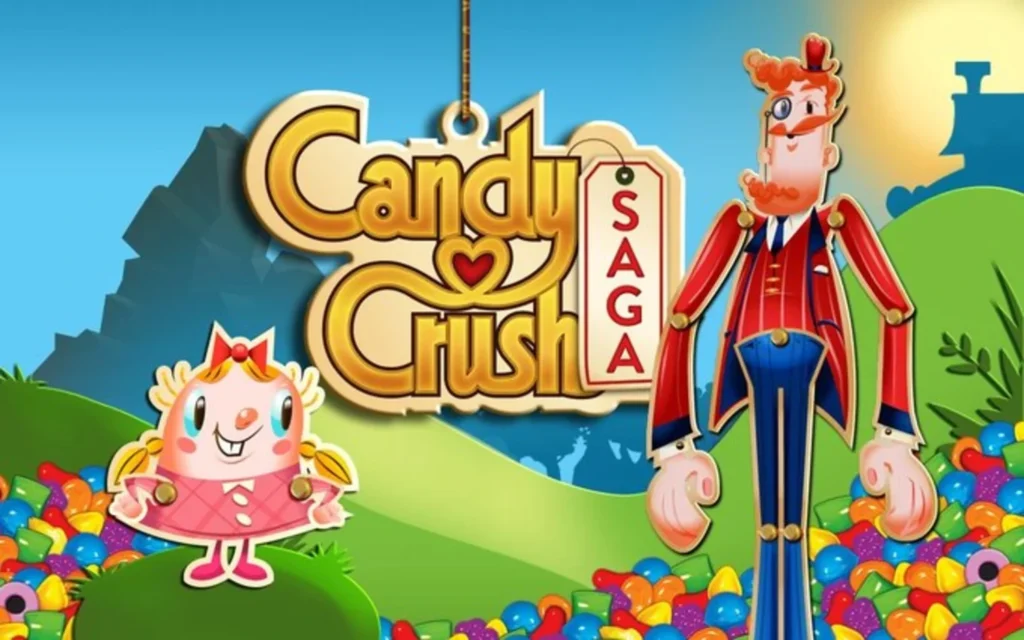
A perfect case study is Candy Crush Saga. Launched in 2012, the game continues to attract hundreds of millions of monthly players even in 2025 — a rare achievement in a hit-driven industry where most titles fade within months. Candy Crush’s longevity proves that “evergreen” design, powered by smart live-ops, infinite content pipelines, behavioral analytics, and perfectly tuned difficulty curves, can sustain engagement for over a decade. It’s an example many new studios still study.
But while global markets are maturing, India stands at a uniquely interesting crossroads. The country recorded 8.45 billion mobile game installs in FY 2024–25, more than any other nation — highlighting its status as the world’s largest mobile-first gaming market. However, monetization patterns differ sharply: although Indians download games at record-breaking levels, in-app purchase revenue is still developing. This combination of massive volume + low ARPU makes India both challenging and full of untapped potential for developers, advertisers, and investors.
In this article, we’ll unpack the world of casual gaming with a data-driven lens. You’ll learn:
- Why casual gaming has exploded worldwide — economically, psychologically, and technologically
- How and why Candy Crush remains a timeless global phenomenon
- What makes India a critical yet complex gaming market
- Where mobile gaming is headed over the next 5–10 years, including AI content generation, hyper-casual evolution, hybrid-casual design, and rising regulatory changes
- What developers, brands, and investors must understand to succeed in this competitive landscape
Whether you’re a gamer curious about industry trends, a developer planning your next title, a marketer exploring new user-acquisition models, or an investor evaluating high-growth sectors — this guide will help you understand the forces shaping the future of mobile casual gaming.
The Global Games Market in 2025: A Snapshot
The global gaming industry in 2025 stands as one of the largest entertainment sectors in the world, outpacing film, music, and streaming in total revenue. According to Newzoo’s 2025 forecast, the games market is expected to generate US$188.8 billion, reflecting a 3.4% year-on-year increase driven by mobile adoption, live-service games, and maturing digital economies.
GamesMarket+2Pocket Gamer+2
This growth reinforces a long-term trend: gaming is no longer restricted to dedicated “core” players. Instead, it has transformed into a universal entertainment medium consumed across smartphones, PCs, consoles, cloud platforms, and social ecosystems.
Global Player Base: 3.6 Billion Gamers by 2025
Newzoo estimates that the global gaming population will reach 3.6 billion in 2025.
Newzoo+1
This means nearly 45% of the planet’s population will engage with games in some form — from casual puzzle players to esports competitors. The widespread availability of smartphones, growth of affordable data networks, and cultural acceptance of gaming as mainstream entertainment have made this expansion possible.
What’s particularly notable is the shift in demographics:
- Non-traditional gamers (older adults, working professionals, women, and rural internet users) now form one of the fastest-growing segments.
- Emerging markets (India, Brazil, Southeast Asia, MENA, Sub-Saharan Africa) are contributing the largest new user inflows.
- Short-session mobile play is responsible for onboarding millions of first-time gamers.
Mobile Dominates: US$103 Billion from a 3 Billion-Player Audience
Mobile continues to be the central pillar of the gaming ecosystem. In 2025, mobile gaming revenue is projected to hit ~US$103 billion, accounting for approximately 55% of the global games market.
Pocket Gamer+1
In player count terms, mobile reaches:
- ~3 billion users,
- Nearly 3x the size of the console player base,
- Over 3x the PC gaming population,
- And the highest engagement time per day among all platforms in many regions.
Why mobile keeps winning:
- Instant accessibility — virtually every smartphone is a gaming device.
- Zero barrier to entry — most mobile titles are free-to-play.
- Short-form entertainment — aligned with modern attention spans.
- Affordable data and smartphone penetration in emerging economies.
- Live-service models that constantly update content.
Mobile gaming also benefits from evolving monetization mechanisms: ads, rewarded video, microtransactions, battle passes, and subscription bundles.
PC and Console Still Matter — But Growth Is Slower
While mobile dominates, PC and console remain high-value and deeply engaged segments.
According to 2025 breakdowns:
- PC gaming population: ~936 million players
- Console gaming population: ~645 million players
GamesMarket+1
These platforms continue to:
- Drive premium experiences (AAA games, esports titles, RPGs, survival, FPS)
- Serve mid-core and core audiences
- Fuel the global esports ecosystem
- Push technological boundaries in graphics and storytelling
However, their growth is stabilizing, not accelerating, due to:
- Higher hardware costs
- Longer game development cycles
- Saturation in mature markets
- Competition from cloud gaming and mobile ecosystems
Mobile, in contrast, keeps expanding through cheap smartphones, app stores, and hyper-localized content.
Key Fact Box (2025 Overview)
| Metric (2025) | Value |
| Global games market revenue | US$188.8 billion (GamesMarket) |
| Global gaming population | ~3.6 billion players (Newzoo+1) |
| Mobile games market revenue | ~US$103 billion (~55% of total) (Pocket Gamer+1) |
| Mobile gaming population | ~3.0 billion users (GamesMarket+1) |
Why This Matters
The scale and reach of the 2025 games market underscore a powerful shift:
mobile casual gaming is no longer a side category — it is the center of global interactive entertainment.
Here’s why the data matters:
- Billions of potential customers for studios and publishers
- Low-cost, high-reach marketing opportunities for brands
- Massive runway for growth in emerging markets
- A viable career sector for developers, designers, and live-ops experts
- Huge monetization potential via ads, IAP, subscriptions, and hybrid-casual models
- Cultural influence that shapes digital behavior worldwide
In short: casual gaming has become a mainstream global habit — and its economic, social, and cultural impact continues to grow every year.
Why Casual Gaming — Not AAA Titles — Is Leading the Charge
While AAA games dominate headlines, awards, and hardcore enthusiast communities, it is casual gaming that drives the majority of global engagement, downloads, and daily active users. The reason is simple: casual games are designed for everyone, not just traditional gamers. Below is a detailed look at the core factors behind this dominance.
1. Accessibility & Low Barrier to Entry
One of the most defining advantages of casual games is how hardware-inclusive they are. Unlike AAA titles that require high-end consoles, GPUs, or gaming PCs, casual games run smoothly on:
- Low-end Android devices
- Mid-range smartphones
- Older-generation phones still common in emerging markets
This makes casual games the default entry-point for billions of users across India, Brazil, Southeast Asia, the Middle East, Africa, and Latin America.
Why accessibility matters:
- No financial barrier → Users don’t need premium hardware.
- Zero learning curve → Simple controls mean anyone can play.
- Instant playability → Lightweight installs and fast loading times.
- Highest global compatibility → Works across thousands of device variants.
Even in developed markets, users prefer low-commitment gaming during daily micro-moments — commutes, queues, lunch breaks, and downtime.
Short sessions = higher engagement
Most casual games are optimized for 5–15 minute bursts, perfectly matching modern mobile usage patterns shaped by:
- Multitasking
- Short attention spans
- Frequent app switching
- “Snackable” entertainment habits
AAA titles demand long consecutive play sessions — a luxury many adults simply do not have.
2. Massive Audience & Unmatched Reach
Casual gaming thrives on universality. With nearly 3 billion mobile gamers worldwide, casual titles reach audiences far beyond the traditional gaming demographic.
Who plays casual games?
- Teens (quick entertainment between studies)
- Working professionals (stress relievers)
- Women gamers (one of the fastest-growing segments)
- Older adults & retirees (brain-training or relaxation)
- Non-gamers (who never touched PC/console titles)
This broad demographic spread is something AAA games can never replicate, as AAA titles often require:
- Prior gaming experience
- Complex controls
- Large time investment
- High hardware costs
Simplistic mechanics = universal adoption
Casual genres like:
- Match-3
- Word games
- Puzzles
- Card games
- Idle clickers
- Hyper-casual tap/timing games
require zero gaming literacy, enabling effortless onboarding.
This is why games like Candy Crush, Subway Surfers, Temple Run, Free Fire MAX (lite), and Ludo King dominate global charts.
3. Flexible Monetization Models (Built for Every Economy)
Casual games are monetization chameleons — adapting seamlessly to regional spending power.
Most common models:
Freemium (F2P)
- Free download = low friction
- Optional IAPs like boosters, extra moves, skins, coins
Ad-Supported (Huge in India & SEA)
- Rewarded videos
- Interstitial ads
- Offerwalls
- Banner ads
The brilliance of casual monetization is that even non-paying users generate revenue, something AAA titles largely cannot leverage.
Hybrid monetization = the future
Most top-tier casual hits use a combination of:
- Ads
- Microtransactions
- Events
- Subscriptions (VIP passes)
This ensures:
- High ARPU in developed markets
- Steady revenue in low-spending regions
- Broad monetization funnels that scale globally
AAA titles typically depend on large upfront purchases or expensive DLCs — a barrier in many markets.
4. Rapid Content, Live Ops & Faster Iteration
Casual gaming thrives on agility. Unlike AAA games, which require years of development and multimillion-dollar budgets, casual titles can:
- Release content weekly
- Run seasonal or festival events
- Add levels incrementally
- Test new mechanics via A/B experiments
- Localize culturally relevant content quickly
- Respond to player data in real time
Why this matters:
- Higher retention → Players always have new things to do
- Lower production cost → Sustainable long-term margins
- Better personalization → Tailored difficulty, rewards, offers
- Stronger community engagement → Regular touchpoints
This “always-evolving” nature is why Candy Crush has survived more than a decade, while many AAA titles fade after launch.
Live Ops + analytics = the backbone of modern casual gaming success.
In Summary
Casual gaming leads because it is:
- More accessible
- More inclusive
- More adaptable
- More monetization-efficient
- More agile in content and updates
AAA titles may define gaming culture — but casual games define the global gaming economy.
Candy Crush Saga: The Evergreen King of Casual
Key metrics and why it remains dominant
- As of 2025, Candy Crush Saga reportedly has ~273 million monthly active users (MAU) globally. Priori Data+1
- Lifetime downloads across all Candy Crush titles exceed 3.5 billion. Priori Data+1
- The franchise’s lifetime revenue has surpassed US$20 billion — making it among the highest-grossing mobile games ever. Priori Data+1
- Candy Crush remains available in 200+ countries and translated into more than 70 languages — underlining its global reach. Priori Data+1
“That data is the most valuable thing about King.” — on how game-play data keeps Candy Crush alive and evolving. The Guardian
This data confirms Candy Crush is not a “one-hit wonder” but a long-term phenomenon — combining scale, revenue, and global reach.
The Design & Monetization Playbook
Low friction + Instant gratification
- Quick to download, simple to learn, instantly playable. No steep learning curve, making it ideal for all ages and demographics.
- Short and satisfying sessions — great for breaks, commutes, or short leisure times.
Live Ops & Frequent Updates
- Developers reportedly release ≈ 45 new levels per week, keeping the game fresh and giving users new challenges — avoiding content fatigue. The Guardian+1
- Over 13,000 levels as of 2025, with content tuned continually based on user behaviour and feedback. Sci-Tech Today+1
Data-Driven Optimization + AI Support
- Behind the scenes, the developer (King) operates as a behavioural-science company — tracking how players behave, where they drop off, what entices them to continue. The Guardian+1
- Use of AI to test new levels for difficulty, fun, engagement before rolling out to players — a modern evolution of game design. The Guardian
Freemium + IAP & Balanced Monetization
- Candy Crush is free-to-play; only a small portion pays — but its scale ensures profitability.
- Revenue driven by in-app purchases (power-ups, lives), optionally boosted by ads for non-paying users. This hybrid model boosts both reach and revenues. The Guardian+2Business of Apps+2
Takeaway: Candy Crush’s continued dominance isn’t a fluke — it’s the result of a well-tuned combination: accessibility, design longevity, behavioural data, smart monetization.
India’s Role: Installs, Monetization, and Future Potential
India is not just a participant in the global casual gaming boom — it is becoming one of the most influential drivers of the industry’s next decade. With its unmatched population scale, mobile-first internet adoption, and rapidly evolving digital economy, India is shaping how global publishers design, price, and distribute casual games.
A. India Leads the World in Game Installs
According to Sensor Tower and Pocket Gamer data, India registered 8.45 billion mobile game installs in FY 2024–25, making it:
- #1 globally in downloads
- A market larger than the U.S., Brazil, and Indonesia combined in terms of install volume
- A core contributor to the download charts for casual, hyper-casual, puzzle, Ludo/card, and runner genres
Why India dominates installs:
- Affordable Android smartphones starting at ₹6,000–₹10,000
- Ultra-low data costs (India has one of the lowest per-GB rates globally)
- A young population (median age: ~28 years)
- Mobile-first lifestyle → 95% of Indian gamers prefer mobile over PC/console
- Free-to-play (F2P) games match Indian gaming habits perfectly
For global publishers, India has become the default testing ground for user acquisition, advertising strategies, and new gameplay mechanics due to the high traffic volume.
B. Monetization Is Low but Growing Steadily
Despite leading the world in installs, India’s in-app purchase (IAP) revenue crossed just US$400 million in FY 2024–25 — far behind markets like:
- China (US$40B+)
- Japan (US$22B+)
- United States (US$30B+)
This gap highlights a key behavior pattern:
Indian gamers overwhelmingly prefer free-to-play models.
Why IAP revenue is modest today:
- Lower per-capita income
- Strong “value-for-money” culture
- Free alternatives available for most casual games
- Historically low adoption of card-based digital payments
- Preference for ad-supported content
But this is changing fast.
C. The Monetization Landscape Is Evolving (And Improving)
Over the last five years, India has undergone a rapid payment revolution, led by:
- UPI (Unified Payments Interface)
- Mobile wallets (Paytm, PhonePe, Google Pay)
- Instant bank-to-app transactions
- Micro-transactions becoming socially normal
This has dramatically reduced friction in IAP payment workflows.
Signs of improving monetization:
- More users willing to spend ₹10–₹99 per micro-transaction
- Rise of “lite casinos,” Ludo, Rummy, and fantasy gaming (SPENDING CULTURE SHIFT)
- Festival-based spending peaks (Diwali, IPL season, etc.)
- Young users adopting digital payments as default
- Google Play’s expansion of pricing tiers for India (as low as ₹10)
In short: India’s ARPU is still low, but conversion rates are rising every year.
D. India’s Cultural + Demographic Advantages
India’s gaming ecosystem benefits from a unique combination of population scale and technological adoption:
1. A Young, Mobile-First Population
- Over 600 million smartphone users
- Most users under age 35
- High daily screen time (avg. 4.5+ hours)
2. Cheapest Mobile Data in the World
- Cost per GB among the lowest globally
- Enables long play sessions + high ad impressions
3. Lifestyle Fit for Casual Games
Casual games thrive in environments where users:
- Multitask
- Prefer free content
- Have short entertainment windows
India checks all these boxes.
4. Rapid 4G/5G expansion
- Tier 2–3 cities joining mainstream gaming
- Cloud gaming experiments beginning
5. Cultural preferences
Games that perform exceptionally well in India:
- Ludo
- Carrom
- Cricket-themed games
- Card/board/puzzle games
- Word & trivia games
- Match-3 titles like Candy Crush
This creates strong demand for localized casual games.
E. What This Means for Developers & Publishers
India is now a high-volume, high-potential but under-monetized market — a rare combination that offers huge upside.
Key opportunities:
- Ad-based monetization dominates (and will continue to)
Rewarded videos, interstitials, and offerwalls can generate significant revenue due to India’s high engagement. - Localized pricing & micro-IAPs
Pricing items at ₹10, ₹20, ₹49 works far better than global pricing. - Local cultural adaptation
- Festive events (Diwali, Holi, Onam, Pongal)
- Bollywood/music tie-ins
- Cricket content
- Indian-themed skin packs
- Festive events (Diwali, Holi, Onam, Pongal)
- Tier-2 & Tier-3 city adoption
These regions are now the fastest-growing install clusters — huge for scale-focused publishers. - Hyper-casual + puzzle = strongest retention combo
Top-performing genres in India with low churn rates. - Community-driven features
Social sharing, regional leaderboards, and team-based challenges improve retention.
F. Overall Implication
India is becoming the engine of global casual gaming growth.
The combination of:
- massive installs
- increasing payment adoption
- rising young population
- strong ad monetization
- cultural alignment with casual games
- improving ARPU
makes India one of the most strategic markets for global gaming companies in the next 5–10 years.
For developers, publishers, and investors, India is no longer optional — it is essential for long-term scale.

What’s Driving the Next Wave: Trends Shaping the Future of Casual Gaming
The casual gaming landscape is entering a new era. The last decade was defined by mass adoption and mobile-first growth — but the next decade will be shaped by AI, hybrid business models, emerging markets, privacy regulations, and evolving player behaviour. Below is a deep-dive into the major trends experts and reports highlight.
📈 1. Continued Global Growth — But With a Slower Slope
The global games market is projected to reach US$206.5 billion by 2028 (Newzoo), indicating steady long-term expansion, though not as explosive as during the pandemic years.
Why growth is slowing (but still strong):
- Market saturation in North America, China, South Korea
- Higher user acquisition (UA) costs post-privacy updates (iOS ATT)
- Competition from other digital entertainment platforms (TikTok, Reels, YouTube Shorts)
- Economic slowdowns in Europe and parts of Asia
But growth continues because:
- Mobile still adds millions of new users each quarter globally
- Emerging markets (India, Southeast Asia, LATAM, Africa) are rapidly digitizing
- 5G and affordable Android devices expand gaming accessibility
- More adults and seniors joining mobile gaming demographics
Segment outlook to 2028:
- Mobile (largest): Stable YoY growth; remains the foundation for casual gaming
- PC gaming: Growth tied to esports, FPS, MMO, and modding culture
- Console gaming: Boosted by subscription platforms + cloud gaming
Bottom line:
Mobile casual gaming remains the most accessible, broadest-reaching, and highest-volume category globally — and will continue driving the industry even if growth moderates.
🔄 2. Hybrid Monetization Becomes the New Normal
Casual gaming is no longer just about ads or IAP — it’s about using multiple revenue streams simultaneously to maximize LTV (lifetime value).
Hybrid monetization includes:
- Rewarded video ads
- Interstitial ads
- Micro-IAP purchases (₹10/US$0.10 boosters, lives, skins)
- Season passes or VIP subscriptions
- Battle passes even in casual titles
- Event-based packs
- Pay-to-skip mechanics (e.g., skip timers, skip difficulty spikes)
Why hybrid is becoming mandatory:
- Not all player types monetize equally
- 85–95% of players in emerging markets are ad-only
- Micro-transactions allow developers to earn even from low-income regions
- Subscription passes build recurring revenue
- Rising user acquisition costs demand higher ARPU per user
Academic support:
Research such as the “Pay to (Not) Play” model (arXiv) suggests that:
- Optional friction (waiting timers, extra lives, retries)
- small payments to bypass them
= high conversion rates even with low purchasing power.
- small payments to bypass them
This is exactly why games like Candy Crush and Royal Match continue to generate multimillion-dollar daily revenue.
Expect hybrid monetization to become the global standard by 2026–27.
🤖 3. AI, Data, and Personalization Will Power Game Design
Casual gaming is becoming more scientific, with studios adopting analytics and advanced AI tools to maximize retention.
Key AI-driven changes:
1. AI-generated levels
- Thousands of levels can be generated, tested, and optimized
- Personalized difficulty for each player
- Unlimited content → better retention
2. Behaviour prediction
AI can detect:
- When a user is likely to churn
- When to show a rewarded ad
- When to offer a discounted booster
- What difficulty curve to assign
3. A/B testing at massive scale
Modern game studios run hundreds of tests a month, including:
- UI changes
- New boosters
- Tutorial variations
- Adjusted difficulty spikes
- Ad placement optimization
4. Live-ops automation
AI tools automate:
- Seasonal events
- Daily missions
- Personalized push notifications
- Store pricing segmentation
Impact on the industry:
- Lower development costs
- Faster content pipelines
- Higher player retention
- Smart segmentation increases revenue
Result: AI is becoming the backbone of future game development — especially for puzzle, match-3, card, and hyper-casual genres.
🌍 4. Emerging Markets Will Drive the Next Billion Users
While North America and China remain revenue-heavy markets, the next wave of users will come from:
- India
- Indonesia & Vietnam
- Brazil & Mexico
- Nigeria, Kenya, Egypt
- Middle East (Saudi, UAE)
Why emerging markets matter:
- Massive young populations
- Affordable smartphones (₹6,000–₹15,000 range)
- Low-cost internet
- Heavy adoption of free-to-play content
- Cultural shift toward mobile-first entertainment
Monetization changes coming:
- Local currency pricing
- Low-cost subscription packs
- Ad monetization > IAP
- UPI-style instant-pay methods in new regions
- Hybrid-casual games outperforming hyper-casual
India is the anchor market
With:
- 8.45B installs in 2024–25
- Fastest-growing digital payments
- Huge 4G/5G user base
… India will shape how global studios design pricing, difficulty, and ad strategies.
🎮 5. Shift from Hyper-Casual to “Quality Casual”
Hyper-casual games — ultra-simple mechanics, low production cost — dominated app stores from 2018–2022. But the landscape is changing.
Why hyper-casual is declining:
- Ad-driven monetization depends on cheap UA — which is now expensive
- App Store discoverability has worsened
- Post-iOS ATT (privacy changes), tracking-based ads became inefficient
- Players expect higher quality
- Low retention (Day 30 retention often < 2%)
Enter: Quality Casual (a new hybrid genre)
Quality Casual means:
- Better graphics
- Stronger progression systems
- Daily missions
- Live events
- Social elements
- Moderate depth without being “hardcore”
- High retention (D30 ~8–12% or more)
Examples of Quality Casual success:
- Royal Match
- Monopoly Go! (hybrid board + casual loops)
- Candy Crush Saga (modernized live-ops)
- Match Masters
- Fishdom
Why this shift matters:
Quality casual games:
- Cost more to build (but offer huge ROI)
- Appeal to a broader player base
- Have higher ARPU
- Extend the product lifespan beyond years
- Can run infinite live-ops cycles
The future of casual gaming will be dominated by “polished, sticky, endlessly evolving” casual titles — not throwaway hyper-casuals.
Conclusion: What This Means for the Industry
The next wave of casual gaming will be shaped by:
- Data-driven design
- AI-powered personalization
- Hybrid monetization
- Emerging market scale
- Quality-first game production
In combination, these trends will create a casual gaming ecosystem that is larger, smarter, and more profitable — but also more competitive than ever.
Risks & Challenges Ahead
Even though casual gaming is one of the strongest pillars of the global gaming industry, the ecosystem faces several structural risks that game developers, publishers, investors, and advertisers must actively navigate. Here’s a deeper look:
🧩 1. Market Saturation & Discoverability Challenges
- Overcrowded app stores: Both Google Play and the App Store receive thousands of new game submissions every day, making it extremely difficult for new titles to gain traction organically.
- Decline of organic discovery: App Store Optimization (ASO) alone is no longer enough; rankings are increasingly dominated by large studios with bigger marketing budgets.
- First-session abandonment issues: With so many alternatives available, casual gamers often uninstall within minutes if the game fails to deliver instant fun or fast onboarding.
- Brand dominance: Established franchises (e.g., Candy Crush, Subway Surfers, Roblox) occupy long-standing top positions, further limiting visibility for new entrants.
💰 2. Monetization Pressure & Rising User Acquisition (UA) Costs
- UA inflation: Cost-per-install (CPI) has been rising globally due to increased competition, privacy changes, and limited targeting options.
- Privacy changes impact revenue:
- Apple’s ATT (App Tracking Transparency) reduced ad targeting precision, raising UA costs and lowering ROAS (Return on Ad Spend).
- Google’s upcoming Privacy Sandbox brings similar uncertainty.
- Apple’s ATT (App Tracking Transparency) reduced ad targeting precision, raising UA costs and lowering ROAS (Return on Ad Spend).
- Ad revenue volatility:
- Seasonal fluctuations can significantly impact ad-based games.
- Many regions (e.g., India, Southeast Asia) still offer low eCPMs, limiting ad-based profitability.
- Seasonal fluctuations can significantly impact ad-based games.
- Freemium reliance: With a very small percentage of users converting to paid players (often <1%), studios must lean on whales, hybrid monetization, or aggressive retention loops.
⚖️ 3. Regulatory & Platform Policy Risks
- Data privacy rules evolving fast:
- Europe’s GDPR, USA’s state-level privacy laws, India’s Digital Personal Data Protection Act (DPDP Act), and Brazil’s LGPD all restrict data collection and personalized ads.
- Europe’s GDPR, USA’s state-level privacy laws, India’s Digital Personal Data Protection Act (DPDP Act), and Brazil’s LGPD all restrict data collection and personalized ads.
- App store commission structures:
- 30% revenue cuts by Apple and Google continue to heavily impact IAP-driven games.
- Alternative app stores exist but have fragmented reach.
- 30% revenue cuts by Apple and Google continue to heavily impact IAP-driven games.
- Loot box & micro-transaction scrutiny:
- Several countries (e.g., Belgium, Netherlands) have labeled certain game mechanics as “gambling-like,” prompting restrictions.
- Several countries (e.g., Belgium, Netherlands) have labeled certain game mechanics as “gambling-like,” prompting restrictions.
- Ad content regulations: Platforms and governments increasingly monitor ad quality, targeting, and child-directed content.
⏳ 4. User Fatigue, Retention Issues & Shifting Entertainment Trends
- Attention fragmentation: Casual players now divide time between:
- Short-form video apps (TikTok, Instagram Reels, YouTube Shorts)
- OTT entertainment
- Social platforms
- Short-form video apps (TikTok, Instagram Reels, YouTube Shorts)
- Higher expectations: With top studios setting higher standards, users expect:
- Zero bugs
- Smooth onboarding
- Fast rewards
- Constant updates
- Zero bugs
- Retention challenges: Day-1, Day-7, and Day-30 retention rates continue to decline industry-wide due to intense competition.
- Content treadmill: To stay relevant, studios must continuously release:
- Daily missions
- Seasonal events
- New levels
- Limited-time challenges
This requires constant developer resources.
- Daily missions
⚠️ 5. Monetization Ethics, Overspending & Player Protection Issues
- Micro-transaction pitfalls:
- “Pay-to-win” mechanics can frustrate free users.
- Excessive monetization loops may create negative sentiment or backlash.
- “Pay-to-win” mechanics can frustrate free users.
- Younger audience exposure: Many casual games attract children, raising concerns around:
- Unintended purchases
- Manipulative ad design
- Addictive reward loops
- Unintended purchases
- Overspending risks: Heavy spenders (“whales”) may incur substantial costs, sometimes leading to legal or ethical concerns for game publishers.
- Ads vs. gameplay balance: Too many ads (especially unskippable ones) can ruin user experience and drive churn.
🧵 Summary: Why These Challenges Matter
Despite massive growth in mobile casual gaming, the road ahead is shaped by:
- Competition reaching its peak
- Rising acquisition costs
- Tighter regulations
- Rapid shifts in user behavior
The studios that survive and thrive will be those that balance ethical monetization, data-smart design, high-quality casual experiences, and sustainable retention strategies.
What It Means for Developers, Investors & Marketers
The global rise of casual gaming — powered by mobile dominance, accessible gameplay, and evolving monetization — has unique implications for every stakeholder in the ecosystem. Here’s what the trend means from a strategic, business, and content perspective:
🎨 For Indie & Small Game Developers
Casual gaming remains one of the few genres where small teams can still break through, provided they focus on smart execution rather than massive budgets.
1. Opportunity in “Quality Casual”
- Hyper-casual fatigue is increasing, but there is huge demand for simple-to-play yet polished games.
- Players prefer titles with:
- Better visuals
- Smoother onboarding
- Clear progression loops
- Daily rewards & social mechanics
- Better visuals
- Think: Candy Crush, Royal Match, Subway Surfers, Fishdom — simple but deep.
2. Data-Driven Game Design
- Developers must integrate analytics, A/B testing, behavioural segmentation, and real-time retention tools.
- Key metrics to optimize:
- D1, D7, D30 retention
- Session length
- Level drop-off rates
- ARPU, ARPPU
- eCPM trends across cohorts
- D1, D7, D30 retention
- This approach helps reduce guesswork and prolong the game’s commercial life.
3. Sustainable Monetization Strategies
- Casual games thrive on hybrid monetization:
- Rewarded ads
- Interstitials (balanced frequency)
- Micro-transactions (₹10–₹50 range for India)
- Battle passes or season passes
- Rewarded ads
- For emerging markets, focusing on ads + micro-IAPs is crucial since spending remains price-sensitive.
4. Global Audience = Low Localization Cost
- Since casual games rely on intuitive mechanics, localization is inexpensive.
- A single well-made casual game can scale across:
- India
- Brazil
- Indonesia
- Middle East
- Europe & North America
- India
- This makes casual gaming one of the highest ROI segments for small studios.
💼 For Investors, Publishers & Gaming Businesses
Casual gaming continues to be one of the most resilient and profitable sectors in the gaming market.
1. Stable Revenue Models
- Casual games rely on predictable income:
- Ads = steady volume
- In-app purchases = recurring revenue from loyal players
- Subscriptions = high LTV
- Ads = steady volume
- This makes them safer investments compared to AAA games with long development cycles and high upfront risk.
2. Strength of Live Ops
- Games with strong Live Ops frameworks (events, updates, personalization) can retain players for years.
- Examples:
- Candy Crush still releases new levels every week
- Royal Match invests heavily in event-based engagement
- Candy Crush still releases new levels every week
- Investors favor studios that prioritize Live Ops maturity over raw downloads.
3. Massive Emerging Market Upside
- India, Southeast Asia, LATAM, and MENA are experiencing explosive gaming growth driven by:
- Affordable smartphones
- Cheap mobile data
- Expanding digital payment usage
- Affordable smartphones
- These regions offer:
- High download numbers
- Low CPI
- Long-term monetization potential
- High download numbers
4. M&A & Consolidation Opportunities
- Large publishers (e.g., Take-Two, Tencent, Playtika) constantly acquire smaller studios with proven casual games.
- Casual gaming IPs have high valuation multiples due to:
- Longevity
- Repeatability
- Predictable LTV
- Cross-platform potential
- Longevity
This makes the space attractive for VCs, PE firms, and acquirers.
📢 For Marketers, Affiliates & Gaming Content Creators
Casual gaming is a content goldmine with strong SEO potential and high advertiser demand.
1. Evergreen Content Opportunities
Bloggers, YouTubers, and publishers can create:
- Game reviews (e.g., “Best Match-3 Games”)
- How-to guides (levels, boosters, strategies)
- Monetization & industry insights
- Regional trends (India, SEA, LATAM)
- App ranking updates
- Casual gaming career paths (game design, Live Ops, analytics)
These topics attract:
- High search volume
- Strong retention
- Repeat visitors
2. High Monetization Potential
Content around gaming often enjoys:
- High RPM from ad networks
- Affiliate earnings from app installs
- Sponsorships from game developers
- Revenue from influencer campaigns
- Brand collabs (tech, gaming, fintech, telecom)
Casual gaming audiences are wide-ranging:
- Teens
- Young adults
- Working professionals
- Older users (50+)
This boosts advertiser demand.
3. Rising Demand for Region-Specific Insights
The India gaming boom is a trending content niche:
- “India’s gaming market report”
- “UPI and gaming monetization”
- “Best casual games for low-end devices”
- “Trends in rewarded ads in India”
These attract traffic from:
- Journalists
- Edtech platforms
- Investors
- Startup founders
- Students
4. Marketing Agencies & Influencers Benefit Too
- Casual games are hugely reliant on influencer marketing.
- Short-form content creators (Reels, Shorts) who specialize in gaming see some of the highest engagement rates.
Marketers who understand ad formats like:
- Rewarded video
- Playable ads
- Cross-promo networks
- UA funnel optimization
…become extremely valuable to studios.
Bottom Line
The rise of casual gaming is not just a consumer trend — it is a strategic business opportunity.
- Developers can build scalable games with low budgets + high retention.
- Investors can capitalize on predictable revenue and global reach.
- Marketers & creators can tap into a massive audience with evergreen interest.
Casual gaming is no longer a “simple” genre — it is a global entertainment engine shaping the next decade.
FAQs Section
1. What is “casual gaming”?
Casual gaming refers to a category of video games designed for quick, easy, and highly accessible play. These games require minimal skill, no prior gaming experience, and allow players to engage in short sessions — often 2–5 minutes at a time. Casual games typically feature simple controls, bright visuals, reward-heavy progression, and light difficulty curves to appeal to a broad audience, including non-gamers.
They are most commonly played on mobile devices, though casual games also exist on web browsers, tablets, PCs, and even smart TVs. Unlike core or AAA games, casual games do not demand long time commitments, expensive hardware, or steep learning curves, making them universally appealing across age groups.
2. How big is the global mobile gaming market in 2025?
The global games market is estimated to reach US$188.8 billion in 2025, according to Newzoo. Out of this, mobile gaming alone contributes approximately US$103 billion, making it the largest and fastest-growing segment of the industry.
Mobile captures the biggest share because:
- Smartphones are now the default gaming device for billions
- Mobile games have lower development costs
- Monetization is diversified (ads, IAP, subscriptions)
- Emerging markets like India, Brazil, Indonesia, and Africa are mobile-first Overall, mobile gaming now accounts for ~55% of global gaming revenues.
3. How many people play mobile games worldwide?
In 2025, approximately 3.6 billion people are expected to play games globally (Newzoo). Of this, around 3 billion users play mobile games — making mobile the dominant platform for both casual and hardcore players.
Key reasons for this dominance:
- Affordable smartphones
- Low-cost 4G/5G data
- Free-to-play access
- Social media integration
- Instant app-store distribution Mobile’s accessibility has made it the largest entertainment medium in the world, ahead of movies, music, and streaming combined.
5. How much revenue has Candy Crush made to date?
The Candy Crush franchise has generated over US$20 billion in lifetime revenue as of 2025. This includes:
- In-app purchases (boosters, extra moves, gold bars)
- Ad revenue
- Franchise extensions (Friends, Jelly, Soda)
- Cross-game ecosystem events The game is a case study in perfecting the free-to-play model, proving that casual titles can achieve revenues comparable to major AAA console franchises.
6. Why is Candy Crush considered “evergreen”?
Candy Crush Saga is considered evergreen because it maintains long-term relevance through:
- Low entry friction — anyone can play within seconds
- Infinite content pipeline — 70+ new levels added every week via live ops
- Behavioral game design based on dopamine reward loops
- Data-driven difficulty tuning to keep players in the “flow zone”
- Hybrid monetization that works even if 95% of users never pay
- Strong social integration (leaderboards, challenges, team modes) These factors allow the game to stay fresh and competitive even 12+ years after launch.
7. What’s unique about monetization in casual games?
Casual games rely on a robust hybrid monetization model, combining:
- Free-to-play access (0 cost to install)
- In-app purchases (IAP) — boosters, skins, extra lives
- Advertising revenue — rewarded videos, interstitial ads
- Subscriptions — ad-free or premium benefit passes
This hybrid approach monetizes both paying and non-paying users, which is crucial because only 2–5% of casual players typically make purchases.
Casual titles can earn millions monthly even with low ARPU due to: - Huge player bases
- High ad-fill rates
- High daily session counts
- Personalized offer systems powered by analytics & AI
8. Why is India important for the casual gaming industry?
India is one of the most important markets globally due to:
- 8.45 billion game installs in FY 2024–25 (Sensor Tower)
- A young, mobile-first population
- Cheap 4G data (world’s lowest data cost)
- Rapid smartphone expansion
India generates the highest app-download volume in the world, but historically had low in-app purchase revenue (~US$400M).
This is changing due to: - Growth of UPI & digital payments
- India’s rising middle class
- Better monetization strategies (ads + hybrid purchases)
- Local-language content & regional targeting India is projected to be a top-3 global revenue driver for casual gaming by 2030.
9. Will mobile casual gaming continue growing?
Yes. According to Newzoo forecasts, the global gaming industry will rise to US$206.5 billion by 2028, with mobile continuing to dominate.
Growth drivers include:
- AI-generated levels and real-time personalization
- 5G-enabled low-latency play
- Better cross-platform syncing
- Stronger ad monetization models
- “Quality casual” games with deeper narratives The industry is expected to expand steadily in both mature and emerging markets.
10. What are the risks for casual gaming’s future?
Despite strong growth, casual gaming faces several emerging challenges:
- Market saturation — thousands of new games daily
- App-store discoverability issues
- Rising user acquisition (UA) costs post-privacy updates
- Short-form video competing for attention
- Regulatory pressures, including:
- Data privacy laws
- Ad-targeting limitations
- Age-restriction rules
- Data privacy laws
- Ethical debates around:
- Loot boxes
- Pay-to-win mechanics
- Player addiction Casual game studios must now innovate in marketing, retention, and ethical design to stay competitive.
- Loot boxes
11. How do game developers keep casual games relevant for years?
Developers use sophisticated strategies, including:
- Live operations (LiveOps): weekly levels, timed events, special challenges
- Data analytics: difficulty tuning, churn prediction, offer optimization
- A/B testing: new mechanics, UI layouts, reward structures
- User segmentation: distinct experiences for ad-watchers vs. payers
- Crossovers and collaborations: seasonal IP tie-ins
- Personalization: using AI to adapt difficulty, rewards, and pacing This combination ensures games stay engaging long after launch — some for 10+ years.
12. What should investors or new studios watch out for when entering casual gaming?
Investors and new gaming studios should monitor:
- Retention metrics (D1, D7, D30) — the real indicators of success
- LTV vs CAC balance — profitability hinges on acquisition costs
- Long-term monetization strategy — not just launch hype
- Tech stack needs: analytics tools, ad mediation, LiveOps infrastructure
- Global distribution opportunities, especially Latin America, SEA, MENA, and India
- Regulatory changes in markets like the EU, US, and India
- Device fragmentation, especially in budget phone markets Entering the casual gaming space requires careful planning, but the upside is massive for those who can scale sustainably.
Summary
- The global gaming industry is massive and still growing:
By 2025, the global games market is projected to reach US$189 billion, supported by 3.6 billion players worldwide. Mobile gaming leads the charge with a majority revenue share, thanks to the increasing reach of affordable smartphones and fast internet across emerging markets. - Casual gaming dominates user engagement and retention:
Simple controls, low learning curves, fast onboarding, and short play sessions make casual games accessible to all ages. This low-barrier design — combined with hybrid monetization (ads + in-app purchases) — explains why titles like Candy Crush Pack continue topping charts, even a decade later. - Candy Crush Saga remains a benchmark for sustained success:
With ~273 million monthly active users, 3.5+ billion downloads, and over US$20 billion in lifetime revenue, Candy Crush is a masterclass in player psychology, progressive difficulty, and consistent content updates — proving casual games can achieve long-term profitability like AAA franchises. - India is becoming the world’s casual gaming powerhouse:
With 8.45 billion mobile game installs in 2024–25, India is now one of the largest markets by downloads. As UPI-led digital payments rise, average revenue per user (ARPU) — historically low in India — is expected to increase, making the country a major revenue driver within this decade. - The next decade will bring AI-driven personalization and higher-quality casual games:
Expect “smart difficulty,” adaptive level design, live events, creator integrations, and higher production value. With AI improving user segmentation and ad optimization, publishers will enhance retention, monetization, and lifetime value with greater precision. - Key challenges persist despite strong growth: Market saturation, rising user-acquisition (UA) costs, limited organic discoverability on app stores, privacy regulations, and addiction-related scrutiny will require developers to be more innovative. Success will depend on sustainable monetization, community-building, and long-term content strategy rather than just downloads.

Conclusion
Casual gaming is no longer just a light pastime — it has become one of the most dominant pillars of the global entertainment economy. From ultra-simple mechanics to dopamine-driven level progression, games like Candy Crush Saga have mastered the art of keeping players engaged for years. Their success lies in a blend of frictionless onboarding, behavioral psychology, frequent content updates, and scalable monetization models that work across cultures. With billions of players worldwide — including massive adoption in India’s mobile-first market — casual gaming continues to expand faster than PC or console gaming, proving that accessibility beats complexity when targeting the mainstream audience.
As smartphone penetration deepens, 5G becomes universal, and game studios improve personalization through AI, the next decade will see casual gaming evolve into an even bigger force. Expect more social play, live events, creator-driven content, and hybrid monetization models that blend ads, micro-transactions, and subscription-based perks. For developers, publishers, investors, and marketers, this is a rare opportunity to tap into a high-engagement, low-entry-barrier market. And for players, casual titles will continue offering quick entertainment, stress relief, and community-driven experiences — all without the complexity or cost of traditional gaming.
If you enjoyed this deep-dive, subscribe to our newsletter for weekly insights on the future of gaming, mobile monetization trends, India’s digital economy, and exclusive expert interviews. Have a friend who loves gaming — or someone planning to build the next viral casual game? Share this article and help them stay ahead of the curve. The casual gaming wave is only getting stronger — make sure you’re riding it.
References & Sources
- Newzoo — Global Games Market Report 2025: Global games market to hit US $188.8 billion in 2025, with ~3.6 billion players worldwide, and mobile revenues ~$103 billion (≈55% share). Newzoo+2GamesMarket+2
- Newzoo data breakdown (2025): 3.6 B total players; mobile ~3 B players; PC ~936 million; console ~645 million. GamesMarket+2Pocket Gamer+2
- Candy Crush Saga / Candy Crush — As of April 2025: over 3.5 billion downloads, ≈ 273 million monthly active users (MAU), available in 200+ countries and translated into 70+ languages. Lifetime revenue reportedly US $20 billion+. Priori Data
- Casual & mobile-gaming in India — as per Sensor Tower’s “India Mobile Game Insights 2025”: India recorded 8.45 billion game installs in FY 2024-25. Sensor Tower
- Monetization gap in India: Sensor Tower notes that while installs are high, IAP (in-app purchase) revenue remains modest (only a few hundred million USD), highlighting reliance on ad-based or free-to-play models for many users. Sensor Tower
